Software
Houzz Logo Print
larebare

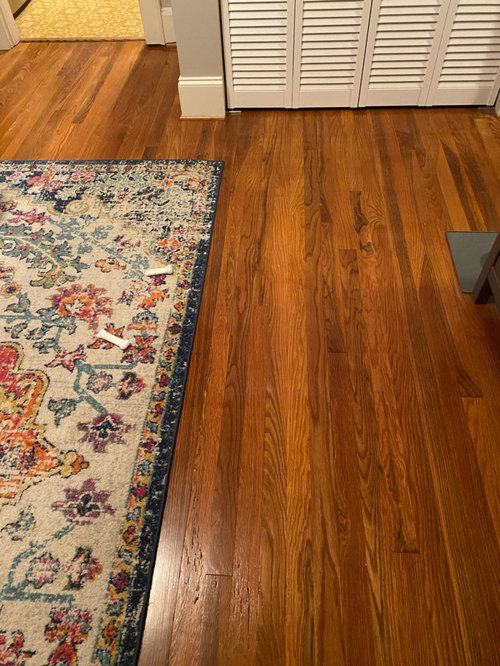
Does this hardwood look like it can be refinished?

6 years ago
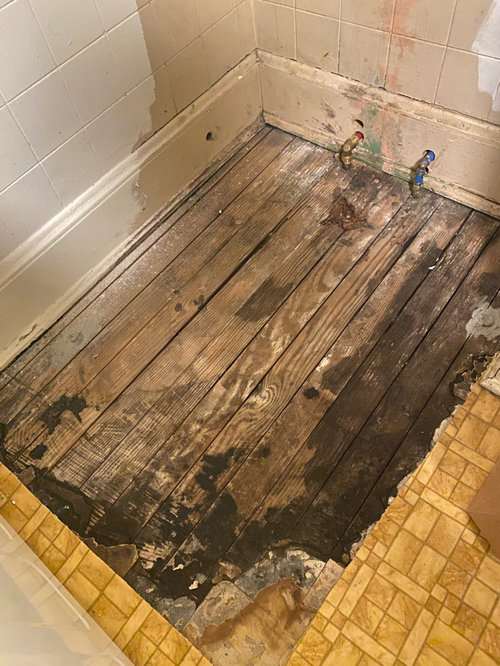
The house was built in 1941. I’ve only exposed a small portion of the 12 x 12 foot kitchen. I realize that I won’t see the full picture until I take up all of the vinyl. This is probably the worst of it, since it’s where the water heater used to be. The floor is otherwise level.

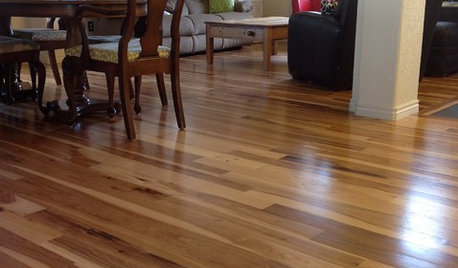
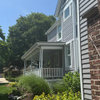
I’ve include a pic of the rest of the house for comparison. Is this refinishable? I was going to put down tile, but the tile guy said he would have to remove the hardwood to put down plywood before backer board and tile.

Thank you!

Comments (13)

  • 6 years ago

    The first pic does not appear to be a finished hardwood floor to me. I think it is the original subfloor.

  • 6 years ago

    Thanks for the input. I won’t feel so bad ripping it out if it’s not hardwood.

  • 6 years ago

    I wouldn't feel bad about removing that old floor (probably subfloor) either, except for the fact that vinyl flooring of that vintage often contains a layer of asbestos which can get released and contaminate your house. Before you do any major ripping, take a small sample of the vinyl flooring, including all the layers, to a certified asbestos test lab. The analysis should cost less than $100 and tell you if this is going to be more complicated. I'm not sure why the tile guy is concerned about having to remove the flooring, unless he thinks this will raise the whole floor too much. Typically the solution in a situation where asbestos is present in the floor covering is to pay for a removal by an asbestos remediation company, or to glue and screw down a thin layer of underlayment for either tile or another seamless flooring material. My daughter was going to go with tile in her kitchen until she had the existing flooring tested for asbestos and it came back positive. She decided to leave it in place and go with the approach of a thin underlayment and install a new linoleum floor.

  • 6 years ago

    I agree with Joseph! Part of refinishing a floor is whether there's enough left to refinish or not. Do you have any in floor registers that you can see how deep that flooring and subflooring is?

  • 6 years ago

    Joseph-

    Asbestos risk can be overblown. The problem is that the layperson has no way of evaluating that risk and most people are not familiar with abatement procedures, or what constitutes a safe practice and what doesn't. I worked in this field for many years and saw too many instances of people taking a manageable situation that posed minimal to no risk and turning it into a disaster.

  • 6 years ago

    Keeping the glue and flooring wet as you go so nothing becomes airborne is a key element to containment.

  • 6 years ago

    I am not sure your floor will be salvageable. I see two things right away. One is the gaps between floorboards, especially by where the radiator was. You might need to replace some at the very least. The second is that there are some chunks missing at the edges of boards. Could be from damage from the radiator or because the edges have become thin from refinishing. I would anticipate that there are patches of some sort under the vinyl.

  • 6 years ago

    I do not think that floor is hardwood but likely to be fir subflooring . At my previous house, I removed the plywood and vinyl flooring and had a similar fir subfloor finished. It made a beautiful floor despite having some areas of visible face nailing. Yes, it had some character marks but that is what you get in a vintage property.

    I don't think you will be able to avoid a height difference if you choose to tile the kitchen. Only the sheet goods portion of the existing flooring can be removed. If you wish to avoid a height difference, you will need to use similar flooring. Even then , you may end up with a slight difference as I expect the flooring installer will need to install a thin layer of underlayment for sheet goods.

  • PRO
    6 years ago

    Gaps are fine.

  • 6 years ago

    I would wonder about the black I see - is that old glue? When we were remodeling kitchen, we wanted to re-use the old hard wood floor (same as in adjoining room) which had be covered by vinyl and kitchen carpet over the years, The flooring contractor refused to sand the old glue. He said it would ruin his machine. So he installed all new hardwood in the kitchen. There some problems with this contractor so maybe that was his way of being paid more for new hardwood.

  • 6 years ago
    last modified: 6 years ago

    When we remodeled our 1940 kitchen we found wood (looked like yours) under the linoleum in the kitchen, but it did not appear to be hardwood that matched the rest of the house. My guess is that they bought cheaper wood (maybe pine) for the kitchen because they knew it was going to have tile or linoleum over it. The entire floor had diagonal 1x6s or 1x8s as a subfloor.

    We were able to purchase new hardwood of the same thickness and they refinished old (dining and living room) and new (kitchen) at the same time. It was a perfect match.

    Bruce

  • 6 years ago

    The question is do you want it to be refinished or do you want tile? It appears to be old subfloor which can be finished and look nice. I did it in a 1912 house that I flipped.