Software
Houzz Logo Print
linaria_z7_ch

3. attempt: help for SUm+ Substance

5 years ago
last modified: 5 years ago
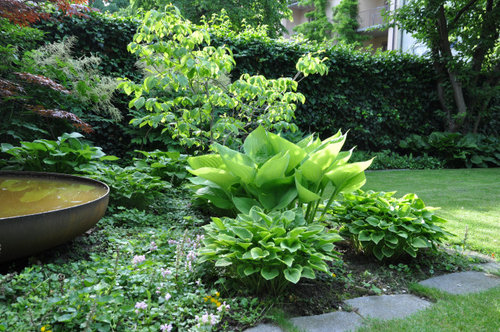
(warm z7, loamish, good soil, some direct sun)

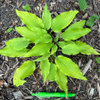
happy Hostas, 2017, around June


so, I did this border a long while ago, as an addition in a garden of friends.

The border was newly dug, Hostas grew greatly

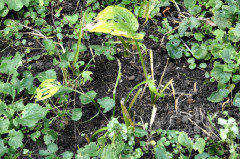
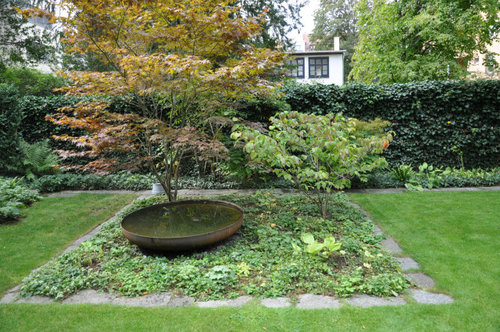
now, they are almost gone.

is it only/ mainly roots from nearby trees (Cedrus, Acer pseudoplatanus) that cause this?


just from today, the leftovers from SuSu are at 4 o clock, kind of


probably no mice or crown rot,

every spring new compost.


I would hesitate to just replant another Hosta...

thanks for suggestions, bye, Lin

Comments (15)

  • 5 years ago

    Voles eating the roots? Lovely garden!

    linaria_gw thanked kitasei2
  • 5 years ago

    thanks

    I forgot to mention again (somehow I managed to kick myself out of the menu twice before, something about my "enter"key...)

    they have some kind of terrier dog and it is an urban setting, so I think mice/ voles can be ruled out as their doggie is uninterested in the border., but goes nuts when he smells mice, rabbit etc


    they adopted the SuSu from me when it outgrew its too small border, after its leap year, so the decline was really drastic


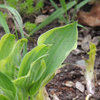
    so, here is a close up of another Hosta in the border, I think August moon or something


    they had weeded out wild strawberries recently, and are battling slugs permanently


  • 5 years ago

    nicholsworth,

    thanks,

    those are impressive pics,


    Su& Su is no foufou cultivar, I would think, so if those in your woodland garden are doing so great, the ones in the tiny border should not be bothered that much.

    hmm, I wonder whether some caterpillars/ earth owls or something eating in the soil could be a factor, probably we should dig up some leftovers just to check the roots...

  • 5 years ago

    why should we guess ... dig it up and find out how bad the tree roots are ...


    if it were a smaller plant.. i might suggest to remove the roots in the hole.. and replant it ...


    but grown successfully ... you arent going to be moving it around in the future.. unless it regresses again ...


    the bottom line.. its a water issue ... the tree out competing the water hungry hosta ...


    ken

    linaria_gw thanked ken_adrian Adrian MI cold Z5
  • 5 years ago

    I think Ken's points are good. Also, nobody has said anything about it being near an Acer. Maples have wide, shallow root systems and do tend to out-compete lots of other plants. I love them! But. When you look at a climax hardwood forest that has maples in it, you'll see that there's not much growing under them. And it's not just because they're shady. I grow lots of hostas under trees of course, but those are all oak trees except for one green ash. They do fine next to some yews as well. Not so good near arborvitaes.

    Of course, if it is a water-competition issue, maybe the owner needs to just water a lot more? If practical. In which case they might have to fertilize more as well.

    Still think both you (Lineria) and Ken are right about taking a look at whatever it is going on underground. You can't possibly make things any worse, hah!

    BTW I've hauled some pretty huge hosta root balls around, dragging them on a tarp. It's even better to drag them on a plastic sled, my favorite root-ball-dragging device of of all. :)

    Good luck to you!

    Joan

    linaria_gw thanked Northern Gardener (3b west central MN)
  • 5 years ago
    last modified: 5 years ago
    Lin..I've read that dogs are a great vole deterrent so maybe no voles in that garden..my trees are not all maples..I've seen pics here of huge clumps of maple roots..my Japanese maples aren't huge..only one was here when I moved in..I love them and I've planted 12..I've noticed that near one JM and near a beech that the hostas there will droop whereas other hostas nearby still look fine..the trees must be hogging the water..

    linaria_gw thanked nicholsworth Z6 Indianapolis
  • 5 years ago

    If the compost doesn’t disappear every year make sure the crowns aren’t being buried.

    tj

    linaria_gw thanked tsugajunkie z5 SE WI ♱
  • 5 years ago

    If you have a slug problem do the 10% ammonia or vinegar drench. Pour the solution over all hostas now. It will kill slug eggs. Then do it in spring when the pips start coming up. It will kill any eggs left over and kill any hatched slugs. You may need to redo in 6 weeks. You have to check for any signs. Some people use sluggo but I have not had luck with that. I tend to re-drench hostas prone to slug damage, like the Tiaras.

    debra

    linaria_gw thanked djacob Z6a SE WI
  • 5 years ago

    Debra, "djacobz568sewi", I take it you're not too far south of me. Just a zone or maybe a zone and a half. I was lazy this year re slug control, since they've never been all that bad, but dang. Just a few cosmetic holes are annoying. I thank you for your advice re drenches and intend to use it.

    So the next question is how to do it most effectively: When you say "drench," how much solution are you talking about per square foot? Or how deep do you think it needs to go? Cuz I have hundreds of square feet of hostas, besides which slugs can live in the surrounding lawns. I've seen them there, in wet years. I wouldn't be averse to drenching my whole yard, I just have to calculate how many jugs of ammonia to buy.

    I'll never entirely get rid of slugs but I sure hope to slow them down.

    Thanks for your advice.


  • 5 years ago

    The drenching is intended to slow them significantly. I thoroughly wet the crown and surrounding area. I generously pour over each hosta. In my opinion you can’t do too much. Someone on the hosta forum uses a 20% ammonia solution. I have used both vinegar and ammonia. You are correct, I am in Milwaukee WI. I wouldn’t worry about your lawn. Do the fall and spring drenches and check regularly, go out at night to see if you find them. Some people use Sluggo too but that product has never worked well for me.


    The drenches ar a real pain but I cannot tell you what a difference it made in my garden this summer. Although I don’t really know my square footage, I am sure I have hundreds as well. I bought 7 or 8 gallons last fall, I still had some jugs left over. For me,since I cannot carry heavy things, I pour two cups of vinegar or ammonia in my 1 gallon watering can. I have been able to get my husband and my garden helper with the process. If you can get help, make sure they know which plants are the hostas..........lol. Good luck!!!

    debra

  • 5 years ago
    last modified: 5 years ago

    I believe if you will dig them up you will find that maple roots are strangling them.

    I have the same problem and have put most of my hostas in pots.

  • 5 years ago

    Debra, THANK YOU. I'm putting ammonia on my list. Your formulation is one part ammonia to eight parts water: 12.5%. Seems to me that if that's doing the trick for you there's no need to increase the concentration to 20% or more.

    Re-reading your post, you say "now" is when to apply. Now, while the soil is still fairly warm, but things are starting to shut down; do not wait until it gets really cold. Sound about right? And then again in six weeks? That'll be mid-November, I think where I live it'll be well into the 20's at night, not so much in Milwaukee where the big lake will moderate night temps. Maybe if I do it now, a second drench in four or five weeks wouldn't hurt.

    What would be the timing of the spring drench? (Phenomenological description more helpful than dates, since latitude/zone matters.)

    Again, thank you. Some of my foliage damage is due to storms sending debris from the trees raining down on the gardens below, but a significant portion is slugs, for sure.

    Joan


  • 5 years ago
    last modified: 5 years ago

    I’m interested in knowing more about planting hostas in pots under maple trees... I assume the pots are sunken. What size do they need to be? Should the bottoms be left on?

  • 5 years ago
    last modified: 5 years ago

    I agree that the hosta should be dug out to check its roots. From what I have read, the Acer pseudoplatanus has a "Shallow root system, predominantly horizontally spreading with many fibrous roots, extensive root growth in top soil layer." I am afraid that the tree may be making that area a difficult place to garden. How are the other plants doing in the same vicinity? Are there also large trees nearby that could be affecting this bed? When was the last time any of the surrounding soil was dug? Try to dig an area and see if you find any tree roots.

    My backyard is full of tree roots. Every year, if I dig into the soil, I find tree roots. If I till the soil in an area, next year the tree roots will be there again. I have two big maple trees. Remember that the roots of a tree extend far beyond its canopy.

    Kitasei, pots can be dug into the ground around trees. I would recommend a pot that merely fits the roots. This is because tree roots will want to grow into the pot from the drainage holes. Bottoms should be left on. I have had more success when the pot is full of roots. The pot will have to be turned a few times a season. That would break any tree roots that have entered the pot. Not sure where you are located, but for cold winters, the pots can stay in the ground or be removed to store elsewhere. If left outside, the pots should be filled with soil right to the top to eliminate too much water and snow entering the pot. Remove the excess soil in spring.