Software
Houzz Logo Print
kcorn

Help finding this range hood, please....

5 years ago
last modified: 5 years ago

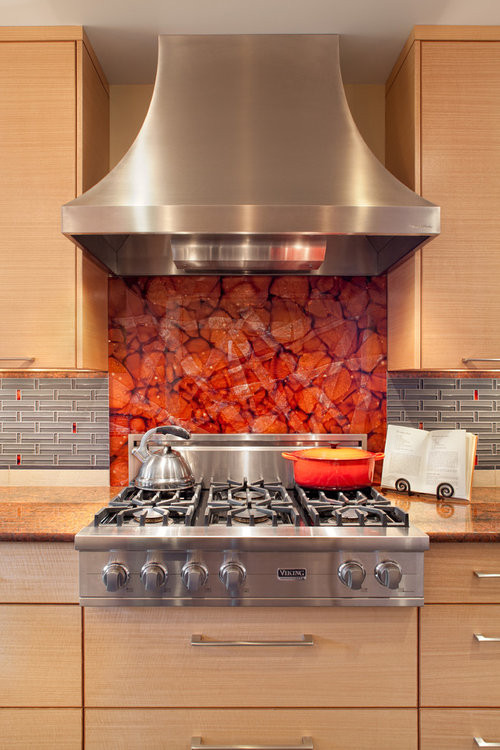
I am looking for a 42" range hood that is the same style as one of these in stainless steel....

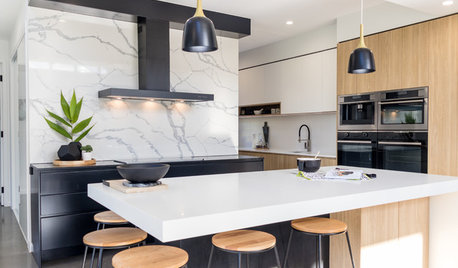
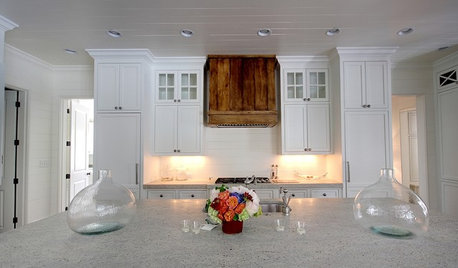
1) commercial/pro style canopy that is sloped on the sides with a wide duct cover (see photo 1)

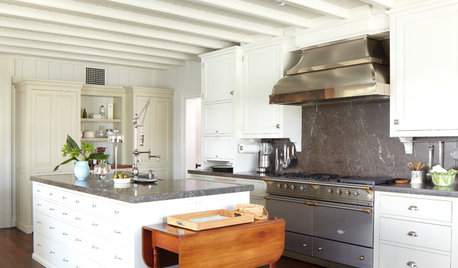
2) sloped front and sides with duct cover

Preferably not something custom.


Urbane shingle style Residence · More Info


Grant Park Kitchen Remodel · More Info


Comments (11)

  • 5 years ago

    @mmiller, thank you. None of the best hoods seem to have the height in relation to the canopy style with slope (vs a chimney style) that I was looking for. I’ll check out the zephyr titan.

    I also should have seen that comment on the second one.

  • 5 years ago

    I'm wondering if anyone has a Zephyr vent hood the retractable Pisa model? Would it look weird under a short cabinet instead of a cabinet that is the same as adjoining cabinets? If so, any recommendations for a good one under the cabinet style- without paying a lot?

  • 5 years ago

    After some research, I found hoods that have the style I am looking for (similar to photo 1) with wider duct covers (18"+) from Zline and Proline. There is one from zline (687), and 2 models from Proline (104 and 109). All are 1200 cfm and have similar pricing.


    I do realize vent a hood and others may also have better options, but I would prefer to keep the cost under $2000.


    Any preference on Proline vs. Zline for ease of cleaning / performance / warranty?

  • 5 years ago

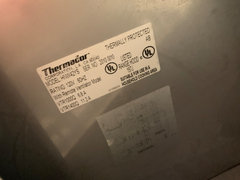
    Oops. I see now that the hood we are replacing (an old Thermador model) has an external / remote blower (see picture below). So that would mean, I would be looking at one of these two models.


    https://www.zlinekitchen.com/professional-stainless-687-remote

    https://www.prolinerangehoods.com/42-prov-chimney-wall-hood-430-stainless-steel-prov-42wc-430.html


    Could we possibly use the old blower with the Proline option?


  • 5 years ago
    last modified: 5 years ago

    Which blower do you have, the VTR1000Q or VTR1400Q?

    From the Proline page you linked to:

    “You can choose which blower will work for you and your home. Maybe you even have an existing blower you’d like to use in your space instead of spending more money, we get it! As long as the blower you use with our ProV hood is fully variable, it will work perfectly! If you need a blower to accommodate this hood, we have a myriad of choices. With the ProV model you have the benefit of using either a local blower (one that is mounted inside of the hood) or an inline blower (one that is mounted away from the hood and inline with the ductwork).

    An external blower is not the same as a remote blower, btw.


    kcorn thanked Sammy
  • 5 years ago

    @Sammy, I'm going to check right now on which blower we have...


    I may be getting confused from the Proline blog page where they describe the inline blower as a type of remote blower...


    https://prolinerangehoods.com/blog/whats-the-difference-between-a-local-blower-and-an-inline-blower/

    "What is an inline/remote blower?

    An inline blower, sometimes called an inline blower motor, inline fan, or a remote blower, is a type of remote blower that is not in the hood itself but positioned inside your ductwork, between the range hood and the end of your ducting. These blowers are less expensive than local blowers. They’ll provide you with a little less power, but will be much quieter. Inline blower motors are a great solution if you plan to have guests in your kitchen often or if you love to socialize with friends and family and are looking for a very quiet kitchen fan.

    Even at reduced power, these blowers can still vent up to 1300 CFM of air out of your home, which is more than enough for all kinds of cooking styles."


  • 5 years ago

    @Sammy, I cannot tell which of those blowers we have (could it be both?).


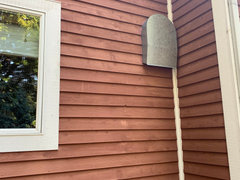
    This is where it's mounted on the outside wall of the kitchen and I am having a hard time getting into this to figure it out.


  • 5 years ago

    An external blower is a category of remote blower. All blowers not in the hood envelope are remote from the point of view of the hood and its blower control. For residential purposes, the relevant remote blowers are 'in-line' and 'external.' The latter may be mounted on a roof or on the side of a building. The former are mounted at a convenient point in the duct path. A duct cap is then used outside.

    Continuously variable blowers have historically used single phase ac power induction motors controlled by some type of simple solid state control. A motor capacitor provides the second phase needed for starting and running torque. It is also possible to have a more modern synthesized frequency multi-phase control driving a multi-phase motor. In this case, the blower control in the hood may have to be specific to the design.

    In-line blowers can provide nearly any CFM that is practical for the duct size that they are matched to. See Fantech's offerings.

    External blowers of the down-roof or down-wall type that I'm aware of are available up to 1500 CFM (at zero static pressure) and in most hood system configurations will provide at least 1000 CFM. If a commercial style up-blast roof blower (sometimes installed horizontally on walls) is used, then the possible flow rate is only limited by duct, hood, and make-up air restrictions.

    kcorn thanked kaseki
  • 5 years ago

    @kaseki, thank you for the detailed description on the types of blowers. Do you have any opinions on the zline vs proline models?

  • 5 years ago
    last modified: 5 years ago

    Overall, I can only comment on the hood line represented by the Wolf Pro Island hood I own. For other hoods, I can in some cases point out deficiencies due to their significant, or in some cases extreme, design digressions from the essence of functionality represented by commercial hoods.

    To the beginner, this means that if the characteristics of commercial hoods are understood, say by reading the initial dozen pages of the Greenheck Guide (https://www.tagengineering.ca/wp-content/uploads/2015/02/KVSApplDesign_catalog.pdf), then by extrapolation residential hoods may be seen as providing practical approximations to these, or not, as the case may be.

    What I am most willing to do is help establish the requirements that one's hood should meet in the context of one's cooking surface size and cooking preferences. These include requirements related to capture, containment, duct sizing, blower performance, and the counterpart make-up air requirements. As you may see by searching out my previous writings here on this subject, the requirements flow is fairly straightforward, and generally supported by papers written by organizations involved in cooking ventilation.

    For Z-line vs. Proline, maybe there are some threads here where comments have been made. Also, for items sold by Amazon, there are often user comments/reviews that may provide insights.

    kcorn thanked kaseki