Software
Houzz Logo Print
webuser_221477878

New Lawn Disease Identification

5 years ago
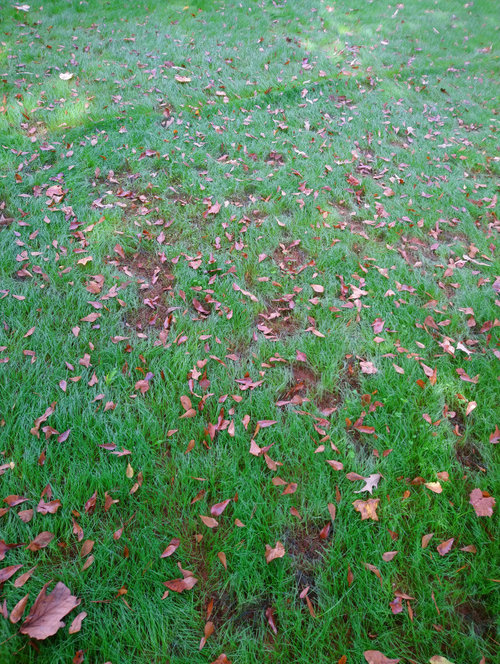
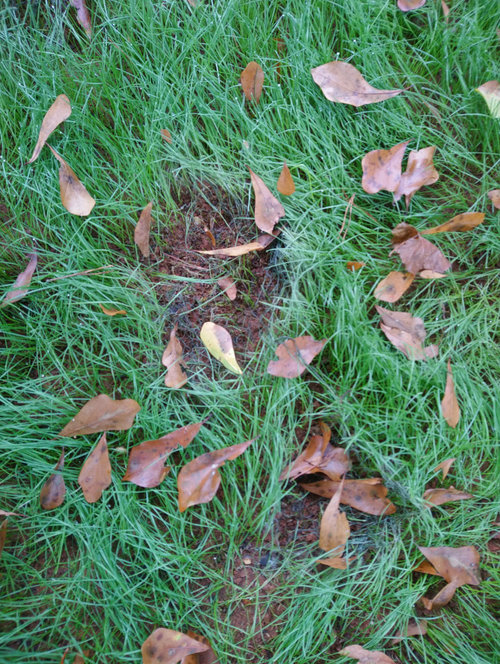
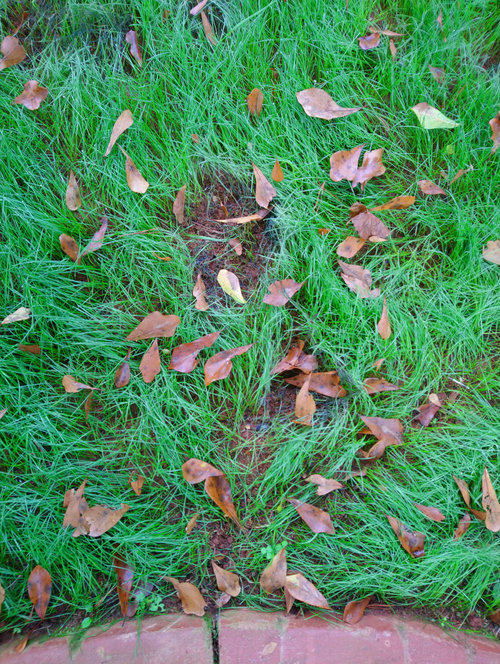
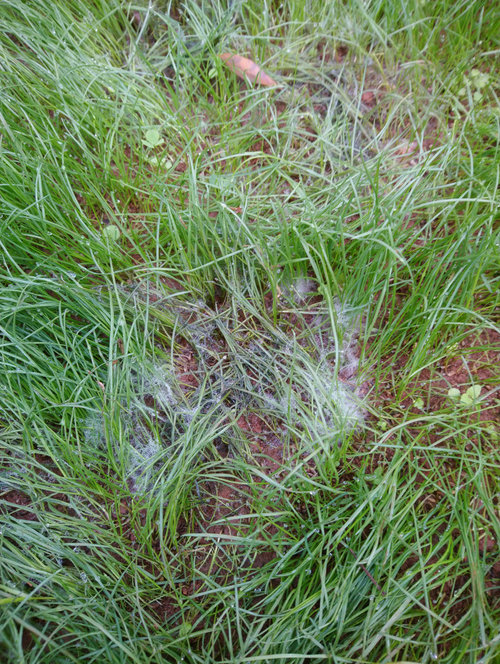
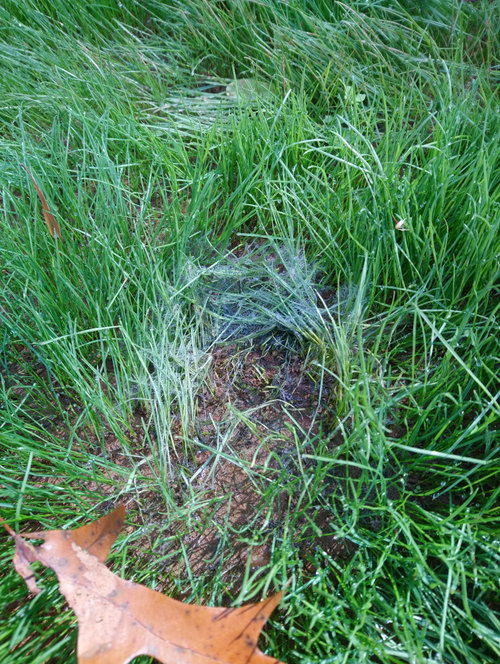
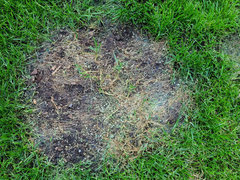
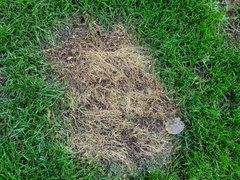
This is a 20 days old grass, a blend of Tall Fescue and about 10% Kentucky Bluegrass. I noticed couple days ago that dark spots started appearing as shown in the attached images.

What kind of disease is this and how to protect my lawn from further damage?

Comments (21)

  • 5 years ago

    It looks like melting out but it's acting half like dollar spot and half like damping off fungus. It's late in the year. None of the first two should be terribly active any longer, and the latter should be dying down as it's too cool (everywhere) and your grass is too mature.

    First, I'm guessing you're still watering the lawn a lot.

    Stop. Water once every third day now, in the morning, and let the grass dry before dark. We're going to try to dry off the surface enough that the fungus can't spread any more.


    I'm also going to suggest, even though this is a very young lawn, mowing it at around 2". Do the best you can, and realize this isn't going to be easy. Let's try to get some air moving in between the blades.


    I don't want to suggest using a chemical on this. It's too young and any chemical I suggest is likely to kill it.

    Are you willing to try something that sounds crazy? What I want to do is populate the lawn with different fungi that will use up space and deny the disease fungi some of the space they're using to kill your lawn. Decay fungi won't attack the grass, they don't care about it. Most organic feedings will grow bacteria preferentially, at least at first, due to their higher nitrogen levels (usually exactly what you want), but in this case, I want exactly the opposite--very high carbon levels.

    This is something a lot of folks say doesn't work simply due to lack of research. About a third of us who try this swear by it. A third are iffy and say it's situational. A third say it doesn't work, or say it's incredibly dependent on when and where. I'm actually in the last third--so if I'm actually suggesting this, there's a reason. The reason here is that you have a wet environment, it's late in the season, and the lawn is very, very young--you don't have any other options.

    Call around and see if you can get corn meal. Cracked corn will be fine but it's definitely second on the list. Many agricultural supply places, pet food stores, and grain mills may have this. You'll want to apply about 10 pounds per thousand square feet.


    If you absolutely cannot find it, a distant third choice would be alfalfa meal. A very distant fourth choice would be Milorganite.


    If you'd rather not try that, I certainly understand. Go with the lowered watering, cut the lawn, and wait it out for a week or so. If things rapidly get worse--or if a week passes and things are still slowly getting worse--check back and at that point we'll start talking chemicals. At that point, you're going to have to and simply risk the lawn. By then, it's older anyway and should be able to take a little more of a beating!

  • 5 years ago

    @User Thank you for your valuable input. I stopped watering on Oct 15th and yesterday the 16th, I cut at 4 inches or a little lower, but I guess the riding mower is too heavy so parts of the grass is laying flat now and did not have enough time to recover yet. I am thinking to go over it with a rake but also afraid to spread the fungus further.


    Regarding the corn meal suggestion, I am willing to try it if it is a budget solution. So far the cheapest I found is a 2 pack of Enriched Yellow Corn Meal, total of 10 pounds, for about $5 through Walmart.


    Is this the right product?


  • 5 years ago

    Yes, that would be correct--but horribly expensive. If it would cover the whole lawn (it's very small), that's fine, though. You'd want ten pounds for every thousand square feet of lawn, so if you have about a thousand square feet that have a problem, that would be great and the price, overall, isn't too bad if it's also convenient for you.


    I get about fifty pounds for $15 from my local grain mill, but I'm in the wilds of Pennsylvania, where the deer and the...well, cows play--and have ten thousand square feet of lawn.


    By all means, if the mower won't go over it right now, skip it and wait for the soil to harden up a bit as it dries out a little. There's no critical need to cut it short right this instant, just lowering the water will help out.

  • 5 years ago

    @User You are encyclopedia bro! I live in Upstate South Carolina, so hopefully I can find a grain mill nearby, this is an awesome price no question. The front yard where the fungus hit is about 4500 square feet. I have also about 6000 square feet side and backyard which I seeded a week later, then I had to overseed a few days ago because the initial results were not satisfying (I know this is crazy late) but I am a little more careful with watering this time, fingers crossed.

  • 5 years ago

    The name's taken, so call me Encyclopedia Sienna. :-) SC shouldn't have a shortage of grain mills, and perhaps think "horse feed" as well. Not that I know horses, but they kind of seem corn-adjacent to me. Maybe that's pigs, though. Something farm-like.


    Temperatures down in SC are warmer than I was thinking so yes, fungi are more on the prowl there than up here in PA. And you do have more time remaining, so if that week passes without this stopping we're going full chemical warfare on this with DiseaseEx (keep that in mind).

  • 5 years ago

    Here's a list of feed stores near Greenville, SC. Call them for availability and price. If they quote you a price up around $20 or more for 50 pounds, then they are talking about a different product, corn GLUTEN meal. This year I've been getting a bag for $7, but the world is expecting food shortages due to the pandemic, so wholesale prices are increasing.

  • 5 years ago

    @dchall_san_antonio Thank you! Definitely I will keep this in mind for future projects. For now I ended up spreading DiseaseEx and waiting now for the results, hopefully positive. Also, before posting here I contacted the Clemson Plant and Pest Diagnostic Clinic, and early today I received a response identifying the damage as Pythium blight and suggesting a product with azoxystrobin ingredient. The following article was shared with me as well turffiles.ncsu.edu/diseases-in-turf/pythium-blight-in-turf/ which I found to be very informative.

  • 5 years ago

    I've been researching articles and watching videos for any signs of what this could be as my lawn started showing the same signs about 3-4 weeks ago. From what I read and saw videos on, it's more than likely Pythium Blight and I've spread Disease Ex and anti-fungal that also treats brown and dollar spots just to be safe. I've also aerated my lawn as it seemed to always be wet/damp even though I' m watering 2-3x a week for 3-4 minutes.


  • 5 years ago

    Thanks for the feedback! I'm hoping that's not the case :( I had rye grass planted/over seeded in October and the landscaper told me to set my sprinklers to water 3x a day for 7 to 8 minutes for about 10 to 14 days so the soil and seeds stay wet and damp. Everything grew in pretty well but then 3 weeks ago is when I started to realize these spots appearing in my yard. I immediately stopped watering and used Disease Ex. Is there something else I should be doing?

  • 5 years ago

    @Jan V If no rain is coming, don't forget watering Disease Ex for the magic to start taking effect immediately. According to instructions, it takes 24 hours from that moment.

    In the future, avoid at any cost over fertilization and over watering!

    Also in the fall, try overseeding earlier. I suggest mid August to mid September. You can overseed early spring as well if you're not planning on using a pre-emrgent product.

    Regardless, your green looks great.

  • 5 years ago

    Exactly! Post that last watering to get the DiseaseEx moving, just watch the soil. Rye establishes fast, and it's pretty late, so you shouldn't have to water that much. If rainfall doesn't do the trick (it probably will), water weekly. Just barely damp soil is just fine at the one-month mark with rye, and if you notice wilting--water. The DiseaseEx did its job.

    This one time, skip the last feeding. It won't matter too terribly much, and it's better not to provoke the disease with free nitrogen.

  • 5 years ago
    last modified: 5 years ago

    @User @adel, thank you both for the suggestions, I'm fairly new to the upkeep of lawn management. How would you tell when the pythium blight has run it's course and treated so I can start to plant new grass seed? Also, would you recommend covering the new seed with soil? I know that keeping the new area damp but not too wet will be a struggle as it's just small patches that need to regrow. I'm worried if I over water the surrounding grass, Pythium blight will come back or the grass will die. I've typically used Scotts Turf Builder for soil, is there any other brand recommendations you prefer?

  • 5 years ago

    What's your locale, Jan? Grass seed is usually planted from August 15th - September 15th, although with rye you can stretch it a bit past those dates. Deep in the transition zone (Georgia and the like, where northern grasses just barely survive) grass seed can be planted into late October...but it's touchy.

    Spring plantings tend not to do well, but you can get away with them if you count on losses being kind of heavy over summer.


    That Pythium should die when the DiseaseEx gets working. If not, winter will take it out, or at least set it back enough not to be much of a worry. Pythium flourishes in wet, rich conditions which the new grass gave it (being rich, green, and very, very young and juicy stuff). That won't be as true next spring, although keep an eye out as spring growth is fast, strong, and very juicy as well.

    (Skip feeding until May 25th is the watchword here, although that's standard for lawns anyway).


    At this point, I might go with the third, easiest, but not always most reliable option--dormant seeding. Wait until winter's underway and almost over, like February. Spread a little seed in the blighted areas at that point (the blight, by then, is dead from the DiseaseEx or dormant in the cold). There's no need to cover the seed or do much with it, and birds aren't much of a concern. Try to time it before a good rainfall/ice storm/snowfall to get the seed worked in.

    It'll sprout all on its own the first instant it can, usually early April for me.


    Keep an eye on that and, if that isn't working by the time you notice the weather is "really nice," whenever that is, then seed a bit and dampen it down twice a day next spring. If you want to dust seed over it (up to a quarter inch, Turf Builder soil is fine, just scratching the surface of what you have is also fine). If you sense that there's no real rules here, you're right. :-) I've used peat moss, soil, compost...it's all good.

  • 5 years ago

    The disease disappears once all the suggy mess and white fungus residue disappears. After the soil dries out, you might want to rake those spots and get all the dead stuff out.
    When the time is right for seeding/overseeding, example night temperature is 50+, I think the most important step is seed to soil contact! For larger areas, I use a roller half or third filled with water. For random spots, walking over seed multiple times might be enough. After that you can cover it very lightly with soil, peat moss, or seedless hay, my favorite is seed fabric which requires even less watering but in my experience the fabric should not be kept more than 2 weeks, 10 days might be best. If no birds or blazing sun, and you have a decent sprinkler system, you might not need to cover the seed at all.
    You might want also to consider mowing at the lowest height and overseed the entire lawn with little more seeding in the bare spots.
    I live South and it's too cold to seed now, I imagine if you are seeding perennial rye, you must live North, so it's even colder. In this case patience is good or it would be like money thrown down the drain.

  • 5 years ago
    last modified: 5 years ago

    @User @adel I'm located in southern AZ where the weather has been considerably warm even being this far into November. Luckily, temperatures are going to be cool enough this week to where it'll keep the Pythium Blight in check (or at least I hope). Plus, I'm thinking the Disease Ex will do it's job and kill off what's left, I haven't seen any new spots or spreading so I think I'm in the clear for now. I'll wait another week or so to plant new Rye grass in the empty spots and do a light layer of soil as you both recommended to keep things damp. I've read the ideal temperature to plant Rye is between 60 and 75 degrees. Thank you both for your help!

  • 5 years ago

    Good luck Jan! But why in the world are you planting Rye in Arizona:)? All this will die out with the first heat wave in July. However, my understanding is that some people with Bermuda lawns, spread rye every fall, this way they get green lawns year around, so by the time the rye starts dieing out, Bermuda comes out of dormancy.

  • 5 years ago

    I was kind of wondering that myself. :-) Southern lawns will do better, but the rye will be a nice hold over the winter, at the very least.

  • 5 years ago

    Definitely looks like Pythium Blight. You can also get mefenoxam for it.

  • 5 years ago

    Well I've been ignoring Jan V simply because he/she hijacked Adel's topic. But then Adel chimed in to help Jan V, so I guess Adel is happy with the way things are going.

    Jan V, what appears to be happening is someone has talked you into leaping over your novice skill level into a much more advanced lawn care routine. You're in the deep end now. Golf courses in the desert southwest often overseed rye into some parts of their turf and some homeowners have been doing it, also. As you have learned, getting it started is tricky because it is so much different from normal bermuda lawn care. You are going to find in the spring that it gets even trickier when it comes time to get rid of the rye and reawaken the bermuda underneath.

    You've got the fungicide on. Now get the watering right. Water longer and less often. For your area you might be watering deeply once a week, but if you watered last week and the soil seems moist, don't water again. The soil should dry out down about an inch before you water again. Stick your finger into the soil. If it feels warm an inch down, it could take some water. If it feels cool, then you still have plenty of evaporation going on telling you the soil is still moist further down. Deep watering means 1 inch all at one time and not 1/7-inch every day. Deep watering will develop deeper roots which need to be watered less often.

    Raise your mowing height all the way to the top for the winter. In March drop it all the way to the bottom to open up the turf canopy to the sunlight. The bermuda underneath needs sunlight to awaken. If the rye is too tall, the bermuda might not awaken until late April or May. That's not good for the bermuda.

    Take this year to learn good bermuda practices and don't overseed with anything next winter.

  • 5 years ago

    Dchall, I really doubt if Jan has Bermuda underneath at all.