Software
Houzz Logo Print
nmbexcuse

Is my tree on life support?

5 years ago
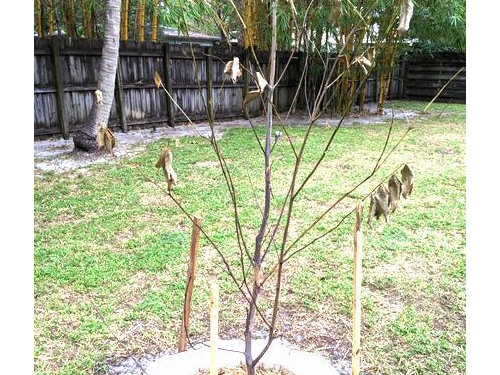
I purchased a rainbow eucalyptus tree from a local nursery in October. I have been watering it in its pot every other day. But a month ago we had a really bad flood, water came up from the river (King Tides) plus extremely heavy rain for a few days from a tropical storm, our yard got flooded with 3-4 inches of water, water that's a bit brackish.


Every since then the tree has been looking very sad, the leaves began to dry up.


I planted it into the ground immediately, and now a week later it hasn't improved.


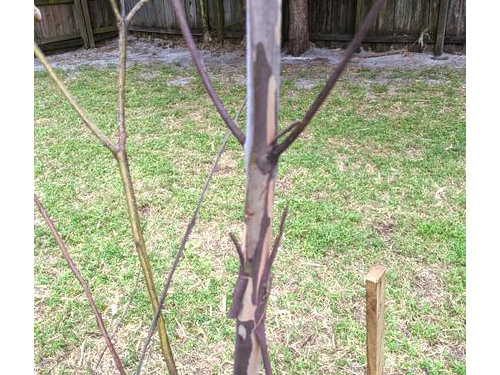
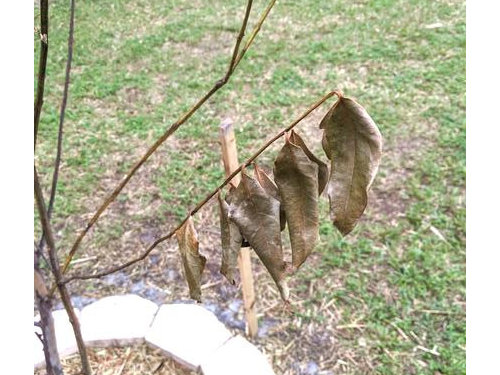
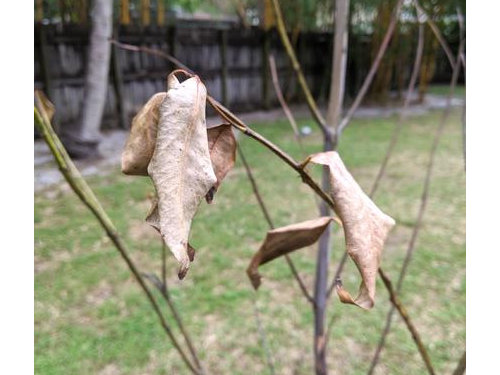
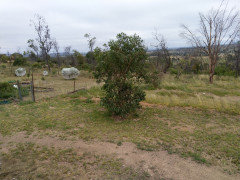
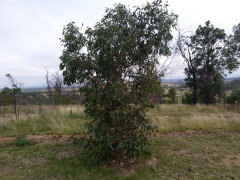
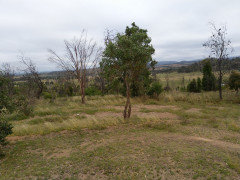
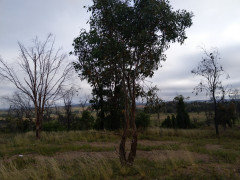
Here are some pictures.


There is not a single green leave on the tree, and two of the twigs broke off on very gentle contact.


Is it dying? Anything I can do to help it recover?

Comments (35)

  • 5 years ago
    last modified: 5 years ago

    Do the leaves of established trees of that kind dry at this time of year in that zone?

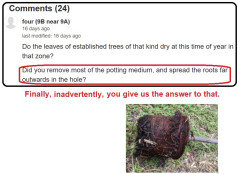
    Did you remove most of the potting medium, and spread the roots far outwards in the hole?

    Was the ground at planting depth extremely wet?

    Miami Cuse thanked four (9B near 9A)
  • 5 years ago

    I'd probably give it more time, but IMO you can pull the life support plug :-( Only a handful of the hundreds of species eucalypts lose their leaves and those that do lose them at the end of the dry season, not after flooding.

    Miami Cuse thanked gardengal48 (PNW Z8/9)
  • 5 years ago

    planted it into the ground immediately, and now a week later it hasn't improved.


    ==>> tree time is counted in decades ... nothing is going to appear to change in a week ...


    can we rule out any salt water issues??


    your tree is severely stressed ... it is not uncommon for a tree to lose all its leaves under extreme stress ... most .. otherwise healthy trees can releaf given a few months to develop and break new buds ...


    a few days of heavy water should not have been a death blow .. but you never know ..


    it might be interesting to look into how you planted it ... but with it as stressed as it probably is.. im not sure i would call a redo immediately ... on the other hand.. maybe it is time to redo it????


    all you do between now and the hoped for bud break .. is insure proper watering with near drying in between and pray ...


    its stressed.. not hungry.. fert is not a response to such ...


    ken

    Miami Cuse thanked ken_adrian Adrian MI cold Z5
  • 5 years ago

    I think that the issue is the brackishness of the water, more than the amount of the water. FWIW I have a Eucalyptus leucoxylon 'Rosea' that I neglected to water after I planted it. It dried up, all leaves fell off, I left it for dead. Right after this occurred I turned on my drip system for the season and a few weeks later the tree popped growth from the base. A year and a half later (Eucs are fast growers) it is about 8' tall and look what it's doing now. I'd give it a little time at least.


    Miami Cuse thanked Sara Malone Zone 9b
  • 5 years ago
    last modified: 5 years ago

    Branch tips of example asked about are also blackening - there probably is not much likelihood of it bouncing back. And if salty water came over your place once it's going to happen again. So presumably the tree is going to continue to be damaged at intervals if kept where this flooding happens.

    Also if what you have said here means that you had it in a pot during the flooding and then planted it right after then the tree was not the optimal size to be planting out for a gum. These are really best started with in the smallest possible size - such as a 2 in. band, definitely not anything bigger than a gallon pot. And where ever it is able to develop fully the tropical species you have chosen makes a tall tree with a pillar like trunk - so that if yours does in fact bounce back somehow (and is not burned or drowned again in future) it seems there might be problems with it for instance blowing over. Because of being in a pot too long and how root development was affected.

    All the more so because of the planting site being in a hurricane belt.

    Miami Cuse thanked Embothrium
  • 5 years ago

    I am not sure how brackish the water was.


    We are next to a river that runs to the Atlantic ocean, about a mile upstream of the inlet, I have been told the water in the river is brackish, although I have never tried to taste it.


    The flooding that occurred this time is not a frequent occurrence. In fact, it has never happened in the 23 years I have moved here. It was a combination of events. First, we have king tides every year around mid September, mid October and mid November, during those days for about a week, every day the river will rise to a high point. Sometimes it rises so high it will have an inch of water in the parking lot of the marina next to us. This alone is not the issue, the issue is when tropical storm ETA came to us around the same time and dropped a lot of water in a short time during the king tides flooded the streets and the water got higher and higher and first flooded the garage, then went through the crawlspace vents and flooded the crawlspace, and flooded the yard. This much water rising to this high has never happened, not even during hurricanes Wilma, Matthew or Irma my crawlspace was invaded by rising water. Will it happen again since it has now happened once in my 23 years here? May be, may be never again or may be another 23 years.

  • 5 years ago
    last modified: 5 years ago

    The difference between Sara's E. leucoxylon that sprouted from the base is that it has a lignotuber, while E. deglupta (Rainbow Euc.) doesn't have that, so it won't regenerate from the base. Agree that the saline watering has done it in. That tree looks dead to me. I do see one branch with some colour remaining, but I'd say it's in its final throes.

    What's the white stuff on the ground outside the stone ring? Salt residue?

    Miami Cuse thanked shaxhome (Frog Rock, Australia 9b)
  • 5 years ago

    Same as with killer winters events like you have experienced don't follow a predictable schedule. Except that tropical storms hitting the SE are getting worse due to climate change.

    Miami Cuse thanked Embothrium
  • 5 years ago

    Aha! I wondered if that was an issue. So many of the Australian natives have epicormic buds and sprout all along the trunk. This one only sprouted from the base. Thanks for clarifying and explaining.


    This was a #15 which is how I also planted my E. sideroxylon which is now about 30' tall. I do have to make sure that the root crown is situated properly to avoid the instability mentioned above. Same with Acacia. I can't find any Eucalyptus in small size around here but small Acacia are plentiful and they grow so fast that planting a #1 is rewarding pretty quickly.

    Miami Cuse thanked Sara Malone Zone 9b
  • 5 years ago

    Ah, yes. The wonderful epicormic regrowth of Eucs that look dead and gone after being ravaged by bushfires. Ain't nature grand!


    Miami Cuse thanked shaxhome (Frog Rock, Australia 9b)
  • 5 years ago

    OT to Sara...I don't know if you can get them there (I had to have mine shipped 4,000kms across the country!), but for smaller Eucs, I'd highly recommend the West Australian mallees (multi-trunked Eucs.)

    Mine are about 16 years old now, and seem to have topped out @ around 15-20 feet. First one here is Euc. kruseana.


    And this is Euc. platypus (!)

    Miami Cuse thanked shaxhome (Frog Rock, Australia 9b)
  • 5 years ago

    Nice!!! Never seen one here. But now I will be looking...;-)


    Miami Cuse thanked Sara Malone Zone 9b
  • 5 years ago
    last modified: 5 years ago

    Retail supply of eucalyptus in western US appears to have become generally poor in later years. For instance forest farm is currently offering a grand total of one species. However there was one recent season where Seattle area independent garden centers were able to obtain and display an assortment of kinds in one gallon pots. This was noticeable because such no longer seems to be a routine occurrence.

    Also former Garden Web participant Ian Barclay had multiple kinds listed on his Desert Northwest web site this past year. Like other dry climate plants gums are a particular interest of his - I suspect that he would be offering dozens of species if he could but cannot get them (through commercial channels anyway) at this time.

    THE DESERT NORTHWEST - Retail/Specimen Plants

    Miami Cuse thanked Embothrium
  • 5 years ago

    There's a nursery in California that stocks a wide variety of Oz plants, including a good list of Eucs. But they appear to sell to trade, not home-owners. Perhaps they could advise where to find their trees for retail sale?

    Australian Plants

  • 5 years ago

    Yes I've wanted to visit that nursery for years. It very nearly was destroyed in wildfires a few years back. I think their greenhouse burned. We have a fair number of Eucs available in this area, but not anything like what supposedly is out there.

    Miami Cuse thanked Sara Malone Zone 9b
  • 5 years ago

    The Rainbow Eucalyptus is the only Eucalypt native to the northern hemisphere. It doesn't occur naturally in Australia but is very popular with gardeners who have the room to grow it. It grows in high rainfall areas. I wouldn't think brackish water would have been an issue in this instance. The heavy rain would have put a layer of fresh water over the brackish water and the king tide would have raised the upper layer (fresh water) over the ground. Also, the ground would have been saturated with fresh (rain) water at the time.


    You say:

    "Every since then [flooding] the tree has been looking very sad, the leaves began to dry up.


    I planted it into the ground immediately, and now a week later it hasn't improved."


    So, it was looking "sad" before you planted it in the ground? The problem looks like it was earlier on and possibly the transplant shock might have exacerbated it. How long was it in the pot, from when you bought it?

  • 5 years ago

    "So, it was looking "sad" before you planted it in the ground? The problem looks like it was earlier on and possibly the transplant shock might have exacerbated it. How long was it in the pot, from when you bought it?"


    The plant was purchased in the beginning of October from a local nursery.


    It's about 5' in height in a one gallon pot, way too small a pot and needs to be put into a bigger pot or planted into the ground. But I was too busy so I waited, but I watered it every day. It was fine.


    Then tropical storm Eta was here, usually when we have a hurricane approach south Florida they are coming in from the east. This storm took on a really strange zigzagging path and came to use from the south west, putting us on the dirty side of the storm, and at the same week king tides hit us. So we had lots of rain meeting rising water.


    After the storm the tree looked sad. Half the leaves were green and half of them were drying up. I decided to plant it into the ground, removed the pot and the roots were really bounded tight. After it went into the ground I kept on watering every day. Eventually all the leaves were dry and brittle.


    It could also be the wind from Eta blowing in the tree doing damages.

  • 5 years ago

    Eucalypt leaves like that usually result from dehydration. Is it possible that the soil in the root bound pot was hard packed and repelling water? It often happens in situations like that. Water poured in from the top either runs down the inside bypassing the soil, or overflows the top. It's a very wet climate plant so the roots would have been very susceptible to damage from drying out. It's the only reason I can think of as to why the leaves would look like that.

    Miami Cuse thanked tropicbreezent
  • 5 years ago

    Tropicbreeze what about the level of water salinity? That effectively dehydrates the plant, as it kills by osmosis.

    Miami Cuse thanked Sara Malone Zone 9b
  • 5 years ago

    Have you scratched the bark on the bottom third of the tree to see if it's still green underneath? If it was me, knowing how tough most eucalyptus are, I'd start using my fingernails or a small knife to scrape the outer bark gently to see how far up from the bottom it's dead. If there's green, even a few inches up from the soil, the tree usually will be o.k.


    If you have brackish water in the river, it's likely intruded into your underground water supply, so it may have to be grown in a pot if it's sensitive to salt. I'll admit to not knowing much about eucalyptus, except that they're very tough trees.


    Right now, I'd probably dig it up, use a strong stream of water to wash all the soil off the roots, and put it into a container with 3 parts fresh potting soil to 1 part perlite and use something like SuperThrive to help boost it a little. Don't fertilize it -- you never fertilize a sick plant. Scrape the limbs and cut back to a live section (green under the outer bark) and put it into the shade to recover.


    I've saved a lot of plants doing this, but sometimes, it doesn't work if they're to far gone. Sometimes, you just have to be a plant doctor to save something. I've cut away so much of some plants, they looked dead, but they're not back and growing fine. Plants, especially trees, are tougher than we think.

    Miami Cuse thanked dirtygardener
  • 5 years ago

    @Sara Malone, before the tree was planted there was flooding rain. Salinity wouldn't have been an issue. During a prolonged dry period it could start to become a problem. From garden photos Miami Cuse has previously posted there doesn't appear to be any issue with salinity in the soil. But to give a full answer I'd need to know the "layout of the land". That is, the local geography and rainfall patterns. It's not unusual to find rainforest plants growing right along the coast in areas which have long dry seasons. They're sustained by fresh water floating on salt/brackish water.


    Miami Cuse thanked tropicbreezent
  • 5 years ago

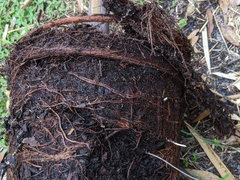
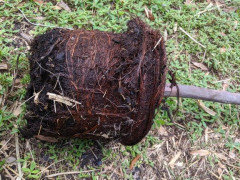
    OK I decided to dig up the tree and examine the roots.


    I carefully nudged my shovel around the tree about an inch outside of the original pot size. Then I pulled up the entire plant.


    I then soaked the plant in a five gallon bucket of water for 15 minutes, then examine the roots.


    i do see some new tiny roots coming out. They look fresh to me. Although the branches look dry and brittle.


    I put the whole thing back into the hole, added more soil...hopefully it will come back.


    Thoughts? May live on?


  • 5 years ago

    Did you scratch the bark?

    Miami Cuse thanked irma_stpete_10a
  • 5 years ago

    Give it a bit of time. If it is producing new roots it may come good. Little green nubs should appear where the trunk is still alive.But it won't happen fast. Just keep your fingers crossed, there's not much else you can do. Good luck.

    Miami Cuse thanked tropicbreezent
  • 5 years ago


    Miami Cuse thanked four (9B near 9A)
  • 5 years ago
    last modified: 5 years ago

    I always loosen the soil and spread the roots out before planting to the ground, part of the reasons I always dig a hole twice the diameter of the pot and at least six inches deeper in order to mix the existing soil with that in the pot.


    However with this plant it is impossible to do so. It was purchased in October 2020 and it was already very root bound in the pot. In fact it was so root bounded there is no loosening the outside roots at all as they wrapped themselves several times then went towards the center. I debated about cutting the entire bottom about an inch off but decided not to. There were more roots inside the pot then there were "soil". The nusery should have upsized the pot long ago. The only way I could have loosened the roots was if I make cuts into the pot shaped roots every 45 degrees or so but that would cut into some pencil sized roots that went around the pot and back into the middle.


    But like I said, the plant once planted into the ground was fine. I was observing it and watering it every other day while it was in it's pot for a few weeks, then once planted watered it every day for two weeks and there was no sign of distress, then the storm and flood hit us in November and after that it wilted within 2-3 days. I believe it's current situation is caused by the storm event and not by the planting into the ground.

  • 5 years ago

    "Did you scratch the bark?"


    No I did not. This tree naturally peel and shed barks on it's own even when healthy so I am not sure if that will tell me anything. In fact, right now I can probably pull off a few pieces of brown bark the size of my thumbs off it's skinny trunk.

  • 5 years ago
    last modified: 5 years ago

    Best not to cling to post hoc ergo propter hoc.

    And with regard to the roots, I understand the reluctance. Seeing the above photos, I know that I could direct outwards some large roots and many small ones; accepting breakoffs, cutting in some strategic places. It is not too late to do it., i.e. still is practical.

    Watering : slowly, deeply, soak ground beyond the hole. A small survival amount at roots.

  • 5 years ago
    last modified: 5 years ago

    If this still generally very poor looking specimen does manage to grow away later there is a danger it will be doing so only to eventually blow over because of having what will become much larger roots going in circles close to the base of the trunk. Roots that should have been growing out away from the center of the plant right from the start, giving it a firm anchorage.

    It would be so much better to give up on this example and replace it with a fresh healthy specimen growing in a smaller container that it has not been left stuck in long enough to have a high percentage of circling or otherwise misdirected roots.

  • 5 years ago

    Without root surgery the plant is doomed long term. Even the root flare is buried under circling roots.

    tj

  • 5 years ago

    four, you nailed it.


  • 5 years ago

    I would cut that big circling root completely off and remove it, then cut slits in four sides of the rootball to allow new roots to come out and grow in the proper direction.

    As for scratching the bark, it has not one thing to do with peeling bark. It's to see if there is green underneath the peeling bark. I don't understand why you resist doing that so much. If you don't want to break a nail, use a butter knife to scrape it.


  • 5 years ago

    There is a convention that gums don't respond well to root damage. Another reason to buy small and without significant deformities being present at time of purchase.

  • 5 years ago

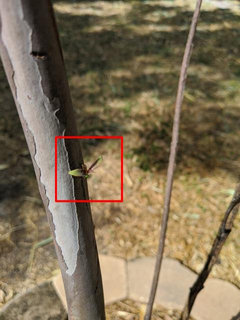
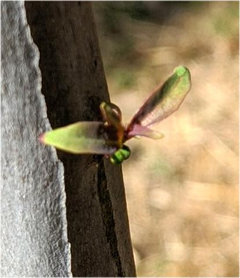
    After two months, a little sprout developed on the main trunk.


Sponsored
Mary Shipley Interiors
Average rating: 4.8 out of 5 stars34 Reviews
Columbus OH Premier Interior Designer 10x Best of Houzz