Software
Houzz Logo Print
laura2736

Landscape design for aging in place

I thought it might be nice to have a discussion about multigenerational families and aging in place.
Over the years I have learned aspects in landscape design that one might want to consider if you have aging parents or grandparents at home. These days we are all spending more time at home and most are wanting to maximize their outdoor space. Below are some design tips. I'd love to hear either problems or solutions you're encountered using landscapes for seniors. I'm also including a link to an infographic. https://bit.ly/3t0GEh2


Use bright colors. As people age their eyesight deteriorates, generally bright colors like red and orange are easier for them to see.


Use old fashioned plants. Older people enjoy seeing plants that are reminiscent of their past. Consider favorites such as rose, peonies, black-eyed susans, and hollyhocks.


Engage the senses. Engaging the senses allows a person to more fully enjoy the present experience and reduces outside stress and anxiety. Smell is a powerful sense that will invoke memories. Using the elements is another way to engage the senses. Wind often is an overlooked element in the landscape. Consider adding wind chimes, wind spinners, or ornamental grasses that rustle to bring awareness to the element of wind.


Encourage wildlife. Bird watching is a gratifying activity for seniors. Design the landscape to attract wildlife such as birds, butterflies, and the very entertaining squirrels.


Shade is often more important with seniors.


Smooth paths with no steps and a 2% or less slope is ideal.


Creating an edge or curb is helpful for those using wheelchairs or walkers.


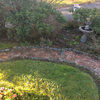
Curved paths are often more soothing and easier to navigate with wheelchairs and walkers.


Seating. Provide sturdy seating with backs and arms, wood is usually an ideal material. Seating placed at intervals of no more than 25' apart will provide important resting areas for seniors.


Passive garden. Don't underestimate the views from windows into the garden for those who are not able to go outside.

Comments (20)

  • 5 years ago

    You left out one very critical aspect - the skilled maintenance gardener and the budget to pay them for their skills.

  • 5 years ago

    raised beds..maybe even waist height? for easy access..I've seen built in seating ledges so an older or disabled person could garden..elevate pots for the same reason..

    Earth Essence Designs thanked nicholsworth Z6 Indianapolis
  • 5 years ago

    I'd plant taller, white perennial flowers that move with breezes near a patio or entry area, to dissuade birds from leaving their droppings there. I'd discourage anything that attract squirrels because they can chew on wiring and enter your home's attic via gable vents.

    Avoid mulch lines within 3' of the foundation to reduce potential for fungal issues on your home's windows/siding. Select plantings that do not appeal to deer/groundhogs, etc..

    Think about adding a moonlight garden of white leafed/flowered items and night time landscape lighting. The elevated plantings are a great idea if plants are wisely selected and watering systems are easily accessed. If bulbs are planted, avoid those favored by chipmunks and sqirrels, which can make holes in the yard (fall hazards). Plantings requiring regular watering should be easily reached via sprinklers or similar systems easily managed.

  • 5 years ago

    How do you imagine that mulch on the ground is going to result in rotting of siding and window frames (which I guess was supposed to be what "windows" meant)?

  • 5 years ago

    @Embothrium-I never said it would rot siding and window frames. I did mean the removal of artillery fungus from siding can be exceedingly difficult and unnecessarily time consuming. For your edification, this has been an issue in a number of locations as reported on any number of gardening websites, but obviously not in your little corner...

  • 5 years ago

    We should be careful not to generalize about seniors. Gardening can be a great hobby that keeps seniors active and interested. My garden club has many elderly members (well into their 80’s) who are some of the most progressive gardeners ... trying new plants and varieties. They are not focused on old fashioned plants. Quite the opposite, actually.

    Earth Essence Designs thanked B T
  • 5 years ago
    last modified: 5 years ago

    I never said it would rot siding and window frames. I did mean the removal of artillery fungus

    Which you of course never stated in your previous post. Yet you now feel entitled to follow up with

    For your edification, this has been an issue in a number of locations as reported on any number of gardening websites, but obviously not in your little corner...

    If you don't make it clear what you are talking about you should expect that some readers aren't going to know.

  • 5 years ago

    @Embothrium-of course, as in other posts on this site, people either ask the reasoning behind the statement or do their own research. I found your statement to be presumptive with a very negative tone, "how do you imagine that mulch on the ground is going to result in rotting siding..." rather than simply asking if it could pose a potential rot problem. I "imagined" no resulting rot of siding nor of window framing.

  • 5 years ago

    You can keep complaining about my response to your vaguely worded statement but the fact remains that the entire basis for any difficulty with the resulting discussion is that vagueness. As for "tone" the author of

    this has been an issue in a number of locations as reported on any number of gardening websites, but obviously not in your little corner...

    really should have no gripe about that.


  • 5 years ago
    last modified: 5 years ago

    @Embothrium-do you always critique comments that you don't find sufficiently clear to you? Mores the pity.

  • PRO
    5 years ago

    I think we've gotten off-topic. I would like to reiterate that there is value in different perspectives and each perspective has value. This discussion is about designing landscapes and gardens that provide the most value and benefit for an aging population. I would like to focus on people's experiences with aging loved ones, community members, etc. Have you seen or created fantastic solutions to make the landscape more accessible or enjoyable for seniors? Have you had challenges trying to use a landscape or garden with seniors?

  • 5 years ago

    I could probably write a dissertation on gardens for and with the elderly. I have lived next door to my now 93 year old mother and her two plus acres of wild cultivated gardens for the last 13 years. She calls me from Florida in the winter for consultations about her other 100 year old, 2 acre garden that has been in a state of neglect for the last 30 years. Sometimes I think there is the catalyst for a British gardening sitcom here. Bulbarella Stinze and Peasant Gardener Son

    Then add in most all of my clients are older than me and fading.

    What threw me off in the beginning was this idea of multigenerational families. That is just not the norm these days. You can not have a complete conversation about gardens and the elderly and leave out the question of who is going to do the work of maintaining these gardens. That question can be crucial to the implementation of all the lovely design ideas you have listed.

    It is not at all unusual to find an elderly person or couple living in a home you can tell once had a lovely garden. And I mean gardens, not just yards or landscapes.

  • PRO
    5 years ago

    @ Earth Essence Designs. A thoughtful post by you and apparently a bit more provocative than anticipated. Your points are cogent to 'aging in place' and I enjoyed your thought process.

    Earth Essence Designs thanked KD Landscape
  • PRO
    5 years ago

    I agree that maintenance is an important piece, especially in a commercial setting. I won't do a commercial project without getting a commitment to maintaining the project. In this discussion forum, it's not possible to cover all aspects. My focus was targeted specifically on design. Currently, there is a trend of more families moving in with each other to take care of each other and reduce expenses. This is also the scenario where more abled body people would be looking after older loved ones. who may be declining. This is the target audience I am interested in serving. I have a specific interest in therapeutic landscapes. Because this is my area of expertise it's actually difficult for me to find problems. If someone else were to share something that was difficult for them it's easier for me to be able to come up with a solution If someone else had a great idea I'd also love to hear it.

  • 5 years ago

    Great ideas. I've inherited my late grandparents' & then parents VERY run down home. It's like homage to the 1950s in here. The garden was an actual jungle, and don't get me started on the interior. I'm slowly refurbishing it, and taking care to choose items which will age with both the house and my family. (My son has profound disabilities). I have shared the link below to the before video so you can see how BAD it really is LOL. Before Video - ITS BAD


    The back garden is my biggest worry right now as it needs to be secure for my son, I also have to avoid toxic plants for both him and the dogs' sakes. It's a minefield for this non green - fingered Mum. (I'm in the UK).


    I'm thinking 6 foot high wooden fencing, with a raised, non toxic sensory bed for my son's benefit, but out of the dogs' way. I also need to replace the currently cracked concrete paths with something which is safe for him. He eats things he's not meant to, so exposed soil is out. (I was going to cover the beds with either stone or bark). All low budget suggestions appreciated.


    (PS I have decorated most rooms now, and am saving to replace the kitchen and bathroom, but that'll take a while. I have also cut back the jungle out back, but now the perimeter isn't secure, so my son can't use the outdoor space without constant supervision).

  • PRO
    5 years ago
    last modified: 5 years ago

    Best of luck with your project. Sensory gardens are great, especially for promoting well-being. Try select items that would be soothing. Wind chimes may soothe some and irritate others. Consider incorporating fragrant plants and maybe herbs if you are worried about things being eaten. You could also consider creating a platform (decking boards on 6"X6" posts) to raise an area off the ground if you are concerned about your son having too much exposure to the soil.

  • 5 years ago

    I have seen this post around for a few days and decided to add a bit based on experience. I am 73 and have my lawn mowed and edged but I take care of the plantings and beds. Usually I can weed and clean up the two large front beds on successive mornings each Spring. The backyard is trees, lawn with strategic ground covers and colorful pots on the patio. After a brutal freeze some things have had to be cleared out and replaced and I hired help for that.


    My advice is to simplify plantings and avoid anything that has to be pruned or hedged as that work is hard to manage as you get older. And not so many plantings! Several friends and family members had professional landscaping done on new houses and now five years later they are having to pay to take out plants! Things outgrow their space and need dividing or heavy pruning each year. And that can be hard to do.


    A sprinkler system in southern states is useful and can save a lot of effort. Seniors that like to garden and enjoy being outside can easily manage changing out annuals in front of dwarf evergreens, new potted plants each season on the porch. Those things are fun and enjoyable; hedging 50 feet of boxwood or worrying about a spreading patch of cannas is not.

  • PRO
    last year

    these tips are really solid. i’d also suggest adding non-slip surfaces for any patio areas and maybe some low-maintenance raised beds for easy gardening. has anyone tried sensory gardens with herbs and fragrant flowers? curious if seniors respond well to that.

  • last year

    Another 73 year-old here. We bought our home 30 years ago because of the trees and space which here in Northern Virginia seemed wonderful to us, being half and acre.I spent 15 years eliminating the bamboo and ivy that covered the back yard which has a hill and three different levels. I just loved it and had visions of the sanctuary I could create. Did I factor in the fact that I was a teacher who would have very little free time to make those ideas a reality? Nope. Teachers even have work that frequently carries over into weekends and if I didn't, I was too tired/lazy to get out there for any length of time.


    Anyway, about 8 or 10 years ago, I read Doug Talamy's books and have planted only natives since then, although I did not remove shrubs that were not native. I managed to get the side yard looking good with only native shrubs and some perennials. Then had to wait three years for a knee replacement and even the front yard went to pot (not literally-ha) because I was out of commission for those years plus one more. Now scheduled for my second knee to be replaced in 11 days. So, I would also add the thought that any unevenness in your lawn/gardens. I have lots of spots that could cause a fall because a plant dies or was removed and the ground sank some after refilling the hole.


    All this is to say that, get things in good shape while you can, use low maintenance plants (mostly trees and shrubs imo), and make sure you or someone you hire can maintain your garden. Avoid lovely paths made out of stepping stones that are natural stones (not smooth) which look lovely in a woodland setting, but may not be so terrific if you are not steady on your feet. I have more, but have gone on far too long.


    I think your ideas in your OP are very good, although I agree that many seniors look for new plants and I personally prefer to avoid some of the brighter colors-can't stand red, like soft oranges though. Prefer the sound of the birds over wind chimes, etc.