Software
Houzz Logo Print
turtlexings

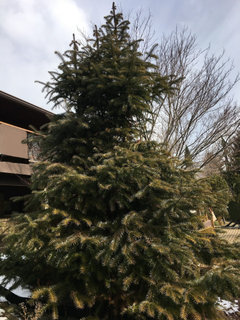
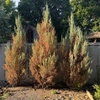
What types of tree(s) is this?

5 years ago
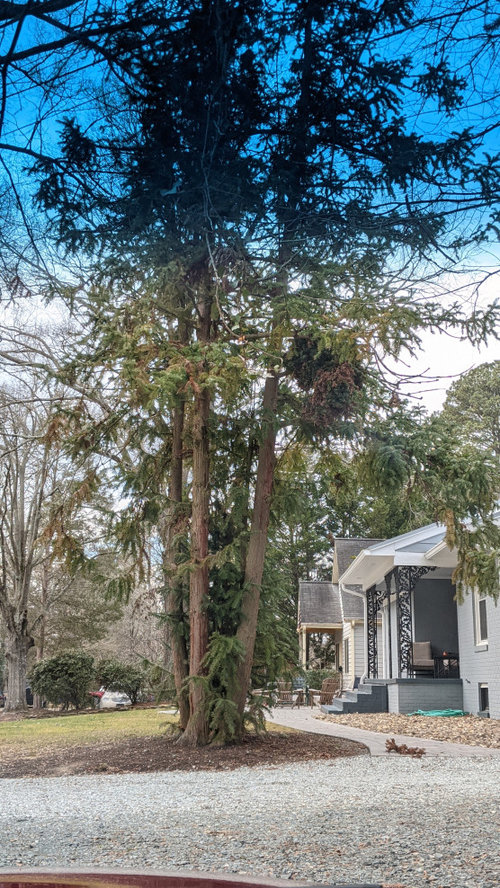
We're in zone 7B and I've never seen this coniferous tree species (or small cluster of trees?) anywhere except this house's yard.
I love the look of them and would be curious to know what the tree species is and how challenging it would be to grow in our zone. Does anyone have any ideas?

Comments (23)

  • 5 years ago

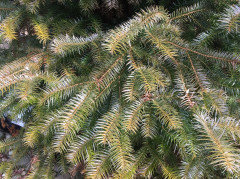
    Looks spruce like. A closeup of the needles and any cones laying on the ground will dial it in.

  • 5 years ago

    Cunninghamia

  • 5 years ago

    @Christopher C Nc - Unfortunately it'd be hard to get that close without intruding on the person's private yard.

    Interesting though, I hadn't considered a spruce. I thought it might be a type of cedar due to the soft, vertically fibrous, brownish-red bark that looks like you could weave a basket from it!

    @Embothrium - Interesting, maybe that's it. I'll read up more.

  • 5 years ago

    Sarah it is ok to knock on the door and ask to take a picture or even what it is. Most people would be fine with that. Embothrium is really good with the conifers and 7b is iffy for spruce.

  • 5 years ago

    I think location is far more important than zone :-) Zone 7b in the PNW is perfectly acceptable for most spruces but in the midAtlantic or southeast, maybe not so much.

    Even enlarged, the photo is not distinct enough to determine the foliage clearly, so a closer view would be helpful.

  • 5 years ago

    Yes a cool summer 7b is a whole other world than a hot and steamy summer 7b.

  • 5 years ago

    We're in the South East so hot and steamy summers with lots of precipitation. Winters are short but can get cold, with usually a few days of ice and snow. Soil is lots of clay.

  • 5 years ago
    last modified: 5 years ago

    It is indeed Cunninghamia lanceolata, the so-called China Fir, as Embothrium ID'd it. I used to grow it. I used to have the glauca variety. Can be a bit messy.

  • 5 years ago

    Looks pretty ratty.

  • 5 years ago

    Rattiness is a Cunninghamia trait. You can lop these off at the base and they will grow back with a vengeance. That's what I do periodically with mine. But this one is a little large for that treatment!

  • 5 years ago
    last modified: 5 years ago

    On the very best sites in the Southeast or Mid-Atlantic, they don't look as ratty.

  • 5 years ago

    I've never seen this coniferous tree species (or small cluster of trees?) anywhere except this house's yard...... and how challenging it would be to grow in our zone.


    ==>>


    i would guess that tree... conifer.. is 30 to 50 years old ...


    and if its growing in your neighborhood .... then i suspect there isnt much mystery if it will grow in your zone ...


    just forget about zone ... its one minute in winter at the lowest min temp ... you need to add big city name.. so we can hone in location ... its important ...


    all that said. .. was panted about 30 to 50 feet too close to the house.. with no concept of the monster it would grow into ...


    using the name provided above.. this is how i look for future potential : https://duckduckgo.com/?t=ffcm&q=Cunninghamia+lanceolata&iax=images&ia=images


    note that the species is a forest tree .. perhaps you could look for slower growing cultivars ... but since they dont grow in my MI ... i have no clue if there are any ...


    ken


  • 5 years ago

    oh.. and if you dont have the guts to knock on the door... just drop a postcard attached to a muffin asking permission....


    ken

  • 5 years ago

    Absolutely Cunninghamia. A very striking tree except during the ugly shedding periods when twelve inch long segments die on the tree and fall to the ground. You can see one on their walkway.

  • 5 years ago

    Davidrt, I've seen Cunninghamia at the VA State Arb, and tho they're pretty darn big, they look ratty there too w/alot of dead, persistant lower branches.

  • 5 years ago
    last modified: 5 years ago

    Yes I've seen them...I would say that isn't an quite ideal climate for them. That part of VA is somewhat dry in summer compared to much of the SE US, and the soil seems rocky and possibly not very rich. This page has some pics of ones in the coastal south on soils with high water tables and generous summer rainfall, usually.

    https://conifersociety.org/conifers/articles/featured-conifer-cunninghamia-lanceolata/

    (linked on that page) http://www.gafollowers.com/wp-content/uploads/2015/07/picture-045.jpg


    cf: http://www.virginiaplaces.org/climate/ The Shenandoah Valley is relatively dry, a "rain shadow" getting only 33" of rain each year as storms soak the mountains on either side. In contrast, the higher elevations in southwestern Virginia get over 60" of rain annually.


  • 5 years ago

    I vehemently despise pinterest and I don't know how to get back to the original post at instagram (not a fan either) but here is a better view of the one in South Carolina: https://in.pinterest.com/pin/393994667405549436/


  • 5 years ago
    last modified: 5 years ago

    Embo captures well - via the report he read from China - that these things will struggle to survive, and often look like it. I saw one somewhere between Scranton PA and Allentown, PA, a hard 6a location, a few years ago...that looked absolutely awful. But like a mangy old feral tomcat, it was surviving. I didn't have time to stop for a pic.

    So...back to Sarah's interest in the species if she ever shows up again...

    1) have a sunny site with good, deep rich but well drained soil

    2) not a dry microclimate (7b in "the south" could be way over in OK/TX, very prone to summer drought, or lower elevation parts of the NC or GA mountains with > 55 inches of rain a year!)

    3) make sure roots aren't knotted when planting

    4) anticipate a cutting grown cultivar could take years to form a leader (I am waiting on one myself)

    and EDIT - I forgot 5) keep it to one leader because generally speaking most trees look and perform better that way: https://www.houzz.com/discussions/4977109/we-agree-some-cutting-grown-trees-need-aggressive-waterspout-control

  • 5 years ago

    @davidrt28 (zone 7) Thanks for all the info! It does definitely sound like that is the species.

    It's a gorgeous tree. However, reading about its preferred growing conditions I'm not sure I could provide a location where it would be happy and thriving. Since I don't think it's fair to do that, I'll continue to admire it where I see it already planted.

  • 5 years ago

    "Since I don't think it's fair to do that,"

    It's a good thing plants don't have nervous systems because I would be in prison for plant torture!

    But seriously, we actually need more people like you who say, "I want the plants in my yard to look as healthy as they can" and plant accordingly!


  • 5 years ago
    last modified: 5 years ago

    Agree, davidrt, if pinterest gets you email address you'll be spammed forever. Had to block 'em on my email.

  • 4 years ago

    Here's a reasonably healthy looking Cunninghamia in a somewhat protected residential location north of Detroit. I believe it's been in the ground at least 20 years or so, which means it survived the polar vortex years. Growth appears to be relatively slow in this climate.