Software
Houzz Logo Print
messing4

Z line range hood - more than TWICE the decibels - why so loud?

5 years ago
last modified: 5 years ago
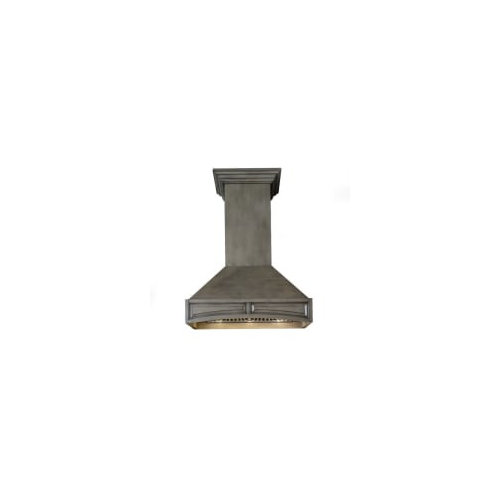
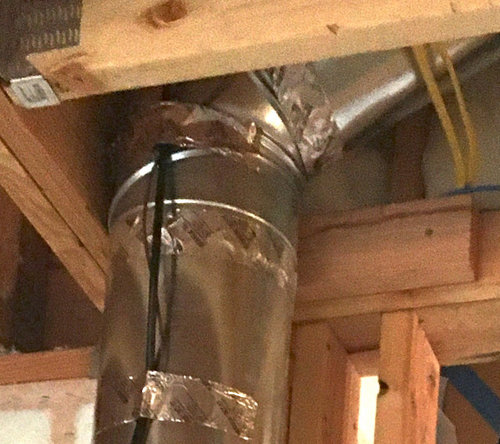
We bought a Z-line 36" Wide Wooden Wall Mount Range Hood with Remote Dual Motor [Model: 321GG-RD-36]. We specifically ordered the remote motor so it would be quiet. The four-speed blower was installed in the (insulated) attic, >20 feet away from the stove. There are no 90 degree turns, no sharp turns at all in the 8” ductwork.

Z-line advertises noise levels of 30; 41; 49; & 52 decibels at the four blower speeds (280-460-670-1200 CFM). "The fans in our hoods are designed to be extremely powerful yet silent at the same time. At the highest setting, the decibel level gets no higher than a relaxed conversation between two people"). However, even at the lowest speed it sounds like an aircraft engine during take-off….

Knowing my contractor would say it’s subjective, I downloaded 3 different decibel-measuring software apps for iphone; the three apps are all in agreement that the noise level at the lowest speed is 65-70 dB, standing in front of the stove. No one seems to be able to tell me why it is so loud. It sounds like rushing air noise or turbulence, rather than the motor.

Please, if anyone has a suggestion, we would appreciate it.

My wife has threatened never to cook again…….


Comments (8)

  • 5 years ago
    last modified: 5 years ago
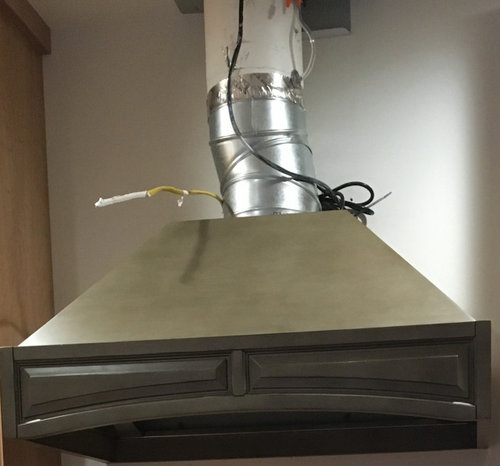
    Just for reference, I downloaded a decibel meter to check mine. My 48", 1200 cfm, 10" duct range hood without (!) a remote motor reads 56-58 dB when on its lowest setting, and standing about a foot from it. There must be something wrong with your install or the hood itself. I had to turn it on the 3rd setting (quite powerful, 3 of 5) to get to 70dB, and my hood is 1ft larger.

    r m thanked lucky998877
  • 5 years ago

    10-inch duct for 1200 nominal CFM (probably actually 800 -- 900 depending on MUA.) After growing the duct, put a Fantech silencer between the hood and blower. (Note 10-inch silencer is 14 inches in diameter.) You should be hearing baffle hiss once silenced and duct upgraded.

  • 5 years ago
    last modified: 5 years ago
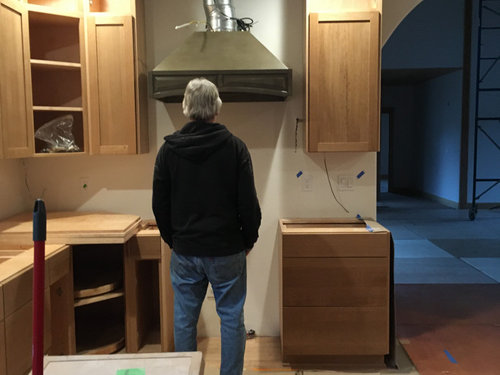
    A few thoughts...

    - Many noise apps are not very accurate. Most accurate we've found in our lab is Decibel X on an iPhone 8 or newer. Make sure you are using dB(a), not dB(c/z), are 1m from the hood, etc. More on how to accurately measure: https://www.houzz.com/discussions/6040827/range-hood-noise-project

    - Duct and blower should be mounted with strap and NOT ever come in contact with framing or other elements that transmit vibration noise and effectively turn your house in to a giant speaker.

    - Yes on duct possibly being too small. If so then this will result in increased noise.

    - Bends/Turns (w/ proper sized duct) are actually good for noise reduction even if not so good for overall performance.

    - Distance to blower is good for noise reduction.

    - A duct silencer between the hood and blower can be very helpful.

    - 1200 CFM is a lot for such a small hood. You likely have a lot of noise just trying to pull a lot of air through a small baffle.

    - Baffle design has a big impact on noise levels. Many consumer hoods do poorly on this. How loud is it w/ baffles removed?

    - Your hood lacks sufficient containment volume which requires you to operate at much higher CFM's (and thus greater noise) for the same (or worse) effectiveness at effluent removal.

    - Blower may be out of balance.

    Not necessarily noise related:

    - Your hood looks the same width as your range. The aperture/opening s/b at least 6" wider than your range and ideally at least 27" deep.

  • 5 years ago

    OP, @lucky998877 and others can you please do measurements and post in: https://www.houzz.com/discussions/6040827/range-hood-noise-project 

    This could be very beneficial to others making decisions on new range hoods.

    Thanks,

  • 3 years ago

    I am experiencing a similar issue. The fan/blower is virtually silent without the baffles installed. With the baffles installed, there is a high-pitched whining/whistling caused by the air moving over and through them. A customer review on Home Depot mentioned that Zline told him to turn the baffles over. I did that, and the whistling is gone, but the air noise is still quite loud. Unfortunately, I think it's just incredibly poor design on Zline's part.


    Does anyone know if I could buy replacement baffles from another vendor that would fit the Zline hood?

  • 3 years ago

    "Flame Gard" www.flamegardusa.com makes various baffles for commercial systems, but fit might be a matter of luck. You can take your baffles' dimensions and look at Flame Gard's product lines. I am sure that there are also other commercial sources.

    ModernAire makes custom hoods, so it is possible that they could make custom baffle assemblies.

    I think baffle hiss is inevitable with an affordable baffle array. One cannot force two reversals of direction with simple shapes and expect no turbulence.

  • 3 years ago
    last modified: 3 years ago

    The baffles (and entire system) on our Accurex are silent at ≈500 CFM. Nearlly silent up to about 800 CFM and I think at 1400 is still much quieter than consumer hoods on low.

    I think a big problem is that the consumer companies simply don't want to invest in engineering to produce a quality product because American consumers don't generally care about quality.

    Companies selling commercial hoods know that if they don't produce a product that is both quiet and high performing (and easily cleanable in a dishwasher) that they'll not be able to sell any because their customers care very much about these things.

    The same thing is prevelent across products. You cannot buy a well designed sauna in the U.S. and the saunas sold in the U.S. aren't marketed elsewhere because consumers elsewhere demand proper saunas and won't touch what is sold in the U.S. The average coffee (or any food) sold in the U.S. is quite poor compared to what is sold elsewhere. Same for the build quality, particularly energy efficiency, of homes built in the U.S. And on and on.