Software
Houzz Logo Print
diggerdee

Experience with Rhamnus Fine Line Improved?

I'm considering this for inclusion in a border that will be in mostly full sun with dry soil. It will be in with other shrubs. I have no experience at all with buckthorn so I'm looking to see what, if anything, has been the experience of others with this in particular.


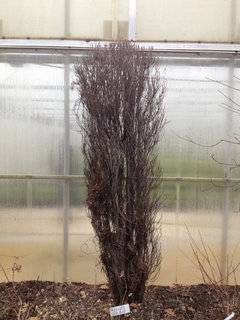
Does it really do well in dry soil? In full sun or part shade as advertised? Any photos of it in winter (can't find any photos of it without foliage)? How is it's form - is it as upright and tight as all the promotional photos show, or looser and floppier? How fast or slow does it grow? Just looking for some real-life experience.


Thanks,

:)

Dee

Comments (19)

  • 5 years ago

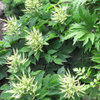
    One of my favorite shrubs! Very tight and upright growth even in winter.... I really like it for a not hugely growing vertical statement plant. Sorry, I don't have one of mine taken at that time of year but here's a pic I found online.

    Will take full sun well but not very drought tolerant until fully established. I wouldn't like to test it in very dry soils without supplemental watering.

  • 5 years ago

    but not very drought tolerant until fully established.


    ==>>> which means.. you are responsible for all PROPER water the first year.. and in drought the second.. . and after that.. it should be tolerant and free range ... ITS NOT A WATER LOVING PERENNIAL.. SO DONT THINK THIS MEANS PROPER WATERING OF A SHRUB HAS TO BE A BIG DEAL ... oops .. with some good mulch.. you just have to check and make sure the first year ...


    ken

  • 5 years ago

    I could cry, knowing how bad European buckthorn are destroying out wild areas, and people still.planting them. They should be illegal to sell.

    https://www.invasiveplantatlas.org/subject.html?sub=5649#:~:text=Ecological%20Threat,%2C%20shrubs%2C%20and%20tree%20seedlings.

  • 5 years ago

    Rhamnus frangula 'Ron Williams', aka Fine Line, and Fine Line Improved are considered to be sterile cultivars. Apparently they can produce seeds (I've never seen any) but the seeds themselves are sterile or mostly so, with a germination rate of less than 3%, so the chance of this shrub contributing to an invasive issue are exceedingly slim if they exist at all.

  • 5 years ago

    Go ahead and worry about it......I'm not.

    Invasiveness of any plant is highly dependent on location. If the buckthorn problem is an issue for you, don't plant it, but it is presumptuous to assume that a) a reportedly sterile plant will turn rogue, and b) that it will be invasive regardless of where in the country it is planted.

    And it is really tiresome to get beaten over the head constantly about the superiority of native plants. It always depends on the situation.

  • 5 years ago

    If I had to deal with all that guilt I wouldn't be a very happy camper either.😁❤

  • 5 years ago

    Jay, there is no reason for that comment. I am neither guilty about what I plant nor unhappy. I am just very aware of the attributes of the plants I select and whether or not they pose any threat in my area or at all.

    btw, silly emojis do nothing to alleviate offensive statements.

  • 5 years ago

    The improved form is too new for much, if any, consumer feedback. Patent claims are more dense, better branched and slightly narrower leaves.

  • 5 years ago

    Oy vey. Maybe I shouldn't have asked.


    I've looked very briefly at buckthorn before and discounted it almost immediately because of it's supposed invasiveness. I considered this one because it is supposedly non-invasive. I am a very conscientious gardener - I garden organically, I do plant many natives, I research whatever I plant ad nauseum, and always, always, always do research into invasive qualities. I was looking for personal experience with this plant exactly because I do not take everything I read at face value from the advertisers of a plant.


    Thank you all for your input. Much appreciated.


    Dee

  • 5 years ago
    last modified: 5 years ago

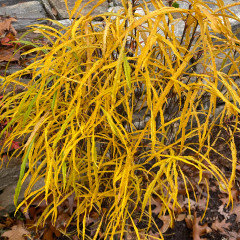
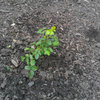
    I have this plant. It was growing in an semi-shaded area with zero supplemental water. Growth was ok. Erect and full. I moved it to a sunnier location that gets better watering from me. Doing better. Outstanding fall color. Here is a closeup of the fall color.


  • 5 years ago

    I'm going to have to take a second look at the 'Fine Line' next door. I was excited to see it planted years ago but it's always seemed kinda boring to me, and has never once caught my eye... and I usually love anything in an upright form! I wonder if it's just a neglected specimen or maybe the improved version is better.

  • 5 years ago

    Sterile forms of Burning Bush have been touted as non-invasive, but failed to meet those expectations. Having dealt with non-indigenous buckthorn on a five acre property, to me it’s just not worth the risk.


    I had Fine Line in a desert-like border and pulled it because it failed to prosper. The deer would consistently browse it, which surprised me. I can see how it would serve a designer’s taste, especially where the species has not shown invasive tendencies, but there must be better choices, or at least reasonable alternatives. Have you considered Amelanchier alnifolia ‘Obelisk’?

  • 5 years ago

    ctgardenguy thanks for posting that. That color is fabulous! Wow! But, I have decided not to buy this at this time. Despite the CT ag extension telling me this is not considered an invasive, pennlake's reference to it's newness made me reconsider. I hadn't realized this plant was quite so new, so at the very least I would want to wait some time to see how it fares in regard to invasiveness.

    Maackia, thank you for your suggestion, but this shrub border is directly under power lines, and on top of a slope to boot, so I need to keep things no higher than ten feet, and I'm looking for about a 5-6 foot height.

    I think I will try a couple of ilex Sky Box here. They will take a lot of supplemental watering, I'm afraid, but I don't want to spend much more time researching. This is right along the street and I'd like to get my privacy border going. It's going to take a few years as it is to get to full height, so I want to get these shrubs in the ground asap.

    Thank you everyone for your input. I do appreciate it.

    :)
    Dee

  • 5 years ago

    Fine Line Improved may be new to the marketplace, but according to the patent, it is just a refined/improved version of regular Fine Line (narrower foliage, tighter habit and less 'bare legs" at the base), which has been confirmed as sterile. btw, Fine Line Improved has been under production since 2017 and stock plants have shown NO signs of fruits or seeds during this period. There is NO reason to think Fine Line Improved will behave any differently from regular Fine Line.

  • 5 years ago
    last modified: 5 years ago

    The patent was a bit unclear referring to it as a seedling, but seemed to imply this might just be a branch sport found in production with a denser form so likely the low seed set carries over, but may not 100% know until it's out in the real world. My understanding is the old fine line is not 100% sterile but reduced enough that some states consider it not invasive. Some states do ban it and will likely ban this new form as well.

  • 5 years ago

    "My understanding is the old fine line is not 100% sterile but reduced enough that some states consider it not invasive. Some states do ban it and will likely ban this new form as well."

    I find no evidence of this at all. I can find nowhere in the US that lists Rhamnus frangula 'Ron Williams' (aka Fine Line) invasive and therefore nowhere where that specific cultivar is banned from sale. Some states DO consider the straight species Rhamnus frangula invasive (and it certainly can be) and may arbitrarily lump Ron Williams/Fine Line under that heading - Illinois is one - but after considerable research, I can find nothing to support any invasive characteristics associated with that cultivar.

    btw, Rhamnus frangula (the species) has a seed viability rate of nearly 85%.....Fine Line has a viability rate of only 3% and generates far fewer seeds than the species overall.


    It is perfectly acceptable to choose not to plant if this is a concern. But it is equally acceptable to choose to plant if this is not a concern. Check locally. Since even the straight species Rhamnus frangula is not considered invasive across a large portion of the country, this leaves thing pretty wide open.

  • 5 years ago

    I'm thinking that this plant performs differently in different climates. I had a group of five for about five years and finally took them out. They were scraggly in summer and unattractive in winter. However, others clearly have had better experiences than I had. I will note though, that in the five years that I had them I did not see one seedling. Oh that I could say the same for the Rhamnus alaternus....


    They are all Frangula now. Does that make Rhamnus frangula now Frangula frangula?

  • 5 years ago
    last modified: 5 years ago

    From the PW website.

    PLEASE NOTE: Fine Line® - Buckthorn - Rhamnus frangula is restricted and cannot be shipped to the state(s) of IA, IL, IN, MA, MN, NH, NY, OH, or VT.