Software
Houzz Logo Print
originalpinkmountain

"Weeds" for supper

5 years ago
last modified: 5 years ago

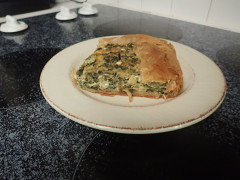
I pulled all the lamb's quarters out of half the garden tonight and made them into a phyllo tart with onion, garlic chives, garlic and fresh thyme. Added feta, sharp cheddar and "six-cheese" Italian mix plus 2 eggs and a dollop of half&half. Used it as filling for a square open tart with a phyllo crust. To me it was delish, the lamb's quarters were milder than the traditional spinach. Hubs kept saying "We're having weeds for dinner" and "It's OK for weeds." He couldn't get over that . . . I don't consider them weeds. Anyone grow them for their leaves, or some other interesting cooked green? We like kale, chard, collards and turnip greens and bok choy. Mustard greens are a hard no for us. Hubs said tonight he only eats kale because it is good for him. It's my favorite green! Especially the Lacinato kale.


Edited to add that I also like broccoli rabe but have never managed to grow it successfully. Bugs always get at it.

Comments (16)

  • 5 years ago

    People pay a lot of money for frisee. Ugh!!


    There are lots of weeds I'd rather eat.


    Your pie sounds delicious. All a weed is is a plant growing where nature put it.


  • 5 years ago

    Frisee is one of my favorite lettuces. I should try and grow some. I've also eaten escarole and arugula, neither of which was a fave. Not bad, just not ones I'd crave. I'm not much of a chicory gal either . . .

  • 5 years ago

    I had violet greens for dinner yesterday.


    Lamps quarters have not come up yet.


    May cook some plantain tomorrow.


    Purslane, my favorite, will be another month.


    dcarch

  • 5 years ago

    The only thing I can think of is that it's one of those supertaster things where if you don't have the genes for it, you don't taste how bitter it is. That fits with the locinato kale love. :) Between the rough texture and extreme bitterness, I tend to think of frisee as a vegetable form of carpet layment. :D If you lived closer I could swap you my frisee for your arugula (my fave!). :D

  • 5 years ago

    When we lived in the rural area of Fresno County (read: surrounded by cattle ranches,) we had a plant that grew every spring by the thousands called Miner's Lettuce (Claytonia perfoliata). It has a very fleshy leaf that works like spinach... either fresh or cooked. It is one of those Spring plants that is like tonic: Miner's lettuce is an excellent source of vitamin C and vitamin A and also contains iron, beta-carotene, and protein.

    When everyone came for Easter I'd send the little ones out to gather the Miner's Lettuce by the basketful and then we'd have it in a salad or cooked as a side dish. DH and I would eat lots of it for the brief time it was available.

    I never see it at any Farmers' Markets so it must be a grow-your-own wild thing.

    Kate

  • 5 years ago

    All this talk about eating weeds....not sure just how you are sure what to eat and what not to eat. Remembering a few years back walking from the place where we had lunch on one of the islands near Venice back to the boat dock along a path, there was something growing that looked like spinach. we wondered what it was, so I picked a leaf and chewed it....and it was the bitterest thing I had ever tasted.

    I always wonder jus how you know....

  • 5 years ago

    Tart sounds lovely. Bet it was pretty too!

  • 5 years ago

    One knows what one can eat from experience and reading. I can id pretty much any plant growing where I live and I know which ones I can safely eat. But I would never taste a plant I can’t name or at least recognise. I’ve occasionally stuck my oar in with people out foraging when I’ve seen or overheard them misidentify plants. I’m probably an interfering old bat but I’m still pleased I prevented a woman from picking berries which she told me she was going to make into ‘a winter tonic’ for her child. She thought she was gathering elderberries. In fact she was picking privet.

  • 5 years ago
    last modified: 5 years ago

    Lamb's quarters is one of the easiest wild greens to identify. It has a whitish waxy cast to the underside of the leaves and stems and that causes it to conserve water so it is resistant to drought conditions. When you wash it, the water doesn't soak in. The waxy coating has no flavor, it's a natural compound and a lot of is washes off when you rinse the green. Also, I'm a horticulturalist who has taught plant identification for decades. But there are a couple of wild greens that are super easy to identify--purslane, lamb's quarters and sorrel. Sorrel is the basis for chav, a Russian spring greens soup. Sorrel tastes distinctly lemony. Lamb's quarters are very mild, much milder than most domestic greens like spinach.

    I figure these weeds are free food, so if I like them, might as well take advantage of something, having it become a resource rather than a problem. After all these years of pulling weeds, I think its about time for a positive spin to it.

    But yes, you can't fool around and be blase about being able to identify what you are harvesting, because, for example, very superficially, nettles look like lamb's quarters just a tad, and you would not be very happy to harvest those, (they don't have the waxy coating and are a slightly different shade of green and also the leaves are slightly different too). Nettles are also edible cooked, which degrades the stinging hairs, but I have never bothered. Someone gave me some once and they tasted like grass to me. Supposedly very healthy but I eat other healthy things that I like the taste of so I have never bothered. But they are a very old spring tonic green. People eat pokeweed shoots, and the mature leaves, stems and berries are very toxic. Another wild green I have never bothered with.

    Lamb's quarters are ubiquitous in my garden, super easy to identify and super easy to harvest and cook. Armchair experts abound in this world, and often get themselves into big trouble on many fronts. As a biology teacher, we have a riff on the saying, "the devil is in the details." We say, "god is in the details." It's wise to know how to find the details, understand them, and heed them.

  • 5 years ago

    As a layperson, I might start with "Peterson's Field Guide to Wild Edible Plants."

    From a culinary perspective, books by the late great Euell Gibbons are a very fun read. He explains not only what is edible, but what is tasty enough to be worth the trouble of foraging. And also how to take advantage of the wild food's best characteristics.

  • 5 years ago

    “what is tasty enough to be worth the trouble of foraging.”


    For me that is key. Elderberries and elderflowers are easy and quick to pick and don’t taste like anything else. But would I bother to crawl around gathering chickweed removing the bugs and random weeds mixed in and then washing in numerous changes of water to get the mud off? Probably not, unless I was starving. I’d rather pick a nice big lettuce from the veg patch.

  • 5 years ago

    We had curled dock leaves as a side last night. It only takes a couple of minutes to steam it. Let it go too long and it is mush. And I love early nettles and nettle teas. Interesting that others don't care for it. I see some eat plantain. I know I have some lush plants waiting to be weeded out. Maybe I'll eat them rather than feed the compost pile. I think of plantain as a topical medicine. A mashed up leaf will draw out a stubborn sliver when bandaged on overnight.

    ID is an interesting topic. For those who grew up with lots of interest and exposure to plants most any local plant is recognizable even if one does not know its name. I will stop in my tracks at times when hiking because something looks "off". Usually I will find a new or rare to me plant or animal nearby. But those without a long time interest in plants and animals may not notice them at all and won't surely will not notice the details.

    Many wild edible guides list look-a-likes to avoid. I sometimes wonder how anyone could think they were the same. But then I get questions from friends or relatives and realize that for many what seems obvious to me is not to them. And other things are not obvious to me...like those of you who can taste a dish and know immediately what herbs or spices are in it...or look at a room and know what one or two changes will improve it greatly. In those cases, I often have no clue.

  • 5 years ago
    last modified: 5 years ago

    I made some plantain salve with coconut oil and beesewax. Can't say it's any better than just the coconut oil and beesewax alone . . . Ironically I've tried dock and plantain, just not my cup of tea. And also ironically, since I'm a horticulturalist and grow and teach about herbs, most herbal treatments haven't done much for me. But I'm always game to try . . .

    I feel the same way about identification. People often make unsafe leaps of generalization that I would have never thought of . . .

    Last year I tried pasta with ham, cheese and "hairy bittercress" Cardamine hirsuta which I have a ton of in my yard. I did not like it. It lived up to its "bitter" moniker, IMHO. It also had an unpleasant stringy texture, kind of like old celery even though I removed the stems and cooked it. I rarely see the culinary watercress in the stores, but as I recall I don't much care for that either . . .

    Edited to add that also, plants have many characteristics that will vary depending on environmental conditions, and wild plants are also quite genetically variable. And some even hybridize naturally. There are a lot of attributes you need to use when making a secure identification, at least at first if you are not very familiar with the plants and their habits. In my above example, the flowers of nettles and lamb's quarters are totally different, so if you have a chance to observe them, the flowers are one of the most reliable means of making a definitive identification. I knew the lamb's quarters because I was pulling them out of the garden all last summer, so I knew the parents well of the ones I pulled out yesterday . . .

  • 5 years ago

    I love watercress, which we used to see in abundance by the bunch. Now it's in a plastic shell with the roots on, but that just means it's old if it's at tge store. I do get it from the farm on occasion, whence it is fresh. It's lovely in a green salad. I can totally see that if you don't care for arugula, you might not enjoy watercress. I find this comparison fascinating, that we perceive greens so differently beyond just the bitterness or not.

  • 5 years ago

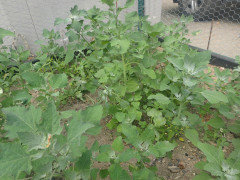
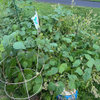
    For those wondering what lamb's quarters looks like, below is a photo from what's left in my garden. You can see the characteristic grey blush where the leaves meet the stems. Lamb's quarters is in the Amaranth plant family, along with buckwheat and quinoa. Below that a picture of the phyllo tart. So yum.