Software
Houzz Logo Print
jacqueline9ca

OT - another huge shrub I am trying to identify

5 years ago
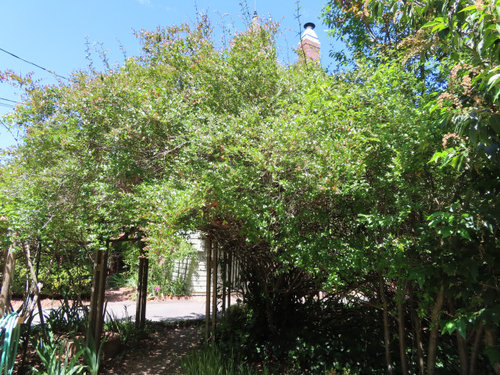
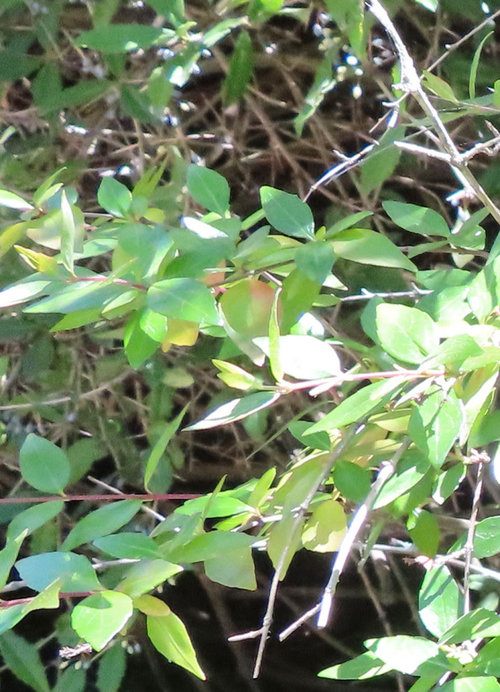
I get WAY faster and more helpful responses on here when I need to ID anything, so I am skipping the "perennial" forum completely this time, and just posting on here. Part of our fire danger removal of some very old old HUGE shrubs will include removing this one. It looks familiar to me, probably used as a hedge? I has tiny blossoms, but they are all finished for this year. Like the other one I posted about, and the "barbarous barberry", this one was probably planted 70-90 years ago in our garden. First pic is about half of it - you can see the massive trunks where it originates from below it. Second pic is a close up of the leaves (which are small - maybe an inch or so), and tiny bluish grey berries it makes after the flowers. Any thoughts anyone has on what it might be would, as usual, be appreciated.

Jackie


Comments (16)

  • 5 years ago

    Is it evergreen or deciduous, Jackie? Your shrub has opposite leaves, which are, along with being a bonus to botanists because they are less common than alternate leaves and can narrow things down considerably, found in the dogwood, olive, and honeysuckle families, to name some off the top of my head. My first thought was Cornus sericea, which is a common stream-side native along the CA coast, but the leaves don't look right for that, though racemes of little whitish-bluish berries are.

  • 5 years ago
    last modified: 5 years ago

    Jackie, I'm betting it's one of the shrubby/tree-like honeysuckles, Lonicera sp. Without seeing the blooms I can't make a better ID.

    John


    EDIT: ummm, scratch that. As far as I know all lonicera species' leaves have smooth edges. I think I see small bumps or teeth on the edges?

  • 5 years ago

    "Blue berries"? Are the flowers like a "puff"? Do the leaves smell good when crushed, like "Gee, Your Hair Smells Terrific" or "Clairol Herbal Essences Shampoo"? Try Myrtus Communis. https://en.wikipedia.org/wiki/Myrtus_communis

  • 5 years ago

    I’m thinking along John’s lines. Lonicera maackii? Carol

  • 5 years ago

    But for the color of the berries, Amur honeysuckle, the current scourge of the east. Those leaves with very small white blooms at the base of each one, and berries that the birds spread wantonly. Amur's berries are a pretty shade of red until they dry up.


    I know your is a plant of the past; one time I got called to a town across the Holston River from our farm to identify their family rose. Their house was a victorian, built 1890s and their great-s had bought the mail order rose to plant in front of their house. They even had a picture of this small rose in front of the house the year after it was planted. Boy, was I excited. We got there, and the family rose was Rosa multiflora, from back in the days before it was everywhere.

  • 5 years ago
    last modified: 5 years ago

    Oh, Ann. That story is so spot on! Thank you for pointing out the blue berries. I missed that piece of the puzzle.

    Jackie, other Lonicera family members have similar non alternate leaf patterns (as Catspa noticed) and berries. One is Symphoricarpos, but I’ve never seen one with blue-grey berries. I’ve also never seen one over 6’, but of course we’re talking about your garden.... I’m hanging out on the couch and waiting to feel the effects of vaccine #2, so it’s a perfect time to Google around and research.

    Carol

  • 5 years ago

    Looks like flower buds or maybe fruits are visible in your second picture, show a good close view of those to make your shrub more recognizable.

  • 5 years ago

    So, so sorry - I goofed. I went out to look at it more closely, and the tiny grey blue berries are actually on the dratted barberry, which snuck over into this other shrub.


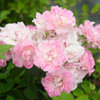
    There are pink flower buds all over my mystery shrub, and I did (I hope) take a pic of the ONE bloom cluster I can see which is open, way up at the top. In the first pic below, you can see the pinkish buds against the sky. The second pic shows the only flowers I was able to find just now. The third and last pic is a close up of one mature leaf. It does, indeed, have sort of teeth - not smooth. I did look up pics of lonicera maackii, and the leaves did not match to me.


    Any further thoughts?


    Jackie


  • 5 years ago

    Houzz ate my pic of the leaf, for some reason - here it is:


  • 5 years ago

    That looks like an abelia to me.

  • 5 years ago

    Ha! I did find a cluster of last year's dried up blooms - first pic below. On the other side of the same stem (second pic) are new flower buds just starting to open.


    I looked at pics of the myrtus communis pictures, and some of them look sort of like my plant - more than the honeysuckles do, anyway. Remember mine was planted in the 1920s or 30s, so perhaps it is not as fancy as currently available specimens.


    Mine is everygreen, and I squished a leaf, and it just smelled like a squished leaf.


    Sorry if I seem to be obsessed with this - I think I am - must be why I like collecting roses!


    Jackie


  • 5 years ago

    Yes, almost positive that it's abelia x. grandiflora.

  • 5 years ago

    Hah! Abelia had crossed my mind (little shiny leaves), but the berries were a puzzler. Your second set of pictures very much look like Abelia, Jackie.

  • 5 years ago

    Oh, yes! That looks like Abelia to me, too. Abelia Edward Goucher has pink flowers and was introduced early 1900s, I think. Abelia grandiflora has blushed white buds opening to white, sometimes with a bit of red-pink. Yours looks like Abelia grandiflora. I believe Europeans snagged it from China in the 1800s, so both EG and AG would probably have been collectors plants back when your garden was established. Abelia is in the honeysuckle family which is why your plant looks so honeysuckley. If it’s another variety, maybe another member can speak to that. I am only familiar with EG, AG and colorful newbie Sunrise. Carol

  • 5 years ago
    last modified: 5 years ago

    I used to have Edward Goucher, too! And Kaleidoscope. I think the variegated abelias are really cool, but they ended up getting too big for me. Edward was supposed to be a well mannered shrub, but he ended up fighting with my manzanita--so I took him out. I also have a kolkwitzia that looks very similar, but it's distinctive because of it's shaggy bark. I think the taxonomists have merged a bunch of these.

    jacqueline9CA thanked Formerly RBEHS Z10A/S17
  • 5 years ago

    YES! Thank you, thank you. I looked up abelia grandiflora, and my plant looks just like the non-fancy versions of that. Exactly.


    My plan is to have it completely taken out and dug up, and replace it on that side of the arbor/tunnel (which is the entrance to our side garden) with one of the roses I have to take off our house. Not the 3 story ones, but perhaps Anna Olivier, which is a more moderate size. The other side of the arbor/tunnel is already a large plant of Rosa de Lizy, which will be happier to not have the abelia grandiflora on top of it (I hope).


    This is the BEST plant forum on HOUZZ, I am certain!


    Jackie