Software
Houzz Logo Print
heruga

Plagued with heavy clay.. which perennials will likely not survive?

5 years ago

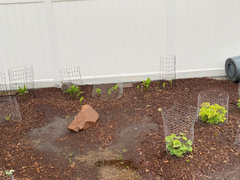
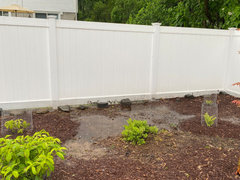
My soil, particularly where I have my woodland garden has very heavy clay. Like when it rains hard it forms puddles on bare dirt surfaces, although it does drain within hours after rain ends. When I stuck my finger in the soil the next morning, I felt like I was touching moist sponge. I already planted a lot of perennials not knowing how clayey my soil was. I am thinking of digging out some of the least clay tolerant and transplanting it to a better section of my yard. I did the research on every individual plant for its clay tolerances but I'd like to know individual experience as internet information isn't always reliable. And some plants I have are not so known that they don't even have any info regarding it.


Hakonechloa macra

Dryopteris crassirhizoma

Zingiber mioga

Pachysandra terminalis

Salvia glabrescens

Jeffersonia dubia

Liriope muscari

Polygonatum odoratum

Saxifraga stolonifera

Athyrium nipponicum

Diphylleia grayi

Dicentra spectabilis

Thalictrum rochebrunianum

Epimedium grandiflorum

Kirengeshoma palmata

Leucosceptrum japonicum

Aconitum sachalinense

Asarum takaoi

Pinellia tripartita

Lychnis miqueliana

Polemonium yezoense

Vaccnium vitis idaea

Comments (17)

  • 5 years ago

    Just how clayey is this soil? I have clay on my allotment. I can’t stick my finger into at all. It would try to rip my nail off. And it certainly doesn’t feel like sponge. More like greasy dough. Have you done the sausage rolling test?

    You’re predicting problems with no concrete evidence yet that there are any. If there is no information available on the plants you’ll have to be the person who finds it out. Leave your plants in peace and watch how they get on. Move them if it turns out they’re not happy but cross those bridges when you come to them.

  • 5 years ago

    I seem to recall from another discussion that there’s a family member who objects to leaves.

  • 5 years ago

    It doesn't sound like clay to me either. I've had clay. It doesn't drain within hours, and you can't stick a finger into it. It's what you make pottery and bricks out of, and isn't very common.

    This sounds much more like a clay-loam, that is a very good soil for plants. If the soil dries out immediately, then the plants have to be watered all the time. So the soil should hold water after a heavy rain for a few days.

  • 5 years ago

    It seems like, yet again, you're inventing "problems" for yourself that don't exist yet. Let the plants grow and see how they do before panicking.

  • 5 years ago

    You are fine....mulch with leaves and composed manure and stand back The only possible problem I see may be the fern.

  • 5 years ago
    last modified: 5 years ago

    Floral, when I meant sponge its when I step on bare, mulchless soil the surface squeezes out some water. Not a lot but its like squeezing on wet sponge with your hands. I guess not spongy when I stick my finger in it. It's not muddy either, the surface is nice and solid but water will seep out. When I stick my finger in my soil(below mulch) after a hard rain I feel more water than soil on my fingers. Also when its dry its becomes very compacted and hard to dig. We live in a low spot too so we definitely get more water. I did the sausage rolling test and they certainly don't break apart. I also question because some of my woodland salvias have an off color to their foliage that looks similar to chlorosis, which might indicate too much water.

    I will try to take a pic of the soil, not sure if you can really tell by looking. But on the other side of my yard is all pure black soil that is mush. Nothing crumbles apart. I think thats definitely clay.

  • 5 years ago

    This is today in the rain(rained past 2 days as well) and its flooding badly on mulchless soil. When I took a walk in the mulch so much water just squeezed out from the bottom I thought i was walking on a swamp! Do you guys get this in your yard too?


  • 5 years ago

    In our ’wet corner’ area the paths (which also serve as drainage channels) can be difficult to walk on in spring after snow-melt if the winter was particularly snowy. Two or three years ago we sunk up to our ankles in mud! But it dried out in a week or so. And it gets very dry by mid summer. The plants do well there though - they are all ones that like shade and moisture.

  • 5 years ago
    last modified: 5 years ago

    Clay soil isn't a death sentence- it is actually very nutritious. Just learn how to work with it and top dress with compost on a regular basis and over time your soil will improve. I have some clay soil and can grow anything anyone else can grow.

    Grade your low spots. Redirect your downspouts. Install french drains or dry wells.

    Plant high. Learn your trouble spots and plant accordingly. If something does well plant more of it. If something struggles move it. You just have to work with what you've got.


    Mulch those beds. If I had bare soil showing anywhere it would probably show puddles here and there after a heavy rain just like yours. As long as it drains away in 'hours' instead of days you'll be fine.

  • 5 years ago

    My soil is heavy clay. It stays soft & squishy from November to March. There is never standing water because the lot is graded with swales to direct excess rainfall to the street. Your lot may be the low point in your neighborhood.

  • 5 years ago

    The question is never 'does water pool here'. The question is 'how long does it stay there'. If you get enough rain, fast enough, any soil will get some pooling unless the grading prohibits it. If the standing water is gone by now, it isn't a problem.


  • 5 years ago

    Well I don’t have some areas mulched yet because I’ll be planting more perennials in those spots in the fall. But maybe just mulch it for now anyway and just rake it to the side then?

    And yea, I might’ve mentioned previously but my lot is in the lowest spot of my neighborhood so maybe it just takes that much longer to drain no matter what soil. I have a big swale with a catch basin that should help but no where near my woodland garden. It’s weird because we have 2 giant silver maples and other big trees nearby so you would think they absorb all the water quick but ground always seems to be wet.

    The water was all gone this morning so must’ve drained overnight. Guess not all hope is lost.. maybe I’ll elevate that area with topsoil more.


  • 5 years ago
    last modified: 5 years ago

    I share your woes of being located in the low spot in neighborhood and having clay soil. It is red and heavy and sticky. Now then, I have Rose's, hydrangeas, hostas, hardy ferns, peonies, azaleas, some others that I'm sure I am forgetting. Patience is key. Add some organic materials to the planting hole, backfill with a mix of native soil, topsoil, and some compost. Then I mulch, water as needed and go my merry way. I really enjoy my plants but I wont stress over what doesn't work. Thank goodness they thrive without me

  • 5 years ago
    last modified: 5 years ago

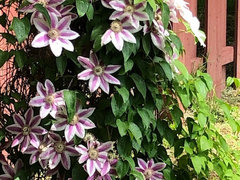
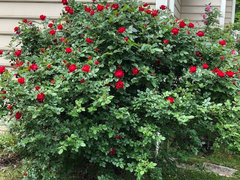
    A couple of clay survivors from early spring. The rose is 6 ft tall and is now covered on blooms


  • 5 years ago
    last modified: 5 years ago

    You've gotten some GREAT comments and advice. Clay soils, sensu stricto, are NOT "bad" to garden in.

    Apologies if I missed liking anyone whose comment was actually worthy of it...I had to skim.

    1) avail yourself of the USDA soil maps and read about soil structure (which factors in several layers down) in the area of your garden

    2) as an experiment I would take the worst of the worst area and try to incorporate a mix of calcitic (NOT dolomitic) limestone and gypsum. Although you can just broadcast it; in a place w/o a lawn to 'hold' the granules I would stick spade in ground, pour a 1/2 cup or so in, release spade, repeat ad nauseum. It doesn't happen overnight but this can 'release' the soil of cations that cause the clay to aggregate into very fine particles, like H+, Mg+, and Na+, and replace with Ca+, which causes the clay to form larger, looser clumps. No kidding story: a couple springs ago I allowed my neighbor to drain his in-ground pool into a couple of my drainage swales. Afterwards, they held water better than they ever had before. It wasn't just the volume of water: they had surely seen more gallons of H20 during Hurricane Irene. Why? The pool water would have been full of Na+ ions from pool water chem additives and partly reversed what I describe above, as it perc'ed through the bottom of the swales. Not enough sodium to damage any plant life of course, especially since there's plenty of rain to dilute it around here. With salt water, it's the combination of Na+ and Cl- that is especially damaging to plants. I believe this is actually sometimes done in the making of dams and pond liners. Soda ash (sodium carbonate) is mixed with the bentonite to 'activate' its stickiness and make it retain water better.

  • 5 years ago

    btw the difference you will observe is that, if some pooling does occur after heavy rains, it will drain faster. This will potentially save the crowns of certain plants that might otherwise be prone to rot.