Software
Houzz Logo Print
westes

Pulling Leaves from Thrips Infected Photinia

5 years ago
last modified: 5 years ago

I have a Photinia in zone 9b with a thrips infection. It also has some kind of fungal infection, which may be secondary to the thrips because the plant is in a weakened state. If I remove the leaves infected by thrips, will new leaves pop into place on the stem at the point of removal? Or am I better off trimming back the stem, and any infected leaves attached to that, as a way of promoting both new stem and leaf growth? Is there any method for removing the leaves that would help to signal the plant to grow more leaves in that location? I am concerned that the thrips are affecting groups of leaves that are close together. I am going to create some bald spots on the hedge by removing so many clustered leaves, so I want to do the leaf removal in whatever way will promote more leaf growth.

I am tackling this infection by the following strategy:

* I am using neem oil to slow down the thrips

* I am physically removing leaves that show evidence of thrips, to limit the rate of spread to new leaves

* My arborist wants to treat the plants with phosphorous in the soil rather than general-purpose fertilizer. He does not want nitrogen to encourage new growth, Rather, he wants the phosphorous to increase ATP production in the plant to maximize its energy to fight the infection. He wants to increase vigor in what is already there rather than put energy into growth.

* My arborist wants to use an in-ground insecticide named Imidacloprid, which is taken up into the leaves and will kill thrips. I realize there is a risk to pollinators so I am timing the application to take place after the flowers on the plant are gone. Can someone recommend a brand of Imidacloprid that is convenient for an in-ground application?

Are there other things I should be doing to help the plant maximize its chances to fight the infection?

Comments (10)

  • 5 years ago

    Can you provide photos?

    Thrips rarely congregate in numbers sufficient to damage a shrub of the size of a photinia. However, photinia is often very heavily damaged by Entomosporium leaf spot, to the point where it is no longer advised to be planted in many locations and is no longer offered for sale. It is more likely the leaf spot has weakened the shrub to the point where the insects find it vulnerable......rather than the other way around.

    westes Zone 9b California SF Bay thanked gardengal48 (PNW Z8/9)
  • 5 years ago

    @gardengal48 (PNW Z8/9) Historically going back about four years, the thrips appeared first. In the last 18 months, the fungal infection has emerged as almost as serious as the thrips.

    I will get you more photos tomorrow, but the photo below is what sections of the hedge looked like three years ago. Notice extensive leaf damage from thrips and under each leaf you would find the telltale black spots. But what is important to also note in that photo is there are no black spots from a fungal infection. In the recent photos, the black spots appear on many leaves.


  • 5 years ago

    looks like lacebug, show us the underside of the leaf.

    westes Zone 9b California SF Bay thanked sam_md
  • 5 years ago

    @sam_md I have had many people tell me this is thrips. It's black dots all over the backs of the leaves. On most leaves it is more dense than this photo.


  • 5 years ago

    Have you or these people actually seen a thrips on the plant or are they just going by damage?


    None of these critters are microscopic or particularly stealthy so it should be possible to see them if they are present.


    http://ipm.ucanr.edu/PMG/PESTNOTES/pn7428.html


    westes Zone 9b California SF Bay thanked Fori
  • 5 years ago

    @Fori This is the most mysterious part of the entire situation: we never find any bugs. I just sat there wearing a jeweler's visor and pulled off 20 leaves from a devastated section and carefully inspected for anything alive under the leaves. I find one spider mite and no thrips, no lacebugs, nothing.... The only consistent thing is hundreds of black dot feces under each leaf.

    Is there a pest that would only come out at night or at certain times of day, and then maybe hide out in the soil during the mid-day heat?

    I have definitely never seen a lace bug in this garden, on any plant. The reference you give shows a very distinct body shape that would be hard to miss.

  • 5 years ago

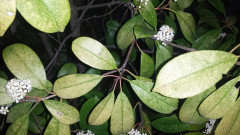
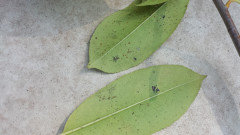
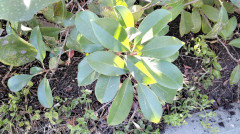
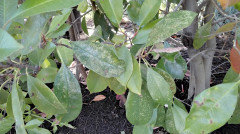
    @gardengal48 (PNW Z8/9) Here are some photos as promised.

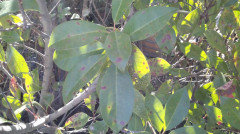
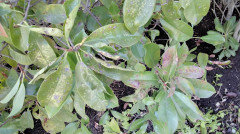
    The first photo shows how new leaf growth is coming out pristine, no insect damage and no fungal spots.


    The second photo is showing an area with mostly insect damage and very few fungal spots.


    The third photo shows an area with mostly fungal spots, and very little insect damage.


    The fourth photo shows an area with both heavy insect damage and fungal spots.


  • 5 years ago
    last modified: 5 years ago

    Given that thrips are a vector for viruses, and the photos I showed from years ago had no brown spots at all, I wonder if the brown spots are a virus rather than a fungus. I guess all I can do to treat either one of those is to try to get the plant to the best health it can be, and hope it can fight the disease to at least a draw.

    Long-term, it is clear this hedge needs to be replaced. Pittosporum Mock Orange does very well in this climate and soil and is growing robustly in other places in my yard. So I will be planting Mock Orange in the soil under the Photinia and at the point that the new Pittosporum hedge has grown high enough, I can start to remove Photinia. Taking out the Photinia and starting from scratch is not a good option given that this hedge is the key privacy screen between a public school and street, and a secluded garden.

  • 5 years ago

    If I want to try an in-ground insecticide for thrips, what are my best options? How do others feel about the Imidacloprid recommended by the arborist?

    This treatment will be in addition to spraying neem oil on the leaves.