Software
Houzz Logo Print
kp_devlin

Tips on Making a Great Substrate Mix for Cacti and Succulents?

5 years ago
last modified: 5 years ago

For a long time now I've been using premade bonsai soil mixes for my cacti and other succulents. The stuff is great, but it's definitely expensive. So I'd like to start making my own mix. My plants are mostly Euphorbia, Crassula and Cereus sp.

I've read dozens of recipes for this online and see people selling soils on ebay and etsy... I look at the ingredients and it looks like you need a mix of sand, lava rock/pumice and some small amount of organic material, Mycorrhizal fungi...

Just figured I'd ask here and see if there's some consensus (or close to it) on which ingredients, proportions, etc. work best. Tips on sourcing the ingredients for cheap would also be appreciated. And surely some trial and error might be involved, as always is the case...

Anyone?

Comments (16)

  • KP Devlin thanked tapla (mid-Michigan, USDA z5b-6a)
  • 5 years ago
    last modified: 5 years ago

    Many of us stay away from sand, unless it is grainy. I use a mix of abt. equal amount of sifted perlite and chicken grit + smaller amount of peat coir/peat/C&S soil or turface (any of these; maybe 10-25% of total). I don't add any microrhiza etc... You could use pumice (too expensive for me & hard to get); scoria, zeolite...Aim is to get good drainage. Mix is based on what tapla (Al) said in linked article...

    KP Devlin thanked rina_Ontario,Canada 5a
  • 5 years ago

    I often use a blend of cactus/succulent soil (packaged, bought at a big box store) with either sift/washed perlite or washed pumice -- a 50/50 ratio.


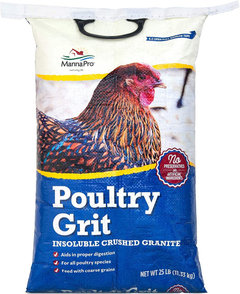
    When I go "soil-less" I used various combinations (trial and error via experience) of Turface, pumice and chicken grit. Turface retains water. I have bought it at a John Deere store. Hard to find where I live, kind of expensive. In truth, I also make gritty mixes WITHOUT it. The pumice I source from General Pumice Products, online. They are not cheap -- but my plants are relatively small and you get A LOT of product. As for chick grit, I have tried many kinds. My favorite is Manna Pro Poultry Grit, Insoluble Crushed Granite. I buy a 25 lb bag at Tractor Supply. I wish both the pumice and chicken grit pretty thorough.


    You can also plant in pure pumice alone. I have done that and it works pretty well. One of the best things about using a mix without soil is that, if a plant dies, the mix can be thoroughly washed and re-used. But -- with a soilless mix, I do fertilize SLIGHTLY at just about every watering. You asked about sourcing material for cheap and, in my experience, materials for succulent plants are seldom cheap.

    KP Devlin thanked robinswfl
  • 5 years ago

    Thank you, everyone. Great info!

  • 5 years ago

    As it happens, I just picked up those three ingredients! Will mix some up soon. Thanks!

  • 5 years ago

    Remember particle size is an extremely important part of creating a mix that works for you instead of against you. Also, there are many grades of Turface. You want Turface MVP, or, if any still remains out there, Turface Allsport. Same product, different packaging. Profile DOES package a grade of Turface (horticultural grade) that is pre-screened and is said to have a minimal amount of dust. I've never found it anywhere, but it wouldn't hurt to ask, especially if you live in a heavily populated area. Also, the ingredients should be screened and/or washed of dust before combining, depending on what the particle size distribution is. It does no good to buy packages of material which is primarily chunky or gritty but contains enough fine material to clog all the large soil pores you set out to create (You want pores between large particles to be filled with air, not water as you find in most packaged medium, including those labeled as appropriate for cacti/succulents. Don't expend the effort and pay the extra cost making high quality mixes requires unless you're sure the end product will meet your expectations. Finally, you can have an assemblage of materials capable of being combined such that the result is a superlative product, or, you can combine them to produce something you might find is unusable.

    Al

  • 5 years ago

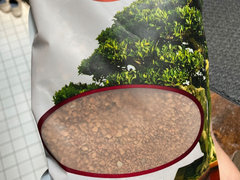
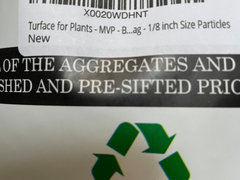
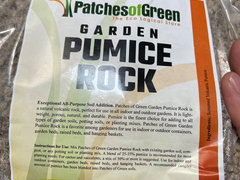
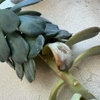
    Thanks, Al. I definitely want to do this right. The turface I got is pictured below. It does say Turface MVP. I also got a bag of pumice and a bag of the granite poultry grit (both pictured below as well). My plan was to rinse all of these thoroughly and then mix approximately equal parts pumice and poultry grit with a smaller amount of turface. Does that sound like I'm on the right track?


  • 5 years ago

    Looks like you're good to go. I'd srceen the dust out over a piece of aluminum insect screen and rinse before combining the ingredients, The Turface hort grade was a particularly good score.

    My starting point would be

    2 parts granite

    1 part pumice

    1 part Turface

    Don't be surprised if you need to water every 3-5 days, depending on plant and pot size.

    Please stop back and show an image of what you come up with before you use it on a plant, just in case something is 'off', even though I'm not expecting any surprises.

    Al

    KP Devlin thanked tapla (mid-Michigan, USDA z5b-6a)
  • 5 years ago

    Will do, Al. Thanks much.

  • KP Devlin thanked tapla (mid-Michigan, USDA z5b-6a)
  • 5 years ago

    Sorry I never posted pics of my substrate, but I did sift it well and the mix may have been a little heavier on the pumice, but the ratio was fairly similar to what was listed here. I have four new plants living in this substrate now and when I repot my old plants, I'll use this new soil mix...


    One other question, because I want to be thorough.... Our new house has well water and a water softener. For the past 25 years Ive watered my plants with wonderful NYC municipal water. Is there anything to be concerned about with the water softener? I know it replaces the calcium, magnesium, etc. with sodium ions... Is this anything to worry about with regard to watering plants?

  • 5 years ago


    Yes, you should be concerned and avoid using water that is plumbed through an ionic exchange water softener. Usually the outdoor hose bibs and at least 1 cold water line in the basement are not routed through the softener, so you'll need to check that.

    Both sodium and chloride are micronutrients used by plants and required in minute amounts for normal growth. Unfortunately, the poison is in the dose, and there will almost certainly be more than enough of these chemicals to cause a severe toxicity.

    I invested in an inexpensive 5-stage reverse osmosis water filtration system that can filter 75 gallons of water per day. I use it for drinking water and watering plants over-wintering under lights in my basement grow area. See it. It was about $200, but I see they've gone up. What hasn't? You can install it in minutes yourself if you decide you want one, and it's very inexpensive to operate. I particularly like it because it allows me to use home-made ultrasonic humidifiers w/o worrying about the white residue they usually produce. The R/O system produces all the 0 ppm DS water I can use.

    Al

    KP Devlin thanked tapla (mid-Michigan, USDA z5b-6a)
  • 5 years ago

    I am glad I asked! Thank you. So the RO filtered water + appropriate fertilizer would be pretty much ideal I guess? I also have to check - I believe only the hot water line is softened usually, correct? I Have to look at the unit. But if that's the case I can just use the cold water for the plants and should be ok right? I'm going to test my water pre and post softener and see what it's like. I keep aquarium fish so this is a concern there too. Living in NYC the past 33 years has spoiled me - our water is perfect for just about everything!

  • 5 years ago

    Would another viable option be to simply use potassium chloride instead of sodium chloride in the water softener?

  • 5 years ago

    KP,


    Either Turface and granite chips (#2 poultry grit) or pumice, but I think it's overkill to have all three. Sure, a combination of all would be fine, in the long run, but IMO you can have excellent porosity with just pumice or the other combination.


    And just an FYI - many C&S are not particularly picky about micronutrients - unless you love the detail and esoterica of a particular feeding regimen, a general purpose fertilizer applied diluted 1/4 is fine for just about everything. At the extreme other end, many prize-winning growers don't feed their plants at all, but that's also perhaps due to their climates being perfect for C&S.


    Yes, the NYC water is so good - I miss the bagels so (don't tell anyone, but Montreal's are just as good, for the same reason).