Software
Houzz Logo Print
jacqueline9ca

ID for old old rhododendron - can you help?

5 years ago

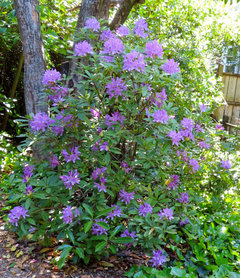
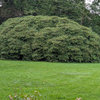
A few years ago I posted a pic of my old old (probably 80-90 yrs at least - planted by my DH's grandfather or great grandfather) rhododendron in our garden. All of the response I got was something like "Oh, that is probably just rootstock". Rootstock is not a type of plant, it is just a description of how a plant was used.


If anyone on here knows anything about old rhododendrons, I would really appreciate some help trying to ID it - is there any sort of web site where you can look up old rhododendrons, as there is for old iris and roses? Any help or information anyone can provide would really be appreciated. Thanks in advance -


Jackie


Comments (15)

  • 5 years ago

    Oops - meant to post a pic, and say that I composed that message for the perennials forum, and included the antique roses forum because I frequently find that very helpful if I am looking to ID any sort of plant.


    Jackie


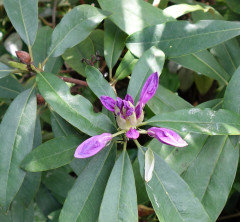
    Close up of opening bud:


  • 5 years ago
    last modified: 5 years ago

    You will get a much better response if this were posted in the Rhododendron and Azaleaforum. There are some extremely knowledgeable rhody experts that often visit there. I'd try Name That Plant as well.

    jacqueline9CA thanked gardengal48 (PNW Z8/9)
  • 5 years ago

    Thank you gardengal - I looked and looked for that forum, as I seemed to remember it, but I could not find it - Houzz seems to have reorganized how one gets to the forums. I will try looking for it again!


    Jackie

  • 5 years ago
    last modified: 5 years ago

    Just an observation that based on the characteristic of this plant - which is clearly mostly of the pontica subsection and therefore likely an 'ironclad' like 'Purpureum Elegans' - there is no way it is 90 years old unless it had been repeatedly and aggressively pruned all those decades! I have a 'True Blue' planted a little over 5 years ago that is almost this big! (the plant is a let down as I noted elsewhere, no more blue than any other supposedly blue elepidote rhodie hybrid...all of which have a plurality of pontica genes. That's on the east coast, on the west coast, YMMV)

  • 5 years ago

    I’m no Rhododendron expert but that does look a lot like Rhododendron ponticum, in which case those who suggested it was a rootstock could be right. But I don’t know if it would grow in CA. It’s an invasive menace in parts of the British Isles and likes abundant moisture.

  • 5 years ago

    It does look a lot like mine, which we estimate to be about 50 years old, based on house photos the previous owners’ daughter left behind for us. I’d love an id also, and will be googling the above suggestions!


  • 5 years ago

    Wow - thank all of your for the comments!


    David - what I know for sure about this plant: it was growing in a neglected, shady, and not irrigated part of our garden when we moved in here 32 years ago. It was the same size it is now, and no one has pruned it for 32 years for sure. Occasionally I have thrown some plant food for acid loving plants on it, but only maybe once a year or two. We normally get 40 inches of rain Oct - March/April, and ZERO rain March/April - Oct. About 20 years ago, I think, we added a bit of irrigation around this plant, but only for our normal 6 months of total drought in the summer. I looked up Purpureum Elegans, and it said 6-10 feet tall. Mine is about 6 feet tall, so I do not see why it could not be that one, or another ponticum hybrid, especially since it has gotten so little care, and accd to the internet is growing way outside of its warmest zone 8 preference (we are zone 9 trending towards 10). The serious gardeners who were ancestors of my DH lived in our house from 1905 until the mid 1960s, when it became a rental until we moved in in 1989. That is why I have assumed it was planted at the latest 60 years ago, and probably much earlier.


    I don't think it is the species, because I agree that that one would not stay so neat and compact with no pruning. I will wait until it is blooming again in the Spring, and take detailed pics of the blooms, etc. and compare them to pics of ponticum hybrids I am able to find on line.


    Thank all of you for heading me in the right direction!


    Jackie


  • 5 years ago

    Thank you, gardengal. I agree that many plants grow happily outside of their supposed top heat zones, but I have had trouble with some bulbs like tulips and some daffodils, and even some once blooming old European roses, which did not like it here - I found out later that was because we don't get enough "winter chill hours" for them. I guess rhododendrons do not care about that.


    Anyway, my inherited rhodo is still in the same place, and still the same size, as when we moved in here, so that is a nice mystery to have.


    Jackie

  • 5 years ago

    "grow happily outside of their supposed top heat zones"

    That's because the USDA zonal system has nothing to do with "top heat zones" :-)) As noted, they only apply to winter cold tolerance, nothing more! The fact that growers even list an upper hardiness zone is very misleading and rarely has any significance.

  • 5 years ago
    last modified: 5 years ago

    Jacqueline...ok I take your word for it but that is a bit of a mystery. All of the 'ironclads' are known to get over 10' with age and certainly, the mild zone 9 climate of CA means it should certainly never dieback from cold.

    Here is a pic of a Purpureum Elegans, probably in New Jersey:

    https://kiefernursery.com/product/rhododendron-catawbiense-purpureum-elegans/

    Ironclads this big or bigger are all over SE PA and NJ. Less common south of here because the summer just get a little too hot and even ironclad start to die of root rot.

    And here are some pics of other large ironclads - English Roseums looking to be roughly 15' tall.

    http://gammonlandscapenursery.com/plant-catalog/broadleaf-evergreens/rhododendron/

    maybe something about the summer drought of CA keeps these smaller, but I doubt it. When I was driving around Norcal in spring, I certainly saw such plants but they were so low on my radar of things to notice, I paid no attention to the size of them.

    https://www.houzz.com/discussions/3828976/norcal-field-trip-report-pt-1-maybe

    Or maybe something about the particular spot of yours is keeping it dwarfed.

  • 5 years ago

    There exists a rather interesting book that can be found online called Standardized Plant Names. It was published in 1942, and is an effort by the McFarland Publishing Co. to do for the plant world in general what they had done with Modern Roses. I use it as a reference point for what cultivars were in existence in the late 1930's, since most perennials don't have official registrations. It has almost 3 pages of Rhododendron species, and 7 pages of cultivars.


    Have fun!

  • 5 years ago

    David - all I can think of is that it is growing right at the base of a very old privet tree (which is as tall as the pointed top of the turret on top of our house - that is about 4 stories high). If you look at the whole bush pic of the rhododendron above, you can see the trunk(s) of that tree. Whatever the reason, I am glad it is dwarfed - I will not feed it now, in case it gets ideas!


    mad_gallica, thank you for the link to that book! When I get that far, I will look at those pages.


    Jackie


  • 5 years ago
    last modified: 5 years ago

    One thing I have noticed with Rhoddies here is that ones in deeper shade and closer to trees are smaller than the ones closer to the sun and farther away from tree roots.

    Also, I noticed that some Rhoddies do keep growing and growing, but some that my mother has have just stopped getting height after about 30 years, in fact probably hit final height in 20 years and stayed there. I think 1 of them is over 60years old.

    Maybe this doesn't apply in CA, but I would say other than not getting as cold as here and less rain, San Diego is actually pretty similar to here for rhoddies.

  • 5 years ago

    yeah it could be that shade and root competition keeps them smaller