Software
Houzz Logo Print
webuser_439496908

Branch an ungrounded outlet circuit for kitchen under-cabinet lighting

4 years ago

Hi 👋,


I am currently working on a kitchen renovation project. I need to add under-cabinet light for my kitchen. Due to code, I can't tap into existing kitchen receptacles and add a new switch for the light, because those are used for kitchen appliances.


So I decided to branch a new circuit from nearby outlet. By doing so, I need to branch a new circuit from an existing outlet, and cross the crossbase, open a new light switch above countertop for the under-cabinet light.


However here comes the problem, my house was built around 1980, so the whole wire is ungrounded. In such a case, am I allowed to branch the ungrounded outlet for lighting?


Thanks,

Rob

Comments (25)

  • PRO
    4 years ago
    last modified: 4 years ago

    Are you sure there are only 2 wires? Grounding circuits have been around a lot longer than the 80s. Where are you located?

    At any rate, since you're worried about code, the answer is no; any new work needs to be done to current codes (whichever those are in your jurisdiction). Consult with your local electrical inspector.

  • 4 years ago

    Hey Verbo, thanks for the answer. Does that mean if I can branch a new circuit based on the exiting ceiling light then I should be “permitted” even though my house is ungrounded.

    Another problem is I have backsplash on the kitchen, so I prefer to branch a wire from an existing wall outlet(non-kitchen) and use crawl space to route the wire.

  • 4 years ago

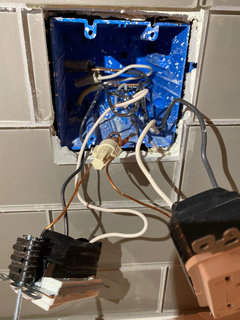
    Actually I just checked again it has 3 wires. Does that mean it is grounded?

  • PRO
    4 years ago

    Not necessarily. It could be a number of things. I'd just be surprised if you didn't have a ground circa 1980. Photos?

  • 4 years ago

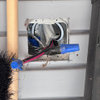
    This is one example. I am in Seattle area.

  • PRO
    4 years ago

    Bare wire = ground

  • PRO
    4 years ago

    Another thought: if you're DIY'ing this, it would be worth getting a permit/inspection. It's worth a couple hundred bucks to have someone experienced check your work to prevent your house burning down.

  • 4 years ago

    Verbo, i hope you do realize theres nothing wrong with outlets and lighting sharing a circuit. its done all the time.

  • 4 years ago
    last modified: 4 years ago

    It shouldn’t be ”done all the time”. Lighting and outlets requires different size wires. It’s bad DIY electrical to mix up outlets and lighting on the same circuit.

  • 4 years ago
    last modified: 4 years ago

    Verbo,

    Where are you coming up with this? Thats absolutely false. and no where in the 2020 NEC does it say that. please dont spread misinformation.

    You can run outlets on either 15a or 20a circuits. you can also run lighting on either 15a or 20a cirucits and you can certainly mix them as long as you run the corresponding outlet and wire size (however, you can run 15a outlets on a 20a circuit as long as its not dedicated.)

    im not coming from any diy standpoint. im an electrician.

  • 4 years ago
    last modified: 4 years ago

    While mixed usage of branch circuits is permitted, it is still very poor design to run luminaires from the same circuit as outlets. Which is why it’s usually bad DIY done, if the half the house’s lighting and oulets are shut done by a single breaker. And then theres the matter of arc fault or GFI and oops the lights go out. Bad electrical design.

  • 4 years ago
    last modified: 4 years ago

    Its still perfectly permitable by code and youre coming on this site saying its not allowed.

    We do it all the time out of ease. each room having one circuit with shared lighting and outlets.

    Sure, you trip a breaker and the lights go out. not the end of the world and nothing illegal about it.

    You were trying to say lighting and outlets require different size wires which is completely untrue. Both lighting and outlets can be run on 14awg or 12awg wiring depending on the circuit.

  • 4 years ago

    You are both right, having one breaker taking out the kitchen lighting and outlets sucks, and tho its ok to do it, it really is just an "easy" way to stay in the code without running more lines. So I would agree, (living in a house wired like that), if you can avoid it I would.

  • 4 years ago

    Of course. and thats all i was getting at. the guy was trying to say outlets and lighting require different sized wiring which is completely false and misleading people who might not know.


    there are plenty of times where it makes sense. Single room addition to a house? no sense in running a seperate feed for the one light in that new room. run a single 12/2 home run for eveything.

  • 4 years ago

    You spend unnecessary money on a 12 gauge wire for a lightng circuit? A 14 is permissible, easier to deal with, and cheaper. No electrician that I work with would ever use 12 for lighting.

  • 4 years ago
    last modified: 4 years ago

    When you have a van full of 20 250’ rolls of 12-2, youre not going to waste your time going to buy some 14-2 just for lighting. My company almost never uses 14-2 unless were extending a 15a circuit that was previously run with 14-2.

    you must not work with many electricians, or youre too picky and micromanaging.

    you sadly seem like know it all who doesnt know it all.

    lastly, i get your points. just dont go around saying things like lighting and outlets need different wiring when thats not true.

  • 4 years ago

    My concern is electrical load: I want 20A / 12 gauge circuits in a lot of areas. The fact that some lighting happens to be on these circuits isn't enough to make me want to save a few bucks by re-jiggering everything so that I can have isolated lighting circuits on 14 gauge wire.


  • 4 years ago

    Exactly. plus, led lighting draws very little. its more wasteful to add extra circuits just for those lights.

  • 4 years ago

    This must be regional, because here, all of the lighting circuits are sepatate from the outlet circuits. And are 14 gauge. The trucks are full of both 12 and 14. You wouldn’t have any electrician run a lighting circuit from an 12 gauge outlet circuit. And no inspector would approve a 20 amp kitchen circuit supplying any lighting circuit. It wouldn’t pass the overcurrent requirement. They'd grab from one of the 15 amp lighting circuits. My 70’s house is run that way, as is 90% of any of the houses from then up. Older than that, or with DIY involvement, all bets are off. Its much more organized, predictable, and better design, than higgeldy piggeldy half the house’s outlets and 1/4 of the lights are out.

  • 4 years ago

    Its not regional. the nec 2020 is national and nowhere in there is it against the rules to mix lighting and outlets


    yes sure, dedicate two kitchen appliance circuits on the c top, dedicate the fridge, micro, etc etc. but feel free to pull a convenicence outlet or two off the main kitchen lighting. Thats what im talking about.


    just curious what your back ground is? you seem a little confused with code.


    no inspector would have any issue with lighting and outlets on the same circuit as long as theyre not circuits that need to be dedicated.

  • 4 years ago

    But the 2 20 amp small appliance circuits ARE dedicated curcuits. They are not general usage branch circuits. And no, you cannot run lighting off of them. NEC 210.52(B)(1) does trump your opinion on this.

  • 4 years ago


    My 5-year old house in upstate NY was wired entirely with 12 GA wire and 20 Amp breakers. Receptacles and lighting on separate circuits.

  • 4 years ago
    last modified: 4 years ago

    Verbo, i was never stating to tap into the decicated counter top circuits.

    you are difficuit to converse with.

    You said a few things that are completely untrue.

    i never said you should feed lighting off deciated counter circuits. i said its fine to mix them when not dedicated.

    you were going around posting that you cant mix lighting and outlets which is false. you were also saying lighting uses different gauge wiring which is false.

    are you just repying to have the last word? if you look back through all of your posts, they dont make a lot of sense.

  • 3 years ago

    Verbo,

    Your statement that the 20 amp (breaker) circuit cannot supply lighting because "it would not pass the overcurrent requirement" is confusing. As I understand it, one can supply a light circuit from a non-dedicated outlet circuit protected by a 20 amp breaker, but in that case the wiring to the lighting MUST be 12 gauge because the 20 amp breaker is not rated to protect 14 gauge wire. Yes, it is best to run lighting circuits off of 15 amp breakers, using 14 gauge wire, but that is not always practical.