Software
Houzz Logo Print
manic_gardener_socal_10a

ladybugs for aphids

4 years ago
last modified: 4 years ago

We have a very severe aphid problem here. Right now my outdoor plants are dormant, so I am just trying to save my indoor pepper plants, which are getting more and more infested.

I have tried every organic solution - nothing has worked - no matter what I do, they simply come back, in ever increasing numbers. so I decided to try ladybugs.

I released the ladybugs into the indoor garden area. To my surprise most of the ladybugs have stayed in the area - but so far as I can see they are ignoring the aphids. I see them crawling all over the plants, but they just go right past the aphids like they aren't there. I'm confused by this as I expected them to feast!

I read that if you put bird netting over a plant and put more ladybugs inside, they will eat the aphids even faster. So I got some bird netting and have put it over a few of my plants. On those plants the aphids aren't even crawling on the leaves, they are all congregating on the netting and ignoring the plant altogether.

What could be going on here? Has anyone successfully used ladybugs to resolve an aphid problem before, and if so can you enlighten me about their behavior?

Thank you!

Comments (9)

  • 4 years ago

    i dont understand the premise.. you are introducing beneficial bugs into your home????


    how about a couple pix.. tell us where you are.. big city name ... though the plants outside are dormant.. can these be taken outside for treatment ... like a good blast from the hose?


    ken

  • 4 years ago

    What species of ladybug? Some just want to hibernate right now. Photos?


    (The ladybug sellers are not always concerned with efficacy.)

    manic_gardener_socal_10a thanked Fori
  • 4 years ago

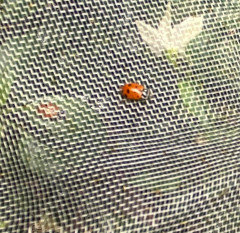
    I've attached a picture of a ladybug. The seller promoted them as aphid eaters.


    I was supposed to receive 300 but having released them in an indoor garden and there can't have been more than 100 in the bag.


    I tried to divide them between three netted plants, and left a few to fly around. There are also three plants I did not put netting on.


    Today I lifted the netting and took a look at the plants and it really does seem they are ignoring the aphids. The aphid infestation is more out of control than ever - the leaves of the plants are literally carpeted with aphids.


    Unfortunately the lady bugs were my last hope for controlling them, and it doesn't look like that's going to happen.


  • 4 years ago

    IMO high mortality is fairly common in mail-order ladybugs. I ordered them once, and nearly all were infected with a fungal disease... it may that you have a similar situation, and even the survivors are infected. But my most likely suggestion would be that the ladybugs were frozen at some point, and are attempting to hibernate.


    It is possible that some eggs have been laid; but if the infestation is as bad as described, that would be too little, too late.


    "I have tried every organic solution - nothing has worked - no matter what I do, they simply come back, in ever increasing numbers. so I decided to try ladybugs."


    I'm guessing you've already tried insecticidal soap? That is probably the best remaining solution (no pun intended). The plants would have to be really soaked down on all surfaces, especially leaf bottoms, pot sides, and even the soil surface... so something probably best done in the tub or shower, unless you are located where the outside temp is well above freezing. Then thoroughly sanitize the growing area, before returning the plants.


    I'm not going to lie to you; I've been through that battle, and aphids are tough to eradicate indoors. They are very good at hiding, perhaps even on underground roots. The chances are that despite all of your best efforts, you might only slow the aphids down for awhile. If the plants are worth the trouble, then rinse & repeat as necessary. Bringing outdoor plants inside always carries the risk of bringing pests to places where they are protected from their natural predators, and multiply exponentially.


    Just be glad you don't have spider mites. I brought a potted plant (Molokhia) in to allow seed pods to ripen, and discovered a spider mite infestation several weeks later. To avoid them spreading to DW's large indoor garden, that plant had to be isolated in the kitchen until enough seed was collected... then thrown outside to freeze.

    manic_gardener_socal_10a thanked zeedman Zone 5 Wisconsin
  • 4 years ago
    last modified: 4 years ago

    Thanks for your reply Zeedman.

    yes I have tried insecticidal soap many times and it has not been effective.

    I have also done it in combination with periodic water spray downs of the plants to remove all the aphids. First spraying down the plants completely, then applying the soap when they return.

    The only thing I haven't tried, which I have read about, is totally dunking the plant in a soap solution. I'm just not really sure how people do this effectively, without making a huge mess? given the size of my plants, I think I'd need to fill a vat with the soap solution and imagine the soil in the pots would fall out when turned upside down to be dunked, creating a huge mess.

    if you think the dunking method would be effective and can offer any tips on how to do it effectively, I'll give it a try.

    Here it doesn't matter if the plant has ever been outside or not. The aphids also infest my indoor plants which have never been outdoors. They seem to be able to seek out and find every green leaf in the house. They recently even found my aerogarden, located in a completely different room from my pepper plants, and went wild infesting the herbs I was growing there.

    We also have ants here who farm the aphids, and there is no way to get rid of the ants either. I have managed to get rid of them temporarily, but have noticed the aphids multiply just fine on their own without the ants, and the ants always return soon enough to help them out and make the problem worse.

  • PRO
    4 years ago

    This might sound odd, but you could try house spiders if you allow them in your house. I allow them in my house- when I got the racks set up in winter, I get a few to hang out in the more houseplant kinds of plants, and I don't see any aphids or gnats or anything else in my seedlings. If I accidently bring a dirty plant in (sometimes happens with store plants), the spiders move along to it pretty quick for dinner. If you can get a spider with an egg sack to move, that's even better, baby spiders can be hungry.

    But if you got them as bad as you say, you might need to take a gardening break- when it's nice out. Take all your plants outside and give them a good cleaning where the mess isn't such a big deal, and clean the dickens out of your house while the plants are outside. Sometimes when cleaning/treating from one spot to another can encourage the bad bugs to move to better plants. So a whole do all the plants and the house clean/treat might be needed to really help control the problem.

    manic_gardener_socal_10a thanked beesneeds
  • 4 years ago
    last modified: 4 years ago

    It sounds like you have a difficult situation @manic_gardener_socal_10a. Aphids can spread by flying, crawling, or by ants carrying them - and you apparently are dealing with multiple vectors. At this point, you have a whole-house infestation. I was fortunate that the times I found aphids, I quarantined the plants before the aphids could spread to DW's house plants.


    For the house plants, you may be able to eliminate the aphids by applying a systemic insecticide, which will kill any listed insects which feed anywhere on the plant. You wouldn't be able to use those on peppers or anything else edible though. I really don't have a good solution for the peppers, since most natural predators are inappropriate for indoor use. Sad though it is, perhaps the only way out of this would be to dose the houseplants, dispose of the peppers, set out ant traps, and start over. :-(


    But before such drastic measures, I would recommend speaking to a greenhouse operator, since they commonly deal with aphids & might have better suggestions.

  • 4 years ago

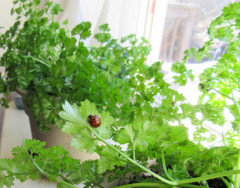
    A couple of years ago I had aphids all over my overwintering parsley. I caught a few convergent lady beetles hiding in the upstairs windows and put them on the plants. Not only did they go after the aphids, they reproduced! I had hungry larvae falling on the floor.