Software
Houzz Logo Print
melissaaipapa

(OT) The garden in early April

After a couple of over-stimulating days in Milan, in an attempt to re-attain equilibrium I spent yesterday working in the garden. As usual, there's far more to do than I can possibly accomplish. I was intending to go out to the Dutch Bed and clean there: it has some roses that desperately need to have old and diseased growth cut out of them, and tidying in general. But I swung through the old part of the big garden to see the pear trees in bloom (hint: other people's pears are much finer), and stopped where the drainage ditch crosses the property line to continue the weeding and pruning I had embarked on a few weeks ago. The delta project, where I deliberately blocked the drainage ditch in order to capture the sediments coming down, is coming along fine: abundant sediment and flourishing weeds, the worst of which I pulled and carried up to higher and poorer ground along with the dead growth pruned out of the roses. I also attacked the brambles on the neighboring property, carrying them as well up to the higher ground where I cut them up and scattered them. What a slow way to increase the fertility of the soil, but the grass is improving.

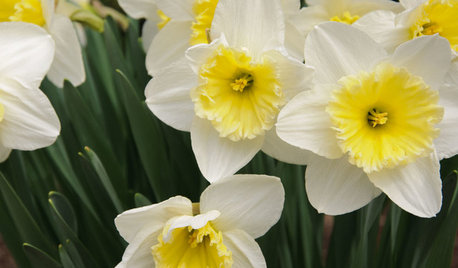
I was surprised and glad to see how many narcissus there were. I made an order a few years ago, and have seen that many of the daffodils I got then came back well this spring: 'Sweetness', 'Jetfire', and some small ones I don't recall the names of, but that look like Triandrus hybrids, which is a class some of which do well here. I struggle with narcissus, which I love, so this was a welcome sight.

The wind came up during the morning and blew great guns, so after lunch I worked in the propagating beds where a building offered protection from the wind. The beds haven't been used much for propagation for some years now--I need to get back to that--but, once I cleared the weeds from around the heavy pavers, the two tree peonies, one from seed, left to grow, and the relict tulips, left over after I gave up on tulips when they got virus--but these survivors are handsome and tall, and very, very durable--gave the beds rather too much of the appearance of being formal planted beds. It will be hard to steer the beds from this unintended beauty back to their planned use, to start and grow on young plants. Fortunately, last winter I had the experience of digging up a well-established tree peony and moving it, and so know that it can be done. It did take some nerve.

The weather continues dry. We got an inch and more of rain about a week ago: certainly it helped, but it wasn't enough to restore water levels to seasonal norms, and there's no rain in the forecast. Well, patience.

Comments (8)

  • 4 years ago

    Melissa, what lovely work. I really am happy to see weeds and grass too where the soil had been barren when I arrived here 7 years ago. I pull weeds and let them compost in place. I do think grass shading the crown of a rose might even help it here in the baking Summer heat. Having 5 acres here, there is no way I can keep it tidily weeded. The lavender trimming and nepeta trimming in the Spring can be a chore too. It is definitely a long term project.

  • 4 years ago

    Jackie, glad you like the post, and the moral support for a garden that isn't maniacally tidy. Beauty includes an element of freedom, I think.

    People who garden for a long time and on their own may develop all sorts of strategies that are quite original and strange to other gardeners. I don't know how my gardening compares with others', but I'm pretty happy with how it turns out; though it does occur to me to wonder whether I couldn't improve my methods and get better results. Who knows: the ground and its plants that I began with were somewhat difficult. At least I see positive change, and enjoy myself. I like the experimental aspect of my gardening: trying things out; making discoveries.

    Sheila, exactly. So you started with poor ground, too? I agree with all you say. Get Nature on your side; let her little warrior pawns grasses and weeds grow and add organic matter above and below the surface. They'll make the ground more permeable to water and slow down its runoff when it falls, and cool the ground when the sun beats down. I mulch as well: we've added over a hundred tons of old hay to the garden in the years we've been here, but it's a drop in the bucket still (it shows how much carbon can be sequestered in soil). I'm like the forum poster on a thread some years back, who said her motto--or was it a battle cry?--was, More organic matter!

  • 4 years ago

    "Beauty includes an element of freedom"-well said, Melissa! It makes me happy to read of projects like yours and Sheila's- sometimes I feel like my own is such a doomed idea, then I read your things (both of you) and am comforted.

    A couple questions for you, Melissa. From where did you get the old hay? Often I see covoni of hay neglected and rotting in a field and wish I could have it for mulch. Did you have to pay for it, and, if so, how much? Another question: how do you go about cutting down brambles, aka, rovi? I have a LOT of them, and find it painful and awkward to cut them down, and wonder if you know some way to do it more efficiently.

    Lastly, a purely snoopy question: have you started watering ?

    Melissa Northern Italy zone 8 thanked User
  • 4 years ago

    Hello, bart! It's good to hear from you.

    For the hay, we asked around. We bought forty tons one year early on, after everybody cut their grass and then it began to rain and didn't stop for five weeks, and all the hay was spoiled. That was a buyer's market, goodness. For a few years we got old hay, that stuff you see rotting in the field, from various suppliers, finally settling on some farmers up in the mountains. They collect the hay, from whom we don't know, and deliver it to us by tractor, moving the bales around to where we need them in the garden. We pay, or have up to now paid 240 euros for fifteen 400kg bales (the price may go up with recent inflation). The hay itself has no value to anyone but us; we're paying for delivery. This supply may keep us going for a couple of years. The environmental advantages are clear: the old hay is locally sourced and is sustainable, and is a resource for us while it's just waste for everybody else.

    About brambles, the only way I know to deal with them is the hard way. I approach them with pruners, and a lopper for really large canes, cut as much of the bramble as I can reach, drag it off, and chop it into bits with the pruners, then scatter the bits as mulch. Repeat. I've cut down quite sizeable areas of brambles this way, though it takes time. The good thing is that, once cut down, brambles struggle to come back: grass sprouts where they grew, and, although the brambles return the following year, they're much weaker and can be cut down in a tenth the time it took before. You have to keep them from building up strength again, though.

    I suspect you already know all that about brambles. I imagine you'll get better advice than I could offer from your husband about suitable postures and positions from which to work.

    I think we watered once since planting in the winter, in the warm dry period in later winter, I think it was. We got an inch or so of rain several days back, and last night a most unexpected episode of hail, and this morning the air is fresh and the ground, to my surprise, is damp. So I hope we'll be good for some days to come.

    How are things going in your garden? How's your weather? I think your, my, and Sheila's garden motto is "Sempre in salita" (Always uphill), but then some plants do well here and there, and we see positive changes to the soil and the flora, and we feel pretty good about what we're doing.

    Would you consider writing a description of your garden? I remember that several years ago, exceptionally, I wrote an essay, with photos, of ours, for the forum here. I'm curious about your garden, as I've mentioned before.


  • 4 years ago

    I really feel I'm with you both, Melissa and Bart. Of course we would all love more and photos.

    Melissa Northern Italy zone 8 thanked Sheila z8a Rogue Valley OR
  • 4 years ago

    Thanks for your answers, Melissa. Your brambles seem to be more reasonable than mine!

  • 4 years ago

    You're welcome, bart. I don't know about reasonable: mine can make 5-6 meters of growth in a season. What are yours like? What is it about them that makes them so difficult? Or is it just too much to do for one person?