Software
Houzz Logo Print
hzdeleted_60638948

Can someone help me with a watering question?

4 years ago

This isn't off topic, in my opinion,since my curiosity is directed to the cultivation of roses, not to the cultivation of true water-hogs like hydrangeas or tall garden phlox.


I'm interested to know how a gardener with ideal water access approaces the matter of watering their roses.

Now, there's a popular saying that solemnly and categorically states that "plants need an inch of water per week". This is clearly nonsense; if it were true, all of Italy would be a desert,since even before global warming ruined our climate,we had long periods without rain. Not to mention the fact that plants can have wildly different water needs.

Even in these sad, hard times of climate change, there is a definite tendency here in my climate for rains to come for a few days, and then a dry period follows. Thankfully, we are going through a rainy spell now. It began raining -GOOD rain,first gentle, then more consistent, (there was even thunder), but never destructive or violent. Today is the 25th,and it's still lightly raining on and off. Before this, we had had totally dry weather for about ten days.

Now, here's my question, and I'm directing it to those of you who have running water in their gardens and can water whenever you like,but I'd love comments from everyone. If this occurs in your climate-that is,you are blessed with 4-5 days of on-and-off "good rain", which is then followed by a dry period, how long would you wait after the rainy spell before you start watering again? Would you automatically re-start watering your roses after a week of dry weather, or would you decide based on how moist the soil seemed to be? You see why I specify that this is indeed a ROSE topic,since roses do like to dry out a bit between waterings...

I'd be interested and grateful for any comments that any of you can make. I hope that I will hear from people who have easy access to water and also from those who do not! I post on these forums because I want to learn,and hearing about different opinions is a good way to do so.

Comments (36)

  • 4 years ago

    Even though I live in an area that has ample rain, I do not water any established plants when the rains stop. I find that if I do, the plant tends to "adapt" to the availability of water and will stay in a growth/bloom stage for far longer than usual. Then, I am forced to continue to water far longer than I may have planned on; all that extra growth would be wasted otherwise. I do not want to spend that much time & energy, and I also do not think that is sustainable for the plant in the long run.


    Of course, new plantings receive ample water for two growing seasons.

    User thanked rosesmi5a
  • 4 years ago

    A very common summer weather pattern we get here is high temperatures and very high humidity. Because of the usual advice to water more when the temperatures are high, the newbies drag out their hoses even though nothing is drying out. As in nothing - you hang clothes out to dry, and they are wetter when you bring them in than when you put them out. Then the temperatures drop, the humidity drops like a stone, the newbies put their hoses away, and you can almost hear the plants drying out.

    So my answer is you wait to water until the soil dries out, not on top, but an inch or so down. Depending on the weather, that can take anywhere from two days to two months.

    User thanked mad_gallica (z5 Eastern NY)
  • 4 years ago

    Okay, this is two cents' worth from your neighbor up in Piacenza. I'm assuming you're referring to roses that are in their first year, not yet established; and that, as you say, the rain has been a good long soaking one. Mad_gallica's right that it depends somewhat on weather conditions: is it sunny? is there a drying wind blowing? how are atmospheric humidity levels? In my garden I'd probably begin thinking about watering after two weeks, but might wait three or even four if conditions aren't too drying. However, mad_gallica's right again that that you wait until the soil dries out. The times I specify are how long it takes, with our soil (clay, mulched) and conditions, for that to happen.

    User thanked Melissa Northern Italy zone 8
  • 4 years ago

    I don't know the answer, but I think it's very important to have soil that drains well. If it does, you don't have to worry about over watering. Where I live water is plentiful and not expensive, so I just kind of guess. If it hasn't rained in a while and it's been sunny and dry, I give them water. When plants are desiccated, it usually shows up first on leaf tips. When they have too much water, it typically shows up near the leaf stems.

    User thanked charles kidder
  • 4 years ago
    last modified: 4 years ago

    I don't know what to add that could be helpful. My particular situation is that I live where we get less than 15" a year, I live on quite a slope, it's windy af here, and our soil does not have much of any clay content so it doesn't hold the water. A very mature cottonwood tree spreads its roots into the low part of the slope and takes a good amount of the water. Humidity is but a myth here. All in all, my garden is pretty parched a lot of the time. I only have overhead watering (and rain collection barrels) and I could run all of the sprinkler zones (there's overlap) for 15 minutes each and still have the soil dry out beyond an inch down by the next morning.

    I water via sprinklers every 3 days during the height of summer, but I only do so because of the veg garden, which I believe needs more water than anything else and is the most valuable part of my garden to me. The veg plants really languish and drop their blossoms/bolt/stop producing if they go much longer than that. If I only had flowers and roses I would water maybe once a week, but that "one inch a week" is utter nonsense here. We sometimes go almost a month and a half between rains, and they tend to be heavy, wash things down the slope, and then we get pummeled with wind and hail at the same time. I'm not sure how many roses could even survive here, much less come anywhere near "thriving", if I didn't water. I've played around with lots of different annuals over the last few years, but I switched my approach this year and I'm changing over to almost all perennials (except the veg garden) that are able to put down big root systems that can take advantage of the deep soak that snowmelt will give them, hold the soil in place, and are easier to mulch early on in the year as they'll already be big enough not to get lost in the mulch. I've been removing the lawn more and more each year because lawn grass is a stupid idea in this climate. Hopefully once the rest of the garden is able to be more hands off with water then I can use the rain barrel water exclusively for the veg beds, although we never get enough rain to be able to rely on them for the whole summer. Sigh. If I look at the unkept areas that are not yards or farmland, the only areas that rely solely on rainfall in summer, my gardening options get very bleak very fast. Prairie grass, dandelions, whatever plant from hell produces "goat heads", and sunflowers that get rain run-off from the road are what grow around here on their own.


    Wow that turned out to be a long post. Sorry. Lack of natural water and water retention is a big issue for me here.

    User thanked Mischievous Magpie (CO 5b)
  • 4 years ago
    last modified: 4 years ago

    Hi @User. You’ve already received lots of great replies, but I’ll chime in. Once my non remontant roses are a couple years in the ground, they do not get coddled. We usually get quite a bit of rain during spring and I check the soil for moisture during bloom season. If we have experienced a weird drought that deeply dries the soil, or we have oddly drying winds, I water because I want the blooms to last as long as possible. If the soil is not dry and we are not getting California-like Santa Ana winds, I don’t water. I usually water the hogs, like hydrangeas and phlox, once per week depending on temps; they bloom in high summer drought. My remontant and once blooming roses get watered in high summer, too, because they share the beds. The soil would probably by dry enough to trigger watering during July-Sept. anyway. The short answer would be: I water when the soil is dry below the surface and no rain is forecast or the air is very dry. I ease up watering as October approaches. Carol

    PS I should add that I have done some rearranging so that a number of my once blooming OGRs will only get watered every 2-3 weeks in summer. I have also added native plants that can handle 3 week summer gaps.

    User thanked portlandmysteryrose
  • 4 years ago

    I live near Seattle Wa and while water is usually plentiful summers are basically dry.

    For me watering is a very touchy subject because while I love to garden I do not like to use excess water.

    We never water the grass and I try to make sure each area gets watered twice a week, pots included. This could be why my annuals do just ok….they’re always thirsty😬

    I have a lot of old big leaf maples and they take a lot of water I wish the plants would get so we just do the best we can.

    Last year we installed a sprinkler system and I am hoping I can cut watering down to once a week.

    While I would love everything to be full and lush, I am satisfied as long as nothing dies


    User thanked oursteelers 8B PNW
  • 4 years ago

    @oursteelers 8B PNW 🙌 My PNW “lawn“ doesn’t get water either…which is probably why it contains very little grass and mostly dandelions and grouncover violets! 😁 Carol

    User thanked portlandmysteryrose
  • 4 years ago

    Watering is suggestive on where you live. Mother Nature does the watering. The only things I usually water is my planters/baskets. If it hasn't rained for 2 weeks then I'll water the veg garden. That is not common. There is usually only a few days that it hits 90+ in a summer if at all. As far as roses I don't grow them. Too high maintenance for me. Plus the flowers are beautiful, but personally I think the plant itself is ugly.

    User thanked functionthenlook
  • 4 years ago

    Well then! *storms off*

    User thanked Mischievous Magpie (CO 5b)
  • 4 years ago


    This plant is ugly??? With its wine color near thornless canes, and its lovely growth habit.

    Function, you don't know roses. Go back to the daisy forum. Diane

    User thanked Diane Brakefield
  • 4 years ago

    Diane Brakefield, I have grown roses and quit. Beauty is in the eye or the beholder.

    User thanked functionthenlook
  • 4 years ago

    We're not quitters here.

    User thanked Sheila z8a Rogue Valley OR
  • 4 years ago

    If you love the rose plant, fine. If you don't it's fine. Just because one person loves something does that mean everyone else has to love it too? It's like art, architecture, music, etc everyone has their own likes and dislikes.

    User thanked functionthenlook
  • 4 years ago

    I'm afraid I agree with functionthenlook here. I think roses are beautiful, but people have a right to their own aesthetic notions, however strange they may seem to others.

    On the other hand, it occurs to me to wonder what functionthenlook is doing on the old rose forum.

  • 4 years ago

    It is also posted on the garden forum.

  • 4 years ago
    last modified: 4 years ago

    Check out this old post:

    https://www.houzz.com/discussions/5881949/how-do-you-water-your-roses#n=16


    You could be the Timer, turning it on/off as you desire. More than one feed line to the different water requirements would give even better control of the amount of water the plants received. Hope this helps.....

    User thanked toolbelt68
  • 4 years ago

    Ah. I see.

    User thanked Melissa Northern Italy zone 8
  • 4 years ago

    I already do all that stuff, toolbelt. I am the timer, I decide what days to water and how often. I plug in the little sprinklers according to how wet a section gets, and I can turn them completely off easily, and of course, downhill is wetter, etc. Diane

    User thanked Diane Brakefield
  • 4 years ago

    Diane, one of these days they will come up with an 'App' and Timer Unit that all you have to do, while watching TV, is punch a few keys to water the flowers.....


    User thanked toolbelt68
  • 4 years ago

    I'm pretty sure there is.

    User thanked Mischievous Magpie (CO 5b)
  • 4 years ago

    I can do the fully automatic watering if I want. My son in law sprinkles the lawn this way. But I want to be in control. Also the little sprinklers can be adjusted singly and rearranged any time I want to do this. Diane

    User thanked Diane Brakefield
  • 4 years ago

    Wait a minute Diane, you're telling me you already have a controllable watering system (THE SON IN LAW), and YOU are still doing the watering???? Oh well..... lol lol lol


    I agree Mischievous.....

    User thanked toolbelt68
  • 4 years ago

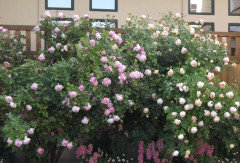
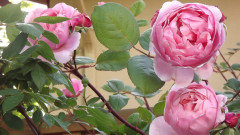
    @diane: what Rose it that. I love it.

    User thanked Ann-SoCalZ10b SunStZ22
  • 4 years ago

    That's Brother Cadfael, now in his 18th year. Diane

    User thanked Diane Brakefield
  • 4 years ago

    Oh, and Jude the Obscure is next to BC and is also 18. Diane

    User thanked Diane Brakefield
  • 4 years ago

    Carol, about your unwatered lawn: be of good heart. If you can live with a community of plants, not just grass, it's possible to have quite a nice lawn without watering; at least, such is my experience, and your climate ought to be similar. I do weed out dandelions, while appreciating them in wilder parts of the garden. But how about a lawn made up of grasses, clover, violets, English daisies, plantain, small geraniums, dead nettle; and you might be able to work in early crocuses, as who knows what else, as well? Of course I don't water my lawn! And it looks fine! Keeping it well fed with mowing clippings plus abundant pruned and weeded matter that gets chopped up by the lawn mower is helpful. So is some shade, but in a town garden crammed with plants, that shouldn't be a problem.

    Actually I suspect your comment was hyperbole, and that your lawn resembles mine, in good way, but I'll put this in just in case.

    A question: what species are your violets?

    User thanked Melissa Northern Italy zone 8
  • 4 years ago

    Thank you all so much-this is so helpful that I'm going to cut-and-paste it to save it in my documents since Houzz is so unreliable.

    In the past, I've only watered plants (roses and trees) in their first year,and have been successful in general. However,in the past few years, I've noticed that some plants did seem to need water in their second years-for example, I lost all but one magnolia ,so the survivor now gets occaisional water. I also saw that floribundas, for example, seem to require coddling in order to get going; I'm still not sure if this type of rose will be sustainable in my garden.

    Another factor which is probably influencing things is that of soil preparation. My garden is very large, and the land was never cultivated before.Some areas are very heavy clay, others pretty sandy; it's taken me many, many years of trial and error to learn what to do to improve it. Just adding organic matter is not enough (maybe it would be ,if I had tons and tons of it for each square meter,lol). Expanded clay and lava rock are REALLY helping with aereating and improving moisture retention; so is betonite kitty litter. AND organics, of course.

    This year I'm trying something a little different. Somewhere I read about some gardeners asserting that interventions and work done early in the season are more effective than those done during the height of summer. I thought they were referring to spraying, but now I don't know...I'm also remembering something I read about water-wise gardeners who ,in the course of the year,gradually cut down on watering as spring advances into summer,in order to encourage drought-resistance. Now, that may seem crazy to those of you in cold areas, but here...hmm...to be honest, I think that the closest roses come to true "dormancy" here in Tuscany may well be in July and August;since winters are not very long or cold here I think they work on their root systems then, whereas in the height of the summer heat, they sort of close down. So this year, I'm focusing on keeping them well-watered NOW ;we have had far too dry weather basically since January. I've set up a big leaky water barrel above one of the "floribunda beds".and laid down a soaker hose in another. I'm hoping to keep up with regular watering of these areas ,as well as the new implants,until maybe June or so. Then, gradually lay off watering all except of course, the new implants. We shall see...


  • PRO
    4 years ago

    There's some roses in the yard, but I don't water them. Or other established perennials or my lawn. I live in a water rich area, but there is usually a dry streak during the summer. Ususally does not have an impact on any of the perennials. Sometimes it slows the lawn down, but that just means I don't have to mow as often, lol.

    I have water tanks and I tend to the containers and veggie beds with those. How I water can depend on what stage the plant is in and how moist that container or bed is.

    User thanked beesneeds
  • 4 years ago

    I think the length of the growing season is also a factor. Where I live, the season is very short. As it is, we're about to enter May and some of my roses and plenty of perennials still haven't even unfurled any leaves for this season. If the plants are very lucky they'll grow all the way through September, or we may have early hard frosts and they'll get cut short in early/mid Sept. and return to dormancy. Maybe I'm just being a chicken but I'm not going to risk weakening my young roses by seeing how far into drought they can go in between watering. Each perennial only has a few good months to try to bloom, grow and save up energy here, I don't think any period of drought-induced dormancy would be good for them. A weak plant is not a good candidate for surviving our long, cold winters. Even the huge, old trees out here with enormous root systems would (and often do) die if they were not on irrigated property. But that shouldn't be surprising. Not a lot, if any trees (or shrubs) survive naturally on the windy plains unless they're in a riparian area which I am nowhere near.

    User thanked Mischievous Magpie (CO 5b)
  • 4 years ago

    @User It sounds like you are developing some good game plans for your garden given your particular types of plants, your access (or not) to easily procured water and your (changing) Italian climate and the way it affects the seasonal performance of your plants. I think I kind of water the way you mentioned. Winding down after bloom time and letting plants just be for longer, no moisture supplement stretches of watering. I do spot water a number of my late blooming plants so that their flowers fully form and blooms last. Ditto my remontant roses. It gets HOT now in July-August!

    Like you, I use staked soakers. I like that these are fairly easily changed around if needed.

    I think your soil prep comment is spot on, too. Good soil versus my native clay—HUGE difference in how long a plant can hold out.

    My old roses after their bloom really do kind of kick back and just hang out, especially as the high summer hits. My well established Tuscany Superb hedge, for instance, gets watered about every 3 weeks after its bloom. It is underplanted with tough Crocosmia crocosmiflora which does just fine on this watering cycle even though it blooms in July. I am planning to stuff some late spring blooming lady’s mantle around the border of the bed. It should also tough it out okay. 🤞

    I look forward to your updates! Honestly, like you, we should ALL be reassessing our water consumption these days. I think Southern California just received an outdoor water conservation order.

    Carol

    User thanked portlandmysteryrose
  • 4 years ago

    @Melissa Northern Italy zone 8

    Thank you for the great ”lawn” suggestions! I am 100% in the ”what’s grass?” camp. The only lawn in my garden is a small area in the back, surrounded by beds of ornamentals and pollinator food. The only grass in the lawn is the dregs of what is left of a former all-grass lawn. I think a chunk of seeded grassy stuff blew in on the wind, too. The rest of the lawn consists of Viola laboridorica and other violets which threw themselves out of the beds, clover and dandelions. I ripped out the front lawn, parking strip grass and side lawn when I moved into this house. I had to go out and buy a vintage push mower for the back lawn so my dog could wander around on it instead of IN it.

    My diversity lawn does need to consist of very low or non toxic dog chewables. I am searching crocus toxicity. I know that Colchicum autumnale is bad news, but I need to research spring crocus. If they don’t rot in the wet clay, they’d be lovely! I’m also going to look into your low geranium suggestion. I know there are some 6 inch ones out there. I need to check English daisy toxicity, too. I see those growing in park lawns, and my daughter and I adore them!

    Carol

    User thanked portlandmysteryrose
  • 4 years ago
    last modified: 4 years ago

    @Melissa Northern Italy zone 8

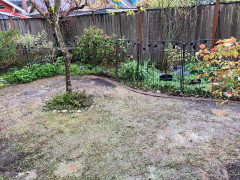
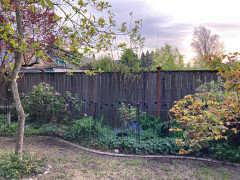
    My ”lawn” this spring after heavy rains in early April. (Pardon the pots stuck in the beds—planting in progress.)


    Lawn is a little drier now.


    User thanked portlandmysteryrose
  • 4 years ago

    Carol, well, that's, uh, interesting. There's no grass in that picture!?! Perhaps I should say that my lawn is predominantly grass: annual grass, and clumping, not running, perennial grass. It's always been here and I never did anything to push it to grow, but it seems perfectly happy. Meadows do exist in nature, after all, and our lawns just imitate them. I should add that my "lawn" is mainly paths with wide spots, not an expanse of velvet green.

    I had Viola labradorica when I lived in Washington, having gotten ambitious to own it after seeing it growing in cracks in the sidewalk. Here I have sweet violets and some other native species, and the American Viola sororia priceana romping in the alley, where I try to keep it confined. I listed the low-growing meadow (lawn) plants that grow for me, and most of them will be naturalized in the U.S. but there might be natives that I don't know that would join nicely in a meadow plant community.

    User thanked Melissa Northern Italy zone 8
  • 4 years ago

    I just listen to a soil scientist that did experiments on planted soil with compost tea added (or great compost) and planted soil with only water. She found that the plants without compost or compost tea required 50% more water to remain alive. The plants with compost tea or compost grew twice as big and required 1/2 the water. While this is not really your question, it might help you cut down on watering and solve some of the puzzle of plants that do well, with not much water.