Software
Houzz Logo Print
vda11

gardenia leaves fading and dropping

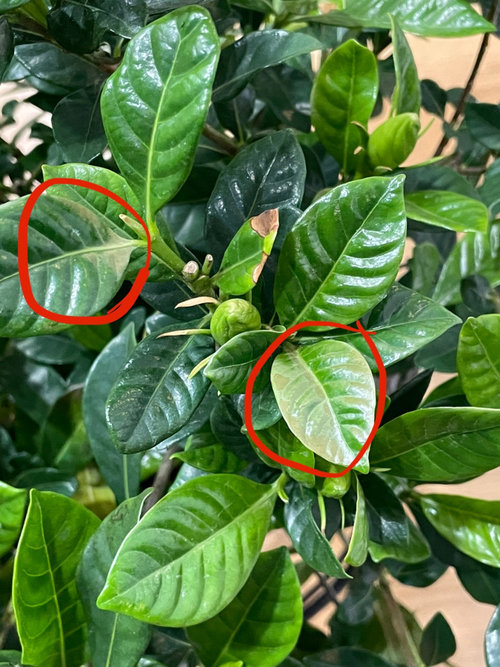
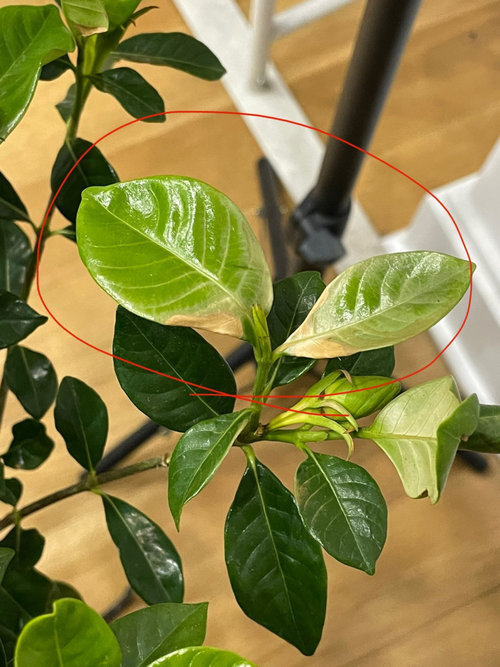
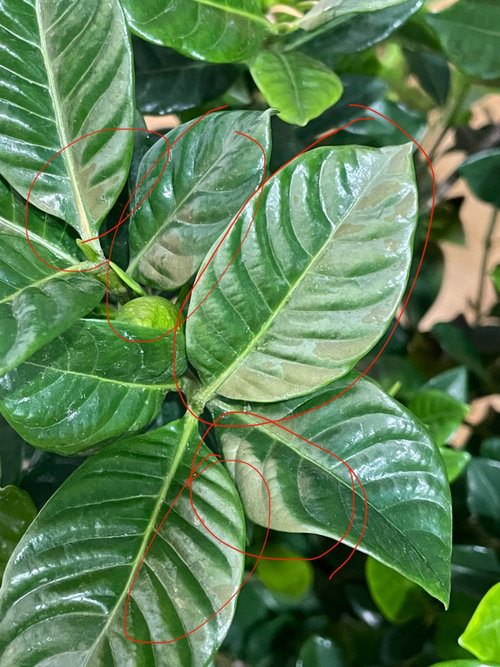
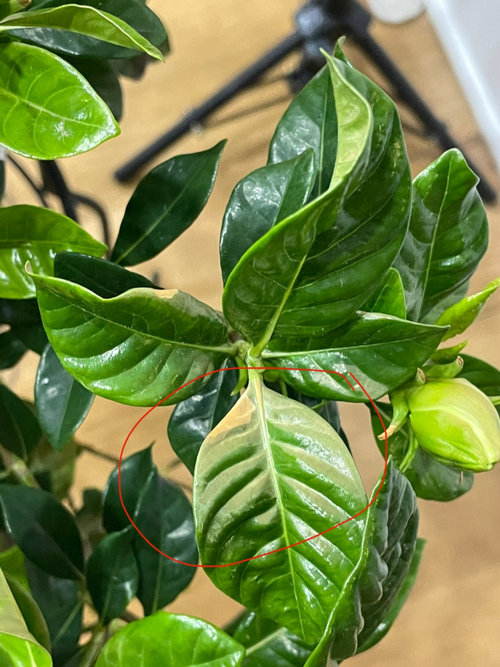
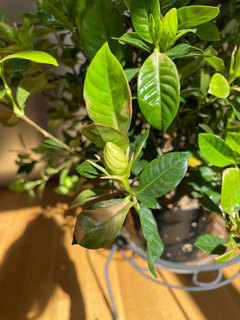
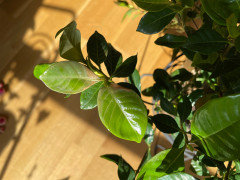
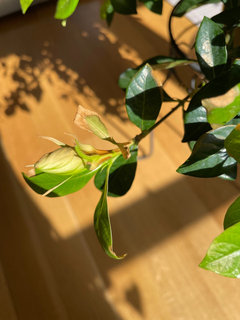
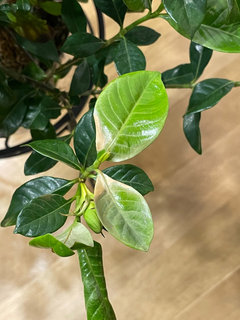
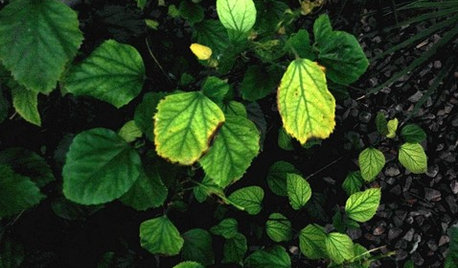
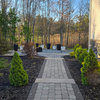
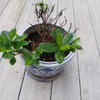
Hi, I just got this potted gardenia from a nursery last week. it was full, beautiful, glossy green leaves, full of buds about to bloom, and a few blooms. I brought it home, put it outside because it gets full sun for a good part of the day and it’s not too cold (40s at night and 60s and up during the day). I noticed that some of the leaves started fading (see pictures) not browning, not yellowing but fading to a lighter green then falling off. Is there an issue for this, I took it outside because I read gardenias need full sun, and at my prior place for my other gardenias I’ve never had enough sun. I just moved and have more direct sunlight now but maybe it’s too much sun? Or is it too cold? Or is it because of the wind? It’s been windy lately. I’ve been struggling with gardenias for a while, they do ok in summer but as soon as I bring them inside for winter the leaves drop, I even bought a plant light, it helped but my last gardenia still didn’t survive. This is my last try and I think I have such better conditions for it. Please help with any advice. I try not to overwater and underwater (HARD to do) and don’t want to give up yet. Thank you

Comments (11)

  • 4 years ago

    More pictures

  • 4 years ago

    LOL!! JP, did you not mean NOT the easiest of plants?? I would agree. Very fussy about growing conditions, difficult to keep happy for even experienced gardeners. They are just so enticing when seen at the nursery with that lush, dark green foliage and filled with flower buds. The problem is, as soon as you have paid for the plant, it starts to decline :-) If you could grow them in a similar grower's greenhouse environment, you might have better luck but they are very challenging to grow well for the home gardener, inside or out.

  • 4 years ago

    Yes, Gardengal, definitely NOT! Still, one of my favorite flowers. I have seen huge ones in .pots in greenhouse nurseries. I think for me, the hardest thing is maintaining their watering needs. This is one plant that actually benefits from sitting in a shallow saucer filled with water at all times. But if we get some hot and windy days, they can go from lush to hellacious in a matter of hours. Outside though, they get the day/night temperature contrast and air flow that they also love. Let's see how long I can keep the current ones alive.

  • 4 years ago

    Thanks all. So that is sun burn, good to know. I just moved and get so much more sun where I am now from before. I’m in zone 7b so it’s been nice but not super hot. It’s in a high rise balcony and the wind is there at times. I’ll try one more time if not I’ll get an azalea instead. Sounds like even if it will do well in summer I’ll have issue again in winter when I’ll bring it indoors. And yes, they’re so tempting at the store that’s why I keep buying them.

  • 4 years ago

    Asking re sunburn because I noticed my cat palm that I took outside got dry silvery leaves also. I’ll try to move it behind something so it blocks some sun.

  • 4 years ago

    High rise balcony?! That is also a VERY CHALLENGING environment unless you can somehow reduce sun and WIND exposure. Cat palms will burn even worse. I would go with cacti, and succulents (Yuccas, Euphorbias, Agave, Aloes, Snake plants, Jades, etc.), or maybe ornamental grasses.

  • 4 years ago

    gardenia from a nursery last week.


    ==>>


    your plant is SIGNIFICANTLY STRESSED.. and as such.. is dropping leaves ..


    it was moved from the perfect environs of the growers greenhouse.. to the store.. to your house .... and then you put it outside at significant height.. with what it thinks are bizarre winds and light ... frankly.. your lucky it still alive ...


    if it were me.. i would have brought it home and left it near the balcony door for a week.. get used to some of the sun ... and i might put it outside for an hour or two after work.. HARDENING THE PLANT OFF to its new future environs ... and then perhaps.. outside on a Saturday and or sunday ...


    https://duckduckgo.com/?t=ffab&q=hardening+plants+off&ia=web


    and then it would be ready to go outside and see if it could survive ...


    good luck


    ken


    ps: try some easier stuff ...

  • 4 years ago

    Thank you, great suggestions, I’d like to get some perennials for some 7b (or 6 since it’s containers) so I don’t have to bring them all indoors. I like the grasses idea. Re acclimating the gardenia - great advice! I’ll make sure to do that with any other plants I buy. I assumed it wants to be outside asap based on what I’ve read online (I did keep it indoor for a few days to enjoy the lovely smell of its flowers, but clearly not enough to get it acclimated.

  • 4 years ago

    Sunburn (photo-oxidation) and Heat Stress

    When plants are not adequately conditioned to high light intensity levels, the additional photo load can cause chlorophyll molecules to rise to a more excited state than normal. If light levels are high enough, the energy released as electrons in molecules return to their normal energy state may be sufficient to form oxygen radicals from O2. These are the same O2- radicals found in H2O2 (hydrogen peroxide) and are extremely reactive particles which will readily destroy (oxidize/ bleach) chlorophyll molecules. The entire process and technical term is photo oxidation, and we generally refer to it as sunburn.

    Many confuse over-heating with photo-oxidation (sunburn). They're different. I wouldn't put a plant in a direct sun exposure and check daily for signs of burning. If your plant is sunburned, a LOT of cells have been killed by the free oxygen O-negative radical that's generated during photo over-exposure. IOW - by the time there's a symptom, the damage has been done.

    Overheating is caused by passive solar gain. Imagine how hot a dark green car gets in intense direct sun when there is no breeze to get a sense of what passive solar gain is - light energy being converted to heat. Overheating commonly occurs indoors because of a layer of still air (called the boundary layer) that surrounds the leaf. It serves to insulate the leaf so heat is trapped in the leaf and not lost to surrounding air. Most cases of overheating can be avoided by rigging a fan on a timer so it disrupts the boundary layer during periods of intense photo load.

    A higher leaf temperature increases the likelihood of damage from photo-oxidation, which is why the most damage is normally seen in the thickest part of the leaf, which would be along the leaf's mid vein, and the least damage at leaf margins where leaf tissue is thinner and dissipates heat faster. Sunburn initially presents as silver/ gray/ tan areas toward the middle of the leaf, except in severe cases where the entire leaf might be involved. Damaged ares might turn black and ooze if leaves are thick, fleshy, and made up of a high % of water. Leaves thinner and made up of a lower % of water usually turn brown and dry in the days after the initial damage occurred.

    Al

  • 3 years ago

    Thanks all. After all my tries the plant recovered a bit then dried up. I give up on trying another gardenia. They seem to work only for a few months max for me. I wish they wouldn’t sell them and tempt me at local stores with beautiful gardenias full of blooms…..

Sponsored
Mary Shipley Interiors
Average rating: 4.8 out of 5 stars34 Reviews
Columbus OH Premier Interior Designer 10x Best of Houzz