Software
Houzz Logo Print
brian_macaione

1952 Electrical help

4 years ago
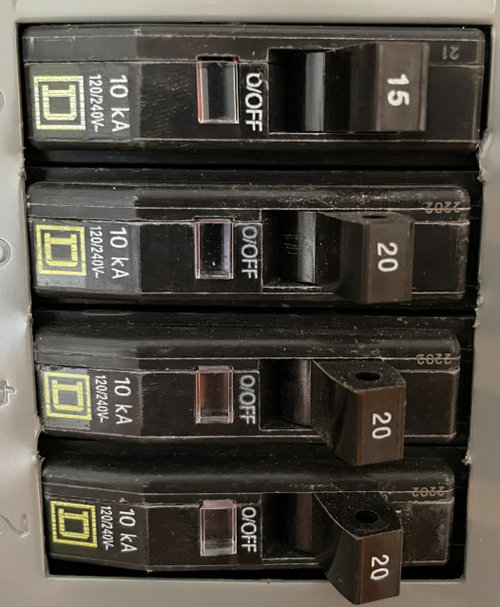
Hey all, we recently purchased a home built in 1952 and have a few questions about the electrical that we haven’t been able to get a definitive answer on. First a bit of info: the house was built in 1952 with some additions in the 80/90s. The additions as well as the original kitchen and bathroom are all good, but the 3 original bedrooms and living room all have ungrounded 2-prong outlets. The previous owner had two of the breaker boxes updated to code before we bought the home, but the outlets and wiring did not get updated. Two of the rooms will be offices handling a decent load of electronics as well as the normal amount in the living room. After researching, I first tried self grounding outlets, as the boxes appear to be metal. However, when tested, it was still showing open ground. So we had an electrician come to assess rewiring and we’re vaguely quoted (tens of thousands of dollars) to get the 3 rooms and living space rewired. We can not afford this. I unfortunately was not there for their visit, but it was relayed to me that he suggested changing the breakers that supply these areas to arc fault / ground fault breakers and to change the outlets to gfi ones. However, I’ve seen online that this may not be the case. So my questions are:

  1. What is the safest alternative to rewiring that house were we can have safe 3-pronged outlets.
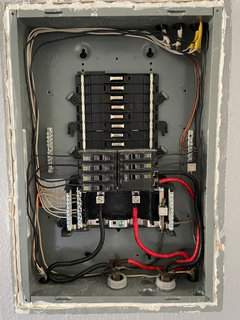
  2. If we were to replace the breakers, how would one go about finding which one is the correct replacement? As most of what I’ve seen says to use the same exact breaker, which doesn’t help when switching to an arc / ground fault. (Pic Included)
  3. Is switching out the breakers AND outlets redundant or will this actually create a safer system?

Thanks for any input / advice. It is greatly appreciated.


Comments (15)

  • 4 years ago

    I am not an expert, but you might consider this:


    In the offices, add one (or more) new circuits. These circuits would be grounded (assuming it is feasible to run these new circuits from a breaker box that supports grounding). This would give you access to a legitimate ground for any equipment that needs it.


    Similarly, add one or more circuits to the living room so that you will have a legitimate ground available there (if needed).


    For the rest of the ungrounded outlets, as suggested by the previous poster, use either GFCI breaker or GFCI outlet(s) to achieve safety, but not actual grounding. GFCI outlets come with (or used to) little stickers that you can put on downstream outlets indicating whether they are actually grounded or not.


    Good luck!

  • 4 years ago
    last modified: 4 years ago

    I believe self-grounding outlets only work if you have metal boxes that are themselves grounded, such as having armored cable that runs from the receptacle boxes to the breaker box. Seventy years ago, receptacle boxes were almost all metal, but that didn't mean that they were grounded, as code didn't require it at the time. I had a 1952 vintage home, also with metal boxes, but none of these were grounded either. Many years ago, when I decided to upgrade the wiring, I ran new Romex cable to as many locations as I could easily access. Since the house was on a slab, some receptacles were not possible to get new cable to very easily, and the permits people allowed me to run 14 gauge grounding wires from the boxes to locations where I could connect these wires to the new Romex. I removed my baseboards, started a wire in a box, ran the wire down inside the wall a foot to the floor, drilled through the wall so I could pull the wire into the room, and then run it along the wall to some other box where I could connect to the grounded Romex. After I reattached the baseboards, it was hidden. I have no idea if this would be allowed today or in your locality. But it did allow me to get all those receptacle boxes grounded.


  • 4 years ago

    Kudzu gives you good advice. I would not install AFCI breakers as they are prone to irritating trips even with new wiring. GFCI breakers are up to you, but there are few problems plugging lamps and such into two prong outlets. The biggest problem I have with our two prong outlets is that they get worn out after 70 years of plugging things in and plugs won't stay in place.

  • 4 years ago

    P.S.: You should get a couple more bids as the one you've already gotten seems high. Or do it yourself: fishing new cable and replacing the receptacles is not complex work. And you may not have to replace many/any of those breakers. Ask your local permit folks; if you need to, those are readily available Square D brand and they come in GFCI versions.

  • 4 years ago

    Do NOT spend thousands to have your house rewired. You may already have a grounded wiring and not know it, and even if you don't, as HU below says, GFI breakers (you don't need AFI to meet code) will have you covered.


    My house built in 1958 had two-prong outlets and I thought I was in the same boat as you. I have cloth sheathed wire, and I noticed that the outer insulation of all of the wires were wrapped in thin copper wire (I think 18 ga) where they entered the outlet box. I assumed this was to keep the fabric from fraying (like using electrical tape on fabric lamp cord) or maybe to hold the wire in the box, but figured out later that this was an early form of grounding. Turns out the wiring has two plastic insulated 14 ga conductors, plus an uninsulated 18 ga ground wire. I installed self-grounding three-prong outlets to the metal boxes and was good to go. I would check to see if your wire has a ground in it that just isn't being used. If so, you'll want to make sure it's connected to your neutral bus bar in the panel (mine were).


    If you truly don't have wire with a ground, you can use GFI breakers along with your 3-prong outlets and still meet code. This is what I was planning to do before I discovered all of my boxes were already grounded. The GFI breaker will provide you comparable protection that a third prong would from ground faults. The only down side is that surge protectors will not work as effectively, as they use the third prong to dump the extra current, so if you really need a surge protector, maybe just run a single new circuit to that location.


    Bear in mind that all of this only matters for devices that even have a third prong-- all of your two-prong devices are ungrounded and unaffected anyway.


    Bottom line: do not rewire your house. There are other, cheaper solutions.


  • 4 years ago

    Thank you everyone for the input. This has been an ongoing headache so all of your advice is greatly appreciated. I decided to take the route of replacing the first outlet in each line with a gfci/arc fault outlet. I was able to located the first in line and wired the new outlet up. After testing it worked well, however when i went to place the outlet in the wall I realized the old (metal) gang box is too narrow. Not to shallow as I would have thought, but too narrow side to side, so I could not even push it in. I ended up reinstlling the old recepticle just for safety and am back at square one currently. I'm not sure if I should try to remove the metal box (which actually appears to be motared into the wall some how) and replace it with a wider box or if I'm better off going a different root.


    I was also advised to check my breaker box to see if there is any indication of grounds in there. I do see what I think are some grounds (see pic below: 4 on the right and one on the left) but after using a pig tail to try and connect a regular self grounding outlet to the metal gang box and still getting an "open gound" reading, I'm not sure they go to the outlets.


    I feel like I'm approaching the "over my head" end of my electrical knowledge, but am really hoping to figure out a solution still that is safe for us, our equimpment, and that we can afford. As always, I appreciate any advice.


  • 4 years ago

    It looks like all the wiring in the breaker box is Romex with a ground wire. Where does this go to and what do you have in the receptacle boxes? Did you follow Mike's advice above to check the makeup of the wires in the receptacle boxes to see if they have grounds that weren't connected?

  • 4 years ago

    The panel you show is not the only panel in the house, right?

  • 4 years ago

    @Seabornman Nope, there's the outside main and a 2nd inside for the aforementioned additions, which are all grounded already. This one is the one for the ungrounded rooms in question.


    @kudzu9 This goes to the original build including the 3 ungrounded bedrooms and living room as well as the original build that is grounded, i.e. the kitchen and bathroom. I did. There was no visible ground unfortunatley. I even tried to ground to the metal gang box as I'd been advised with no luck.

  • 4 years ago

    Brian-

    So are you saying that you have Romex with a ground in the breaker box that services the 3 ungrounded bedrooms and living room, but you don't see any ground wires in the receptacles in those locations? What kind of wire do you see in the receptacles? Is it possible some bonehead installer snipped off the grounds at the locations that aren't grounded. What I'm getting at is that you either have grounded Romex running from the breaker box to these locations and, for reasons I can't understand, the ground wire is not present when the cable terminates, or you have old wires in the receptacle boxes that have been spliced somewhere to this grounded Romex. More detail, please.

  • 4 years ago

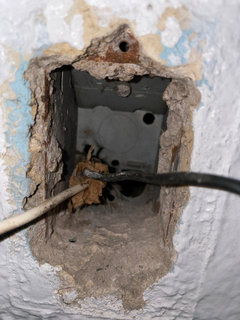
    @kudzu9 I'm thinking it may be the latter unfortunately. I don't understand why this would happen, but inside the outlets are just the hot and neutral lines (2 or 4 depending on where it is in the chain.) I've included a pic of what's inside the box.


  • 4 years ago

    Brian-

    It would be a good idea to try to trace where those grounded Romex go to. If they were spliced to the old wiring outside an accessible box, that's a code violation as well as a potentially dangerous situation.

    Brian Macaione thanked kudzu9
  • 4 years ago
    last modified: 4 years ago

    I agree with @kudzu9. The junction point might be buried in the walls somewhere, unfortunately. The easiest thing to do is replace the breakers for the ungrounded outlets with GFI breakers (even easier since you're working with a sub-panel and you can turn the power to the box completely off while you work on it), replace your 2 prong outlets with the .89 cent 3-prong ones and call it a day.


    If you've got spackling skills, you could attempt a rewire yourself too, since you're dealing with so few circuits. But that's still going to be a lot of effort (it's not complicated, just annoying and tedious). Also, you have plaster walls, which I love, except when wiring.

  • 4 years ago

    I'm going to try to help you figure out your situation here. There are 6 regular breakers on 120V lines, and one double breaker on a 240-volt pair. I see only 4 ground wires going into the ground terminal bar, those appear to be from the four cables coming in from the upper right. There is a cable coming in from the lower left which has a properly wired neutral (white) and hot (black) wire, and a bare ground wire, but I cannot see if that's connected to anything. The cable on the lower right doesn't appear to even have a ground wire. There is a heavy stranded wire going into the ground bus bar, is that going to the auxiliary ground bus bar?

    What appliance is connected to the 240-volt circuit?

    I think you need to trace out the four properly grounded cables and see if they do go to grounded receptacles. If the ungrounded receptacles go to one or more of these, then there (hopefully) a junction box where the two- and three-wire cables are connected to each other. The two-wire cables from the receptacles and this junction box should be replaced with a three-wire cable and properly grounded. This is probably easier to do than to run new cables all the way back to this breaker box. The two apparently ungrounded cables (lower left and lower right) need to be replaced.