Software
Houzz Logo Print
dustynight

How to pull an open seam closed to liquid weld.

4 years ago
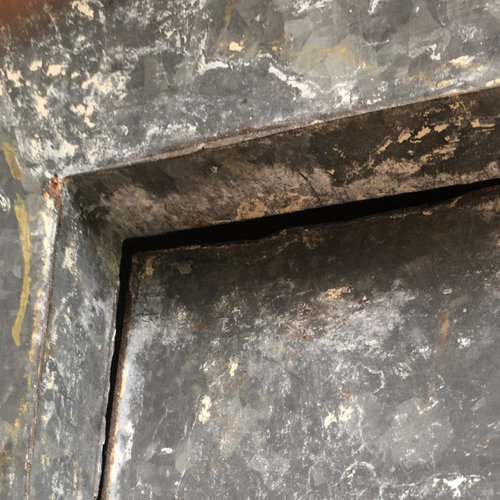
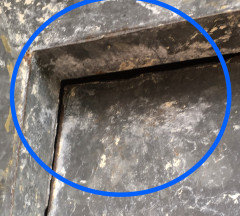
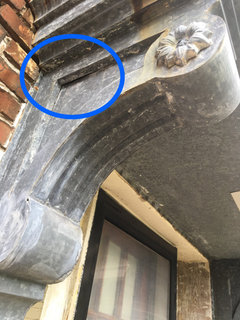
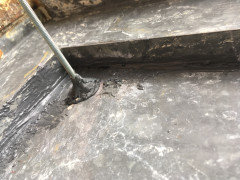
I have this decorative metal canopy over my front door that has come apart at one of the seams and I need advice as to how to pull a side panel closed in order to liquid weld the seam together again.

Photo included


Comments (22)

  • 4 years ago

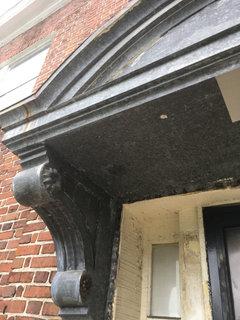
    Need to take another photo. Pull back so we can see the context. Because I can not figure out what I'm looking at.

  • 4 years ago

    Apparently my 2nd set of photos did notvgo through. So here they are again:


  • 4 years ago

    Will a magnet stick to it? Drill a small hole, insert a screw a pull the piece back out by holding onto the screw?

    dustynight thanked millworkman
  • 4 years ago

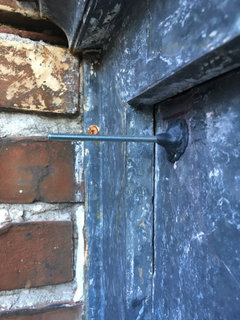
    Or drill a small hole on the opposite inside vertical piece and then use something sturdy (long nail or stiff wire) through the hole to push against the other side?

    dustynight thanked party_music50
  • 4 years ago

    I was thinking the same as millworkman suggested. Sheet metal screw into the metal and pull it back where it is supposed to be.

    You will have to keep tension on it somehow. Maybe a loop of wire around the screw and then wrapped and twisted around a small board or thick piece of metal rod....long enough to span across the raised sections and braced/ shimmed to keep the tension while the 'liquid weld' cures?? JB Weld? (What product were you going to use?)

    dustynight thanked ci_lantro
  • 4 years ago
    last modified: 4 years ago

    Just for the record, that part is a bracket or corbel, not the canopy itself.

    Glad you're repairing that classic part of the house!

    These do not seem to be cast iron which is sometimes used. Galvanized steel?

    dustynight thanked toxcrusadr
  • 4 years ago

    Thanks all for all the suggestions.


    I did try a magnet, but it wiuld just clamp on to that open side panel.

    Yes, I had planned to use the JB Liquid Weld and have used it on other seams on the structure. But I was stunted on how to seal this section.


    As mentioned above, the problem is how to keep the seam closed after applying the liquid weld in order for it to take, cure and seal.

  • 4 years ago

    "As mentioned above, the problem is how to keep the seam closed after applying the liquid weld in order for it to take, cure and seal."


    I posted earlier - "Drill a small hole, insert a screw a pull the piece back out by holding onto the screw?"


    Then ci_lantro posted - "You will have to keep tension on it somehow. Maybe a loop of wire around the screw and then wrapped and twisted around a small board or thick piece of metal rod"

  • 4 years ago

    Noted. So I would hold the metal in place until the weld hardened?

  • 4 years ago

    Yes.

  • PRO
    4 years ago

    So I would hold the metal in place until the weld hardened?


    Maybe not you yourself, but the joint does need to close and stay closed while the weld hardens.

    dustynight thanked PPF.
  • 4 years ago

    1. Drill a small hole in the panel.

    2. Cut a wooden 1X2 that will span the structure surrounding the panel and drill a hole in the wood that a screw can pass through.

    3. Apply JB Weld to the seam.

    4. Put the piece of wood in place and insert and tighten a screw so that the panel is drawn tight. (This will be easier if you first drive in the screw to cut the threads; then temporarily remove it)

    5. Remove the wooden piece after the epoxy has cured.


    dustynight thanked kudzu9
  • 4 years ago

    If you want to avoid drilling a hole, you might try the method that paintless dent removers use to repair car dents, which is essentially a glorified bundle of hot glue sticks, heated to adhere and cool on the surface until you can use the sticks to pull the metal towards you. Google “Hot glue dent removal” to view the technique. Not sure if it would work on that surface, but if it did, you wouldn’t have a hole to repair.

    dustynight thanked larakaty
  • 4 years ago

    larakaty-

    Interesting idea, but that would likely mean standing on a ladder and pulling on the bundle the whole time until the epoxy cured. I think a 1/8" screw hole will be unnoticeable on that high up surface once it has been filled with dark caulk.

    dustynight thanked kudzu9
  • 4 years ago

    Thanks for all the additiobal suggestions. Some questions:


    How long would the screw have to be to go through the wood and the metal? 1 1/2 inch


    Instead of making a hole, Could I use the hot glue to hold the nail head in place against the metal and use the 1X2 to hold the screw tight with a nut?

  • 4 years ago

    If you use a screw, put the piece of wood in place and measure the distance from the outside edge of the wood to the face of the piece you want to draw into place, and add 1/2": that's about the screw length you want. if you want to try to glue a bolt head to the piece, it's a similar measurement: you want the threaded end of the bolt to stick through rhe wood at least 1/4" so you can easily get a washer and a nut on the threads. Get a bolt that is threaded along the entire shaft to make sure you don't run out of thread. (I'm sceptical about this method, as I think the bolt head may break free when you tighten down the nut.)

  • 4 years ago
    last modified: 4 years ago

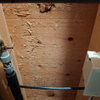
    Screw puttied on panel photo

    (Photo disappeared on previous post)


  • 4 years ago

    Panel w/o 1X2 and sealed.


  • 4 years ago

    It looks pretty good. I would use a sharp chisel to take off that glob of JB Weld.

  • 4 years ago

    The bolt thru the 1x2 was a better yet idea. Providing you can get the bolt off! Can use sandpaper to clean up the seams--knock the highs off the JBWeld. Doesn't have to be perfect since it isn't anywhere near eye level. Do you plan to paint?


  • 4 years ago

    Sorry for the delay. Have had contractors working on the house. Yes, I do plan to paint and have had a contractor working on the roof of the structure. I will remove the screw and sand that area down. Will keep you posted.