Software
Houzz Logo Print
gregjmcquaid

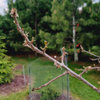
Recently planted Kousa/Korean Dogwood

4 years ago

I'd like to optimize/accelerate the growth rate of a recently planted Kousa and would appreciate any tips on a fertilization/etc. plan. I know they respond well to proper care like any plant - an old development I lived in had a Kousa in the front yard of every house and it's impressive to see the differences in them after 25 years. I also planted two Knockout Rose bushes and notice the same, some do very, very well, and some not so much at all. I don't intend to fertilize the first 6-12 months in either case and am watering more early on as usual until they are settled in. I appreciate any tips!

Comments (10)

  • 4 years ago

    You can't accelerate rate of growth. It is what it is. Fertilizing is never a solution. The only sound recommendation is to provide the growing conditions it needs and let nature take its course.

  • 4 years ago

    Make sure the roots aren't knotted!


  • 4 years ago

    Well, it's clear some grow much more/faster than others when in the right conditions with replenished soil. The development of 200 houses had some twice as big as others after a couple of decades. How do you replenish soil in order to optimize nature taking its course? In nature, the fallen leaves would be left and would replenish the soil, for example, right?

  • 4 years ago

    What do you mean by "replenished soil"? How and with what was it replenished?

  • 4 years ago

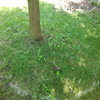
    Is your new kousa planted in the lawn or in a garden bed? Please show a photo of the base to ensure it's planted correctly. If it's in the lawn, do you use a mulching mower or bag the clippings?

  • 4 years ago

    Greg Joseph could humor us with some additional information, such as where is your Cornus kousa currently growing (city, state, country...), and where was the development located that had a Kousa in every pot, er, yard? Do you have any photos that you could share with us? If not, do you live near enough to go take some pictures, and show us images along with some narrative responding to issues presented below?


    I have some basic questions. At first, I put these in paragraph form, but as the list extended I decided that might be hard to digest and to respond reasonably. I will number them so that it is easier to address them in answers, so here goes:

    1. Did you observe the construction of the 25 year old development?
    2. Was the top 3 feet of soil scraped off to build a golf course somewhere, the remaining subsoil dozed around and beaten/compacted into submission, and the poor home buyers left with rock-hard impervious B and C horizon soils with a skim of sod laid on top?
    3. Did you see the Kousa Dogwood trees being planted?
    4. What kind of condition were they in when they were planted (B&B, container, bare root)?
    5. Were they all the same size?
    6. Were they all planted at the same time, and by whom?
    7. What time of year would that have been?
    8. Do you know if these were clonally produced Kousa Dogwood trees, or if they were random seedling grown trees?
    9. Were they all from the same nursery/grower?
    10. Was that grower/source nearby, or were they grown some place else entirely and shipped in from some significant distance?
    11. What types of subsequent disturbances may have occurred in the vicinity of these Kousa trees?
    12. What level of care was provided for each?
    13. What other environmental anomalies are/were present, or are these actually Cornus kousa 'Stepford'?

    As you have observed, planting the same species of tree does not (or cannot) ensure similar results, but concomitantly one can't attribute the reasons for those variations without doing a little, er, digging.


    For your tree: how big of a hole (width) did you dig for your planting, and in what condition was your tree when you got it? Regardless of your answer, I suggest loosening soil even wider than you did. Seeing some images of your current planting will help in responses here.


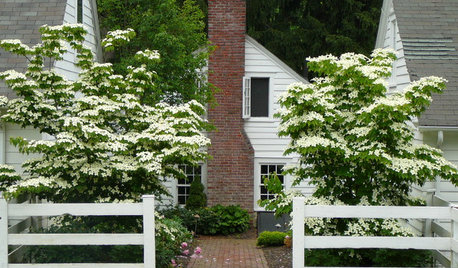
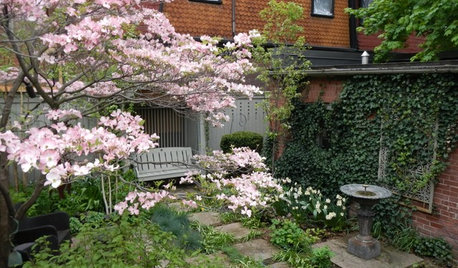
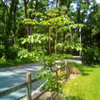
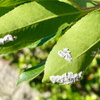
    Looser soil will enable easier/more rapid root exploitation, water penetration, gaseous exchange, etc. for your transplanted tree - much as you might do for planting a vegetable garden. I would not incorporate anything into the newly loosened soil, but I'd advise regular addition of organic matter (compost is generally good) to the soil surface - mimicking nature's dropping of leaves and other organic detritus. This encourages quality soil microflora and fauna, and availability of nutrients should be enhanced. Water thoroughly when encountering droughty periods. Observe details of your plant's growth, noting insect activities, foliar variations, and other things that may or may not be out of the ordinary - and your plant may aspire to compete with these pictured.


    I look forward to further conversation.


  • 4 years ago
    last modified: 4 years ago
    • What do you mean by "replenished soil"? How and with what was it replenished?Like
      Save

    The principle of organic farming. As stated, in the wood the leaves replenish the soil. We usually remove most leaves as they fall in autumn.

    • Is your new kousa planted in the lawn or in a garden bed? Please show a photo of the base to ensure it's planted correctly. If it's in the lawn, do you use a mulching mower or bag the clippings?

    It's in a bed and planted correctly, the hole was dug 1.5-2 times wider and filled around correctly with half the native soil and half an amendment. But yes, I do mulch the lawn most every time.

    Viburnum, Thank you for your responses, this more or less summed up what I already presumed and I will follow the plan accordingly. Regarding the development, it's just a standard housing development and a Kousa was planted by a contracted landscaping company in just about every front yard. I certainly did not see them all planted but presume the same procedure was repeated. Some of them look fantastic and are much, much larger. I understand all of the points you are making and agree the conditions/care caused the differences. I was wondering if any good tips on such care beyond proper planting. Drought-watering and compost sounds good to me! Thank you all!

  • 4 years ago

    Not sure the "humor us" connotation/energy was appropriate if I've interpreted it correctly, but I appreciate everyone's time as usual. Happy Sunday

  • 4 years ago

    "Humor us" meant it is a question almost ubiquitously asked (Where are you gardening?), when not already provided. It can (and often does) make a huge difference in providing cogent answers or advice. No offense was intended.


    It can sometimes amaze questioners how direct an answer can be provided - as there are many contributors here, some may live quite nearby, and may have already encountered exactly the issue you are asking about. Other answers may reflect experiences in an entirely different set of conditions, somewhere else on Earth.


    Kousa Dogwood is a perfectly good non-native ornamental tree, and can grow well in a variety of places.

    • It DOES NOT do well in standing water, thus my question about general soil profile conditions.
    • It DOES NOT tolerate extended droughty periods well, especially if its root system is limited (potentially due to problematic soils).

    Since you didn't offer too many answers, I'll explain some of why I asked what I did. Stipulating that every house had a tree planted at the same time, here are some reasonable postulations about why you observe differences.

    • Better aftercare by some homeowners has resulted in superior landscape specimens today.
    • Some died early on, and were subsequently replaced - and are thus a completely different age and stage of growth.
    • Being planted by the same contractor does not guarantee the same quality of workmanship. Having personally managed horticultural staff over the decades, I can unequivocally state that this can vary from person to person.
    • If these were B&B plants, there could be inorganic bindings girdling the subsurface plant structures (wire basket, plastic weave "burlap", plastic cords, etc.).
    • Planting too deep (burying the crown/basal flare of the trunk) can lead to life-long poor performance or premature death.
    • As mentioned by davidrt28 above, container-grown plants may have varying levels of encircling roots caused by poor quality production methods. These unknown defects can take a long time to evidence themselves, but often result in poorer landscape performance.
    • Lawn care damage!!! Mowers, weedeaters, and applications of herbicides/pesticides wreak havoc in growing conditions for trees, by debarking the trunk or inadvertent poisoning. The landscape industry would do well to survey and publicize the actual rate at which this leads to the mortality of woody landscape plants I'd suggest it is the reason more than 50% of the time - whether by contracted work or by oblivious homeowners. "It just died" is rarely a believable answer.
    • Utility installation or construction damage! Trenching through the root system of an established tree can remove up to 50% of its productive below ground structures, depending on how close to the trunk the insult occurred. Homeowners that desire irrigation to support an established landscape often incur this kind of damage, if not working with a reputable irrigation firm with horticultural bona fides. Water, electric, sanitary sewer, fiber optic, "invisible fence", and any other underground utility that employs trenching to install will cut roots - and lead to diminished performance of trees when roots are severed. Patio construction, sidewalks, swimming pools, driveways - all these sever roots as well, and worse - create impervious surfaces which diminish potential soil volumes and rooting zones permanently.
    • Depth to bedrock: if soil profile is shallow, this can exacerbate wetness AND dryness during extreme conditions, and limit the available soil volume that roots can exploit.
    • Abnormal climatic events can affect landscape performance, depending on exposure and the plant's health at the time of exposure. Severe cold (a Kentucky nursery I've purchased trees from, including Kousa Dogwood, had its Cornus kousa killed to the snowline in 1994 during a cold snap that dropped to -37ºF), flooding, severe insect damage like Periodical Cicada, competition/shading from larger plants, or extended drought will create marked differences in expected appearance of similar trees.
    • The growing media (whether the soil of field grown trees or the soil-less media of container plants) and whether it matches well with the landscape into which it is planted, makes a big difference in how a tree establishes. Knowing something about the location to which you refer helps in answering this issue. I think of mid Atlantic region states in the coastal plain, where acid sandy loams are normal - and many nurseries abound. Moving plants grown there into compacted clay soils of some newly established subdivisions traumatizes those plants, unless some extensive preparations are made. This doesn't mean it is impossible to do, just that extra effort is generally required to be successful. Pass through contractors installing trees for a developer are not often compensately adequately to encourage these kinds of extra efforts.
    • Finally, if all these trees were one named selection (Cornus kousa 'Greensleeves', 'National', 'Wolf Eyes') then even better judgment might be made on performance similarities or differences. Likely, though, these were row run seedlings or some mixture of plants purchased to meet a minimum landscape size requirement (all 1.75 - 2" caliper, or all 6-8' tall). Thus, there would never have been a fair way to evaluate how they would grow from the outset.

    I hope your Kousa achieves its inherent greatness.


  • 4 years ago

    “filled around correctly with half the native soil and half an amendment.”

    Sadly it was not filled around correctly. The planting hole should have been back filled with the soil taken out. No amendment.


    A good start to caring for the tree would be to not remove the fallen leaves.