Software
Houzz Logo Print
jordan_swogger

Advice on washing machine repair vs. replacement

4 years ago
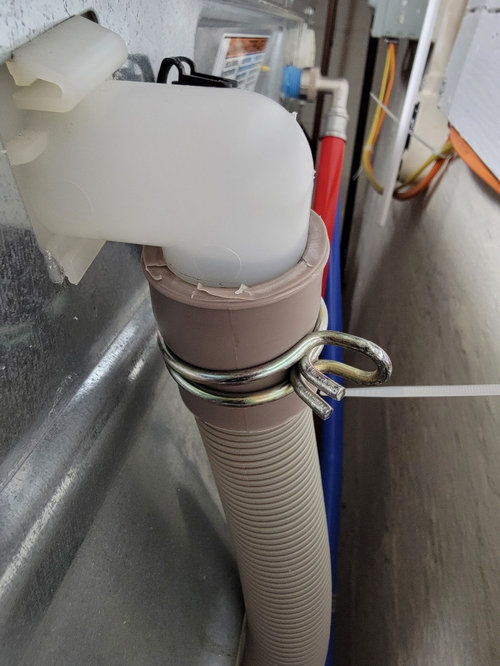
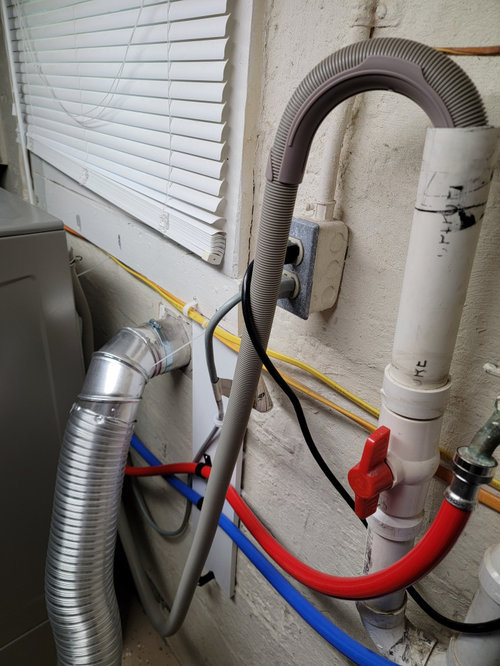
We have an 18 year old KitchenAid (Whirlpool) frontloader that we recently moved from its original location in order to place it to the left of the clothes dryer. While moving it, we discovered its drain hose was starting to crack, so we replaced it. Everything seems to work aside from the fact that there is a lot of water still remaining in the drain hose after the cycle completes (not really in the tub, as far as we can see). We didn't install the washer, so we are seeking advice as to what is considered a normal amount of water in the hose. I know it's impossible to fully purge the water and some will likely always sit in the "dip" of the hose, but in our case nearly the entire hose has water remaining in it after a cycle. I feel like this is abnormal. I've attached a picture showing the waterline at the clear drain connector in the back of the machine, and the water goes all the way up the hose nearly to the curve where it goes into the standpipe. I figured the drain pump may be worn out, so I ordered that part, but I'm hesitating on replacing it and wondering if it's worthwhile. Since sales are going on for July 4th, we're also weighing whether a $160 part with potentially no improvement is a good investment versus just purchasing a new one.


So essentially we're trying to determine: is that much water left in the hose normal (and if not, would the new pump help or is there another cause/solution?), and whether it's wise to attempt a repair on an 18 year old machine versus getting a new one (that may only last us 10 years from what I read, haha).


Please see below for the waterline picture and an overall picture of the setup, if that helps. Thank you so much!


-Jordan


Comments (13)

  • 4 years ago

    Yes...water will remain in the drain hose.

    All pumps just move the water from the tub to the drain line.

    As soon as the pumps grabs air from the empty washing machine drum the flow of water stops (pretty much) and some water remains in the hose.

    There isn't a pump that will fully eliminate all the water. The physics of moving the water from down low to up high to go down the drain won't allow total water elimination.

    Usually there will be some water left in the bottom of the washer in the "sump" area (where you can't see) also.

    That's why it's good to use bleach every once in a while to keep mold at bay in that whole drain area.

  • 4 years ago

    Tricky to determine for sure but the perspective of your photo makes the drain hose appear longer than normal and the height of the standpipe may be higher than usual. Both factors have an effect on residual water in the hose.

    A "gotcha" on the pump for this model is that (as far as I'm aware, you didn't cite the model number) Whirlpool doesn't source the pump as a separate item, the entire pump-and-housing is replaced as an assembly. I found years ago that a Samsung pump (DC31-00054A) fit on a sibling Whirlpool Duet model, although a slight modification of the wiring connector was needed. Other substitutions possibly can be found nowadays.

  • 4 years ago

    Thank you all! For some additional info, the height of the bottom of the p-trap above the floor is 3 ft. From the bottom of the p-trap up to the top of the stand pipe is 2 ft. So, the opening is about 5 ft off the floor. The washer is on a pedestal and the height of the clear drain exit (pictured) from the floor is 4 ft. The length of the replacement drain hose was 8 ft. and was definitely longer than the original, however we retried the original and the water also sat in it. We actually thought about it being too long, so we cut off about a foot of it. There was no appreciable difference but maybe if we cut off more it would help? Do you think that replacing the pump is worthwhile in this case, or do you think that it really won't make any difference? Apologies for leaving out the pump model number, it is WPL 280187. I already have it in hand, I just haven't taken it out of the packaging yet. Again, thank you so much for your advice!

  • 4 years ago

    A new pump really won't make a difference.

    I would wait until the current pump fails before replacing it.

  • 4 years ago

    If you're going to "wait", return the new pump now . IF someday you need it, re-order.

  • 4 years ago

    As plumbers say, shi* don't flow uphill. Neither does water, especially in a hose that is held high on both ends. The washer pump lifts the water to the height of the standpipe where the water gravity drains into the house drainage from there. When the pump shuts off, the water in the drain hose will drop from the standpipe height to the level of the washer outlet, that extra water up to the standpipe draining back into the washer. With your current plumbing layout, heights, etc. that's just the way it is. High school physics.

  • 4 years ago

    Thank you all very much for your advice and perspectives! I definitely feel a lot better informed and hope this will help anyone looking to learn about this in the future.


    We did indeed undo the filter trap, and while there were a few coins in there, it didn't make much difference unfortunately. It's great to hear that we've gotten a good bit more years than expected out of the machine. We talked about it and decided that we're going to just run it as normal for the month we have to return the pump assembly. If it keeps working, we'll likely return the pump and put that money towards a budget for either fixing the washer when it fails at some point in the future or using the funds towards a new one. Again, thank you all for your explanations. You helped me with what I was most concerned with: was this normal and acceptable considering our particular plumbing situation? The answer seems to be yes, so we'll keep on using it until it gives out. Thanks again!

  • 4 years ago

    You might try reducing the sag on the drain hose, which should reduce the volume of the water retained in it.

  • 4 years ago

    Thanks! By cutting some off to shorten , you mean?

  • 4 years ago

    Whatever method works best to reduce how low the hose hangs down on its path to the standpipe. The pump's force is what pushes the water through the hose to the standpipe. There's no appreciable pump-out force after it has drained all the water it can out of the machine so the remainder settles in the sag of the hose. You mentioned that the original drain hose was replaced with a longer one when the machine was relocated. Was the original hose cut off shorter and wouldn't reach the standpipe at all?

  • 4 years ago

    Gotcha, yeah it could stand being cut a little shorter; perhaps that would help a little. And, the original hose was never cut short, it had a "finished" rubber end to it. Even with the washer in the new location, the original hose did reach up to the standpipe and down into it (we replaced it only because it was starting to crack in the sections just above the standpipe along the curve), so theoretically we could cut the new hose that short as well and it should work identically to the old one. I might try that, as long as we can keep it away from the dryer vent.


    I was mostly concerned about that much water staying in the hose, but with everyone's explanations, I now understand that in my particular plumbing situation, it's fairly normal and was likely always the case. The only difference may be that I just know about it now haha. I'm happy to report several successful wash cycles so far with no change in the smell of the machine, no standing water visible in the drum, etc. Thanks again everyone so much for your help, it is very much appreciated!

  • 4 years ago

    Since it's working, I wouldn't spend any money for replacement parts. I would simply keep using it until it fails and then buy a new one. Putting money into an 18 year old machine does not seem like a good economic decision.