Software
Houzz Logo Print
mbeck29

New Trees - how often to water? Zone 6a

4 years ago


Hi everyone,


I'm looking for guidance on watering some new trees. I'm a complete newcomer to all things landscaping and caring for plants of any kind. I really don't want to kill these beautiful trees.


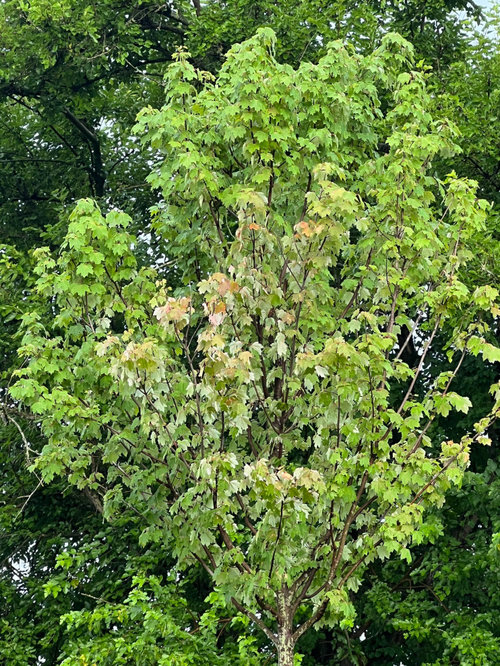
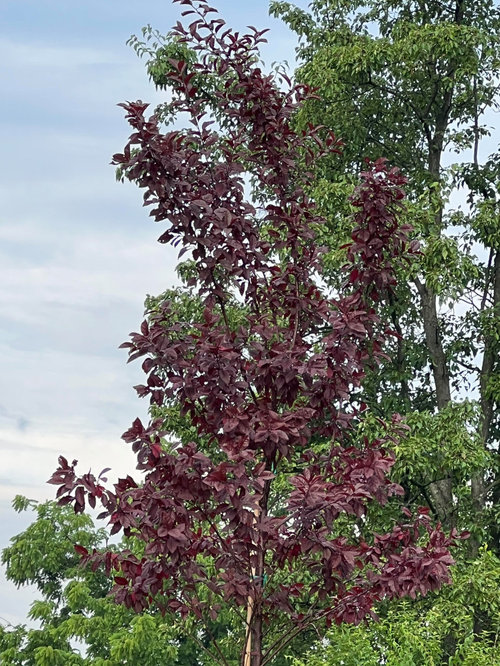
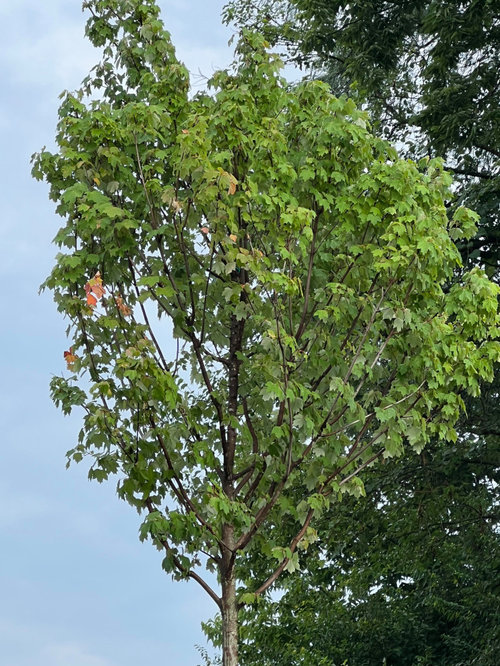
We have two Brandywine Maple and one Purple Leaf Plum which were transplanted from the nursery on 06/22/22. We're in zone 6a with clay soil, and the trees were planted at the top of a ridge with good drainage and full sun. The nursery staff dug the holes and amended the soil a bit. The holes were not too much bigger than the burlap-wrapped root balls, maybe 3-4 inches. It was 90F+ degrees that day and the guys were pouring with sweat, so I'm thinking they just wanted to get the trees in the ground as quickly as possible. After planting, they stood with our garden hose on full flow and soaked the trees down. They did not put water in the bottom of the hole before putting the trees in the ground. The area was mulched when all was done.


The nursery guys gave use conflicting information on how often to water. At first, he said to water the trees once per week, slow flow for deep root soak (about 60 minutes) and aim to provide 20 gallons per week. Then, reconsidering the temperatures we're having with days in the 80F range, but reaching into to the 90F range often, he said to water every 3 to 4 days, again aiming for a total of 20 gallons delivered per week. He said to do the 3-to-4-day routine for about 6 weeks, then back down to weekly through the end of October.


I'm a nervous person and I got a bit overwhelmed, and worried I was going to kill these (expensive) trees, so I looked online for recommendations and reassurance. Most sites I see from nurseries online are recommending new trees to be watered daily for the first several months after transplanting, then weekly for years thereafter until the root system is well established (maybe they were talking about saplings, tiny trees?)


Oy vey. Now I don't know which end is up.


On 06/25, we gave the trees a good surface soak (hose on soaker mode, stood holding the hose and delivering water all over the mulch for about 5-7 minutes on each tree). On 06/28, I dug a little pit at the edge of the root balls, made a little puddle of water, and slowed the flow to where the puddle stayed the same size and soil absorbed the water as fast as it was being delivered. I let that run on each tree for about one hour, trying to provide a "deep soak".


Today, I dug down to the edge of the root balls approximately 6 inches and noticed the soil is moist, but not wet. I scooped up a bit of soil and balled it in my hand. When I pulled up the amended soil, it crumbled and didn't stay formed. But when I pulled up soil with clay, the clay stayed densely packed in a ball. Looking at the trees, I see two or three "scorched" leaves on the maples, and some early fall coloring in some areas, but overall, the green leaves are not crispy or damaged. A handful of leaves have dropped. The plum seems fine, aside from some round holes in the leaves which I think were caused by a bug at the nursery.


Am I doing this right? Should I wait for the soil to completely dry out and get "crumblier" before I water again? Should I water now? Are the leaf changes signs of transplant stress, or over/under watering issues?

Comments (4)

  • 4 years ago

    To be honest, I’m amazed they look as good as they do. I'm astonished a nursery would think it a good idea to transplant trees that big in full leaf in mid summer. And they should not have amended the soil. All you can do is water like crazy and cross your fingers. Do not wait for the soil to dry out. Daily would not hurt. The larger the tree the more water they need and the more likely they are to suffer on transplanting. If you buy more trees in future you would do better to buy them much smaller and to plant when they are dormant.

    If you can post pix of the base of the trees we can see if they have been planted correctly.

  • 4 years ago

    And I would counter that drip is not necessarily the "best" option. Any type of low emission irrigation will work equally as well - a garden hose on a slow trickle, a soaker hose or drip, provided there are enough emitters utilized and the watering duration is long enough. You just need a slow delivery of water sufficient to reach root depth.

    How often and for how long will depend entirely on your soil conditions and weather. The rule of thumb is 1.5 - 2 inches of water per week for new plantings and best delivered all at once but again, that depends entirely on local soil and weather condition. Or testing that the soil at root depth (base of the rootball) remains consistently moist - not wet


  • 4 years ago

    welcome to the forums..


    where are you.. big city name .. z6 is about half the US and VERY divergent .


    what are the night temps ....


    NEVER water a transplanted tree with drip irrigation.. unless you are going to leave that zone on for 6 to 8 hours ...if you mean you hand grip has a drip setting.. well i just dont know what that means ;...


    trust your seller.. i presume he has a vested interest due to his warranty.. so. do what he told you ... period ..


    you screwed yourself all up.. when you went the WWW and got conflicting info.. that frankly has nothing to do with your trees.. in your yard.. planted by that dude.. so what good did it do you other than stressing the beegeebees out of you???


    based on what i figure you invested .. would you consider tree gators ... ask your seller what he thinks ..


    ken


    https://duckduckgo.com/?t=ffcm&q=tree+gators&iax=images&ia=images


  • 4 years ago
    last modified: 4 years ago

    Something I didn't see in the opening post was whether the crew removed burlap from the root balls when planting. That's important, because leaving on the burlap (especially if it's synthetic or treated) prevents or inhibits root spread into the surrounding soil, leaving trees vulnerable to soil moisture fluctuations and making them unstable (I have a vivid memory of seeing the aftermath of a thunderstorm with high winds on a neighbor's property. Two maples planted on his front lawn were completely blown over, even though they'd been there for a few years. The burlap was intact around the root balls).

    "Today, I dug down to the edge of the root balls approximately 6 inches and noticed the soil is moist, but not wet. I scooped up a bit of soil and balled it in my hand. When I pulled up the amended soil, it crumbled and didn't stay formed. But when I pulled up soil with clay, the clay stayed densely packed in a ball."

    You did well to check soil moisture at root level - a much better way of regulating watering than following a set schedule, which does not take into account rainfall and other climatic variables, as well as soil conditions. As long as the soil at that level is remaining moist (not soggy) between waterings, you should be in good shape.

    As for amending soil in tree planting holes, there are different schools of thought about that, but many experts think it's fine to amend to a mild degree, especially if the surrounding soil is problematic. You just don't want to have excellent tilth in the planting hole and hard-packed clay adjacent to it, which could lead to puddling of water in the hole and roots not spreading out into adjacent earth like they should.