Software
Houzz Logo Print
michelle_2021

Mold - New Construction

3 years ago
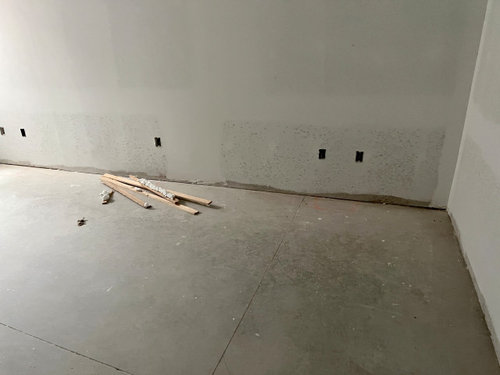
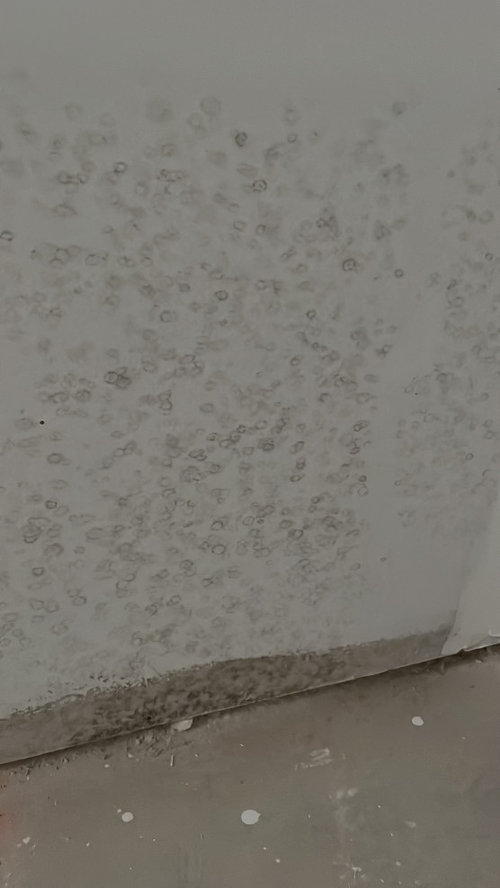
Hello, we are in the trim stage of our new build. Today when I was at the house, I noticed mold on the drywall in one of the rooms in our basement. The mold went up the wall about 2' and was more prevalent on the one exterior wall than the other walls. We live in Ohio and the weather has gotten much colder in the past few weeks. I contacted the builder and he said it's surface mold and that it's very common in new builds and not to worry that it will wipe right off. He also stated they would be bringing a dehumidifier to the house today and that they would be turning on the furnace next week and that we shouldn't see any more signs of mold. Should I be worried? Or is this type of mold common in new construction? I did take a rag and wiped of a small section and it did appear to come right off. Does the drywall need replaced or can it just be cleaned?


Comments (11)

  • PRO
    3 years ago

    What was the waterproofing plan for the basement exterior?

  • 3 years ago
    last modified: 3 years ago

    "Should I be worried? Or is this type of mold common in new construction?"

    Mold is not common in new construction. I'd be more than a little concerned at this.

  • PRO
    3 years ago

    I think the mold is cause for concern. The notion that it will be "wiped off" suggests a naivete about mold. Like Frank and Frank, my concern would be the exterior waterproofing of the foundation. I'll add two more: 1.) are the gutters and downspouts installed and directing storm water away from the foundation? and 2.) what type of insulation was used on the interior foundation walls?

  • PRO
    3 years ago

    No climate control I’m not surprised the basement is damp…

  • PRO
    3 years ago

    To be sure, climate control is critically important in a finished basement. The HVAC system needs to be operational when finishes are installed (it can be turned off when sanding drywall or any dusty work which would get in the air handler and duct work.)

    If the mold were uniformly dispersed on the drywall, it would implicate the lack of climate control, but it may not be the root cause of the problem. The fact that mold appears to be limited to an area within two feet of the bottom of the wall suggests a foundation waterproofing issue to me. Getting the HVAC system operational may reduce the potential for mold growth (most basement HVAC systems don't adequately dehumidify,) but the root cause needs to be addressed to ensure the problem doesn't recur.

    Once mold/mildew is established it's darn hard to get rid of. If the builder thinks otherwise, he's about to get a lesson.

  • 3 years ago

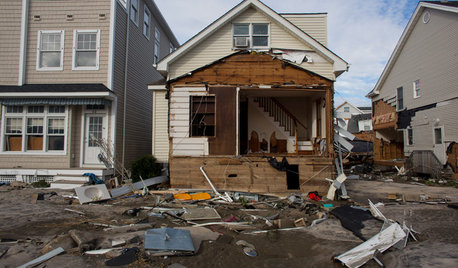
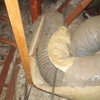
    Thank you all for responding! So the gutters and downspouts have not yet been installed. I'm told that will be happening soon. Final grading has also not taken place yet, although they have done the initial grading. I've attached a picture I took last summer before they backfilled the foundation with gravel and dirt. The black paint was a thick rubber like material that was sprayed on the exterior foundation walls and then the insulation was applied (see attached picture - sorry I don't know what products were actually used). The interior basement walls were insulated with R-13 faced fiberglass insulation. The builder did bring over a heavy duty dehumidifier yesterday and the basement felt less damp after just a few hours. This finished space with the visible mold sits next to our unfinished basement. About six weeks ago we did notice that the basement wall was wet (picture attached is the unfinished space that sits next to the finished room where we found the mold). When we brought it up at that time, the builder said it was just because we didn't have gutters and downspouts yet and not to be concerned. Obviously fast forward six weeks and now I see that we do need to be concerned. Does the drywall and insulation need to be removed in that room? Do we need to contact a mold remediation company? I appreciate your help!


  • PRO
    3 years ago

    Managing storm water at the surface is important. Proper grading coupled with gutters and downspouts will go along way to reducing the amount of water in proximity to the foundation. That said, you need to have a means of dealing with water that flows along the foundation wall and down to the footing level. Typically this involves installing a perforated drain pipe that discharges to daylight or to a sump pump. Backfill material should be selected to provide a capillary break and promote the flow of water to the drain pipe instead of the foundation wall. I can't tell if you have those from your photos; at least with my elderly eyes.

  • 3 years ago

    Thank you! I was looking at earlier picture that I took and there are drains on the interior and exterior of the foundation. Those were then covered with gravel. The space surrounding the foundation was backfilled with gravel and then dirt.


  • 3 years ago

    Though it meets Code, fiberglass alone is a poor choice for interior basement insulation. Unforgivable in a custom home.


    Building Science Corp.


    If it were my build, I'd remove that section and check what happened.


    FWIW, I run a dehumidifier in the basement as soon as it's insulated and power is available.


  • PRO
    3 years ago

    "Though it meets Code, fiberglass alone is a poor choice for interior basement insulation."

    Amen.

  • PRO
    3 years ago

    You can see holes in the piping in the upper portion of the top picture if you make the photo larger. It's not clear whether they used filter fabric over the piping before placing the gravel, but one can hope.