Software
Houzz Logo Print
ajay_singh116

Bark Damage on Royal raindrops Crab Apple

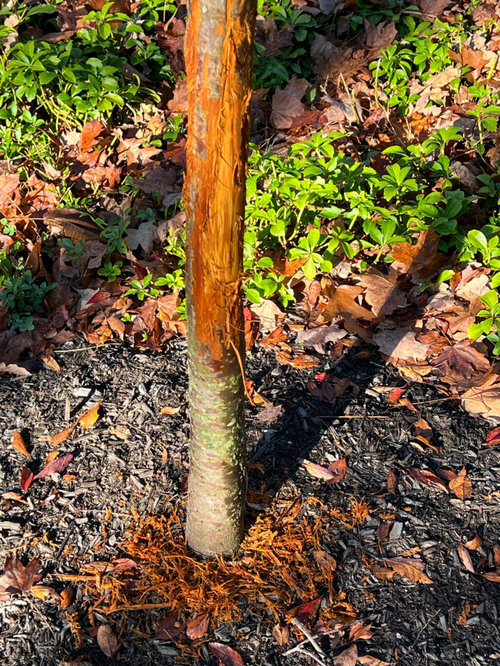
This past spring I planted a 2 inch caliper Royal raindrops crab apple. This morning I noticed some animal had grazed / peeled the bark of the crabapple tree. The picture is attached. Is it normal for animals to graze on the trunk of crabapple. What kind of animal could this be. Could this be a deer? Or is the claws of something else?

Is this likely to damage the cambium of the tree. Should I be doing something?

Comments (23)

  • 3 years ago
    last modified: 3 years ago

    'Is this likely to damage the cambium of the tree. Should I be doing something?'

    Depending on how much of the inner bark is damaged, the tree should heal over (encapsulate) in the next couple of years. But say if more than 30 or 40% of the area/perimeter of the trunk is damaged it might be a better idea to replace the tree.

  • 3 years ago

    Any kind of tree with a small straight pole like trunk should be assumed to be just too good to pass up by bucks during the rut. And needing therefore to be protected by an enclosure. Deer in my area also tend to strip the leaves from rose family trees (such as Malus and Prunus) from head height down. And may sometimes rear up onto their back legs to continue the dining above head height.

  • 3 years ago

    ooof. That is too bad. Dang deer!!

  • 3 years ago
    last modified: 3 years ago

    Yes, if the other side of the trunk, not seen in the picture, is as bad as the side you can see in the picture, I wouldn't waste my time with it and replace it. Maybe your homeowner's insurance will compensate. Depending on the deductible.

  • 3 years ago

    Ditto, its the straight smooth trunks.


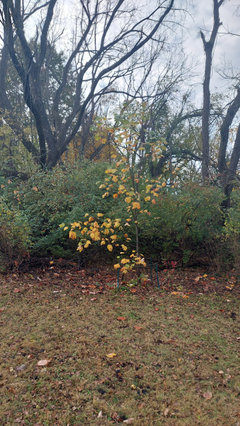
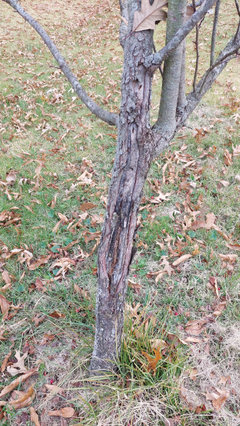
    I have had deer damage on A LOT of trees in my yard. My Prairie Fire crabapple is languishing on from similar damage a decade ago. Mine may of been deeper but less far around.


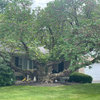
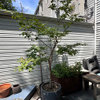
    My Liriodendron tulipifera pictured was damaged last year or yhe year before and is recovering.

  • 3 years ago

    You'll find out in the spring if this killed the tree. Sometimes plants recover fine. Sometimes the trunk dies.


    Instead of fencing in the tree, I've found getting some rebar and pounding into the ground a few inches from the trunk works also. Not only does it make rubbing less attractive, if they rub, they push the rebar into the tree and rub that instead of the trunk.

  • 3 years ago

    Should I be doing something? Resist the temptation to try to fix the damage - no sprays, wraps, paint or whatever should be placed on the damaged trunk. It will heal itself unless the damage is too severe.

  • 3 years ago
    last modified: 3 years ago

    i used 4 inch corrugated drain pipe with holes around my young trees for the first few years of there lives.. until there was bark maturation beyond the smooth baby bark stage ..

    bottom line.. protect now.. and then wait and see how things work out next spring.. and more importantly.. in the heat of summer.. when moisture needs to go up and down the tree thru the cambium later.. the vascular system of the tree ..thats when we will really know if its functional ...

    ken

    some pix examples here : https://duckduckgo.com/?q=4+inch+drain+pipe+on+tree+trunk+guard&t=ffcm&iar=images&iax=images&ia=images

    slew of ideas here: https://duckduckgo.com/?q=tree+trunk+protector+guard&t=ffcm&iar=images&iax=images&ia=images

  • 3 years ago

    The following addresses the 3 things you most likely need to protect your new trees from:

    https://willowridgegardencenter.com/how-to-protect-young-trees-in-winter/

  • 3 years ago

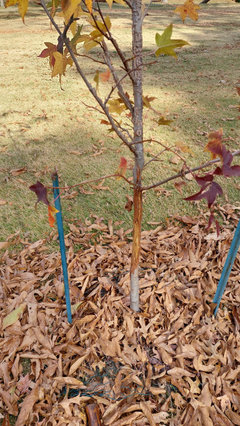
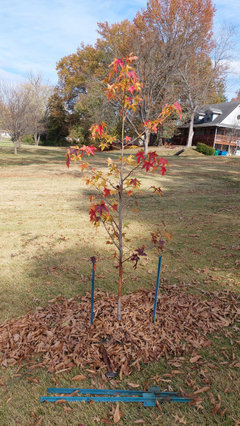
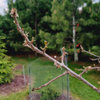
    My crabapple 10 years after


    This year's attack. I thought the branches went low enough


  • 3 years ago
    last modified: 3 years ago

    Were the green stakes there before the rub? Or are you adding them now?

    People in town have told me they don't like the looks of varmint protection on their trees.

    It's a free country, right?

  • 3 years ago

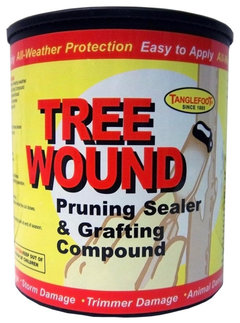
    Thank you everyone. Do you think it’s a good idea to apply a sealant on the open wound. I found this product on Amazon

  • 3 years ago

    no, don't waste your money.

    University tests have proven that sealants actually inhibits the tree from healing.

    It's best that the wound stays dry and open to the air.


    Just put a tree tube on it and be done with it.

    I like the white corrugated tubes. They're cheap and stay cool when the sun beats on them.

  • 3 years ago

    No, do not try to fix the damage. No sealants, gunk, goop, paint, etc. Trees heal themselves.

    Choose a tree tube with holes - I like the corrugated drainage pipe myself.

  • 3 years ago

    i will triple the two above comments...


    if God had meant you to slather tar on trees.. he would have.. oh.. just dont.. its so wrong ... lol ..


    trees have been around for millions of year.. being damage.d.. recovering.. dying.. and nothing you can pay money for will change how a tree takes care of itself ..


    just protect from further damage.. asap .. and see what happens as i said yesterday ...


    it would just be money spent to make you feel good.. its of no value to the tree ...


    and the tree is stressed.. not hungry.. fert is not a response.. especially this time of year... let the tree go dormant.. not get all juiced up on uppers ... no tree crack.. lol...


    ken

  • 3 years ago

    Has no one but me noticed that the tree is telephone poled? Where is the root flare?

  • 3 years ago

    You are right. It was a B&B planting this past spring. The rootball came without the root flair exposed. The landscaper installed it. Now I worry if I should expose the root flair before the onset of winter or wait for spring. Any suggestion?

  • 3 years ago

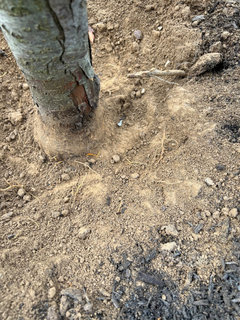
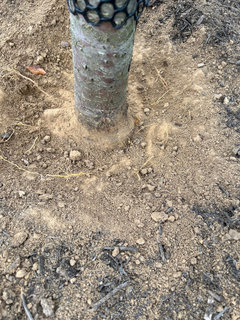
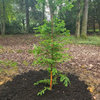
    Here I tried to uncover it. See the pictures attached. Was this done right? Or do I need to expose it more ?

  • 3 years ago

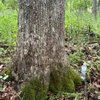
    Pictures after exposing the root flair

  • 3 years ago

    im tempted to tell you to go another inch or two..


    winter is irrelevant in regard to this..


    this is what you are looking for: https://duckduckgo.com/?t=ffab&q=root+flare&iax=images&ia=images


    ken

  • 3 years ago

    Thanks Ken. Will do as you suggest. I have another Japanese Stewartia but planted last spring. Only 1.5 inch caliper. It also seems sticking out like a pencil. When I tried to expose the root flair- I find a dense mat of fibrous roots. Is the root flare buried deeper and I need to cut through the mat. Or is it that small trees haven’t yet developed a root flare yet