Software
Houzz Logo Print
prairiemoon2

Filling pots for growing perennials/annuals/veggies

I'm getting ready to fill large pots for growing in this year. I wanted something large and high to make it harder for rabbits to get at them. But the pots are so big and deep - I'm wondering if I need to fill the whole pot down to the bottom with expensive potting mix? I've seen some articles about using branches and leaves and other fillers for the bottom, but thought I'd ask what other gardeners do with their big pots?

Comments (24)

  • 2 years ago

    How big is big? Can you provide photos? Or at least the dimension or volume of the pots? And an idea of what you intend to grow in them. Some plants, like tomatoes, need a lot of root space to develop and fruit properly.

    As to potential fillers, container gardeners have used things like crushed pop cans, empty plastic water bottles and swimming pool 'noodles' or chunks of styrofoam/packing 'peanuts'. Or you can use whatever natural stuff you have on hand. Just make sue you have some sort of barrier between the potting soil and the fillers. Landscape or weed fabric works reasonably well for this purpose.

    prairiemoon2 z6b MA thanked gardengal48 (PNW Z8/9)
  • 2 years ago
    last modified: 2 years ago

    I guess I haven't gotten to the point of choosing plants to go in them, but for the most part vegetables. Not tomatoes really. Maybe peppers. Brassicas/Lettuces/Swiss Chard/ Herbs.

    The biggest pot I have is 20" diameter. I also have a new standing planter on legs that is about 3ft long maybe a foot deep - that I will plan on filling entirely with soil mix. I'm also looking for large tall pots and just haven't found many yet that are affordable.

    I wouldn't have any cans or bottles or styrofoam but I have a lot of branches. I do have landscape fabric and pretty sure I've done that before now that you mention it. But I did use empty water bottles that time.

    I can take photos and post, I just don't have one right now. I have smaller containers that I'll fill up entirely with soil. It's just the 20 -22" pots that seem to have more root zone for most things I'd grow that it would be a waste of soil mix. If I had more large containers, I would put a tomato or two in one. And I guess they would use all the root zone you can give them?

  • 2 years ago

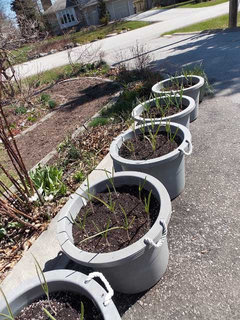
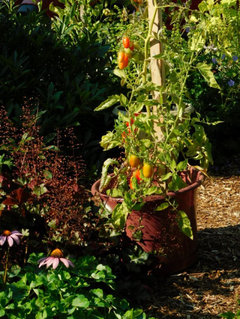
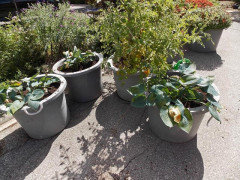
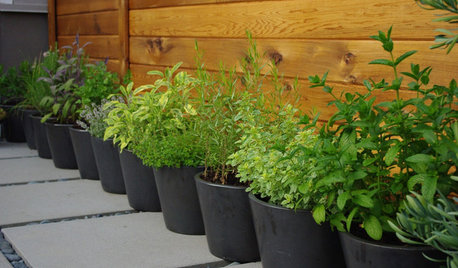
    We don't grow much in pots - but when we do the most common thing we use is those big gray storage containers with holes we drill in the bottom for drainage. We fill them with our own compost with a bit of perlite or vermiculite mixed in to lighten the soil a bit. These pictures are from various years and times of year:

    DH's garlic as the pots come out of the garage in early spring:


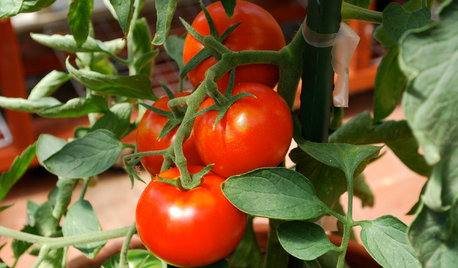
    SIL's cherry tomatoes in August (note that they are in a smaller 'proper' pot but are planted in the same soil mix....):


    Hostas 'rescued' from a house to be torn down, and several other things in the big gray pots:


    Watering the pots well and often is as important as the soil choice I think!


    prairiemoon2 z6b MA thanked woodyoak
  • 2 years ago

    P.S. DH says he sometimes supplements the compost by mixing in some bagged composted sheep or cow manure…

    prairiemoon2 z6b MA thanked woodyoak zone 5 southern Ont., Canada
  • 2 years ago
    last modified: 2 years ago

    Polyester and Nylon is rot, mildew and mold resistant and can be used to fill a pot. I used the stuffing out of an old sleeping bag (or comforter, I can't remember) made from one of the two materials, placed a piece of landscape fabric over it and filled the pots with soil and had no problems. Any old clothing made from the stuff should work. Sheets, shirts, dresses, ect...

    Rocks will work but the pots are heavy and wouldn't recommend it, and what do you do with the rocks when your done? I saw the price of perlite an vermiculite just yesterday and the stuff isn't cheap, and not something to use if the goal is to save the price of expensive potting soil. Speaking of expensive potting soil there are options and doesn't need to be $10 per cubic foot of miracle gro or foxfarm, and there are cheaper options. I picked up a 2 cubic foot bag yesterday for $9 and looked better for potting outdoor plants than miracle grow to tell the truth. Saw other cheaper option too, but I do have some standards.

    I had 3 truck loads of free wood chips dumped last fall and plan on turning it over the year so next year I can use it in the bottom of my 30" raised beds for strawberries next year. So any wood chips partially composted (needs to be to reduce the carbon/nitrogen ratio) will work so look around. Maybe a neighbor has an old pile you can dig down into and find partially composted chips. Do you want free wood chips? Check chipdrop's website and see if they're active in your area. Really anything which doesn't rot will work, any old "my pillow' pillows sitting around? Any pillows with polyester stuffing will work.

    prairiemoon2 z6b MA thanked kevin9408
  • 2 years ago

    When I had large pots to fill (old dryer drums), I cleaned the yard. I put in small logs, then sticks, then leaves and garden soil, then my potting mix. It worked out great.

    prairiemoon2 z6b MA thanked cookiemon5
  • 2 years ago

    Interesting ideas for what to fill the bottom with! Woody, you just gave me a great idea for getting some large containers that may be less expensive than the pots at the garden centers. Plastic storage containers, of course! I just looked at what is available, they are cheaper but wow, like everything else, the prices have gone way up.

    I usually use 1/3 peat moss/1/3 perlite and 1/3 compost. This year I'm doing 1/2 peat moss mixed with perlite and 1/2 compost. I'm trying to get away from peat moss, so I bought Coir that I'm going to use when the peat moss is gone.

    I am considering using a little manure either mixed in or made into a manure tea to water with.

    No wood chips Kevin. DH was aghast when I suggested having them dump a load in th driveway...lol. We have a small property and not a lot of places to allow a big pile of wood chips to age. Lucky you!


  • 2 years ago

    Pm2 - most of thise tubs were bought many years ago! So I’m not sure what they cost now. A lot of the rope handles have frayed or broken, and the tubs do eventually start breaking apart. But they were the cheapest option for our garden beginnings here when we were looking for big, cheap pots and trying to keep costs down by using our own material as much as possible. The soil in the pots gets added either to garden beds or the compost pile after a few years. Generally we use the soil in the pot for about 4 years before replacing it. We never used peat and the bagged manures are still pretty cheap here. Like most of the things we do- experiment to see what works for you… I used to grow peas and beans in the pots to add nitrogen and the nitrogen-fixing bacteria to the soil to improve it. But it became a bit of a challenge to loosen the soil in subsequent years so we eventually stopped….

    prairiemoon2 z6b MA thanked woodyoak zone 5 southern Ont., Canada
  • 2 years ago

    If you do much container gardening, and especially anything planted for longer than a single growing season, you will find that what you fill those containers with can make a enormous difference in the health and vitality of what you are growing.

    For a variety of very good reasons, garden soil, compost, manure or even a high proportion of peat in the mix is not advised for any container planting medium. it will break down and compress with time and the need for very frequent summer watering. This adversely affects both fast drainage - a critical factor with container gardening - and aeration or the porosity of the mix and how air and water move through it. This can impact root development which can lead to stunting or poor growth. And because those sorts of ingredients also tend to be excessively water retentive, they can very easily lead to root rot and other water related fungal issues.

    Of course you are free to use whatever soil mix you prefer. But if you would like to learn more about container gardening and the accepted practices that will generate exceptional results, I:d encourage you to visit the Container Gardening forum and in particular, this extremely long running and super informative and helpful thread on Container Soils and Wafer Movement, written by one of the most experienced and accomplished container gardener on these forums!

  • 2 years ago
    last modified: 2 years ago

    Ah yes, I would agree with GG here. Growing vegetables and annuals in a pot is simple and soil types and drainage is not so critical...but for a longer term planting (which I have), then the potting mix, pot sizes and drainage issues are crucial. I use a very specific mix of loam based topsoil plus an organic composted bark mix and finally, an inert but necessary medium such as grit, perlite, hydroleca, shingle, even sharp sand. I do use topsoil (and manage to avoid compaction and drainage issues, even growing trees successfully for years). I am somewhat astounded at the assertion that topsoil is not used in long-term plantings and would challenge that quite vigorously . It was all a long time ago when I did the soil science bit of my horticulture course, but I definitely recall the role of mineral based soils in nutrient exchange (cations, anions and so on). My entire garden is container based...although I do have a couple of raised beds, there was no usable topsoil in my garden apart from what I have imported...but I have some pots which have been in continuous use for over a decade (most of the ones which have bulbs, tubers or other geophytes).


    Soil structure can be maintained with careful watering and observation. I mess around with ratios and drainage elements but generally go for 2/3rds soil/humus and 1/3rd drainage material. I do sometimes use a wick and bottom watering (for greenhouse tomatoes) but mostly spend a fair bit on a decent medium cos the plants will be living in them for years (with annual top-dressing and the usual cyclical plant maintenance ( which can involve lifting, dividing, root pruning, repotting etc.)

    The soil forum can be very...prescriptive, but drainage, feeding and aeration can be achieved in a number of ways (I often use what comes to hand). Plants will generally indicate their needs and adjustments can be made(especially annual additions of compost, worm castings, zeolite and leafmould).

    In the UK, we will be going peat free in 2024. At the moment, I still use peat while trialling various peat substitutes. The most promising, by a long way, turns out to be...wool. Yep, composted sheep fibre is looking like the best substitute for long term plantings without peat. Also, 'compost'. means both a soilless mix of various fibres such as coir, bark, green waste etc, often used for potting annuals and bedding plants...and also, anything carbon-based which has been allowed to rot down through bacterial action, often used as soil amendment.

    prairiemoon2 z6b MA thanked rosaprimula UK (Cambridge) Z8/9
  • 2 years ago

    Skimmed the previous posts so I may have missed it, but I learned a tip long ago to simply use another pot turned upside down to fill space in a large deep container. I've used black plastic nursery pots for that purpose.

    prairiemoon2 z6b MA thanked carolb_w_fl_coastal_9/10
  • 2 years ago
    last modified: 2 years ago

    RP, if you are interested, I'd be happy to explain exactly why topsoil, garden soil or any other "real dirt" mix does not work efficiently in a container. For a single growing season, sure, but anything longer term you will be running some serious growing risks. That's why commercial potting or container soils sold in this country are also called 'soilless' mixes. I just don't want to hijack this thread or start a lengthy discussion on container soil requirements that PM2 did not ask for :-)

    Also there are some US vs UK or EU aspects that should be clarified. Compost here only applies to the remains of decomposed organic matter. Soil mixes otherwise are just called soil mixes.

    And the use of peat is NOT an issue on this continent! Canadian peat reserves are enormous compared to the negligible amount farmed and harvested. And I use the term 'farmed' intentionally. These operations are run as farms and harvested portions are promptly reseeded/replanted for a new crop. Which due to modern technology, does not require several centuries to regenerate!!

  • 2 years ago

    The John Innes recipes are based on loam., with additional peat and basic fertiliser. I actually feel quite miffed at your offer to 'explain' why a mix I have successfully used for decades is inefficient or even risky.

    I mentioned peat, purely to comment on the surprising (or maybe not) substitution of sheep wool, in a growing medium. I did wonder how the John Innes recipe might change to reflect this, but would still expect it to remain loam based.

    prairiemoon2 z6b MA thanked rosaprimula UK (Cambridge) Z8/9
  • 2 years ago

    I dunno, I just bite the bullet and use a good quality potting mix in my containers. If I couldn't afford that I would have fewer (or smaller) pots.

    But to me the idea of a lot of garbage filler in the bottom of my pots is gross, I don't want that. Many of my container plants overwinter indoors and the idea of pots full of garbage material doesn't sit right with me. The only "debris" I have ever used in any container is fine "yard pickups"- those small branches etc. that seem to blow down every storm, and those I only used to help fill up the bottoms of my large raised beds that took 15 bags of potting mix each.

    I know it isn't rotting or stinky, it's just the idea of it I find distasteful for some reason. Roots want soil, not a pile of old soda cans


    My plants' roots get good quality potting media all the way down. You only have to buy it once if you care for it and amend properly each spring, may as well make it the best I can. I have a lot of money invested in my plants and skimping on their single, most basic need seems a bit shortsighted to be honest.

    prairiemoon2 z6b MA thanked cearbhaill (zone 6b Eastern Kentucky)
  • 2 years ago

    Why anyone would feel "miffed" if offered the opportunity to expand their knowledge base is a bit surprising to me. There is very clear science behind the construction of container potting media and utilizing that science to create the best possible growing environment for any container plantings seems like a no-brainer to me.

    However, I do understand the "I've always done it this way and it works for me" philosophy that many, many gardeners follow. That's just not enough for me :-) I want to know how to create the best possible environment for container plant growth and most importantly, why it is the best possible growing environment. As cearbhaill states, "I have a lot of money invested in my plants and skimping on their single, most basic need seems a bit shortsighted to be honest." IMO, a high quality, durable potting media IS the most important investment one can make when growing in containers. And a media based on science, not just on what's available in the marketplace.....or just because............

  • 2 years ago

    Ah, I have always respected your knowledge, GG but honestly, there is a narrow line between helpful advice and condescension. I don't like being a dogmatic gardener because there are always different ways of getting to where you want to go. As for the 'real dirt' comment - I find that quite astonishing. Topsoil is our most precious, finite resource - a living, dynamic substance. One of the things I always do, with any container planting, is to add in a couple of litres of 'real dirt' which will already have a skein of interconnected micro-life and mycorrhizal fungi which kickstarts a sterile, inert potting mix into a far more welcoming substrate for growing plants.


    I was going to waffle on about replicating natural conditions but decided that the most important requirement for growing health is daily observation. Plants are quick to reveal their needs - we only have to take the time to look and be prepared to make necessary changes...which is very easy in container gardens.


    prairiemoon2 z6b MA thanked rosaprimula UK (Cambridge) Z8/9
  • 2 years ago

    As it seems no one is particularly interested in the science behind container culture and the best methodology for developing container potting media, I will bow out of this discussion. I am more than a little bit dismayed that two such experienced gardeners would not be eager to explore why I made the remarks I did and dismiss my advice out of hand. I would also consider your responses contain more than just a hint of condescension to my remarks as well!

    FWIW, it has been scientifically proven that the ideal particle size to ensure durability (lack of collapse) and to maximize the fast drainage and aeration container culture requires be no smaller than 1/16 inch or approx 1.6 mm. Garden soil or topsoil on average has particles of significantly smaller size, typically ranging from .002 to.05 mm. Utilizing soil particles that tiny does alter drainage and aeration/porosity to a significant extent.

    If you are happy with that, fine. But I would not be!

  • PRO
    2 years ago

    I use big containers for gardening. I tend to use the 18-20 gallon totes the most in my kitchen garden. The rectangle shape works best for me. I do also use a couple of the big round party tubs, but I use the totes most.

    It's all dirt in the bins. No filler. Two of the bins have parsley in them- I dress one side and grow out the other every year. And dress well with a goodly dig down and compost addition. Otherwise the rest of the bins get regularly worked. Turned out, amended, added to, and so on as needed. I grow potatoes every year and that helps encourage rotating around the rest of the bins so no dirt goes unfed or untilthed. I grow a lot of greens, annual herbs, and root crops otherwise in the bins. The composition of the dirt in the bins can change a bit depending. Promix, peat, sandy loam, compost, usually some leaf mold in there, sometimes aged manure. In the summer likely some grass mixed in from being used as mulch. Since I don't let the dirt sit and regularly tend it, this method of container gardening works very well for me. I get good crops all growing season. I put caps over the bins through the winter. They act mostly as season extenders, but I'm able to harvest some things year round like parsley and some greens.

    On another take, I also do cold composting bins. They are 3x3x3' cubes. I treat them like hugelkultur raised beds. Once one is full enough of garden debris and ready to break down for a couple years, I top it with some dirt- usually a couple of kitchen bins worth. I really like growing bush squashes and flowers in them.

    prairiemoon2 z6b MA thanked beesneeds
  • 2 years ago
    last modified: 2 years ago

    Well, I got busy the past couple of days and didn't have time to come back here to follow this discussion. I did spend quite a bit of time at one point in the Container forum and read the very detailed explanations and directions that the member Tapla offers to people growing in containers. It was about particle size and about the water getting trapped in the bottom of the container. It made sense to me, but I read other comments, and someone shared that if you tip your large container at an angle after you water the trapped water will come out which is just as good a way of preventing trapped water in a large container as making sure you have the correct particle size in the soil mix. And Tapla agreed with that.

    I also spent months trying to locate the products he recommended to be used to mix that particular recipe of potting soil without success. And tried to produce the same thing from a different product. In the end, I never did produce the exact mix he was talking about. So if it works for him and anyone else who could reproduce his mix, I think it's great. I just had to go back to choosing a different fill than what he was using. And I tip my pots after I water them. [g]

    When you use a method or materials that work for you, that is knowledge. When you experience two methods of doing something and can compare the results yourself, then you have your own study. [g] When you see someone else produce results that you envy and you want to duplicate the way they are doing it and have the same results, that's knowledge. If you find reading a study exciting and want to try to apply that to what you are doing, all power to you.

    To me what you experience is a more potent knowledge than any 20 year study that is contradicted by another 20 year study and doesn't provide information that is easily applicable for people to use about the subject at hand. Not to say that is the case here. I haven't read the science that backs up particle size and how that impacts the results in growing in containers, but I don't doubt some smart person discovered something informative. I just find trial and error and learning from other experienced gardeners who are succeeding in doing something I want to do, the best way for me to gain what I need as a gardener.

    As for sharing information, experiences and advice on the forums, I think we are fortunate to have so many experienced talented gardeners here and I love getting advice. I'm always asking for it in one thread after another. But I've always found someone's advice easier to take when someone's experience is offered and left for anyone that wants to use it without any further effort to persuade another to your point of view. It's a gift.

  • 2 years ago
    last modified: 2 years ago

    Kevin, the reason I would like to avoid Peat, is that from my understanding in it's natural setting it takes a long time to renew it. I would think Coconut coir is much more renewable. Every season you get a new batch of coconuts. And it's using something that would otherwise be discarded. I haven't used coconut coir yet, as a growing medium, but I do want to give it a try.

  • PRO
    2 years ago

    Coconut coir is a good blank medium. I've used that too in the past. Compressed bricks of the stuff. That too has seen rotation through the kitchen bins at some point. I haven't gotten any in long time though, it's gotten too pricey for me around here compared to other dirt stuff.

    prairiemoon2 z6b MA thanked beesneeds
  • 2 years ago

    For the last few years I've been 'stretching' my potting soil supply, and 'renewing' old potting soil by mixing in a good amount of bark mulch, sometimes by as much as half. You could fill the bottom of your pots with half potting soil/half bark mulch and save some money there, just make sure it's actual bark similar to the pine nuggets used for growing orchids, not the shredded mulch... or even worse the chopped and dyed wood mulches...


    prairiemoon2 z6b MA thanked katob Z6ish, NE Pa
  • last year

    Hey! Lately I've been using coconut fiber. This is an excellent material for filling large pots. It has many useful properties, such as lightness, good water-holding capacity and excellent aeration.

    Coconut fiber can be mixed with compost, garden soil to create a mixture of 1 part coconut fiber, 1 part compost and 1 part garden soil or ready-mixed potting soil.

    To fill the bottom of large pots, you can use coconut fiber alone or mixed with other materials (branches, leaves, plastic bottles).

    Coconut fiber can be used as mulch for topsoil. This will help retain moisture, suppress weed growth, and improve the appearance of the pot.

Sponsored
Bull Run Kitchen and Bath
Average rating: 4.9 out of 5 stars289 Reviews
Virginia's Top Rated Kitchen & Bath Renovation Firm I Best of Houzz