Software
Houzz Logo Print
donald_vargo

What seeds are best to save yourself?

What I mean is what benefits the most from "learning" your garden. I read that garlic did so I started saving some - after a few years the garlic definitely got bigger so it worked. What other veggies are worth saving seeds - not for cost of buying but for getting better crops?

Comments (9)

  • 3 years ago

    I frankly don't think you're ever going to get "better crops" by saving your own seed. To the extent that the seeds you have are heirlooms, the seeds you buy are identical to what you save, though they may be treated with fungicide and or occasionally pesticide to help with germination. Such treated seeds are always marked as such, and usually have a noticeable color. Those treatments just protect the seed, and don't help with foliar diseases later in the season.

  • 3 years ago

    Seeds don't really 'learn' from your garden... you just select for the traits you desire, from the existing genome. That selection could be intentional (you choosing what you like best) or unintentional (such as if disease kills some of the plants, seeds from the remainder are more likely to be disease resistant). I've saved seed from okra for 5-6 generations, and far fewer plants suffer from disease now than did in the original seed.


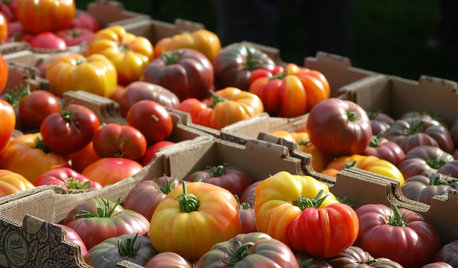
    The best seeds to save for beginners are self-pollinating vegetables, such as beans, peas, and tomatoes. Those are less likely to be contaminated by other varieties grown by your neighbors - but as @daninthedirt (USDA 9a, HZ9, CentTX, Sunset z30, Cfa) stated, they have often been selected so much that there is little variability to choose from. While you might see some improvement from year to year, the most likely result is good quality seed. There is also the risk of crossing (with unpredictable results) if neighbors nearby are growing a different variety, something I see most often in heirloom tomatoes. The chances of self-pollinating vegetables crossing are generally low though, 5% or less.


    Out-crossing vegetables (squash, cukes, melons, corn, carrots, radishes, etc.) require wind or insects to pollinate. You might be able to save good seed if you grow only one variety... but chances are higher that wind or bees will bring in pollen from elsewhere, as much as a mile away. In some cases (such as carrots) pollen can even come from wild relatives growing nearby. Those vegetables need special precautions to save seed. And unlike the self-pollinating vegetables which could be saved from a single plant (and often have been at some point in their history) out-crossing vegetables generally require a certain population size, or they will gradually deteriorate (inbreeding depression). A squash I grew over several generations gradually became smaller, because I grew only a few plants per year. When I grew a variety of corn for seed in a small garden, I had to combine 2 years worth to meet the minimum population.


    Please don't read the above as discouraging seed saving. Properly done, home saved seed can exceed the quality & longevity of commercial seed, and is worth doing for that reason alone. If you grow only one variety of a self-pollinating species, you have a reasonable chance of getting seed that is true-to-type. You may - or may not - see an improvement in successive generations.

  • 3 years ago

    It requires far more than simple saving seed for most plants. Hybrids will not work at all. There mustn't be another plant close enough to result in cross pollination. From there it requires an experienced eye and educated mind to choose which seed to save. I know a man who grows a few acreas of okra he swears is better than when starting out decades ago. Every year he refrains from irrigating a quarter acre plot and allows people to harvest it without paying as they have to for remainder of field. As season winds down he ropes off to prevent anyone picking it as it matures. He chooses which seed to harvest based on self imposed criteria such as # of pods per plant, how well plant did in absence of irrigation and others. He enjoys it and I must say his fields always look better than others. On the other hand it can backfire if plants depend on pollinators and they bring strange pollen of undesirable plants far away.

  • 3 years ago

    I completely understand cross pollination, and I have saved quit a few seeds myself. Interesting, I figured it would help. I did read some more and for garlic I probably get better garlic because I am replanting larger cloves.

  • 3 years ago
    last modified: 3 years ago

    I have to be a little skeptical that seed saving produces higher quality seed. If you buy from a high quality provider, they know EXACTLY what it takes to produce such seed, and they are highly practiced at it. That experience is partly what you're buying. True that, to the extent your garden manages to produce a variety with a new trait that is more optimal, savings seeds is how you preserve that new trait. But I suspect that's somewhat rare.

    My philosophy in saving seeds is to save them if those varieties are not easily found from seed providers. In many cases, seed saving requires letting the fruit develop to the point that it is inedible, and or leaving the plants standing long past the time when they are productive. In those cases, seed saving costs garden space as well as food.

  • 3 years ago

    "learning" your garden would better apply to knowing what each vegetable requires for the best quality and taste, and what the best soil conditions are needed to address each item you want to grow. You'd be better off reading up on soil science to change the soil to conform than trying to progress the evolution of a plant traits by progressive seed saving for quicker results.

    Saving sweet onion seeds won't produce sweeter onions when your soil is high in sulfur, and it certainly won't help to make them sweeter by fertilizing with Ammonium sulfate commonly used for pungent storage onions.

    You should learn what a plant wants and what to avoid, and amend the soil for the best conditions, like knowing tomatoes are sensitive to chloride so limiting the salt will improve growth and quality of the fruit. Study what each plant needs and what it's limits are if you want bigger and better results.


  • 3 years ago

    When I save tomato seeds I wait until the end of the season and save the seeds from the most healthy looking long lived plant that survived to the end and were best at resisting blight type diseases. Not sure if it makes a difference or not but maybe these healthier plants have a good gene pool which helps them survive longer.

  • 3 years ago

    Most of the greens I grow come true to seed, so I do save those - lettuces and Asian mustards, mostly.

    I tend to view seed saving as economical, more than anything else - buy once, plant and harvest for years. Herbs like parsley, basil, dill and chives also come true to seed, IMPE, so are worth saving.

    I don't save pea/bean seeds because I don't have the space to let extra pods ripen for that. We eat them all!

  • 3 years ago
    last modified: 3 years ago

    Saving seed often limits you to growing single varities which most gardeners don't like doing. I prefer multiple varieties if weather conditions can effect how plants do. Unpredictable weather in Texas can make tomatoes boom one year and bust the next so I plant diverse varieties. I had an interesting experience with corn one year. I planted 2 rows of ornamental corn along with several rows of yellow dent. Come harvest I found random colored kernels in yellow dent ears across the field. More surprising was coons totally destroyed both rows within 2 nights when it came into milk. They of course worked on the remainder of field but the destruction wasn't even close to equal.