Software
Houzz Logo Print
webuser_834679376

Ficus benjamin and yellowing leaves

3 years ago
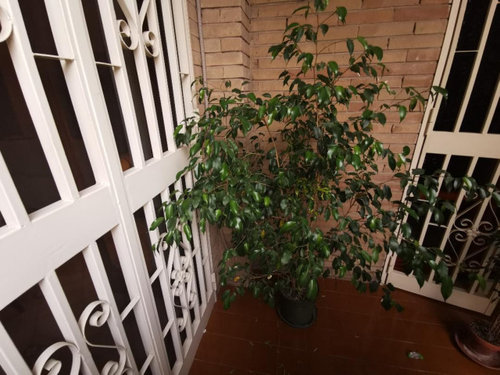
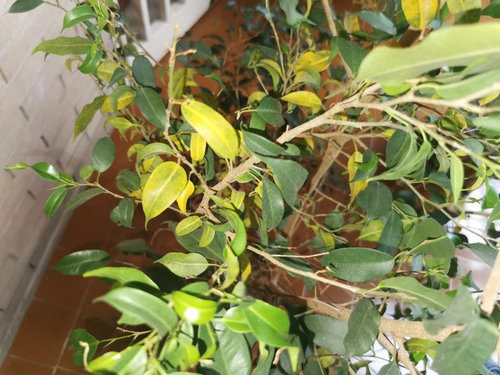
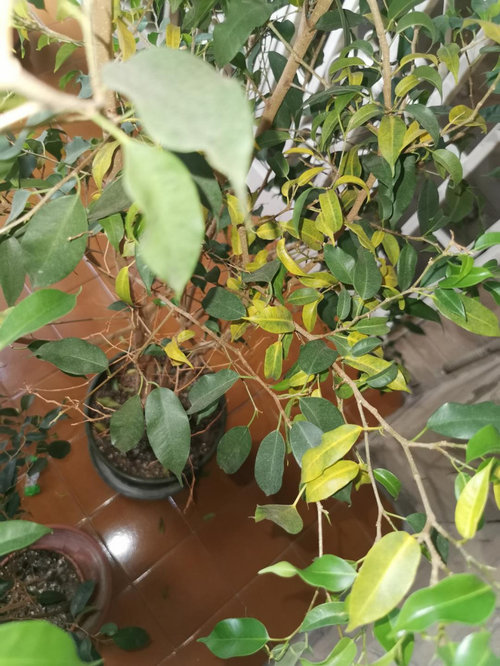
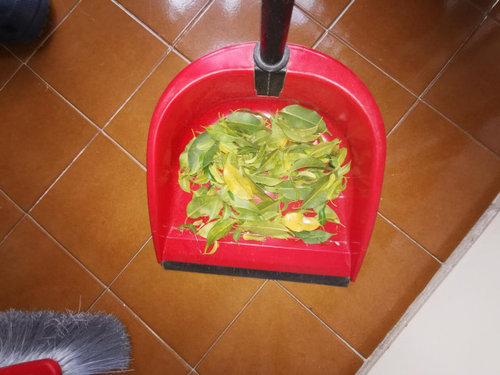
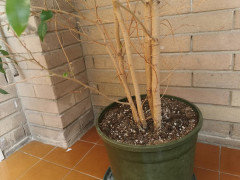
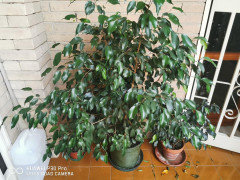
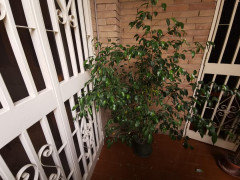
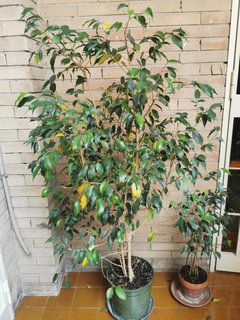
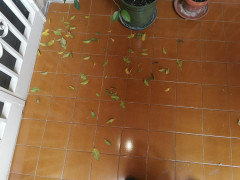
This ficus, unlike the others, is continuing to make many yellow leaves (look at how many have fallen by shaking it). In your opinion for what reason? Many were also small leaves just born (indeed there had been an explosion). Maybe because it's the wall side? What do you say? To @tapla (mid-Michigan, USDA z5b-6a) who will surely tell me to prune I ask: do I prune only sideways or also up and shorten? This ficus was born from a cutting and I have never pruned it.


Comments (10)

  • 3 years ago

    If you moved it there from another position, it could be caused by the decrease in light. Ficus is known for losing foliage when there is a decrease in light intensity and/or duration. The mechanism centers on the flow of a growth regulator (auxin) across the abscission zone where the leaf is attached to the branch. When the volume of that growth regulator is limited by poor conditions (usually in the root zone, except for light issues) an irreversible abscission layer forms that walls of the leaf from the food/ nutrients/ water it needs to remain viable and attached to the plant.


    If it's been there for a long while and you haven't rotated it, it's probably under/over-watering, root congestion, low fertility, or a high level of dissolved solids in the soil. I should throw soil compaction in as a potentiality as well. You should be able to winnow most of the possibilities down by eliminating from consideration any items you're sure are not a serious limiting factor, which can make your best path more apparent.


    It is a single trunk specimen at this point, or would you say there are several branches competing for dominance as the main trunk/leader?

    Al

    Michele Rossi thanked tapla (mid-Michigan, USDA z5b-6a)
  • 3 years ago
    last modified: 3 years ago

    I didn't move the ficus from another position. During the last cold season this ficus has lost many more leaves than the other ficuses I have on the same balcony. Now I was surprised because it had produced so many new leaves and they are turning yellow.

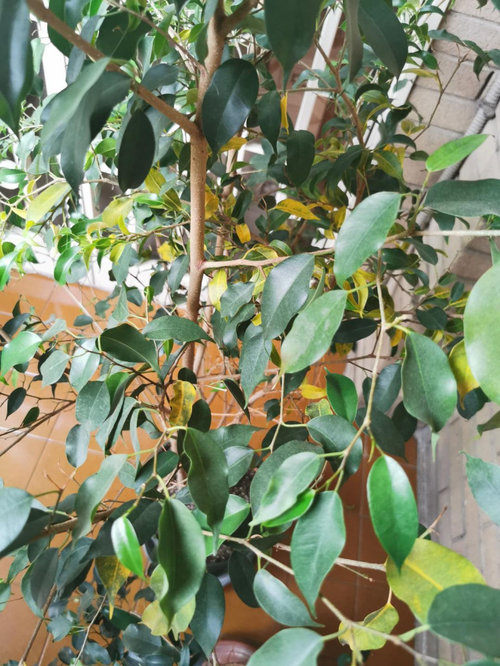
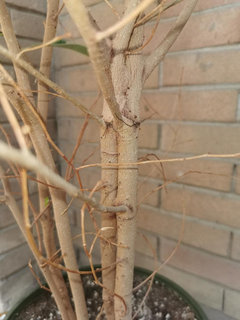
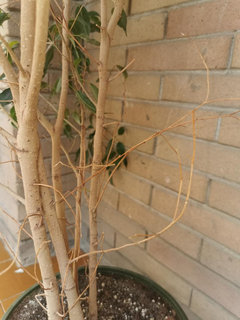
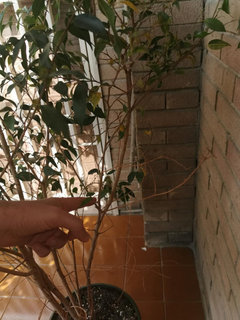
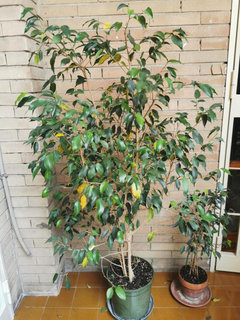
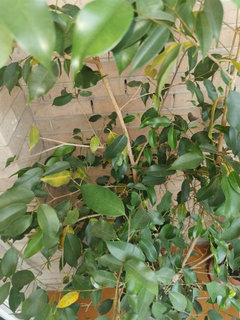
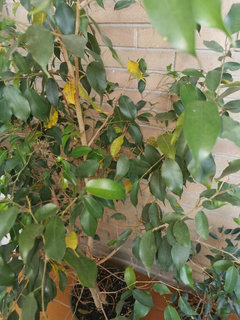
    It is not a single trunk specimen: there are 5 trunks in the vase as you can see from the photos. Two of these trunks merged into each other because I kept them tied (I hope it's not a problem). From these photos you can also see how the lower branches have unfortunately lost their leaves during the last cold season. I say "unfortunately" because I don't like ficuses with the lower part of the trunk devoid of branches and leaves. The trunk that you see in the last photo and that I point with my finger is the one that had produced many small leaves at the top and most of the leaves that are turning yellow are precisely these (my concern stemmed from the fact that most of the leaves that are turning yellow and/or falling off are small new leaves).


    Finally, in case it helps, I'll show you in the photo below what this plant looked like exactly one year ago (June 4, 2022): as you can see, it was much more compact.


  • 3 years ago

    Ok, so it's not a light issue causing the foliage loss. That means we look to the rhizosphere (root zone) for the issue or cold drafts. What is your weather like? Sudden chilling, like overnight dips to temps below 10*C can cause the leaf loss.

    How do you determine when it's time to water?

    Describe your nutritional supplementation regimen (product, NPK %s, how often, how much? organic or synthetic?)

    Do you allow water in the collection saucers to be reabsorbed by the plant?

    When you water, are you making sure the entire soil mass is being wetted and at least 20% of the water you used exits the drain hole?

    Any idea what your water pH is?

    When last repotted?

    Al

  • 3 years ago

    By virtue of the things I've learned in the last year from reading what you write, I guess the problem is that I've never repotted it (as well as never pruned it). The cuttings were planted 4 years ago.


    I grow all ficuses the same way and this is the one that is suffering. Anyway, I'll try to answer your questions.


    I don't use a tell like you suggest. I have about 10 ficus benjamin and although I have been taking care of them for about 5 years I have acquired the ability to know how often to water depending on the climatic conditions. When I water I always let the water out of the holes (I can't tell you if it's at least 20%) and I never leave the water in the saucers. As you taught me, I tilt the pots to let more water flow out.


    This year the temperatures are below average, but it's not cold.


    I don't use a tell like you suggest. I have about 10 ficus benjamin and although I have been taking care of them for about 5 years I have acquired the ability to know how often to water depending on the climatic conditions. When I water I always let the water out of the holes (I can't tell you if it's at least 20%) and I never leave the water in the saucers. As you taught me, I tilt the pots to let more water flow out.


    I use a liquid fertilizer which here in Italy is the closest to what you use:


    I fertilize every 3-4 waterings all year round (even in winter and even in midsummer). Sporadically I use Algatron , a product I know you find useless.


    Now I can't find the data on the composition of the water, but it's not very calcareous (however, we have a condominium tank and I don't know if it can change its composition). The ficus trees that I have on my balcony in the summer are watered with water from the air conditioners.


  • 3 years ago

    I'm pretty sure I have the right intervals between waterings.


    I don't know if there is a water softener system.


    There is some coir, but I don't think much (I see the difference with other soils).


    Unfortunately Foliage-pro 9-3-6 is not available in Italy. You ask me if there is a dolomitic liming agent. Is perlite a dolomitic liming agent?


    A curiosity of mine: I read that your fertilizer contains magnesium but no calcium. Does the presence of magnesium compensate for the absence of calcium?

  • 3 years ago

    I also pruned this other plant: you can see this ficus before and after pruning.


    1. Do I have to lower it further?


    2. I have been pruning for a few days but many leaves continue to turn yellow (photos taken today): is this normal?


    3. In two weeks time can I try to loosen the roots or are there still too many leaves?

  • 3 years ago

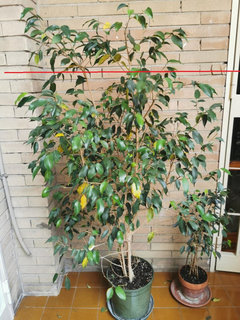
    Do I have to lower it further? Yes, I think so. As I looked at the image I looked for a reference point so I could suggest a ht. I determined it should be about as tall as the top of the hinge on door to right. Lo and behold, when I looked at the next image theres a red line right where I would have put it.

    I have been pruning for a few days but many leaves continue to turn yellow (photos taken today): is this normal? It's hard to say. There are several cultural factors that can cause loss of foliage, root congestion, watering practices, nutrition, light levels, having the most deleterious effects on foliage.

    In two weeks time can I try to loosen the roots or are there still too many leaves? Today, tomorrow, ..... 2 weeks - all fine through early July.


    Al

    Michele Rossi thanked tapla (mid-Michigan, USDA z5b-6a)
  • 3 years ago

    Oggi, domani, ..... 2 settimane - tutto bene fino all'inizio di luglio.

    So you don't necessarily have to wait two weeks between pruning and repotting? I was convinced that you advised to do so.

  • 3 years ago

    A normal repot of a plant that's been repotted before, I often prune and wait until the back-budding starts (for ficus) to do the repot. After root pruning, top growth stops for a week or two and all resumes as normal. The first time a plant is repotted, it's often more traumatic because of the volume of roots removed. That sets up the potential for the plant simply collapsing due to the fact a lot of the fine roots will have been removed in the process of cutting back the heavy roots, so it's actually a good thing to prune back the top at the same time you prune the roots.

    So - run of the mill regularly scheduled maintenance repots I'll often prune as I bring the plants out of the basement into full sun, then wait for new buds to repot. Severe first time repots I almost always prune the top back pretty hard.

    Al

    Michele Rossi thanked tapla (mid-Michigan, USDA z5b-6a)