Software
Houzz Logo Print
webuser_184056649

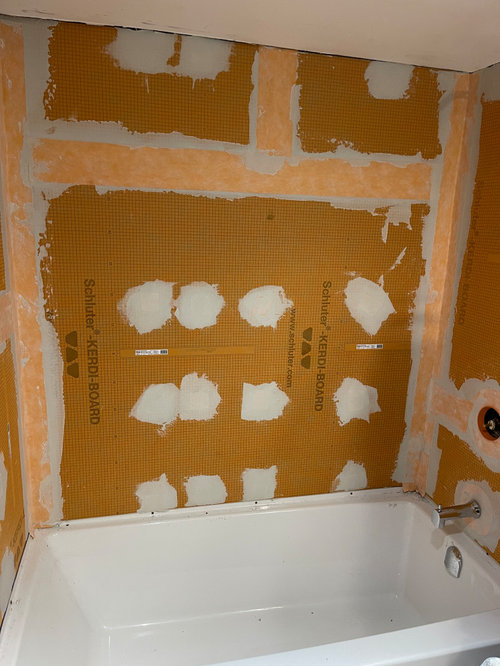
does this bathroom work seem correctly done ?

3 years ago
Hi,

I have recently hired a contractor to help me remediate an issue with my previous shower ,

see my post if interested (here) . Basically, it was an old bathroom with loose tiles and drywall getting wet behind .


I put a lot of preparation work and especially ask for Schulter Kerdi and all that to be done , I picked large tiles , all the material.


I am kind of unsure the result should be considered as good quality .

The contractor has a good reputation apparently but to me it lacks finition.


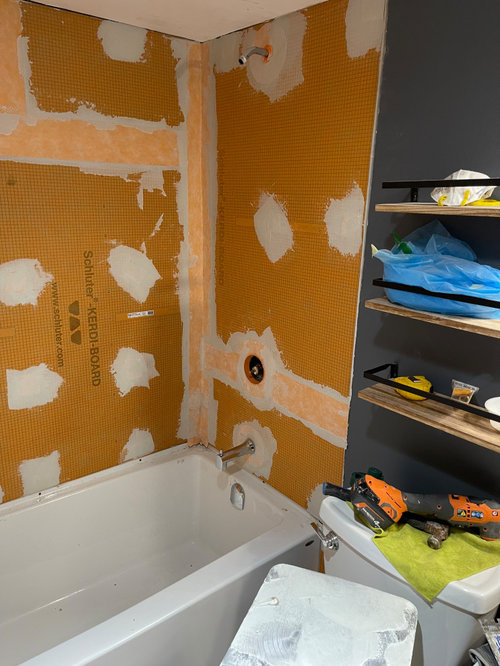
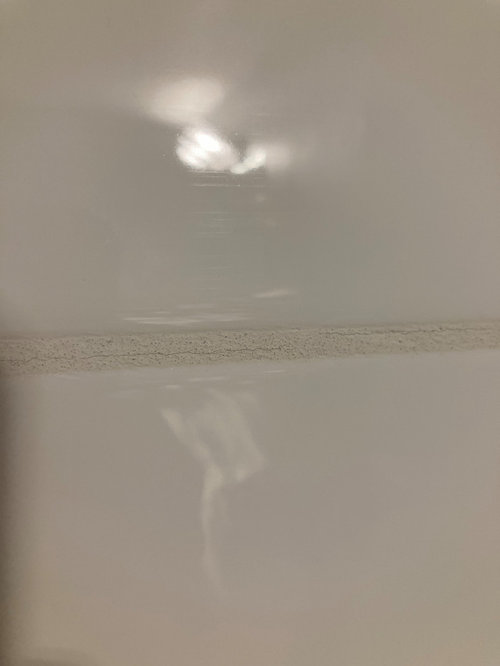
- gap between kerdi and bathtub ( lower corner on pic)

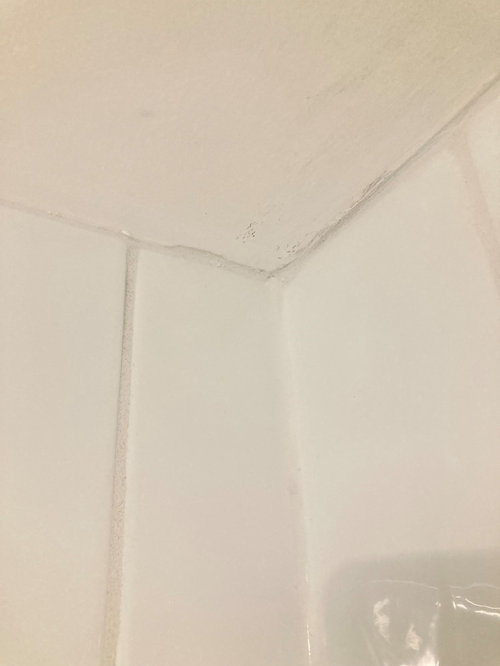
- they didnt finish the tile/ceiling , I had to apply caulk to mask the grout line but we can still see the chips made to the ceiling.

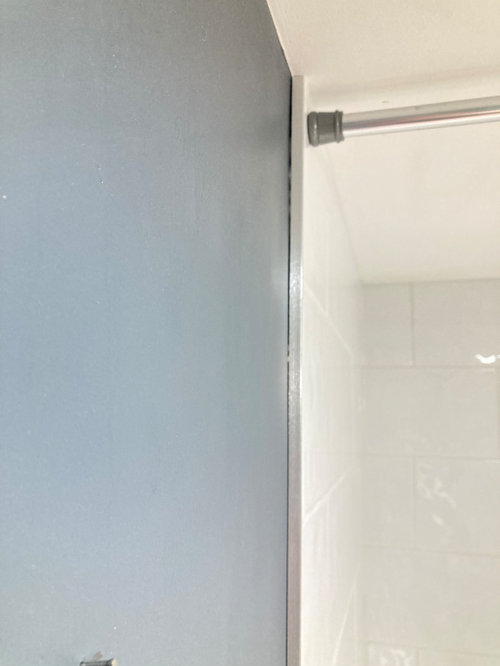
- things seem uneven , gap between jolly edges and wall , my bathtub line is very thin at the main wall .

- grout line are pretty big, I could see before they apply the grout and there was noticeable difference in the lines , I suspect they masked it with large grout lines .

- one grout line has crack (hairline crack all along one tile)

- the spout was not even working at first, another plumber came to fix it .


Maybe it s fine and I am just being too picky, but when we talk bathroom and tiles I believe the job needs to be of quality and durable. I dont want to see a tile falling off again in 2 years .


What do you think , good or bad job ? is my bathroom going to fail again ?

Thank you very much for your time .


Comments (16)

  • PRO
    3 years ago

    The tile flange on the tub is not covered. End of story. Failure.

  • 3 years ago

    The Kerdi board either goes over the tub flange from the little I know, not behind it. Tile and grout are not waterproof and water will get behind the tile. The water then runs down the wall where the Kerdi being over the flange allows said water to drain to the tub. So that is incorrect detailing. ALL changes in plane are required to be silicone caulk as the planes will move differently and silicone gives, grout does not, which is why you see cracks. So essentially you have a shower that will continue to give you issues with water infiltration to your walls and cracking grout until it all rots out again in a few years.

  • 3 years ago
    last modified: 3 years ago

    When you are knee deep in a project like this, minor issues can take seem much larger than they are.

    The tile work seems reasonable to me. The Kerdi/tub is not right, but it's way too late to worry about that.

    A small amount of ceiling paint would clean up the line where the ceiling meets the tile. Yes, there's a little bit of grout on the ceiling. The proper way to do that is a bead of caulk - which can still be done. (You caulk anywhere there is a change of planes - so wall and tub, wall and ceiling, corners of walls).

    Caulk and a little paint would also fix the edging in the photo near the top of the wall. It's minor, but it's easily fixed. Drywall is never perfectly flat.

    From what I can see, the tile work looks like a reasonable job with some very minor issues.

    As for the Kerdi and the tub, the time to address any of that is always before the tile goes on.

    I haven't worked with Kerdi, but with any system like that, that the backer is the drainage plane, not the tile, grout or caulk. Without tile installed, you should be able to spray water at the top of the wall and not have it leak. It should run down the wall and drain into the tub - not behind the tub. The Kerdi should protrude over the edge of the tub - that's a very important detail.

    I think homeowners should insist on a break in a tub / shower project when the waterproofing is done and before the tile goes up. They should insist on a spray test and address any question about waterproofing. They should make sure the tub / shower drains properly. Any issues with plumbing locations, centering, slope, etc. all need to be triple checked. This is also the time to double check things that would impact tile install, such as flat walls, true corners, etc. Check the tile layout - is it going to work as intended? This break in the project is something that needs to be discussed up-front to set that expectation: "When the backer board is fully installed and before tile goes up, we are going to pause the project and test that it's water tight, drains properly, plumbing is centered properly, walls are flat, etc."

    This is a renovation. Walls aren't flat, corners aren't straight, ceilings aren't flat and the tub is shorter than the original. In order to make the drainage plane work, it looks like one of the end walls would need to be furred out - which changes the scope of the project quite a bit or there would be a large bump where the tub end wall is.

    Who decided to take the tile to the ceiling? Stopping tile before the ceiling can avoid highlighting an uneven ceiling. It can also avoid "fudging" some grout lines to make things work.

    Again, I can't see the whole job. My impression is that the tile work is reasonable, but could be made better with a little caulk and paint. The backer board / tub is not right. I understand why things happened the way they did, but I would not have made the same choices. It won't stay waterproof. Nonetheless, it's done and you should enjoy your new shower / tub.

  • PRO
    3 years ago

    " I put a lot of preparation work" is 90% of the source of the issues here. Walls are not straight, flat, or plumb. That is the source for the unevenness issues.

  • 3 years ago

    Thank @Strawberry Patch Designs .

    when I say preparation i mean research and thoughts , i didnt do anything. i came back 3 days later to see the result

  • 3 years ago

    @DeWayne thank you, should the flange be covered or boards just meet the top of the flange with a 1/8" gap for silicone and covered by a kerdi band ?

  • 3 years ago

    Her is the info on how to do the Kerdi - tub transition.

    https://www.schluter.com/schluter-us/en_US/faq/shower-system-kerdi-bathtub-seal

  • 3 years ago

    Thanks @Jake The Wonderdog for the detailed thought,

    I mean, the ceiling caulk line is probably a very small concern, I can paint at some point.

    It was needed to tile all the way up as the shower head is only a few inches below the ceiling.


    As others seem also to say , backer job is not good , yes it s too late , but is it really ?

    I mean this is the most important par I believe , I came from a failing shower that I needed to be remediated and $5k (cad) later I feel like I am at the same point . It s so demoralizing when you put so much confidence and thought but a one man mistake ruins it all .


    Should I insist for them to redo it ?


  • 3 years ago
    last modified: 3 years ago

    " Should I insist for them to redo it ?"

    I don't know how that's going to go.

    Who made the choices on the tub, the Kerdi backer, etc?

    Did you have the opportunity to stop the project before the tile went up?

    The tub looks like it's too short - by about 3/4" of an inch. A different tub is probably not the answer, but what would be? Are you okay with them building out the end of the wall?

    He messed up. But If I'm the contractor, I'm not going to be really receptive to eating that job - particularly if the homeowner decided on the backer system and/or the tub or waited until the job was completely finished to question the backer work. Again, he messed up - I totally get that.

  • 3 years ago

    thank you appreciate it,

    yes I have little hope for them to accept and recognize the faulty installation.


    I purchased tub and backers, although I asked them if they were fine with Kerdi and what tub I should get.


    The job was initially scheduled during the week but last minute they changed and had to do it over a weekend, I was going away that weekend . It kind of bothered me to not be here to have a daily check so I insisted for pictures of progress but well pic are sent after they already proceeded with next steps so it was not super useful .


    I just hope now there is no other problem like a faulty drain flooding the unit below ( they have been away since then ) .


  • 3 years ago
    last modified: 3 years ago

    I don't want to suggest that it's your fault. But know that construction isn't like a retail shop where you bring something back and ask for your money back. You will get a lot of pushback.

    Since "flush" install is an option with the Kerdi, you may be able to get by with moving the tub back slightly so the Kerdi is flush with the tub on both ends and then seal it based on a flush install.

    That looks like an acrylic tub. if you have them redo it, be sure the tub is properly supported as per the instructions (mortar bed, for example). That's the other place that this can go wrong after a few years.

    You don't want to ask contractors to use products / systems they are not familiar with. It gets even more messy when you supply those products and are doing inspections. You start assuming the role of general contractor and assuming part of the risk. If you are in the role of GC, don't expect to flip to the role of retail customer when things go bad.

    Again, this isn't all on you. But I can see clearly how things started going south.

  • 3 years ago
    last modified: 3 years ago

    You're getting a lot of advice from pros, and I respect all of them. However, when there are comments insinuating that you had an opportunity to stop the work to do a water runoff test, or that you specified the kerdi/schluter system, or that it's too late to fix the obviously ridiculous installation of the waterproofing board BEHIND the tub flange, then that is not helpful nor is it incumbent upon the homeowner to know those things.

    A professional has a license to do the work they do. Most homeowners do not spend time in these forums or researching waterproofing techniques and products, nor should they have to.

    If the homeowner requested Kerdi/Schluter, then the professional has to get up to speed on how to install it or not take the job.

    If the homeowner needs to stop work to do a water runoff test, then the professional needs to advise the homeowner of that.

    If the wall needs to be straight, then the professional needs to advise the homeowner of that.

    If a change of plane needs a bead of caulk and not grout, then the professional should know that. Duh.

    I know all these things, but that's because I spend so much time on this forum. I wouldn't leave my bathroom much less my whole house for a contractor for 3 days, but that's me. And I take precautions and do a lot of research. However, this is not common.

    This is a total do-over, and I don't care about "pushback". Tough luck on the contractor. Don't pay the contractor. Give him/her the chance to re-do correctly. And yes, you as a homeowner need to do more research so you don't get ripped off again. Sadly, that's how many terrible contractors are out there.

    Edited to add: show the contractor the installation instructions from the Kerdi company, and there are tiling standards that the pros mention a lot in these forums. I'm not sure what they are, but this installation violates them. There are your written rules.

  • 3 years ago

    That's all good and fine unless the contractor's been paid already. Then it becomes a lot harder. When you start specifying the materials to use and the system to use and even provide those, you're taking on a different role.

  • 3 years ago

    Sure they've been paid ( silly I am too honest).

    They asked to provide materials (tub, tiles, grout) and I chose kerdi because of its reputation. If they dont know how to install it , I feel like they should not accept the job or send a skilled employee.

    I am not a playground for workers to train themselves.


    They say there is 2 years warranty , sure ,anything can sustain 2 years, but to me a bathroom should last 20 years .


    Thank you all for time again , insightful , even if I feel like facing a wall now. I did it to be at peace and now it opens a whole new set of troubles .

  • PRO
    3 years ago
    last modified: 3 years ago

    I would show them the pictures, and the detail from Schluter, and ask them how they reconciled the two. That is not acceptable. If they accepted your front end condition to use Schluter, they either educate themselves to do it right, or they decline the job. They do not take it and mess it up, and say "sorry, we didn't know what we were doing." If they are reputable, they will suggest that they redo it themselves.

    These types of learning experiences are the cost of doing business for a contractor. They either bone up on unfamiliar materials, and use that knowledge in future jobs, or they make a mistake and mess this one up. Mistakes are not mistakes when learning and correction occur.

  • 3 years ago
    last modified: 3 years ago

    @Nic_ H

    I know you are trying to wrap this up.

    I'm unclear if you provided the materials, etc. It's unclear to me how much you were directly involved - or if you simply said, "this is what I'd like".

    You are right, your job is not a playground for unskilled workers. They should have provided someone with the skills to do this work - or not taken the job.

    Unfortunately, installers can be overconfident and tile jobs are unforgiving. The only recourse is to rip them out - and that is going to be a large loss for someone. I don't know that you had a team that had the skills for this job - or if things started going off track and nobody was willing to stop it.

    The tub may or may not be long enough to install the tile backer properly - it looks a little short.

    It looks like the tub was installed on the outside of the sidewall also. I'm not sure why that was done - was it so that it would meet up with existing floor tile?

    Doing a remodel is much more difficult than it may seem. An experienced contractor knows the "gotcha's" because they have done this before (like really thinking through tub length, backing system, how all of it goes together.) They know to avoid some issues (avoid tile to the ceiling), to use products with which they are familiar, have consistent quality, and have good support. They should supervise their crew to make sure it's done properly - and not the way the installer "has always done it".

    You can certainly try approaching them with: "Here are the instructions for this product, and here's what you did". My guess is that they will say it's the way they always do it... and they have installed dozens of jobs that way, etc. Especially since you have paid them, it's going to be difficult to get a resolution that makes you happy.

    I'm with you, I think that this will last at least 2 years, but it should be a 20 year solution - and I really question if it will last that long.