Software
Houzz Logo Print
cara_ann50

crabgrass has taken over

3 years ago

My entire lawn is basically crab grass. Is there a way to get rid of this without killing all the other grass or using cancer causing chemicals?

Comments (35)

  • 3 years ago

    If you don't want to use chemicals, you'll have to either have to dig it up or smother it. And the seeds will remain active in the soil foer several years.

  • 3 years ago

    Ugh lol. If I did want to use chemicals is there anything that’s not completely terrible for me and the environment

  • 3 years ago

    Google can be overwhelming as there is so much info and no idea where to begin! I prefer to hear from experienced homeowners who know what’s best and hve tried for themselves. Thank you for all this info! I will be trying this out :)

  • 3 years ago

    While almost all of Trailrunner's advice is spot on, I'm going to take exception to the comments about lime :-) Liming a lawn - or not liming - has no impact on killing weeds or weedy grass. And a lawn or the soil bed in prep for planting a lawn does not automatically require lime. Most types of lawn grasses prefer a soil pH of neutral (7.0) to slightly acidic (6.3 to 6.5). Liming is only necessary if the pH is lower than 6.3.

    And you can over apply lime. Too much too frequently and the pH will become excessively alkaline and desired grasses will become starved for nutrients.

    Never apply any amendments willy nilly. Get a professional soil test done and then apply only the amount and frequency advised.

  • 3 years ago
    last modified: 3 years ago

    I have some questions which will help get you going again.

    • Where do you live (not your zone).
    • What kind of grass do you have (or want to have)?
    • When was the grass planted?
    • What was your normal watering plan over the summer?
    • Also, can you post a close up picture of the crabgrass? Close means about a foot above the grass.

    True crabgrass is a summer annual plant and will die when the weather gets frosty. The problem is it is a prolific seeder and will leave plenty of seed for germination next spring. You need to get a new lawn down NOW so it will develop strong roots prior to next summer's heat.

  • 2 years ago

    Soil testing by a competent lab is the best money you can invest in a lawn. I had mine tested last year for the first time in several years. It took a lot of lime and fertilizer. Almost fell into the trap of doing the same thing this year, but thought better of it and did the soil test again.


    Turned out, my lawn needed almost nothing this year and I have beautiful lawn. The soil test was way cheaper that the lime and fertilizer that probably would have been detrimental to the lawn.

  • 2 years ago

    How does the previous comment address the OP's issue with crab grass? It is extremely pH tolerant and will grow under virtually all soil conditions.

    While still a chemical (as is everything else we live with), pre-emergents just targeting crab grass are a pretty harmless way of addressing the problem.

  • 2 years ago

    As I believe has been pointed out, not only here but practically anywhere lawn care is discussed, one of the best ways to prevent all undesirable weeds and grasses is to maintain a thick, rich, deep turf.


    As someone posted earlier "Never apply any amendments willy nilly. Get a professional soil test done and then apply only the amount and frequency advised."


    How odd, one disputing one's own position.

  • 2 years ago

    The problem already exists. Getting a soil test now and/or applying fertilizer is not going to deter crab grass appearing. The seed bank exists and will germinate well before the lawn starts active growth in spring.

    btw, the comments I made previously were directed at a now deleted post and were not intended to be a remedy for the OP's crab grass problem. So nothing is disputed wrt to the OP's issue and reason for posting. The crab grass must be addressed before any "thick, rich, deep turf" can be established.

  • 2 years ago

    No, I was merely reinforcing Gardengal's statement on the importance of soil testing. She said " Never apply any amendments willy nilly. Get a professional soil test done and then apply only the amount and frequency advised."


    I was agreeing with her and she evidently took exception to it. I have no idea why. You can poison and use pre-emergent all you want, but if the soil condition, i.e., PH & nutrients, is not conducive to the turf grass you've chosen, it's all for naught.


    How ironic you didn't read the whole thing.

  • 2 years ago

    Again, I was agreeing with her. If soil tests were "off topic", and I fail to see how they could be in a discussion about turf management, Gardengal was the one who brought it up. Not I, and then I was accused of going "off topic".


    If you admittedly didn't read the whole thread, why would you accuse someone of picking a fight? If you'd bothered reading just the last 6 or 8 posts, you would have seen what I've pointed out repeatedly.

  • 2 years ago

    Next spring put down a pre-emergent with fertilizer. It was a horrid year for crab grass for sure.

  • 2 years ago

    2024 was THE worst summer ever for crabgrass. We did put down Scott’s pre-emergent crabgrass preventer/fertilizer right on time this spring, but our front lawn has never had so much crabgrass. (Back gets more shade, so wasn’t such a problem). Seems to love the high temps and humidity we’ve had this summer! Now I have to deal with fixing and reseeding within the next few weeks….

  • 2 years ago

    It looks like Cara Ann has abandoned this topic, but I don't mind picking up with chloe00s.

    • Where do you live (not your zone).
    • What kind of grass do you have (or want to have)?
    • When was the grass planted?
    • What was your normal watering plan over the summer?
    • Also, can you post a close up picture of the crabgrass? Close means about a foot above the grass.

    True crabgrass is a summer annual plant and will die when the weather gets frosty. The problem is it is a prolific seeder and will leave plenty of seed for germination next spring. You need to get a new lawn down NOW so it will develop strong roots prior to next summer's heat.

  • 2 years ago

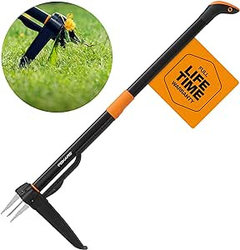
    Upstate NY. I know crabgrass is an annual and will die - leaving bare spots in the spring. I have just finished pulling out all the crabgrass. Got a great new weeder - Fiskars 4-claw standup weed puller. Put down top soil, and reseeded. Yes there are dormant seeds, and I will put down Scott’s fertilizer with crabgrass preventer again next year - hopefully will work better than it did this past year. I watered constantly in dry periods. Grass is a mix of cool weather grasses. I have had great success in the past with over seeding/ patch seeding with EZ seed and used again. I’m no expert, but do know the basics. Crabgrass is all out. Some of them appeared in the bare patches where I had killed back dandylions with a lawn spray. I couldn’t use a crabgrass killer spray this summer because the temps were above 85 degrees ALL summer, and not supposed to use at those temps.

  • 2 years ago

    Great information! You said March for crabgrass preventer? We can still have snow in March here, although not much snow at all last year. The rule I was always told was to put down pre-emergent crabgrass killer before the forsythia stops blooming. I followed that rule last spring, but my guess has been that was too late because of the much warmer winter we had. The soil temp was probably warm enough earlier for the crabgrass to already have started germinating? Everybody here has been complaining about crabgrass this year. The Fiskars 4-claw weeder was recommended by someone I know who saw me on my hands and knees with one of those 3-prong hand tools. It was terrific for getting out crabgrass as well as dandylions. To get the total taproot though, it helps if done after a good rain or watering.

  • 2 years ago

    P.S. - I use always use a tunafish can to measure watering and always do at least a half inch of water at a time.

  • 2 years ago
    last modified: 2 years ago

    Chloe, is this the tool you have?


    .

    .

    I’m in D/FW and crabgrass was the worst it’s ever been. We applied pre-emergent at the right time, our Bermuda was thick and full around all the #*@ crabgrass, and our summer was pretty mild (for us). It was even coming up in my very full and healthy perennial beds.

    Most years, I’m able to just pull up the few clumps I see, but this year was like a Crabgrass Apocalypse .

    Now I understand what Dave Barry meant:

    “Crabgrass can grow on bowling balls in airless rooms, and there is no known way to kill it that does not involve nuclear weapons.”

    😂

  • 2 years ago

    Yes - that’s the tool!

  • 2 years ago

    Thank you! :)

  • 2 years ago

    Jilly, for North Texas I would put the preemergent down in late Feb. The idea is to have it down as early as needed, because it does last 3 months. It's too easy to miss the date.

    chloe00s, yes, forsythia has always been the natural alarm for using preemergent, but it seems to be late to work in recent years. You might try doing the minute the forsythia forms buds instead of waiting for the flowers to form.

  • 2 years ago

    Crabgrass preventer as soon as the forsythia starts blooming is what I remember.

  • 2 years ago

    Thanks, dchall! I’ll make a note of that.

  • 2 years ago

    Mowing the lawn a little higher was another piece of advice I remember.

  • 2 years ago

    kl23, "Crabgrass preventer as soon as the forsythia starts blooming is what I remember." Yes, that is the way it has been stated for years. Now, I'm suggesting to go earlier with it. We don't have forsythia where I live, so I have to trust that forsythia is one of the earliest blooming plants elsewhere. I'm saying that since it lasts for 3 months, putting it down a little early would be safer than missing the window by a few days.

  • 2 years ago

    Thank you @dchall_san_antonio I suppose I was trying to say I remembered what others were saying too, but it came out wrong. Not being in Texas, I wondered what your extension service said. https://aggie-hort.tamu.edu/plantanswers/turf/publications/weed12.html
    Wow! Crabgrass is really challenging in Texas!

  • 2 years ago

    Dchall_san_antonio - Yes, I did some research online and also saw the recommendation to put down the crabgrass preventer in the spring when the forsythia buds are just forming, instead of fully blooming. I’ll also ask at the garden center I go to where there are some very knowledgeable people and confirm with them. I’m pretty sure the problem this year was putting the crabgrass preventer down too late after a very warm winter.

  • 2 years ago

    Put the crabgrass preventer down when the forsythia blooms.

  • 2 years ago

    In the south there is a different way to get rid of crabgrass without harming the surrounding St Augustine or bermuda grasses. Ordinary baking soda will kill it if you can get the baking soda dust to stick to the crabgrass. Crabgrass is hydrophobic and will shed most water and turn any water that doesn't roll off into little drops. The idea is to prespray the crabgrass with soapy water (mixture of shampoo and water) and then dust the crabgrass with baking soda while it is still wet. If you only have small spots of crabgrass, then one way to apply the baking soda is to put a quarter cup of it into a sock or hose. Hold the bottom of the sock close to the crabgrass and squeeze the lump of baking soda at the bottom of the sock. The dust comes out as a very fine powder and sticks to the crabgrass. It dies very quickly. I have tried this on several weeds. Some die quickly and some are not affected at all. For grasses in the north, I would try it in a small spot first to see if your grass is affected.

  • 2 years ago
    last modified: 2 years ago

    Seems you are getting some mostly great advice. Nix the soil test... cut your lawn often in the summer to let your existing grass thrive. Use some good compost - I get it by the yard, not from a bag. I fight weeds in one of my yards - it's tough. I spray Orange Oil, Strong Vinegar and some soapy water onto the weed (nearly weekly)... maybe not practical all over your yard though. It is safe but will kill any grass you have. I order 45% vinegar - 3- 4 gallons a month from amazon - dilute it. Oh - check out DirtDoctor.com - Howard Garrett is an expert on organic. Probably the only website I would ever go to for advice. He will give you the formula for the spray.

    One more thing. I am solarizing an area and plan to plant some perenials in it - grass requires too much water where we are (texas). Solarizing uses black plastic for couple of months - it heats the ground and kills nearly everything - cooks. You will need to add some good compost after that and plant grass or perenials. Easier to do for a garden. I use this to kill the common bermuda grass that gets in my veggie garden. One more thing ( I keep saying this - ha ha) - personal choice. I think All Organic is the best way to go. I add compost to a sad lawn and buy Medina Organic Fertilizer (a 3-2-3). You can put it on and it will never burn your roots whether you water it or get rain or not. Good luck!

  • 2 years ago

    This post is a year old but still popular because the crabgrass is still with us! 🥴

  • last year
    last modified: last year

    Hey, Coffee Dude. I haven't heard dirtdoctor or Howard Garrett in years. I was his lawn care forum moderator for years until the forum traffic died off. I don't know where everyone went, so I haven't been too active there in the past few years. Howard has a good heart, but he's in the business of advertising and selling products. I'm not in any business, so I tend to find less expensive ways to fertilize than Howard recommends. But I agree that organic fertilizer is the way to go. My organic fertilizer of choice for lawns is alfalfa pellets (rabbit chow, not horse cubes). You can get it a real feed stores in plain brown bags, or you can get it at Tractor Supply in the form of fish feed. The application rate is 15 to 20 pounds per 1,000 square feet.

  • last year

    That is interesting re the alfafa product. I've been buying medina 3-2-3 and it is pellets (HEB sells it under another name). I used it in the front yard and if you don't water it down, the deer roam to my place and chow down on it. I think mine has a touch of manure in it, because my guests have asked about it. I occasionally listen to Howard and Bob Webster on 550 am Sat morning. I will check out the costs. My 50# bag will be about $24. Thanks!

  • last year

    We had deer and antelope in Bandera, so I know about watering it right after you apply.

    A 50# bag of alfalfa pellets might be up to $24 by now. It has been creeping up year after year. When I first started buying it the cost was $12 and corn meal was $3. I miss those days.

Sponsored
Landscape Management Group
Average rating: 4.9 out of 5 stars33 Reviews
High Quality Landscaping Services in Columbus