

My first online order.
3-8-2024:
After searching around for certain plants and either not finding them or finding them at very high prices, I put my first order to Conifer Kingdom.
I ordered 3 plants, not to be shipped until early March and everything went smooth but after a couple days decided I needed to add another plant. I emailed them if I could add a plant and they said sure but I'd have to do something so they could access my CC because they don't keep the CC on file.
I didn't understand what she told me to do, something about a paypal, so I asked if she would explain to me how to do that.
I never got an answer so after a while, the only thing I could of was put another order in on the website.
I emailed the same person and told her what I did, and she said sure, she would handle it from there. I even left a note at the end of the order saying the two orders should be combined.
Finally, after a while, I noticed there were still two orders under my account with two shipping charges, one for each order. so, I emailed them and asked about it. Not the same person but they told me that no, they couldn't combine the orders and the amount combined didn't go high enough to get the free shipping anyways.
If I would've understood the gal in the first place (I think), For the same money, I could've had 5 plants instead of 4 plants plus $20 S&H?
I did get a free plant for ordering more than $50 on the first order and 10% discount for first time buyer.
I'm more than happy getting the plants I wanted with a cheap education to boot.
One of the orders came today. It was the second one I ordered. My first order is coming Monday. :-?
bill
Comments (70)
BillMN-z4a
Original Author2 years agolast modified: 2 years agoYes, one reason for delivery before breaking bud.
Known to be drought resistant once established with a dense form, A. concolor was an easy choice, not to mention somewhat tolerant of urban pollution and z3 hardiness. I like the common name of 'California White Fir'. ;-)
The P. glauca is a no brainer, usda z2 and the genus brothers grow like weeds around here.
25-30 mph NW winds coming through late Friday through Sunday, so I gave the little guys some windshield, so they stay upright during that time.
Mid 50's and sunny again today and I believe the buds have begun swelling on the spruce, so I got things planted in the 'nick of time'. ;-)
 2 years agolast modified: 2 years ago
Congrats on your order Bill. CK are great although I sure wish they would figure out how to graft Chamaecyparis lawsoniana onto one of the Asian Chamaecyparis.
"Concolor firs are surprising that they do quite well in east N America (not south) without disease/climate issues. Should be planted instead of blue spruces."
FWIW I see Concolors in the suburbs of SE PA, but not much further south of there. I would say they are very rare in the DC area. In fact I just checked the National Arboretum website, the only 2 concolor firs they have are firma grafted from Conifer Kingdom! Surely they have tried own root ones over the years and they've eventually died of root rot.
UPDATE: wow, I haven't looked at the National Arboretum online database in years. They have a plant I'm shocked that they have. Definitely visiting again this year! (it's probably been almost 10 years since I was there, so I'm due for a visit anyhow)BillMN-z4a thanked UpperBayGardener (zone 7)Related Professionals
Richmond Landscape Architects & Landscape Designers · Anniston Landscape Architects & Landscape Designers · New London Landscape Architects & Landscape Designers · Oneonta Landscape Architects & Landscape Designers · Albuquerque Landscape Architects & Landscape Designers · Quincy Landscape Contractors · Tupelo Landscape Contractors · Fort Wayne Landscape Contractors · Traverse City Landscape Contractors · Altoona Landscape Contractors · Los Angeles Landscape Contractors · San Francisco Landscape Contractors · Hot Springs Home Builders · Augusta Home Builders · Yakima Home BuildersBillMN-z4a
Original Author2 years agoThanks david!
The winds are low 20's mph here this morning and colder temperatures arriving in the days ahead. Thankfully they will be staying in the low teens or above for lows and 30-40d for highs.
But the roots are in the ground, and I don't have to babysit plants for the next month.
The concolor should enjoy the high, sandy location I've given it although it could get moved sometime in the future.
Enjoy your trip to the NA.
billBillMN-z4a
Original Author2 years ago'although I sure wish they would figure out how to graft Chamaecyparis lawsoniana onto one of the Asian Chamaecyparis.'
David, there seems to be confusion on what genus some of these plants are really in.The Chamaecyparis nootkatensis has been renamed at least three times and now they're unsure if the Asian Chamaecyparis are even related to any of those in N. America and the ones in N. America are more closely related to the Cypress.
I'm not a botanist but I always pick up on these tidbits of information every time I buy a new plant and study up on it, so I found that interesting when you brought that up.
I always wanted to own a Chamaecyparis but I guess for now, I'll just have to wait. ;-)BillMN-z4a
Original Author2 years agolast modified: 2 years ago3-26-2024:
Just an update on what is ordinarily an insane practice of planting trees in early March in my area. :^)
My concerns were, by keeping them in the garage, the roots might get down to temperatures that may be harmful to them. My garage only stays 4-5d warmer than the outside air and temps in the teens to single digits were still in the extended forecast.
I've reasoned from people 'in the know' here on these forums that ~20df or below that could be bad for potted plants, even conifers.
I was so glad to see temps in March, when the trees arrived were warm enough to put them in the ground. That doesn't always happen here. But if I had to, I could've manufactured a way to preserve them in the garage or basement but would've been a lot of extra work so I was so glad to get them in the ground! :-)
Once planted, I watered the Callitropsis Nootka twice that week being there was a lack of snow/rain, and the ground did not freeze for many days after planting.
I figured the water would keep it happy as in its native range, it likes an area with some spring seepage and the 40d water might also help moderate the ground temps overnight, to a certain extent.
With single digits appearing in the extended forecast, I was hoping for a little snow to help protect the ground, really for all four newly planted trees.
The night before the predicted 5-7df, an inch or so fell and I promptly went out and shoveled the snow around the plants, so it covered the mulched areas around the roots to about 6" of snow.
After two days, the gates opened with 16" to 18" inches of snow over 3 days. 😁👍
Here's a picture of the Nootka (top half) and WWS. With northerly winds, the airborne snow tends to come over roof, then fall straight down into the vacuum on the south side, like a snow fence. ;-)
The nootka will like this slow snow melt into the nearly frozen ground over the next 10 days or so.
The WWS (left) resides in the 'Wind Tunnel' that I've referred to from time to time in my posts (The snow is more swept away obviously in that part of the yard and the WWS is most likely the hardier of the two trees so it got that spot). Nice drip edge for both trees off the roofs.
When mother nature gives you lemons, you make lemonade. :-)

^This lower left corner of the picture is the end of the deck railing, not part of the snow drift. ;-)The concolor is inaccessible at this time and the 'free gift' is on the south side of the east half of the house so is enjoying the same heavy snow 'blanket' as the nootka. ;-)
I won't be able to give any 'success stories' for a while until they push new growth, or not.
In the meantime, I whipped up new tags for the two trees that I think will be the most likely to survive. :)
ETA:Made it out to the concolor. Glad I put the bunny fence up right away.

got tags finished.


:-)- 2 years agolast modified: 2 years ago
Hhhmmmm.
The current molecular genetic phylogeny seems to think C. obtusa of Japan is closely related to C. lawsoniana.
https://en.wikipedia.org/wiki/Chamaecyparis
I knew that the 'Alaska Cedar' was a different genus.
BillMN-z4a thanked UpperBayGardener (zone 7)  2 years ago
Bill, your snow-blanket is fortunate. Will keep the ground from freezing and slowly seep downward (no runoff) for soil moisture. Winter is not giving up on your area just yet.
BillMN-z4a thanked bengz6westmdBillMN-z4a
Original Author2 years agolast modified: 2 years agoNow you've done it david. You've finally reached the end of my vast storehouse of knowledge, LOL!
But I appreciate your comments and always learn something new every day and that's why we do this imo.
I found this article quite interesting:
' Chamaecyparis species are relatively easy to propagate from cuttings, so grafting is seldom used as a propagation method. Chamaecyparis obtusa (hinoki cypress) is compatible with Chamaecyparis lawsoniana and Thuja occidentalis. Since Chamaecyparis lawsoniana has disease problems it is not used in North America as an understock. In Europe it works well but eventually creates a deformed graft union when it develops a much larger diameter than the cultivar.
eta: And: Chamaecyparis lawsoniana has limited use in America due to disease entering the root systems. Grafting could prevent this problem and allow wide use of hundreds of cultivars throughout this country. However, any understock used is overgrown by the cultivar.https://robertfincham.com/Musings/understk-scion
beng,I have a slim steel rod with a handle, ~2ft. long, that I use to test frozenness of the soil.
Right before the snow, I could tell the top layer, 2-3 inches of wood mulch was on its way to being froze solid but when the rod penetrated that, the soil beneath was still soft/thawed.
Now with the warmer weather, I can tell the snow that's melting around both of the 'close to the house' locations is going directly into the ground (no runoff).
There may even be some root growth occurring albeit very slow thus far.
All 4 plants are still nice shades of green and still dormant. 🤞
BillMN-z4a
Original Author2 years agolast modified: 2 years ago4-17-2024;
'Welcome to the dark side, there's no going back!'
Wait! I thought this was a joke!
I was walking by the plants at the Walmart parking lot and the reality set in.
First, I told myself, I don't need another juniper, then I thought, it's only $8.95, next I picked it up then started walking, I had a blank look on my face (but smiling). Just like radar controlled I ended up at the cashier. Automatically opened my wallet and handed her a ten-dollar bill. I kept hearing the plant saying 'Buy me... buy me....
Weird but I was happy and needed something to replace those lilies out front that the deer won't leave a lone.
Juniperus Squamata 'Blue Star".

 BillMN-z4a thanked artinnaturez8b
 2 years agolast modified: 2 years ago
I didn't catch it the first time around, but Abies concolor var. lowiana, which you have, is reportedly not as cold hardy as A. c. var. concolor. They originate from separate regions, with var. lowiana from the Sierra Nevada range and var. concolor from the Rocky Mountains. Hence the common names California White Fir and Rocky Mountain White Fir.
I've grown a few White Fir seedlings, all of which were simply listed as Abies concolor. I assumed they were all grown from var. concolor seeds. It will be interesting to see how your White Fir handles a z3b/4a climate since A. c. var. lowiana is supposedly only hardy to -22F. I know you'll keep us posted. :)
BillMN-z4a thanked maackiaBillMN-z4a
Original Author2 years agoThose thoughts have already gone through my mind a zillion times since planting, but I have to remember that in the end, this is all just another (cheap entertainment) experiment. ;^)
I've already had some 'not so good' scenarios with the plants being delivered a bit early (mid March) and then the cold coming back (mid 20's lows) the following week.
Next it was mid 60's to mid 70's for day or two and then last night it was 27df with the next two forecast about the same.
I think the major progression will be if the trees were 'truly dormant' when they arrived and if they've stayed dormant, during these back-and-forth recurrences of the cold. The grounds been plenty cold, so fingers crossed.
And with 25d being the lowest since they arrived, you could almost call this a z5 winter for them. Again, whether they were or not truly dormant the whole time.
One thing I have going for me is that the two most sensitive plants of this bunch are in the most sheltered/protected locations that I have. But I have to agree, a lot depends on if these freakish weather events stay on the mild side as if we really are in a warmer zone than previously thought. If we go back to those z2-3 harsh winters, well, I took my best shot. ;-)
From what I understand about concolor is, if the new buds are too far advanced in the spring and it gets cold enough to freeze them off, this can weaken the tree. And that's maybe what I'm seeing here with the not so amazing specimens around town.BillMN-z4a
Original Author2 years agoOh, and just to add, the Dawes arboretum and others have Abies lowiana rated to Zone 3.
- 2 years ago
The Dawes zone rating is surprising. You’ve got the right attitude when it comes to woody plants. If one is afraid to lose a few, it might not be the right hobby.
This winter was so mild, I dont think I lost a single plant, which is almost unheard of. Maybe I’m not trying hard enough.
BillMN-z4a thanked maackia - 2 years agolast modified: 2 years ago
Zone pushing -- works sometimes, others not. My crape myrtles are miserable clumps of base sprouts, but my longleaf, loblolly and pond pines (all southern pines) look healthy and grow like weeds (longleaf pine is over 50 ft tall).
Bill, my Manchurian fir is "winter" cold-hardy, but pushes buds too early and most years these get burned by late frosts. Then it responds by putting out disheveled secondary sprouts in all directions and kinda looks like a mess.
BillMN-z4a thanked bengz6westmd - 2 years agolast modified: 2 years ago
Bill, do you know what your "free gift" is? Some type of juniper/falsecypress?
BillMN-z4a thanked bengz6westmd BillMN-z4a
Original Author2 years agoOne does expose themselves to disappointments with some plantings, even if they are called 'Zone Hardy'.
A 'new to me' term I've been researching more frequently is 'Frost Hardy', where a plant can take the minimum cold of a certain zone just fine all winter but once the plant comes out of dormancy, a late hard frost/freeze can kill or weaken it over time.
Of course, this information is not widely published.
I'm now 'officially' zone 4a, so technically I'm not zone pushing, :-) except for my CK 'free gift' which we'll get to later, I first want to see if it survived all this abuse and weather changes.
I've rejected planting certain plants here because soil type is rated 'Moist to Wet' and I don't want too many trees/shrubs that can't take our summer dry spells, albeit I do have a few.
One factor helped me choose A. concolor is, once established, it is somewhat drought tolerant.TBH, I didn't know at the time mine would be a lowiana, or what the difference was but from all my searching, it does grow in Montane areas to over 7,000 ft. in the sierras, where temperatures will go down to -30 in the winter. Admittedly marginal for my area but then last winter, we only had -18 once in January.
The main issue will be if it stays dormant late enough, until the really hard freezes are over.
So, dispelling the fear that winters will soon return back to the dark ages, I'll take the gamble that it won't (I'll either be the hero or look pretty stupid but hey that's life and what makes it fun). ;-)BillMN-z4a
Original Author2 years agolast modified: 2 years ago5-7-2024:
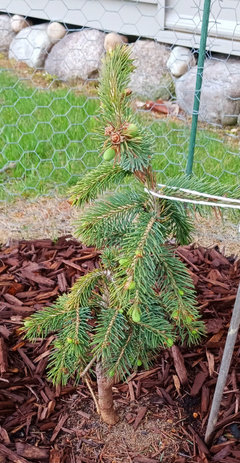
The weeping white spruce is breaking bud: :^)
Same with the concolor fir: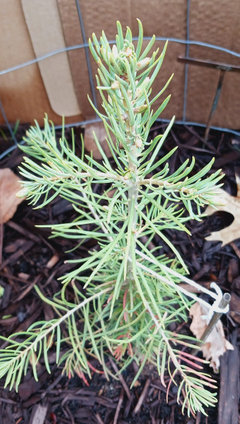
So, 2 of my 4 online ordered plants have survived and are alive!
Good after being planted during mid-March, in frozen ground, then having a roller coaster of temperature swings, down into the teens with snowstorms of over a foot and high winds with very sunny days a good part of that time.My conclusion is they were truly dormant on arrival.
The other two aren't so easily looked into. They don't have buds so don't have that indicator to see if they have begun to grow. They both have nice, green foliage since day one and even if they have grown some, it's not been a whole lot this early, so hard to visibly assess that way.I guess if they look alive, that's the main thing for now.
Only been highs into low to mid 60's for the most part and cool at night.
Guess I'll just have to keep an eye on them. :^)
- 2 years agolast modified: 2 years ago
It can be hard to discern new growth on Nootka cypress. If it's retaining its green, it's prb'ly OK. Plus it may barely grow its first year -- just root-growing/repair.
BillMN-z4a thanked bengz6westmd BillMN-z4a
Original Author2 years agoI took some closeup pictures of some of the leaf tips.
I'll wait a while and photo again then compare the two sets of pictures.
That should show progress if any.
I was concerned with the roots on the C. nootkatensis. It was a small pot with very fine roots that were difficult to untangle without breaking some off. Probably lost, guessing 7-10% that broke off or were too tangled to spread out decently.Hoping that the early planting gave the tree a chance to make some new roots by growing season.
The first year is always the most critical until the tree has a chance to settle in.
I'll repost after a few days of this sun and warmth we're finally getting.BillMN-z4a
Original Author2 years agolast modified: 2 years ago5-9-2024:
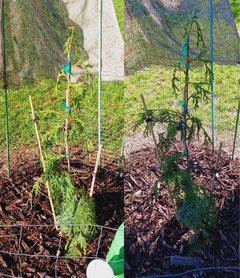
C. Nootkatensis: Doing well but had a few smaller branchlets go brown. I just snipped them off.
The burlap is more for wind damping than for sun, it maybe coming off soon.
Now for the 'Free Gift'.When first planted it was looking good. Then I put a sun shade on it, in case it wasn't acclimated to UV and real sun. I Left the shade on for over a week and with all the documentation saying 'Full Sun', I remove the shade and thought perfect.

About a week in full sun, I was reading about this plant and from that learned that young plants such as this one cannot take full sun and partial shade is what it needs.It might be that it was too cold for the tree to adapt to the sun and UV, idk but after reading the article, I went to check and found that the plant sun burned significantly.
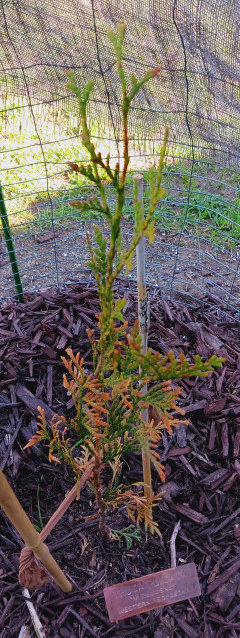
It's been sun shaded ever since.
The branch tips at the top part of the tree look healthy, although I still can't tell if it's growing or not.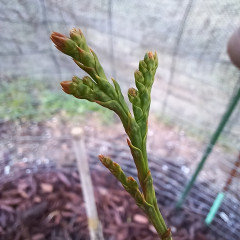
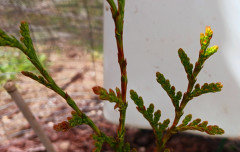
So, there's still hope. We just need some summer weather with regular rains.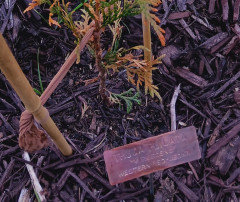
:-))
BillMN-z4a
Original Author2 years agolast modified: 2 years ago5-13-2024:
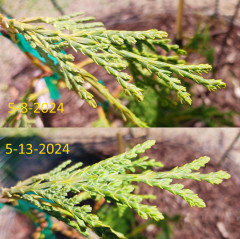
Without a doubt, all 4 plants on this order are alive and growing.
You have to compare in a very assiduous manner, but you can see new growth in various places that weren't there on the earlier pictures.
Callitropsis nootkatensis:
Thuja plicata 'virescens':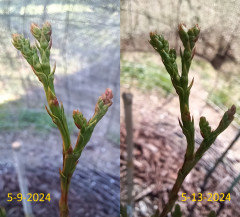
So, not killing the plants soon after transplant now accomplished. ;-)- 2 years agolast modified: 2 years ago
Good to hear. My Nootka cypress has tip growth too. Thuja plicata -- I tell you, my hybrid green giants aspire to their giant western arborvitae (Thuja plicata) side, they're going to become way too big for where I planted them. That's OK, I'll deal w/it if I have to.
BillMN-z4a thanked bengz6westmd BillMN-z4a
Original Author2 years agolast modified: 2 years agoThuja p. 'Virescens' is a small variety of western arborvitae and to be honest, there wasn't a lot of good choices in the limited selection put before me.
It's my understanding that Thuja p. can take the cold but is not frost hardy, once it comes out of dormancy. And there are 'Coastal' stands and 'Interior' stands with the interior trees showing chemical differences and greater hardiness in both categories.
I have no idea of the provenance of mine but probably could give you a good guess which it is.
FWIW: This is the third year in a row with no late frosts here in May and for what I paid I'll have something to play with for a while. ;-)
BillMN-z4a
Original Author2 years ago5-27-2024: Update. ;-)
With cool weather and few real growing days things are progressing albeit slowly (for me).
There were some nights back in early April when the possibility of frost was forecast, that I covered the plants, except the Picea glauca pendula, JIC the 3 other plants had awoke from dormancy and were vulnerable to freezing.There were a couple nights it did get down to ~30f but no apparent damage. I think the ground was warm enough by then, to keep things that were covered from freezing. Could be everything was still dormant, and it didn't matter idk. ;-)
A. lowiana: This one had some root surgery done at planting time, which could explain the lower sections of the tree looking a little weak. But the lower part will be irrelevant in time.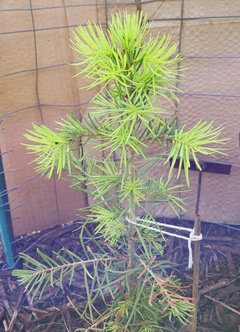
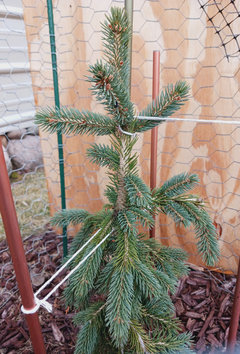
Picea glauca 'pendula'. Not much to say considering what the original condition of the roots looked like. Zone 2 hardy and loving the regular rains so far this season and showing good growth.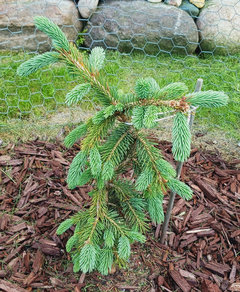
Callitropsis nootkatensis: The trunk on this one was so flexible it needed two ties at different levels, pulling in opposite directions, to keep it upright. The bottom tie in the picture foreground is now ready to come off. Noticeable growth ~1/2" on several branch tips.
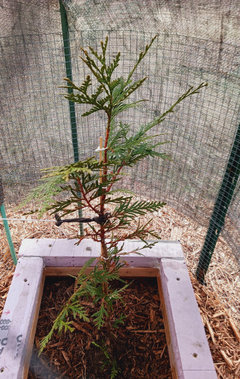
Thuja plicata 'Virescens' below is improving nicely. I trimmed out some of the sun burnt areas, but some were brown on one side and green on the other, so I left some of those. There are a few new green sprouts coming from the trunk in a few spots in those areas. The upper branches appear healthier, are greener and have elongated ~1/4" in several places.
Interesting tidbit of information: T. plicata doesn't like all of its nitrogen to come from urea-based fertilizers. But I have that covered.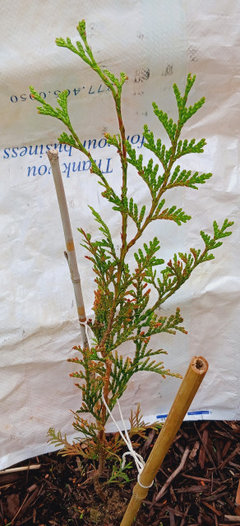
Another important factor about this plant is its rated z5a, a full zone higher than mine.Our winters here lately have been very mild, within z5 temperatures last winter.
So, I planted it in the most protected spot I have on the south side of the house (lower center of picture near the house) where winter winds from northerly directions are nearly non-existent, and any snow fall tends to pile up in this 'dead spot'.
Also, the ground didn't freeze hard this close to the house, at least it didn't last winter.I may still need some 'artificial protection' from the sun and south winds but that's nbd on a smaller plant.
A determining factor is the plant can take the cold while it is dormant. But an early Fall freeze, before the plant goes dormant, or a late freeze after it comes out of dormancy could seriously weaken or damage the tree, eventually killing it over time.
What can go wrong? ;-)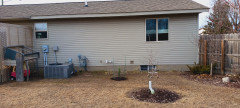
- 2 years ago
Nootka cypress looks good -- mine's similar. Already showing weeping tendency.
BillMN-z4a thanked bengz6westmd BillMN-z4a
Original Author2 years agoC. nootka is a very moisture reliant plant when young and grows in areas where the annual rainfall is in excess of 60". They are said to become somewhat drought tolerant with age.
Lately, both the Thuja p. and nootka have been receiving enough light rains mostly at night and if not, they get a little water from the rain barrel on drier days. My well-draining soil allows me to keep them hydrated.
BillMN-z4a
Original Author2 years ago6-1-2024:
After I removed the lower tie on the nootka, I was surprised to see how fast it had considerably stiffened up.
It now only needs one nylon tie, 2/3 of the way up and sways in the wind. :^)
Now it gets all-day direct sun too. Go 'Calli' go!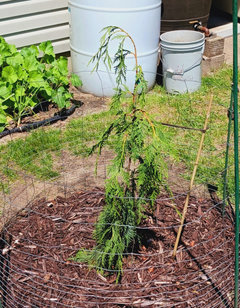
- 2 years agolast modified: 2 years ago
Good to see progress w/the Nootka. Mine looks happy too, long bright green extensions on the fronds (fun-fact -- scale-foliage conifers don't make buds). I hope for a long, warm fall for it to be able to grow roots for as long as possible.
BillMN-z4a thanked bengz6westmd BillMN-z4a
Original Author2 years agolast modified: 2 years ago'scale-foliage conifers don't make buds'
That same idea came to my mind when I was looking at my T. plicata yesterday.
It's now sending out new, green branch tips (scales) from what appeared to be irreversibly sunburnt branches. Even a few new sprouts are coming out straight from the bare stalks.
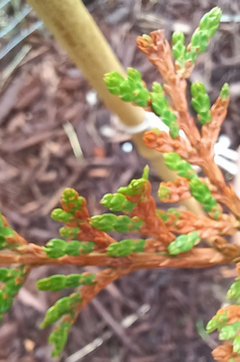
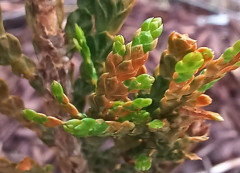
'I hope for a long, warm fall for it to be able to grow roots for as long as possible.'I'm not! Because the T. plicata needs to harden off well before it freezes, I hope for a long Fall that cools off during the days and gets even cooler at night. It'll be my best chance of this thing surviving the winter. A cloudy Fall would be a nice touch also.
The roots will grow all the way up to ground freeze so no worries about that. ;-)
I've increased the hours of direct sun on this one too but still give it ~80% sun shade for a few hours' later morning to midafternoon. The sun disappears behind the house by 6:00 also.
I'll see how it does with that before I open up things further.
- 2 years agolast modified: 2 years ago
One other interesting tidbit -- when your Nootka can spare alittle foliage, nip some off, mash it up and smell it. Some literature says it's unpleasant/catty, but to me it was very unusual/interesting. The smell was very different from my Green Giant foliage (half T. plicata), which is very "fruity".
BillMN-z4a thanked bengz6westmd BillMN-z4a
Original Author2 years agoNot catty or offensive in any way. Difficult for me to name, maybe a hint of citrus?
With our near 'temperate rain forest' conditions this spring, growth is accumulating into the inches, especially near the top.
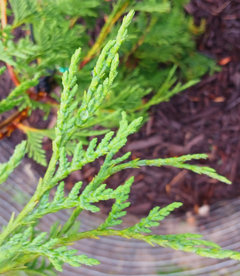
BillMN-z4a
Original Author2 years ago6-18-2024:
What do you do when it rains, and you don't have to drag the hose around to water?
You expand your mulch rings and other things that you should've done.
Last winter when these were planted, I did only what little I had too to get them in the ground so mulch ring expansion was needed and is now finished (for now).
Abies lowiana: Makeshift windbreak for this year.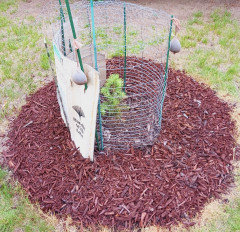
Picea glauca pendula: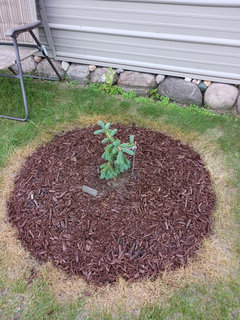
Callitropsis nootkatensis: One tie only soon to be removed.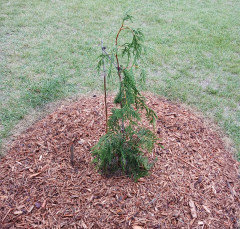
And last but not least, Thuja plicata virescens: Good growth considering earlier setbacks.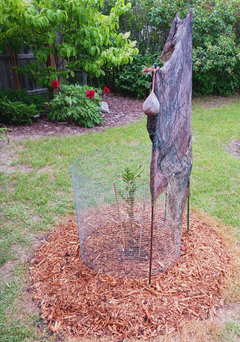
Added composted manure underneath when expanding the mulch but stayed away from the 'Black Cow' brand bc I read bad things on this forum about it contains herbicide chemicals sprayed on the cows' pasture that follows through into the manure. Or something like that.
Rained almost all day today after I was done. ;-)- 2 years ago
Bill, I dunno if I'd completely untie the Nootka yet. The graft area is a weak point for possible breakage.
BillMN-z4a thanked bengz6westmd BillMN-z4a
Original Author2 years agoYa, no hurry. The graft is still quite noticeable. Will end of season be long enough for supporting it?
Turns out the wind is quite subdued at this spot. Even south winds seem to lose their velocity by running into the south side of the garage. The NW wind coming around the corner seem stronger and move the tree more.- BillMN-z4a thanked bengz6westmd
BillMN-z4a
Original Author2 years ago10-03-2024:
Update:
As made known in a previous thread (link below):
Abies lowiana didn't make it. Possibly root rot.
https://www.gardenweb.com/discussions/abies-concolor-var-lowiana-looking-sad
In the thread linked to below, I covered the Thuja Plicata 'Virescens' winter prep.https://www.gardenweb.com/discussions/what-is-this-black-stuff-on-thuja-plicata-virescens
In this update it will be the Callitropsis Nootkatensis 'Pendula' and Picea glauca 'pendula' shown earlier, shortly after planting.
Staked and tied with a soft, stretchy nylon material, the Nootka cypress grew well this season. Several inches in length on the top portions to a foot or more on some of the lower branches (note: Lower left in the picture shows one branch sticking through the wire).I did use a 'Snow Stake' along the top portion of the trunk (seen in last picture below).
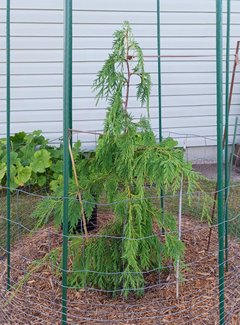
After adding a couple of inches more to the mulch bed, I constructed the simplest frame I could think of using scraps of boards/plywood that I never seem to throw away, screwed to garden stakes I've collected over the years (mostly using Menards rebates). ;-))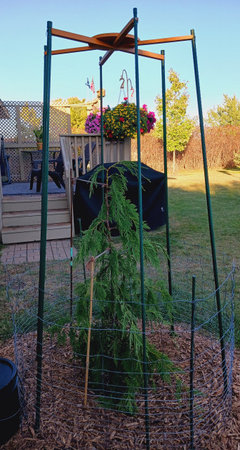
Next wrapped a layer of burlap around the perimeter.Not sure why I needed the lathe 'snow fence', but it was hanging in the shed and only took 10 min. to install. It does add shade and wind baffling and up here you never know what kind of winter you're going to have. Being a Z4a tree, it might be on its own in a season or two.
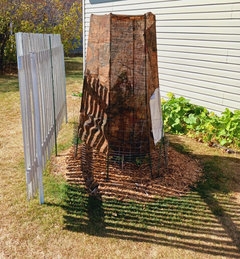
Inside view from the top (snow stake helps keep ice and wet heavy snow from bending over the plant during winter, to a certain extent).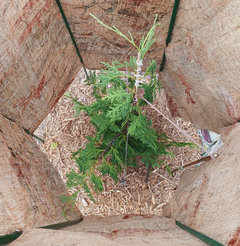
:-]
Picea Glauca 'Pendula'.No muss no fuss with this one.
Last winter, I had such good results with the cardboard windbreak causing snow to pile up around it, I put in a more solid plywood scrap and some burlap to also diminish the strong winds it can be subjected to at this location. Good 4" mulch layer too.
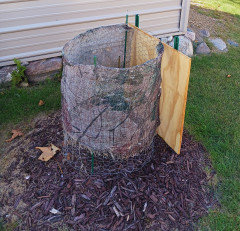
:-)
BillMN-z4a
Original Author2 years agoThanks, beng!
It was interesting how new growth on some of those branches was so flexible yet grew outward to form long horizontal branches. Some at a slight angle upward, some downward.
The top grew more like a fountain with a new shoot going straight up then bending over as the length increased.
It should've built up the root system this season.Regular rains until mid-August then I kept the watering down to once a week since then.
Even with no rain and 80's & some low 90's for temperatures, it seemed to grow well, more towards the end of season, never showing any heat or drought stress.
34df and light frost last night and cooler temps until end of next week so things will be shutting down.
Glad mine won't match the size of those in that thread you linked to. ;-) Beautiful area.- 2 years agolast modified: 2 years ago
Nodding top - correct presentation for some conifers like weepers and even hemlocks.
I watered the Nootka regularly in the dry heat along w/anything else that was planted recently, but gotten 11.9 inches rain since first of Aug, so really no longer any drought here, at least.
BillMN-z4a thanked bengz6westmd BillMN-z4a
Original Author2 years agolast modified: 2 years agoYup, and I don't plan to prune this one at all. ;-)
Dry Fall here can mean a snowy winter.
9-20-2024: Shows a good view of the top.
As the bark darkens, it no longer wants to bend/flop.
I kept it upright just until it gets established a bit more, next season it should have a more solid base and it can do what it wants, although I'll keep the center ties in place for another season.
Failure is not an option, lol :-)
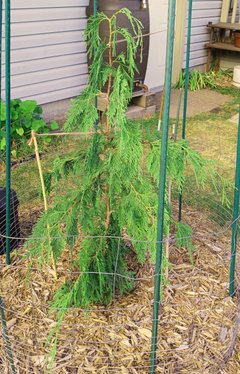
BillMN-z4a
Original Authorlast yearlast modified: last year1-13-2025:
So far, not a snowy winter.
We always hope for sufficient snowfall before the 'real cold' descends on us in January.
But this year, snow has been pretty sparse.
I really didn't have a lot of 'new' plants to be concerned about, so a healthy layer of wood mulch went on everything last Fall and for the established zone hardy plants, we're good.
I hate to think that I'm zone pusher, but I'll present the next paragraph as a qualifier.
This Callitropsis nootkatensis pendula is said to be, by many reputable sources, cold hardy down to -30df, and in that respect you could say it's zoned 4a (which many do and it's where I reside).
The caveat is, if you live in zone 4a, the -30 is only the average coldest low, which could be -20 some years but then again, could be -40 some years. So, is -30 cold hardy same as zone 4a hardy?
I'll answer that with, 'Hello, my name is Bill and I'm a zone pusher'. :-))
A healthy amount of snow (6") that came the other night, so I took the opportunity to fortify the winter protection around my Alaska yellow cedar. So far, we haven't received lower than -17df and future forecasts are now predicting -21df and a few teens below, next week, so if that outlook holds, we could be out of the woods by then, for anything colder than -15. Last year -18 was our coldest, one time, everything else below was teens or single digits.
After piling more snow around the outside, I filled the inside (which was already half full) until the plant was covered completely (no I didn't take a picture inside). ;-)
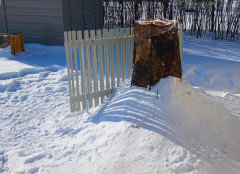
With these colder temps, the snow doesn't disappear very fast either. More snow is just icing on the cake from now on until spring.BillMN-z4a
Original Authorlast yearLet's not forget the Weeping Picea glauca, albeit it's zone 2 hardy, it seems like a snow cover during the cold, translates to a more robust growth in the spring.
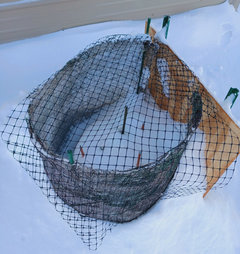
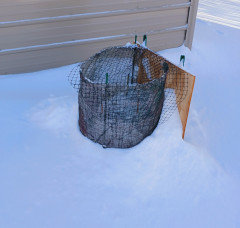
:-)
BillMN-z4a
Original Authorlast year2-25-2025:
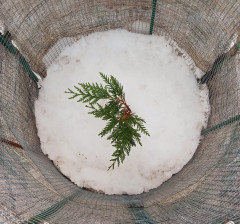
I looked at the two plants that I covered with snow earlier and decided to remove some of the snow that had melted down above the plant and solidified, knowing it would be getting plenty heavy as the snow continued to melt.
Every year is different, so you just have to keep an eye on things and act accordingly.
Thuja plicata wasn't too bad with a slightly bent over top.
There's still 16" of snow around the base for root protection but I think our below zero nights are over for the season. 30's & 40's for highs predicted for at least the first half of March.
Still nice green and healthy looking.
Callitropsis nootkatensis 'Pendula'. The stem bent just below the bottom of the snow stake, maybe 35d but nbd. And there're a few branches show a little cracking, near the trunk, I suppose from the weight of the snow.Probably won't bury it completely next season being it's more winter hardy than the virescens. But it's nice green and healthy looking and first winter in the ground is complete.
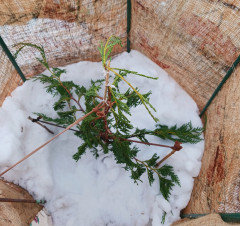
:-)
BillMN-z4a
Original Authorlast year3-21-2025:
Update.
A little colder than last season when I planted these trees. A snowstorm went through 3-15-25 and there is still some drifts and snow piles present with large expanses of lawn showing.
The ground around the Thuja p. is not frozen and the ground around the C. nootkatensis appears only partially frozen. Those are the two zone pushers.
Recently I found out that my C. nootkatensis has a root stock of Platycladus orientalis so why they sell this grafted variety as zone 4 hardy, I'm not sure. The lack of north winds, mulch and snow cover hopefully has saved the root system.
Freezing at night and 40's to 50 daytime highs forecast. Another snow expected Sunday.Probably another few weeks before we warm up enough for things to grow.
- last year
Bill, what your (and my) Nootka is grafted to, I don't know. One would think it would be something cold hardy -- some of our fellow gardenwebbers have fancy Nootkas (Green arrow?) that would be grafted and might know.
BillMN-z4a thanked bengz6westmd BillMN-z4a
Original Authorlast yearThanks, beng!
For clarity.A few days ago, I ran across a post in the conifer section of this forum.
It was mentioned that one-gallon potted nootka cypress plants tended not to 'make it' when planted in Eastern and Midwest zones, when using rootstock of platycladus orientalis but it was fine for plants when used on the west coast.
Dax, in his first comment, mentioned west coast using P. orientalis on nootka cypress and it got me thinking.https://www.gardenweb.com/discussions/1890087/cupressus-xanthocyparis-nootkatensis-understock
I finally emailed CK, and they confirmed my rootstock was P. orientalis.Next, I emailed Wilson bros., and he was able to find out that the ones they sell are on Thuja occidentalis rootstock.
So, a lesson learned on my part.I still have the weeping white spruce, which is the plant I that started the original order from CK. I'll have to hope they didn't do a 'west coast' trick on that one. ;-)
Spring is almost here so I'll more information here as time goes on.
BillMN-z4a
Original Authorlast year4-12-2025:
Yesterday, I revised my winter protection on the new trees.
The weeping white spruce looks good, and I expect no issues with it.
The weeping Nootka Cypress looks good and is Frost Hardy.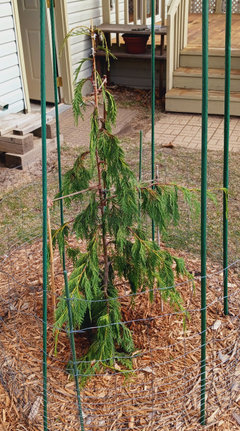
The T. plicata 'virescens' came through good too but is not frost hardy. So, this one could still end up in the winter damage thread, but for now, there's hope.Just preliminary observations up to this point. ;-)
;-)
- BillMN-z4a thanked bengz6westmd












bengz6westmd