Software
Houzz Logo Print
nycgal

new hardwood floor, is glue necessary?

2 years ago

In a new construction home, we are putting in white oak flooring to be finished on-site. The contractor is recommending gluing instead of nailing, planks will be 3 1/4". We don't like the glue idea because it is permanent, if you ever want to change the floor, you have a damaged sub-floor, which must be reinstalled (I don't know if I am correct). Plus the aspect of using glue, a chemical which is not healthy. There is another floor underneath this hardwood floor, where we plan to install LVP. Please advise/comment.

Comments (45)

  • 2 years ago

    My oak floors are over 50 yrs old. Have been sanded, stained and polyed three different times over those years. They withstood 6 dogs, cats and kids. Lots of parties and a huge Steinway piano. Not a squeak nor creak ever.

    I would never glue!


    nycgal thanked jane__ny
  • 2 years ago

    That was not part of a question, it was just to say that there is another lower floor, not a basement because it is above ground except for the back side of the house, the house is on a slope. We plan to install lvp there. This is weekend house.

    But what if you need to replace part of the floor, like if you have a flood from the dishwasher, or from very large windows. Or you want to change your floors for some reason. We currently have original oak floors in our 70-yr old house, without any cupping or warping, which is the concern of the contractor I think.

  • 2 years ago

    That's a skinny width nowadays. Because engineered European Oak is coming in 7 to 12" widths to show off more of the wood grain beauty.

    More options are available today then 50 or 100 years ago.


    nycgal thanked dan1888
  • 2 years ago

    I have only ever had wood floors nailed, not glued. I have only ever worked with contractors who nail down floors. I'm curious with glue how that impacts the expansion and contraction with hot and cold weather. I had a home from 1852 and the 170 year old floors had square nails in them. Pretty cool.


    I'm very sensitive to chemicals so I get the desire to not use glue for those purposes. But new construction itself is laden with chemicals (unless you have designed an insanely expensive low chemical home) and LVP is a heavily chemical product.

    nycgal thanked Kendrah
  • PRO
    2 years ago

    NWFA standards recommends using glue for flooring over 5". Your house maybe a special case. Talk to the contractor, ask why they are recommending the glue versus just nails? It usually has to do with moisture contents or a poorly installed subfloor.


    Modern flooring adhesives are low VOC. Some are lower than water base polyurethane finishes. Get details on the glue being used.


    If, you are sensitive to chemicals. You should also check with your painter to see what they are using. Some paints have higher VOC than floor finishes. Don't forget all the other contractors. There are chemicals being used throughout remodels and builds.

    nycgal thanked G & S Floor Service
  • PRO
    2 years ago
    last modified: 2 years ago

    Is this a SAND ON SITE flooring ? Or are you using an engineered hardwood, pre finished product? Usual method is to float, but glue down is more secure ......and it's also perfectly safe.

    " New construction" has many levels of selection and customization, from hardly any, to whatever you can pay for.

    The 3 1/4 board width is why I ask.......

    nycgal thanked JAN MOYER
  • 2 years ago
    last modified: 2 years ago

    " In a new construction home, we are putting in white oak flooring to be finished on-site. "


    @JAN MOYER

    nycgal thanked millworkman
  • 2 years ago

    Jan Moyer, it is a sand on site type of installation. The contractor said originally that they use glue for planks over 4", so we picked 4"; then in the price estimate, he said he would glue the 4", so we thought we would use a narrower plank, 3 1/4, to avoid the glue. Now he says he glues anything over 2 1/4. It seems he is expecting problems with the floor, which is bothersome, or else he had a bad experience with another installation and is trying to avoid it. The floor will be in a new build weekend house. In our 71 yr old, year-round house, we have 2 1/4 nailed planks all over, and have never had ANY problems with the wood, after all kinds of abuse, spills, mopping, etc., only a ding or scratch here and there.


    Kendrah, I wondered as well how the glue affects the expansion and contraction. I have to research the LVP, are any brands better than others?

    G&S, if the contractor installed the subfloor, I would imagine the subfloor is well done, and I don't know about the meaning of moisture content, but we're not near any bodies of water, the house is on a hill, 2 hrs from NYC. Also, per NWFA standards, using 3 1/4 boards puts us into a safety category if we insist on using nails. The interior paint is Ben Moore.


  • PRO
    2 years ago
    last modified: 2 years ago

    Sorry, didn't catch the sand.

    Why would there be sub floor issues in a brand NEW build?

    If you don't want glue? You tell them that. Or get someone else to install the flooring. Why are you worrying on "changing the floor" in a new build you haven't yet lived in?

    It's your house. Nail and finish the floor : ) with......you pick the installer and finisher? You should have a floor for an EXTREMELY long time. I wouldn't go down in board width for install reasons.

    nycgal thanked JAN MOYER
  • PRO
    2 years ago

    We suggest both nailing and gluing. As someone else said, gluing helps reduce the floor squeak.

    nycgal thanked steveetheridge
  • PRO
    2 years ago
    last modified: 2 years ago

    I've had a floor "squeak" exactly once: ) in thirty plus years. It was my own, thankfully.

    nycgal thanked JAN MOYER
  • 2 years ago

    nyc, my past house sounds similar. I also had a finished floor beneath. My house was built on a steep hill. Large contemporary. All wood floors, 3 levels. Level below was ground level because of the hill. Totally finished. Large family room, full bath and guest rooms. The floors above were living room, kitchen, office, laundry room. All original wood floors as were bedrooms, bathrooms on third level above. The main floor, living room, dining, kitchen had give to the floor. Being contemporary, large expanse. Never had a nail pop, or any gaps. It moved. It was the thick boards (don’t remember size). If you will have movement, I think nailed would be better. Your house sounds similar. Mine was NYC suburb, Westchester County, NY. Built in 1955, we lived there 50 yrs. Loved that house.

    nycgal thanked jane__ny
  • 2 years ago

    I don't know about the meaning of moisture content, but we're not near any bodies of water, the house is on a hill


    I know little about moisture content other than it can come from water vaporizing. You don't need to be near a body of water: Rain, snow melt, hillsides, poor drainage, poorly installed gutters, and misdirected runoff. Others here will know more about appropriate vapor barriers and what is needed.


    My 5-7" very old floor boards were nailed into wood joists. They were not on top of a concrete slab. Perhaps this is the difference. My joists and wood expanded and contracted with the weather. I imagine concrete does not.


    There are all kinds of low VOC construction glues to be found online. They are expensive, have to be shipped, can screw up a time line, and because most contractors have never worked with them, they can't guarantee their work. Been there, done that!


    If you are really sensitive to chemicals, you might want to air out your LVP somewhere before installing. Or, since this is a second home, pay someone local to open and close your windows for you for a month before you start staying up there.

    nycgal thanked Kendrah
  • 2 years ago

    jane_ny, what do you mean by 'it moved' in your sentence ' It moved. It was the thick boards (don’t remember size) '? Do you mean the floor had the ability to move, depending on weather, due to not being glued down? In our house the open area (kitchen, lr, dr) will be about 900 sq.ft.

  • PRO
    2 years ago

    All wood "moves" , expands and contracts with changes in humidity, especially. It is why it is recommended to maintain consistent air and humidity levels in your home....

    nycgal thanked JAN MOYER
  • 2 years ago
    last modified: 2 years ago

    Solid wood moves more than multi-layer engineered wood flooring. 6mm top layer engineered flooring can be refinished about as many times as tongue and groove nailed or mor likely stapled down solid wood flooring. I don't see any reason to forego the technical and aesthetic benefits of engineered flooring. It's available unfinished.

    The talk of vocs from the glue. What about the chemical vocs from having the floor finished onsite? Engineered can be factory finished.

    nycgal thanked dan1888
  • 2 years ago

    dan1888, you are right. no matter which way you go, they are there. I guess the other aspect of the glue is if you ever wanted to replace the floor or part of the floor, it would be a nightmare. The floor will run thru entire LR, DR, and kitchen, so if the dishwasher leaks or the big windows leak, we might have to rectify a floor problem if there would be one.


  • PRO
    2 years ago
    last modified: 2 years ago

    Is this a concrete slab, or a crawlspace/basement type situation? Because what this is sounding like, without enough info, is a concrete slab. And it is NOT all that for that to be removed. Really.

    nycgal thanked Minardi
  • 2 years ago

    It is on a concrete slab, but the concrete slab floor is below the floor with the hardwood. The floor with the hardwood is the main floor (kitchen, LR,DR, bedrooms bathrooms). The concrete slab floor is a large entertainment room, with laundry, etc, and will probably have LVP. The house is on a slope, so even the concrete slab is mostly above ground.

  • PRO
    2 years ago

    Slabs still require gluedown. As does good vinyl. Too many issues with leveling slabs for binyl exist as well. Which is why gluedown vinyl and gluedown wood are the knowledgeable installer's options.

  • 2 years ago

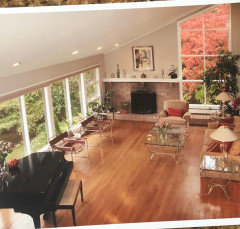
    This photo gives you an idea of what I mean. This is just a shot of the living room. The dining room is past the piano. Large open space. When you jumped or dancing on it you could feel a bit of bounce. We had 3 large Rottweilers who would run across the house.
    The floor below was a large family room, bathroom and guest rooms. all above ground but on concrete slab (we had indoor/out carpet in that space. Because of the large open space above you could feel a subtle bounce if you jumped on the wood floor. No boards ever came lose or popped nails in those 50 yrs. Those floors ran throughout the entire house. Hope this clarifies what I’m trying to explain.

    nycgal thanked jane__ny
  • 2 years ago

    jane_ny, Beautiful room and beautiful floor. Our open floor area will be very similar.

  • 2 years ago

    Minardi, if the wood is glued down, how does it expand and contract during season and weather changes? I would think the glue would prevent it from that adjustment, and then what?


  • 2 years ago

    Minardi the wood is not going on the slab. The LVP she is speaking of putting on the slab is on a different level entirely.


    The wood is going on a wood structure and subfloor. Wood flooring that is glued down will still move, it has too, or it would pull apart.

    nycgal thanked millworkman
  • 2 years ago

    Your concrete slab should have a 6 or 10mil vapor barrier underneath. Mandatory.

    nycgal thanked dan1888
  • PRO
    2 years ago
    last modified: 2 years ago

    New subfloors can still squeak if, installed improperly. There are plenty of hacks out there.

    If, your contractor is recommending glue. This would lead me to believe that they use low quality flooring. Flooring with bad millwork. It most likely have a super loose tongue and groove fit. Allowing too much up and down movement. Adding the glue will prevent the up and down movement.

    It would be cheaper to pay a little more for quality flooring and just install a nail down flooring compared to the glue assist.


    They will be applying beads of glue. Are they going to install a moisture retarder? Is it over Advantech or something similar?

    nycgal thanked G & S Floor Service
  • 2 years ago

    G&S, I was wondering about the quality also, especially since we are being charged quite a bit for this floor. He is giving #1 white oak. We assume the quality is good. He never indicated that the quality he is supplying would be better for a higher price. His original quote was for 4" planks which he said he would glue down. So instead we decided to go for 3 1/4", without glue. He wants to glue down the 3 1/4" size, as well. But we decided to go with nailing and say no to the glue. I did ask him if there would be a small cost adjustment from 4" to 3 1/4", and omitting glue material, but he kind of rebuffed the question, with some excuses, so he is unwilling to do an adjustment it seems. As for the installation, if he were to use glue, we weren't told about any underlayment that he would use.

    Just curious, for @ 1800 sq feet, what would be the charge per sq foot, to do 3 1/4" white oak #1 grade, nailed down with '3 coats of satin clear' (his words)? Location is 2 hours north of NYC. Thanks.

  • 2 years ago
    last modified: 2 years ago

    We just installed 3 1/4" select red oak in our home, about 900 square feet, nailed, not glued. We went with their most expensive finish, a UV cure. The cost was $17K. I'm in North Dakota.


    Here's the deal about moisture content: Wood swells and contracts with changes in moisture content in the wood itself. Your flooring should be delivered a week or two before install, with heat or AC running, to acclimate to your environment. Our floor guy brought a hygrometer so we could monitor the relative humidity in the house - it's was hot and humid those weeks, so in addition to the SC, we ran a large dehumidifier to get the RH down to around 35%. A day before they started installing, he checked the moisture content of the wood itself.

    Since we live in a cold climate where it gets very dry in the winter, we just installed a whole house humidifier, to help maintain a consistent humidity level in the house (both for our comfort, and for the floors!)

    nycgal thanked AnnKH
  • PRO
    2 years ago

    For material, install, sand and finish, depends on your region and market. Range is $12-14 per square feet for a qualkity (material and craftsmanship) nail down up here in eastern Mass. There are flooring companies who have a bunch of laborers doing the work that can do it for much less. If, you don't appreciate or have the patience for quality , general laborers are all you need.


    For a #1 common white oak, it will be less. #1 common grade usually have poor millwork. If, you want better quality millwork but the look of #1 , get Live sawn grade. MIlls will put more emphasis on quality towards Live sawn compared to #1 . #1 common screams "Cheap".


    nycgal thanked G & S Floor Service
  • PRO
    2 years ago
    last modified: 2 years ago

    What is the look you want? Common 1 will have more variation, more marks, more worm holes, more knots, and more variation in milling, and more variation in board length. Some folks would compensate with a deep stain, obscuring some of the variation to a more uniform appearance.

    Select.......which would be my choice, is more uniform in every way noted above.

    A hardwood floor is as forever as you can get, so unless you plan a short stay, view it as the long haul in every aspect including both price/appearance and divide any difference in pricing over those potential years.

    I've never needed more than two coats clear, but that's up to you.

    Will you have shoe mold, and will that be painted or white oak, and is it included in your pricing, or is it being handed off to the builder/contractor. I'm guessing if level floors are an issue, that your builder would RESIST a scribe base molding to the floor: ) which is a great look and my personal favorite, assuming a substantial base height....4".....6" 8" etc.

    nycgal thanked JAN MOYER
  • 2 years ago

    " But we decided to go with nailing and say no to the glue. I did ask him if there would be a small cost adjustment from 4" to 3 1/4", and omitting glue material, but he kind of rebuffed the question, with some excuses, so he is unwilling to do an adjustment it seems. "


    Read between the lines. He is telling you he is not capable of doing the all nail down installation. He is setting you up for when there is the inevitable issue, it will be your fault as he installed the floor the way you wanted not the way he recommended. Tread carefully.

    nycgal thanked millworkman
  • PRO
    2 years ago
    last modified: 2 years ago

    We don't know the level of custom with regards to the build. Even "semi custom" builders at moderate to upper moderate won't let you get your own subs. So ......the OP may be stuck with the "vague" can't answer, can't do this, cant do that guy.

    It's similar to you can't drag your own dental hygienist to your dental Dr. : ) lol

    nycgal thanked JAN MOYER
  • 2 years ago

    G&S, we are being charged about $16.20/sf for grade 1, which seems high to me. Plus we want a light stain, so imperfections won't be obscured by a darker stain.

  • 2 years ago

    Sorry if I am a bit slow to follow here - but can you clarify once and for all - the 900 sq ft space in which this wood floor will be installed (not the LVP but the actual wood floor) what is the material on to which the floor will either be nailed or glued?


    I would purchase the highest quality grade wood since you are doing a clear coat in a very large space.


    When I had a wood floor installed, I hand selected the pieces myself with my contractor in a warehouse in Lancaster. Not a usual situation.


    Have you seen pictures of an entire, large space of the wuality flooring you are getting and from this vendor?

    nycgal thanked Kendrah
  • PRO
    2 years ago
    last modified: 2 years ago

    "Plus we want a light stain, so imperfections won't be obscured by a darker stain."

    PLUS clear coat of three coats? No wonder the price.....especially remotely close to NYC.

    Why bother with a light stain?

    Use select white oak, leave it natural, use the board width you really want and get pricing. Or take the topic up with the builder. Price, quality delivery....pick two. the universal rule for goods and service of all types:)

    Does this mean you do want or do not want imperfections?

    "so imperfections won't be obscured by a darker stain."......

    Or......

    So that imperfections won't be obscured.....

    nycgal thanked JAN MOYER
  • 2 years ago
    last modified: 2 years ago

    You can do this.


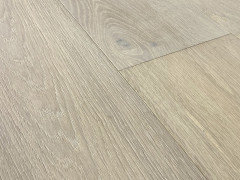
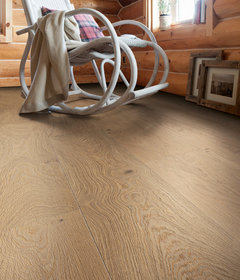
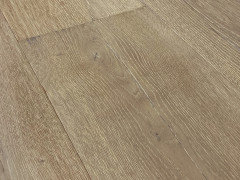
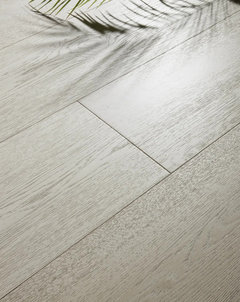
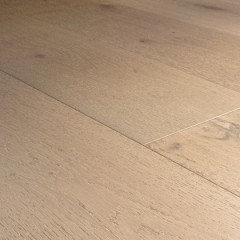
    Light, greyish Wide Plank European Oak Engineered Hardwood flooring - monarchplank

    Ultra matte Bona uv urethane topcoat. 6mm hardwood top layer.


    Martyn Lawrence Bullard Collection - Duchateau


    10 1/4" x 3/4" European French Oak Cascade (hursthardwoods.com)

    Ceruse Blonde White Oak Wire Brushed Water Resistant Engineered Hardwood | Floor and Decor The picture for this does not load. It's white oak with the grain filled(ceruse). It has a limestone based core to add water resistance to allow installation on the lower level as well as the rest of the house.

    nycgal thanked dan1888
  • PRO
    2 years ago
    last modified: 2 years ago

    $16 psf for #1 common, glued assist installation, sand, stain and water base poly. Sounds about right. Just missing a roll on moisture retarder. Which will bring the cost up if, you have Advantech or a high performance sub floor panel. They will need to sand it before they can apply the Moisture barrier/retarder.

    nycgal thanked G & S Floor Service
  • 2 years ago

    I don't think this floor OP is talking about it the basement floor of the house. I think there is a basement space below it that is concrete slab and needs the moisture barrier.

    nycgal thanked Kendrah
  • PRO
    2 years ago

    It isn't the basement . It IS a lot of hand wring? : ) It happens.

    nycgal thanked JAN MOYER
  • PRO
    2 years ago

    You would never cheap out and skip weather wrap for your siding. Don't skip out on installing a moisture retarder. It's a small cost item, that does a lot.

    nycgal thanked G & S Floor Service
  • 2 years ago

    3-1/4" is uber stripe-y.

    nycgal thanked strategery
  • 2 years ago


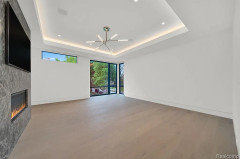
    This is a spec home listed at 4.35M. There's zero chance the builder would put solid wood flooring in. Totally wide plank engineered.

    nycgal thanked dan1888
  • last year

    Sorry, was away for a bit. Thanks for all your comments.

    Kendrah, no we haven't seen a large area floor with white oak, 4", done by the contractor. He is offering to do a few samples of finishes after the floor is installed in an obscure area of the floor, such as under the kitchen cabinets. We will probably just do a natural finish, keep it simple, though our kids like the slightly whitewashed look of oak. And it is correct, I am not talking about the basement of the house, but the floor above the basement, which has a total area of 1800 SF.


    G&S, do we need a moisture retarder, if it is not the basement floor? No, we don't want to cheap out on the flooring.


    Strategery, thanks for the info - so, if 3 1/4" is stripey, we will stick with 4". Spouse is OK with the glue, so I guess we'll do the glue process.


    Dan1888, those are nice floors, so wide plank engineered, are they glued, do you think? Our contractor is not recommending engineered, saying that it might get ruined by the remainder of the work that has to be done AFTER the floor is installed. He recommended doing the hardwood and finishing on-site, with a final coat at the very end. We like the hardwood too, because it can be resanded and refinished a few times.


    Jan Moyer, we want a little bit of character in the floor, ie imperfections, since this is a country house. Since we will probably do natural, just like you suggested, the character marks will show much more than if we did a dark stain, using grade #1 planks that the contractor offered. So part of me is wondering if we should upgrade to select, or just leave it grade #1. I also wonder about the board lengths of grade #1, the contractor said they range from 1' to 4', but he didn't clarify what length the majority of the planks are.


    The thing is, we will never sell this house in our lifetime (maybe our kids will, who knows), so we don't care too much about floor color trends for resale.

  • PRO
    last year

    Yes, a moisture retarder should be used, even on higher levels.

    nycgal thanked G & S Floor Service