Software
Houzz Logo Print
rutabaga4

Please help stop dirt/water run-off without a raised flower bed

9 months ago

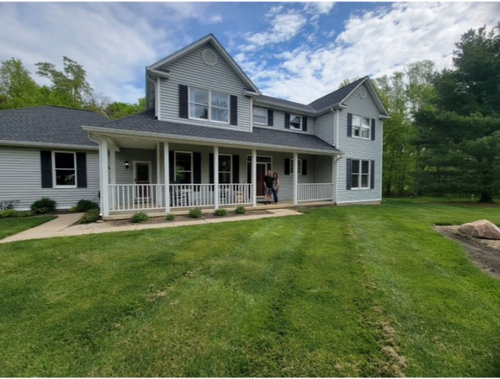
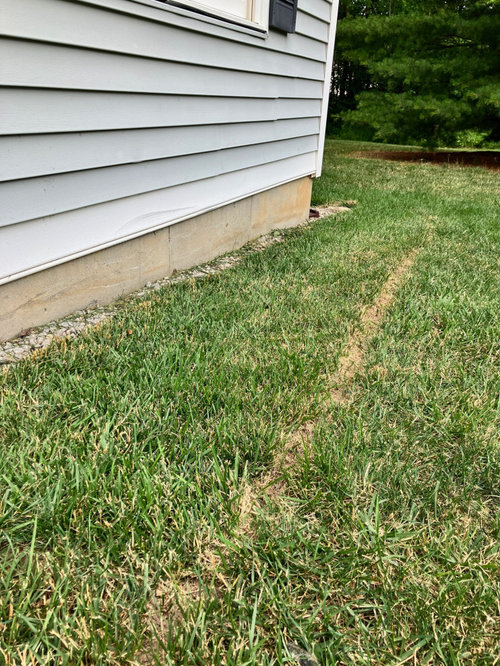
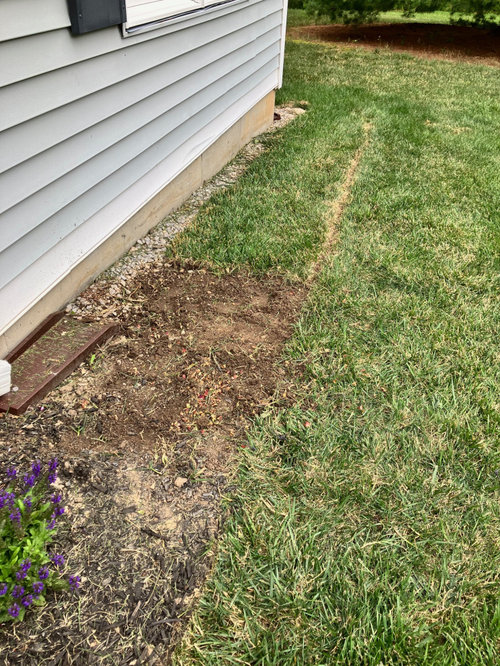
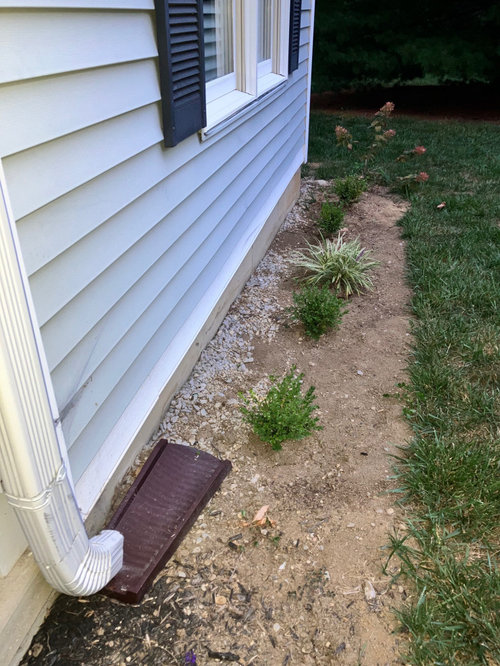
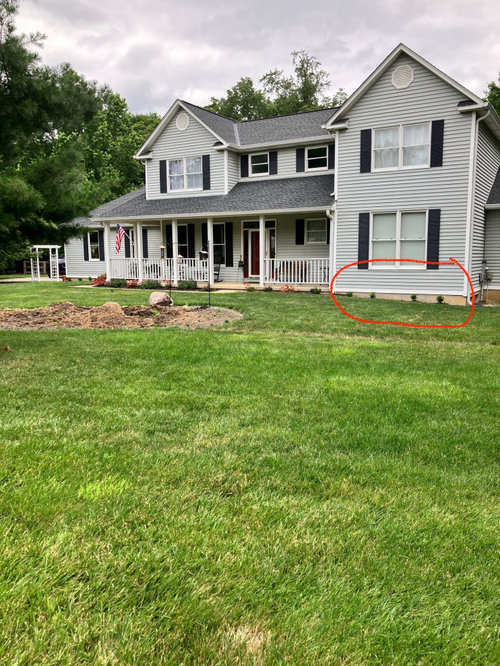
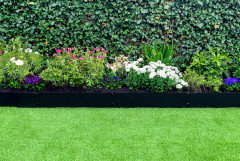
We purchased this 30-year old home and with spring coming up in a couple months, I am continuing with plans for the landscape. Last summer, I planted boxwoods along the left side of the home, near the garage. The grass on the far right side of the house extended all the way up to the building, but I cut it away from the house, to the same width as the flower bed on the other side of the sidewalk. All went smoothly, and I planted boxwoods to match the ones along the garage. But then my plans ran into trouble with the first hard downpour. The slope of the bed made it difficult to keep the water from washing away the mulch and dirt. I will bury the downspout in the spring, but currently the water from it has little effect on the boxwoods. When there is no rain and I have to hand-water them, the water simply washes away the dirt. I've included an online photo to my collection that accurately illustrates the desired pattern for my slope and boxwoods. How do the owners keep their bushes and flowers alive without a raised bed? I do not want to build a raised bed, yet I cannot plant anything in this location due to runoff. Please help me. What is the secret?


Comments (16)

  • 9 months ago

    You use an edging--row of bricks, stone, metal strips, etc. something that makes an edge a tad bit higher than your mulch layer.

    You didn't ask for comments on your plantings, but your boxwoods look too close to your house. What is the mature size of your boxwoods? You need to plant so you some clearance between your home and your shrubs once they are full size.

    rutabaga4 thanked mcarroll16
  • 9 months ago
    last modified: 9 months ago

    We’ve used flexible steel edging - creates a nice crisp line and holds mulch, dirt back - really wish we had done it years ago - also the more plants, the more roots etc to hold things in place


    rutabaga4 thanked la_la Girl
  • 9 months ago

    You start by figuring out where you are. It looks like you are somewhere a lot of handwatering isn't really necessary, so burying the downspouts will solve the problem.

    I agree that it looks like the plants are too close to the house. There should be at least a foot between the siding and the mature size of the plants.

    rutabaga4 thanked mad_gallica (z5 Eastern NY)
  • 9 months ago

    It can be frustrating to plant baby shrubs at the proper distance, because you end up with an odd gap for the first few years. I solved this in one bed by planting heucharas between my azaleas and the house. Once the azaleas get larger the heucharas will move to the front. Maybe you can find something you like to fill the gap for now, even if they aren't part of the long-term plan.

    rutabaga4 thanked mcarroll16
  • 9 months ago

    One thing you can try is to add a pile of rocks to the brown thing under your downspout. The water hits the rocks and slows down, so when it's flowing down your slope, it's slower and has less force and therefore, has less power to push your mulch.

    rutabaga4 thanked Sigrid
  • 9 months ago

    @Sigrid Once the temps warm up a bit we will be extending the drainage pipe to go down the slope and around the house to a french drain. Before we bought the house, the inspector said we need to add the pipe in order to keep the water away from the house. We fully agree. So we will be able to keep any rain water, leaking from the roof will be easy, but evenso, any other rain that naturally hits the ground runs down the slope and takes the dirt with it.

  • 9 months ago
    last modified: 9 months ago

    @mad_gallica (z5 Eastern NY) @mcarroll16 We are lucky to reside in a location where irrigation is unnecessary to keep things green. However, the area experienced a drought last summer and into fall, and a lot of foilage in the entire area suffered, not just on our land, but all around. Because I planted in the spring, I needed to water the new plants by hand, which was fine because I could regulate how much water came out of the hose and how quickly. But then the rain came, and it flowed down the slope, carrying the dirt with it. The boxwoods are dwarf boxwoods that grow to be only 1-2 feet tall and wide when mature. I positioned them where I did so that I might plant something in front of them. Even though they will be little, you are correct that they will be closer to the home when mature, but hopefully not too close.

  • 9 months ago
    last modified: 9 months ago

    Rather than an edging which you'll have to mow along, and which, unless carefully installed, may get wonky over time, you could use a classic slit trench edging. And redirect the water which is currently shooting straight at your bed. And yes, widen the bed and move the shrubs out from the wall.

  • 9 months ago

    I like pine straw. It will not was away like wood mulch.

    rutabaga4 thanked Sherry8aNorthAL
  • PRO
    9 months ago
    last modified: 9 months ago

    Of course you need to control the run off so once you have fixed where the water goes from the roof you will have most of the issue solved . What you have is run off totally aimed at the plants and IMO too close to the foundation too .. Even turning the downspout toward the grass would help

    rutabaga4 thanked Patricia Colwell Consulting
  • 9 months ago
    last modified: 9 months ago

    +1 to redirecting the leader water, widening the bed and moving the boxwoods further away from the foundation to allow for their mature size.

    In heavy rain, you may get dirt/mulch washing away as the bed slopes down to the right. As the bushes grow, you will need less mulch and the roots will help hold the dirt in place.

    You could use stone to build a low raised level bed across the front right side of your house where it slopes down. It may look better to have the boxwoods along the house in a level row with the siding/foundation rather than emphasize the slope as they are now. Or add additional plant types/heights to de-emphasize the slope so no raised bed needed.

    rutabaga4 thanked Design Fan (NE z7a)
  • 9 months ago

    There's been mention about the width/depth of the flower bed and the distance of the boxwoods from the house.

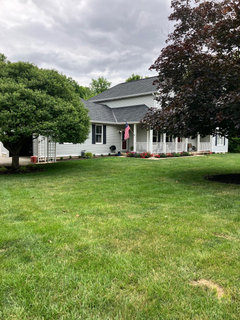
    I wish I had a better picture to share because this one

    was taken last summer but it is the only one I have that shows the other flowers actual size.

    Admittedly, I am anal retentive and I really like symmetry. So, I dug the width of the flower bed for the boxwoods, to be the same width as the one in front of the house. The width of the one in front, and along the side of the porch is growing more mature plants just fine, so I figured with position of the dwarf boxwoods would be okay. In fact, the rose bush on the corner has been there at least 5 years but clearly it needed a little trim to get it off the sidewalk. It's really hard to tell, but the boxwoods on the side of the garage are also planted in the same width of flower bed as the others. But truly in the photo it looks like they are butted up right against the wall. The ornamental grass in the middle of those boxwoods is there to cover up the water meter.

  • 9 months ago

    The downspout should be attached to a solid pipe buried in the ground and carted off to somewhere else on the property to discharge. Otherwise, you would need a 10' leader to get the water away from the foundation, which is not usually a good look. At no point should a downspout be connected to a french drain (perforated pipe) unless you want to use the french drain to leach the water into the soil - and that doesn't seem like that is the case here.

    Since the landscape bed is lower than the grass (you said the rock groundcover was, therefore the soil is even lower), you need to bring in soil to regrade. The soil should start no higher than leaving 6" of exposed concrete foundation wall, slope 6" down over 10' away from house, and can simultaneously slope parallel to house along the front as needed.

    Rain should not wash away the soil if it has a cover or plantings, it is not a point load like a downspout. When watering, always saturate the soil and stop prior to runoff. And when you put a plant on a raised mound not much bigger than the infant canopy size, that may eventually hinder the root ball expanding out and/or may lead to winter and summer burn.

    The goal of symmetry with the boxwoods is better defined here as repetition. Plant choices and landscape bed sizes should be scaled and proportioned based on the size/height/mass of house it is up against.

    rutabaga4 thanked 3onthetree
  • 9 months ago

    "The boxwoods are dwarf boxwoods that grow to be only 1-2 feet tall and wide when mature."

    This is a common fallacy. Plants don't automatically stop growing when 'mature'. Dwarf English box will continue to grow as long as it lives and can reach 4-5' tall and as wide. It just grows so slowly, it may be hard to imagine that size.

    It is also immensely prunable.

    rutabaga4 thanked gardengal48 (PNW Z8/9)
  • 9 months ago

    The cure for your problem is to plant closely other plants between your boxwoods so that all the dirt is wound up in roots. Buy enough annuals or short-lived perennials to fill in the space between the bushes. You could also plant short perennial ground cover plants between the boxwoods. You might have to watch that none of these small plants get dislodged by water, but in a short while their roots will take hold and solve your problem.

    rutabaga4 thanked yvonnecmartin