Software
Houzz Logo Print
webuser_818326579

Project Overruns - Negotiating Tips

last year

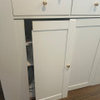
I recently hired a carpenter to complete a shelving project. I met with the contractor 3x, per his request, to take measurements and plan. The estimate came in at just over $2k, but the final invoice came in 33% over budget due to unforseen issues.


It's not a large sum of money, but it is not insignificant. I'm more curious how others handle these discrepancies between estimates and invoices when it comes to building construction. My expectation going in was a 10-15% swing. 33% starts bordering on bait and switch territory.


Years ago I had a deck installed, and the carpenter underestimated his cement requirement for footers in the bid. I suggested I meet him half way on his overages, as I don't think it is always incumbent on the client to offset poor planning. Is that unrealistic? I'm interested in insights on how others think about and approach estimate-invoice differences.


I have some other larger projects I'm considering, and I'm not budgeted for a 33% overrun on those. Thanks.

Comments (20)

  • last year

    Part of the cost over runs is that materials are going up in price every day, and it makes it impossible for anyone to actually have an accurate quote. Most contracts will have something in them for overruns. I came across costing more just this morning. I went to town, to buy a something, I had bought, just last week and decided I needed more. I paid 4.30 cents more for the exact same thing at the same store I previously bought it at.

  • last year

    I understand inflation, but the material cost increases on this project were nominal. It was the carpenter's labor that consumed most of the overruns. He simply did not assess the job or plan properly, so his estimate was way off regarding his time.

  • PRO
    last year

    I'll suggest it depends on the contractor, the project, and what the unforeseen issues were.

    Did the contractor simply make a mistake like your deck guy? Were the unforeseen issues truly unforeseen -- that is, should a competent professional have alerted you to these potential issues?

    Give us some details for the best suggestions.

    HU-818326579 thanked PPF.
  • last year

    When he visited the site to discuss the solution, take measurements and plan, he was comfortable that studs were available to securely attach the shelving to max weight capacity. They were not 16" on center as he thought when he started the job. This required an adjustment to the plan. Secondly, while he had a tool to measure wall angles, he did not use it during planning. During the project, he realized the walls weren't plumb, so he had to plane his pre-cut shelves on-site, then he wanted to caulk the edges to create a seamless look, etc.


    The end solution was satisfactory, but as a non-expert, you hire pros to provide estimates that take into account contingencies such as these.

  • last year

    I think what I'm looking for is an understanding of what is realistic, what is poor planning on the contractors part, etc. If I had a $50,000 project with a 33% overrun, that's $17,000 dollars. My expectations are that 10 - 15% swing is within tolerances. 33% is poor planning. But I'm open to being educated by those with experience actually paid to build things.

  • PRO
    last year

    Pay the man you cheapskate. There's zero way that hidden conditions could be ascertained on the front end. And, that's is so darn cheap to begin with that you ought to pay him 50% more as a tip.

  • PRO
    last year

    Unless he was making you about 5 shelves and dropping them off for you to install, there's no way that 2K is making that guy money. Millwork, that gets custom made to size and finished, usually has a project minimum of about 5K before someone starts to turn a profit on the job. It takes more time than it's worth, so most wouldn't even bother with a small little job like that. And you are the reason that people don't take on small jobs. It's always the cheap little jobs that have clients try to nickel and dime you out of something that you earned. And he earned it.

  • last year

    Take it easy buddy. It's just a discussion. Name calling. Lame.

  • PRO
    last year

    The only poor planning was him taking you on as a customer. But he will have learned for next time.

  • PRO
    last year

    You are the reason that Time and Materials contracts exist.

  • last year

    I don't know if I'm the reason for time and materials contract. That was how the contractor presented the project estimate to me. Someone must have got to him before me.

  • last year

    Appreciate your response Pegasus. One of the few that didn't react emotionally.

  • PRO
    last year
    last modified: last year

    There is no negotiating. Don’t pay. That’s an immediate lien on the house, and you no longer have a clear title and can’t sell or refinance or anything.

  • last year

    Wow. That escalated quickly.

  • last year

    I think many of you are missed the point. If you look back at this discussion, everyone would've read that I'm open to being educated by those with experience actually paid to build things. Nowhere did I say I couldn't pay or wouldn't pay. I was curious as to what is typical when it comes to estimates and invoice differences, and what an estimate represents in the construction industry. I think Pegasus gave the best answer regarding proper client expectations when it comes to estimates, but there were other thoughtful contributions.

  • PRO
    last year

    I think part of the problem is differing definitions of the terms "estimate," "proposal," and "bid." Let's start there. An "estimate" is just that--a (hopefully) good-faith estimate of the likely cost to execute a particular scope of work-- but not a guaranteed price. A "proposal" is an offer to perform the scope of work according to whatever terms and conditions (e.g., materials, price, schedule, quality standard, etc.) are included in the proposal. A "bid" is an offer to perform the scope of work documented by a uniform set of plans and specifications provided to multiple contractors willing to compete for the project on the basis of price. The bid price would be firm, subject to any terms and conditions included with the contractor's bid.

    If the trade contractor's "estimate" is only an estimate of the actual costs vs. a firm proposal, you may be subject to cost overruns subject to whatever terms and conditions are included along with the estimate. An experienced carpenter can easily check for the spacing of studs and knows to expect out-of-plumb and out-of-level conditions will be typical. Those aren't "hidden conditions" in my opinion. Plumbing or wiring in the wall might be a hidden condition, but usually those can be inferred by having a look under, over and behind a wall. Damage such as termite damage behind a wall would qualify as unforeseen conditions. Meeting the contractor half way cuts the cost of his/her "continuing education" in half.

    There are a variety of levels of "professional" service whether it's at a restaurant, a department store or a trade contractor. In general, you can expect higher quality services as you move up the "food chain." It's reasonable to expect a higher level of service at the French Laundry than at the local Denny's. Any carpenter should be able to build a serviceable set of shelves. A cabinetmaker will build them to a higher standard and with a higher price tag. You'll be frustrated if you expect the cabinetmaker's quality at the carpenter's price point.

    HU-818326579 thanked Charles Ross Homes
  • last year

    Based on the thorough response you provided CRH, this was a good-faith estimate. I think the conversation surrounding what is considered unforseen or hidden conditions is interesting. I'm just the client, but I considered studs and out-of-plumb walls knowable. However, both of these aspects of the job are what increased the labor requirement.


    For what it is worth, I had a conversation with the carpenter this afternoon to discuss the invoice. It was very cordial, and his position was that he wanted the price to be fair. I concurred, which is why I agreed to pay the full invoice. He worked hard, showed up when he said he would, did a good job, and he was willing to have the conversation on the business end. That goes a long way towards positive outcomes, satisfied clients and repeat business. Antagonism does the opposite.

  • PRO
    last year

    I met with the contractor 3x, per his request, to take measurements and plan

    What did he do during those 3 visits?


    If my design relies on existing conditions, then it's on me to verify those conditions exist.

    Or to design something that does not rely on these specific conditions.


    If I agreed to paint a room thinking it would take 1 gallon, and it took more, I would not ask the customer to pay for the extra paint. They hired a professional that should know the amount of paint needed.


    I'll suggest your carpenter was simply inexperienced, and if he was smart, would have absorbed any additional time/expenses and learned a valuable lesson.

    He would have gained a happy customer, and hopefully received referrals that would help build his business.


    And yes, I do this type of work along with much larger projects every working day.

    HU-818326579 thanked PPF.
  • PRO
    last year

    I agree with PPF. Right on the mark.

    HU-818326579 thanked Charles Ross Homes