

Gas or Air to water?
We’re renovating an old house and aiming to achieve a B1 energy rating. We’re torn between installing a gas system or an air-to-water heat pump. We’ll also be adding solar panels. Has anyone any advice or experience—particularly regarding costs or energy bills—on which option might be better given the fact it won’t be fully air tight? Thanks!
Comments (66)
 PRO11 months ago
"They weren't shooting for the moon in terms of the rating... but too much we don't know. How many windows, doors? quality windows alone depending on how many of them it could be 80 grand or more" Yes, there's a lot we don't know about the OP's home, but they didn't ask for a comprehensive energy efficiency strategy. They just asked about gas vs. a heat pump with regard to achieving a B1 energy rating. If you bothered to learn about the B1 rating, you wouldn't have wasted everyone's time by posting an AI-generated information dump that wasn't relevant to the OP's objective.
Your answer to Mike's question about the double edged sword isn't an illustration of something that is a double edged sword. A double edged sword refers to something that has both positive and negative consequences. A more efficient heating system is always more efficient regardless of the other attributes of a home.
 PRO11 months agolast modified: 11 months ago
yeah ok, keep them in the dark of how to achieve a B1 efficiency rating. Then they get their first electric bill in the dead of winter and wonder what went wrong?
Well at least you have an expensive energy efficient heat pump, that isn't all that efficient.
Yeah all of that -- dispelling myths from facts was a waste of time.
Double edged sword: spending excess amounts of money for energy efficient in name only equipment and then paying just as high or higher energy bills all the while working that high efficiency system to the bone causing higher wear and tear problems? The builder is long gone in 1-2 years. Yeah no double edge sword here?
yeah no double edged sword here, just in my imagination / with AI agreeing with my assessments. Ok. Well my (our) truths and facts are better than AI. Certainly AI can make mistakes, but not in this thread. Well we're smitten to ignore anything a 30 plus year licensed HVAC contractor from Katy, Tx is going to say on anything. Fine, ignore me... at your own peril.Great plan Charles, I know fully now why you are a builder. 1-2 years see ya later. On to the next project. You are a builder? Aren't you Charles? Do you start your projects today with lath and plaster? with maybe a hint of asbestos for seasoning?
Ignore all these requirements to achieve a B1 efficiency rating. Is this what you are saying Charles?
Related Professionals
Laredo General Contractors · Albuquerque General Contractors · Oxford Home Remodeling · Lancaster Home Remodeling · Hartford Bathroom Remodelers · Bismarck Bathroom Remodelers · Longview Bathroom Remodelers · Galveston Design-Build Firms · Orlando General Contractors · Athens General Contractors · Hilton Head Island General Contractors · Modesto General Contractors · Eugene General Contractors · Cape Coral Flooring Contractors · San Francisco Flooring Contractors- PRO11 months ago
Ray,
The OP's home won't qualify for a B1 rating if they install a gas furnace or boiler. We don't know anything else about their home or any other objectives they may have. And we don't need to in order to answer their question. The volume of irrelevant information generated by AI is impressive, though.
- PRO11 months ago
irrelevant information?
so the goal is what then? You say it's irrelevant.
The manufacturer of the equipment disqualifiers for warranty is what?
Improperly installed.
Short cycling?
No let's only pay attention to a B1 rating. You do realize... no who am I kidding... lol.  11 months agolast modified: 11 months ago
Double edged sword: spending excess amounts of money for energy efficient in name only equipment and then paying just as high or higher energy bills all the while working that high efficiency system to the bone causing higher wear and tear problems?
Ray,
That is a description of a bad installation in my opinion.
I am curious when you installed the Bosch Bova 1.0 heat pump in your house, did you do anything to reduce the heating and cooling loads? If not then is there any concern of your heat pump working to the bone or perhaps that is not the case because the Bosch runs like a stallion? (I really like this fancy dancy HVAC terminology!)
- 11 months agolast modified: 11 months ago
Not worth much commentary here since there is radio silence from the OP.
Re: My Home PRO
“That said, proper insulation and airtightness are key — without that, ‘even the best heat pump won’t perform anywhere near its potential’.”
Not true. The heat pump will - The envelope won’t!
Re: Charles Ross Homes
“A more efficient heating system is always more efficient regardless of the other attributes of a home.”
BINGO!
IMPO
SR
- PRO11 months agolast modified: 11 months ago
Ray,
That is a description of a bad installation in my opinion.
I am curious when you installed the Bosch Bova 1.0 heat pump in your house, did you do anything to reduce the heating and cooling loads? If not then is there any concern of your heat pump working to the bone or perhaps that is not the case because the Bosch runs like a stallion? (I really like this fancy dancy HVAC terminology!)
Yeah of course... new duct system R8, moved system in attic to a better location, reinsulated attic, 4 zones - zoned system... fixed thermal breaks at the fire place. Abandoned a couple of returns for better placement to remove heat and remove heat traps as much as possible. (there's always limitations -- it's an older house over 45 years old, so while a bit drafty nothing compared to the 1922 ancient -- but the cons / concerns with that one are far, far different as it's a different climate than where I live now -- far different night and day different -- that also plays a role.)
The stallion that is Bosch, doesn't always run like a stallion. Sometimes a constant trot, some times a heavy run, sometimes full on race to the finish.
The only thing limiting my preference to Bosch is the refrigerant debacle. I think this will all be resolved / or at least come to a better light within the next 8 to 10 years, the picture will be more clear than it is today.
-------
While it would be true that a high performance, high efficiency machine would be better than a not so high efficiency machine --- but from my perspective give it the best opportunity to perform at the best of it's ability.
A B1 Efficiency rating has standards to achieve such, if you ignore those standards you won't achieve the rating AND you certainly can not expect the Equipment, what ever it is... to perform well. Especially if you are relying on mechanical means to transfer heat, rather than create it in abundance from nothing other than Natural Gas supply.
A heat pump (without resistance heating or dual fuel purpose) only transfers heat. It does not create it (except a minor amount from the work of the compressor) -- it removes heat from outdoor air and in air to water -- transfers that heat to water (brine or transfer liquid -- there's more than one way to do it) -- the challenge is --- the colder it gets outside in winter (to provide heat -- not a real problem in my climate) -- the less heat there is in the air outside. Other complications -- snow and ice impeding the flow of that cold air...
As the air becomes colder still -- the more heat you need to heat the home (structure whatever it is) So imagine a drafty 100 year old home under the influence of narcotics suggesting you can just ignore the requirements of a B1 rating, you'll get all the efficiency, the low energy bills all while being completely comfortable.
Um, No. This is your system under the influence of narcotics. (me performing a kinetic strike on the thought of this -- oops no more drug boat with air to water heat pumps on crack.)
So what's my rating at my house? comfortable. 40% RH in my office this morning 73F. Energy bills also comfortable I think my last one was $120 some where around 14 to 15 Cents per KWH.
------------“A more efficient heating system is always more efficient regardless of the other attributes of a home.”
Efficiency doesn't always translate into lower energy bills. -- a (mostly) problem free 80% natural gas furnace isn't as efficient as a "run of the mill heat pump"
20% of the heat that furnace makes goes up and out the flue... oh look at all that waste.But comparing the energy bills (what it costs you over the long haul)
You can increase the efficiency of a natural gas furnace to upwards of 97% efficient, but doing so will also increase maintenance costs, not to mention costs to repair it when it breaks.
So efficiency and cost aren't really interchangeable terms. Just efficient in name alone, doesn't make your utility bills go down. (Most of the time when thinking or wanting to make things more efficient the purchaser assumes the bills will go down, not up.) --- This is completely different if natural gas is not available at the structure (what ever it is). - PRO11 months ago
" Especially if you are relying on mechanical means to transfer heat, rather than create it in abundance from nothing other than Natural Gas supply." Prescribing or promoting the use of natural gas for heating a home in Ireland would be ignoring the fact that Ireland imports almost all of its natural gas. Domestic production is declining. Current projections are that Ireland will import 100% of their natural gas by 2030--which makes both the price and availability of gas a greater risk than it would be with locally-sourced natural gas. Accordingly, Ireland is fast tracking conversion to renewable energy sources including solar and wind power with the goal of deriving 80% of their electric needs from renewable sources by 2030.
You probably should have passed on this OP's question, Ray.
- PRO11 months ago
Not necessarily promoting it Charles.
Natural gas is a tried and true performer in creating heat, under any scenario. A heat pump is purely mechanical. Mechanical things break, not that a furnace can't break but far less likely.
pass on the question: no, it pertains to what is going on in some parts of the USA as well.
Heat pumps are a good option if natural gas is not available. But the thought that efficiency only is going to save the day and reduce those electric bills? no. - 11 months ago
"Ireland imports almost all of its natural gas."
In the past Ireland traditionally heated with solid fuels, and luckily with the arrival of the biggest pile of pig manure on the island Rosie O'Donnell will provide enough BS to heat every house using Biogas from all the crap she spews out. Just like old times.
Problem solved!
- 11 months ago
Here is some information for people who are considering the gas furnace vs. heat pump decision. Starting on January 1, 2026 gas appliances cannot be installed in any new buildings 7 stories or less in the State of New York. There are some exemptions for commercial applications. Therefore if you are building a new house you won't be able to install a gas furnace. It is likely other states will adopt similar gas appliance bans.
The Federal tax credit which reimburses 30% of the cost of installing a geothermal (water to air) heat pump will end on December 31, 2025. Installations after this date will no longer qualify. This is likely to have a significant impact on the volume of residential installations in the U.S. in the future.
 11 months ago
mike, I'm sure the gas appliance ban notion will spread but for now, it's of limited applicability. In my area as in so many others, heating with electricity (heat pumps) can be prohibitively expensive without solar panels on the house. The price of electricity is projected to increase for awhile so the situation will get worse before it gets better. Right now, my electricity is over 40 cents per Kwh. It's very easy during the few hot summer months for AC use to produce very high monthly bills, even in my mild climate. To have the situation year round? No thanks.
Geothermal potential is also of very limited applicability. When I think of how many Americans live in typical suburban neighborhoods with house on small lots measured by square feet rather than by the acre, I suspect that trenching ditches isn't feasible and drilling holes similarly not feasible or allowed. The possibility of using geothermal systems is very, very limited.- PRO11 months ago
@Mike,
The NY ban on gas appliances in new residential construction is only part of the story. Beginning in 2030, homeowners won't be able to replace their existing gas appliances, except for larger residential and commercial buildings. That will force existing homes to be converted to all electric as appliances and gas furnaces need replacement. That puts a huge cost burden on existing homeowners who may need to upgrade their service panels ($17,400 to $31,700 according to https://nyelectrificationfacts.com/ ) It also puts a huge burden on utility providers which may need to upgrade transmission equipment and wiring. Those costs, of course, will be passed on to consumers in the form of higher rates.
I suspect the ban will make New Yorkers seek out an appliance repair person as their new bff. It's also likely to promote a black market for fossil fuel appliances, furnaces, and boilers after 2035-- when the sale of such appliances is banned in NY.
- 11 months agolast modified: 11 months ago
In my area, the city of Berkeley, CA, passed a city ordinance in the late 20-teens banning gas appliances. I believe it applied to new construction and for replacement situations, A restaurant trade association took them to court (because of its reliance on gas cooking equipment) and won at the federal appeals court level. The ordinance had to be repealed and is no longer in force.
New ban rules have been introduced in other areas and, as I understand, have either been dropped or paused.
One of the many problems is the expensive costs to retrofit homes and buildings now using mixed energy sources to being all electric. Another is the apparent inability of electrical utilities to support such substantially increased loads over their existing distribution systems. They're struggling to meet rules to supply more environmentally friendly electricity for the existing loads, before even considering how to do so with greater loads.
It's one thing to have requirements for new construction (which in my state involves less than 1% annually of the existing housing stock) - they can be built with the specs and setup to comply with such rules. But it's quite another to impose the rules on the more than 90% of housing units that exist and are not in compliance. Perhaps some 10 percent of which or more face the need to replace water or space heating equipment each year.
I understand the underlying reasons. Somewhere along the line, we all have to accept that some good ideas are do-able and some aren't. As things stand, I don't think this one is realistic or do-able as far as existing housing units are concerned.
- 10 months ago
Here is an article which appeared last week. It appears some NY State legislators are getting nervous about the all-electric buildings mandate. A letter has been written to Gov. Hochul asking her to put a pause on the all-electric building mandate.
Moderate Assembly Dems push Hochul to delay all-electric buildings mandate
This is going on while the NY State Assembly web site explains how the the all electric building plan will work and while explaining facts and myths.
- 10 months ago
The article states "planet destroying C02", and something I do not accept. The present level is 420 ppm, and still near record levels in the history of the earth so what I'm I missing. some plant species can not reproduce with levels below 300 PPM and the bare minimum for all plants is 150 ppm with stunted growth of others between 150 and 300 PPM. The optimum level is 1000 ppm.
The little ice age from 1500-1750 was caused by lower then normal temperatures causing C02 to be stored on the surface of the earth drawing down C02 from the atmosphere, with levels hitting 270 ppm. These lower than normal temperatures continued until the late 1800's and based on all the data I believe humans living above the 35 degree N latitude dodged extinction thanks to fossil fuel burning.
It's all a crock of coal, but the increase in C02 was indeed generated by humans, this time, delaying even lower below average temperatures. If the human population didn't expand from 1 billion in 1800 to 8.5 billion today, and stayed below a billion the odds are people would be complaining about the lack of C02 in the atmosphere and how that can't grow many types of plants, and what they can grow would be stunted.
It's "Snowball earth" all over again when C02 levels dropped below 200 PPM and must be the goal of the crazy elites. This is why I still drive a 20 year old truck and burn baby burn, to Make America Warm Again, MAWA! If much of the east and west coast go under water it's just part of evolution and those people can grow gills.
- 10 months ago
More to my rant;
CO2 is not a planet destroying gas! Claiming it's destroying the planet is an incredibly ignorant idea to say, or a blatant lie by the speaker trying to influence others with fear.
Earth has naturally experienced atmospheric C02 levels ranging from around 300 to over 3,000 parts per million, and even higher, without collapsing. The planet itself will be fine, the real issue is how humanity manages the resources.
The challenge isn’t C02 itself, but the enormous and growing global population that depends on massive food production. Each year, the world produces about 200 billion pounds of onions, the second most consumed vegetable after potatoes. The ability to grow that food, along with nearly everything else we eat, relies on hydrocarbons and C02. Without fossil fuels and the carbon cycle they support, we wouldn’t have the energy, fertilizers, or transportation systems that make modern agriculture possible. This is what should be taught in school and this is what the global elites should say is the problem, and not C02.
Yet many people seem convinced we can maintain our lifestyles, diets, and comforts while eliminating the very processes that sustain them. it is absurd and irresponsible to teach this fallacy, Join my MAWA group and spread the truth behind the attack on C02 gas, the gas that keeps the world warm and the plants growing.
- 10 months agolast modified: 10 months ago
" The present level is 420 ppm, and still near record levels in the history of the earth so what I'm I missing. some plant species can not reproduce with levels below 300 PPM and the bare minimum for all plants is 150 ppm with stunted growth of others between 150 and 300 PPM. The optimum level is 1000 ppm. "
Somehow, when you do searches to pop up stuff you otherwise know little about, it's humorous. You're unsteady, not knowing how and unable to integrate your findings into a conversation. It's easy to spot what you really do and don't understand.
Finola Kane
Original Author10 months agoTorn by what; cost of renovation, efficiency, comfort, versatility, maintenance, lack of skilled installers, what exactly?
Firstly we’re based in Dublin. We don’t want to be landed with huge bills come the winter time. I’ve spoken to people and their bills range massively for the same type of house (possibly not using air to water as effectively as possible?). Gas bills for like for like houses seem to be far cheaper than air to water in the area.
Eg gas & electricity €120 / month V’s air to water bill €400ish monthly (winter months-again unsure if they’re using it in the most effective way).
If we went with gas now, is it a huge job to change to air to water down the line (in 10+ years)?
To the OP, where do you live?
What are the design temperatures to consider (winter and summer)? Lowest -2 to 10 degrees Celsius for about 4 months in winter. Summer between 17-21 degrees.
What are the energy costs for gas and electricity? Typical like for like home for gas & electricity is about €2000 for the year currently.
How will solar panels affect the outcome (cost, energy savings, etc.)?
If your existing heating system is hydronic, what water temperature do the emitters (radiators) require? Current system is gas.
Do you have existing ductwork properly sized for heat pumps? No idea, sorry.
- 10 months ago
Re: Finola Kane
Based on your energy costs and that you don’t likely need air-conditioning during the summer, seems like your best bet is natural gas.
Your winter temperatures seem ideal for an air-to-water heat pump but either your electrical rates are too high or the talent doesn’t exist to design, install and maintain it efficiently.
Stick with gas.
Even if you did install a air-to-water heat pump, natural gas would still be the prudent backup for the heat pump as well as powering an emergency generator if you felt that one’s required.
You haven’t responded with information on your current system that is likely radiant hydronic (hot water with radiators). Knowing the water temperature the radiators require helps with the redesign of your system. High temperature 180˚F water would be challenging for a heat pump going forward unless the radiators were either supplemented with or replaced by low temperature radiators. The lower the water temperature required, the lower your potential energy bill could be - if designed, installed, zoned and maintained properly.
It should be noted that 1-air-to-water heat pump with a properly designed and installed hydronic system can heat & air-condition - with effective, simple zoning and potentially supply all your domestic hot water. A non-electric backup, such as natural gas, is always required for backup in case of compressor lockout, failure or the heat pump just can’t ‘keep up’.
IMPO
SR
- 10 months ago
“Fort Wayne, IN – WaterFurnace International, a leading innovator in geothermal and water source heating and cooling solutions, celebrated the grand opening of its headquarters expansion in Fort Wayne, Indiana, on September 24. The 173,000-square-foot addition nearly triples the size of the facility, creating new opportunities to expand production, enhance efficiencies, and continue meeting the rising demand for renewable energy technologies.”
Too bad WaterFurnace doesn’t fallow this forum - they could have saved millions of dollars reading here that subsidies are ending and geothermal will soon be finished - dead and buried in the ground - where it belongs!
I’ve seen geothermal installations done on postage size pieces of land not much larger than 1-meter square! If an air-source condenser pad can be installed and a drill rig can be brought in - you can probably have geothermal!
Interesting that many of the places where the most ‘renewable’ energy exists - also have the highest electrical rates.
Low temperature geothermal for heat pumps is about the only form of Solar energy - and it is Solar energy, that is available 24/7 365-days a year at full design temperatures and will remain available probably well into the next Ice Age!
‘Go kevin9408 - GO’!
IMPO
SR
- PRO10 months ago
@Finola,
Your posts states that achieving a B1 energy rating is your objective. That would favor a heat pump over any fossil fuel alternative, albeit at higher operating cost in the near term. Indeed, achieving a particular energy rating and minimizing operating costs are often at odds in the near term. You'll be best served by consulting with a local energy rater who can help you balance short term and longer term objectives.
- 10 months ago
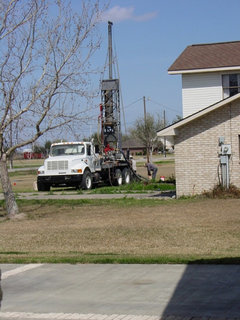
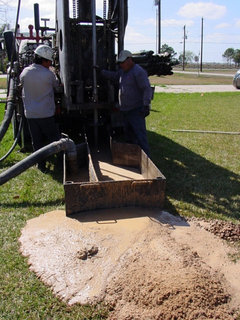
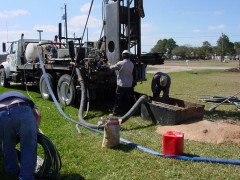
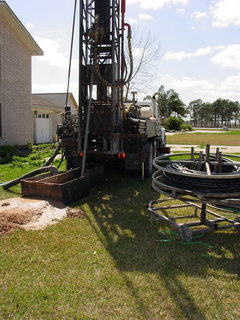
My neighbor had a WaterFurnace installed 3/2009. The (two? three?) ground loops are vertical bores in his front yard. It includes a water heating recovery loop.
- 10 months ago
Re: dadoes
Just out of interest, approximately how much ‘acreage’ did these ground loops require?
Is the, ‘water heating recovery loop’ a ‘desuperheater’?
Is your neighbour satisfied with his system or has it been problematic?
TNX,
SR
- 10 months agolast modified: 10 months ago
" I’ve seen geothermal installations done on postage size pieces of land not much larger than 1-meter square! "
Do you have experience and familiarity with urban/suburban land use laws in the US? In my particular area?
You don't even live in the US. Have you ever? I wonder why your presumption to know and understand land use and land law in another country you're unfamiliar with is so pretentious? This isn't the first time you've done this.
- PRO10 months ago
CO2 is not a planet destroying gas! Claiming it's destroying the planet is an incredibly ignorant idea to say, or a blatant lie by the speaker trying to influence others with fear.
(what destruction looks like? -- it's not warm!)AI Overview Mars' atmosphere is primarily composed of carbon dioxide (~95%), with smaller amounts of nitrogen (~2.7%) and argon (~1.6%), along with trace amounts of other gases like oxygen, carbon monoxide, and water vapor. This makes it very thin and unsuitable for human breathing.
- Carbon Dioxide: Makes up the vast majority of the atmosphere, about 95%.
- Nitrogen: Accounts for about 2.7%.
- Argon: Makes up about 1.6%.
- Trace Gases: The atmosphere also contains very small amounts of oxygen, carbon monoxide, hydrogen, and water vapor.
- Dust: A significant amount of fine dust also hangs in the Martian air, which gives its skies a tan color.
How warm is Mars with 95% CO2 atmosphere?
AI Overview Mars has an extreme temperature range, from a high of about 70F at the equator during summer to a low of approximately -225F(-153C) at the poles.
Problem? you're gonna have trouble burning any type of fossil fuel gas with no oxygen to support the burning of it.
Notice Mars is no where near warm. Why use Mars as an example? Let's not use Science as an example? No let's let people con us into thinking something without understanding how they will benefit from it.
----------Surprised the OP turned up after all this time, throw a log on the raging fire maybe it starts to get interesting.
Efficiency in name only, isn't efficient in the way of saving money on bills.80% even up to 97% efficiency in realm of gas furnaces isn't as efficient as "the most expensive to operate" - electric resistance heating. These operate at 100% efficiency.
Then you get the electric bill: $1000.00 for heating my drafty house, where's the savings I thought this was "efficient".
A heat pump can drop that bill down... but not likely to be as cheaply operated as a gas furnace. Well we don't care, we just want it to be efficient. (efficient at draining your wallet, broke people lack the resources to complain too much -- oh let's search for a new reason.)
So you can see (maybe or maybe not) the con in banning gas appliances -- sounds like special interest groups are pulling a fast one, to sell something for the sake of selling it and nothing else. - 10 months agolast modified: 10 months ago
What’s up, Elmer?
You sound irritated and morally indignant toward the author you quoted, almost like you’re trying to re-establish authority where you don’t have much ground to stand on to begin with.If that’s not the case, maybe clarify your expertise instead of doubling down defensively. It would make your argument stronger and less of a disorganized flow of words to highlight your sense of moral superiority.
FSQ4cw has always been exceptionally accurate in discussions on geothermal systems, including the points he made in this thread. His comparison of low-temperature geothermal energy to the ultimate solar energy source is brilliant, a line I’ll be quoting from now on.
With increasing depth, the stabilization of heat output aligns with average surface temperatures over thousands of years, making his statement as true as it gets. With an average coefficient of performance (COP) between 3 and 5, this means you can achieve that same efficiency every day of the year, potentially for centuries.
I once observed the installation of geothermal boreholes on a remarkably small property, no more than about three square meters in total. Each borehole reached a depth of 180 feet and became the homeowner’s sole source of heating and cooling in Minnesota’s harsh winters. The project was expensive, but the owner’s passion for the technology outweighed any concern for payback. Realistically, there was little chance of recouping the investment within his lifetime.
In the United States, property owners generally hold subsurface rights unless those rights have been sold or otherwise withheld. Most cities permit the installation of geothermal boreholes, and some, such as New York City even offer incentives to encourage them. Certain locations, like San Francisco, pose challenges due to being built on landfill, but across most of the U.S., geothermal systems are entirely feasible.
Interestingly, I’ve noticed that Dublin and the Irish government also provide incentives for geothermal systems. However, the home must have a Building Energy Rating (BER) of B3 or lower to qualify. It’s worth looking into, Finola, the program is called the SEAI Grant and applies to both geothermal and heat pump systems. For instance, an air-to-water heat pump qualifies for an incentive of £6,500, while an air-to-air heat pump qualifies for £3,500.
- 10 months ago
Interesting Ray, but I don't remember talking about Mars. Are you planing to move there someday? You'd be the only HVAC tech on the planet and could make a bundle.
- 10 months ago
Firstly we’re based in Dublin. We don’t want to be landed with huge bills come the winter time.
What are the design temperatures to consider (winter and summer)? Lowest -2 to 10 degrees Celsius for about 4 months in winter. Summer between 17-21 degrees.
You are fortunate you live in a mild summer and winter climate. I don't know what the cost of natural gas is in Dublin, but I would not expect the heating costs to be high. Do you use air conditioning in the summer? If not then the extra expense of installing an air to water heat pump seems wasteful. I agree with the advice of installing a gas fired heating system and use the money you would have spent on an air to water heat pump to upgrade the windows, doors, and wherever possible the insulation of exterior walls and ceilings.
- 10 months ago
" You sound irritated and morally indignant toward the author you quoted, "
Nope.
Do you have some more random stats to quote?
- 10 months ago
@fsq4cw,
Presumably a desuperheater. I'm not all that intimate with all the terminology of geothermal. He has mentioned that he turns his electric water heater off some (most?) of the time during the summer season. The unit is indoors, in a storage closet behind/under the stairwell at front of the house. I recall mention of a couple repairs. A pump? and possibly a capacitor?
Some photos taken w/my (borrowed) camera at time.

- PRO10 months agolast modified: 10 months ago
Interesting Ray, but I don't remember talking about Mars. Are you planing to move there someday? You'd be the only HVAC tech on the planet and could make a bundle.
Kevin I was just making a "scientific comparison" to Earth -- so we know what we have to look forward to... It's not going to be hot, if Mars is our fate.
At a max temperature of 70F -- my air conditioning days would be over.
AI Overview As of 2024, carbon dioxide (CO2) makes up about 0.0427% of Earth's atmosphere, or 427 parts per million (ppm). While it is a trace gas, (then we'll go into drivel that is not based on science at all more in line with propaganda and control) yeah AI has it's limits folks.From Mars 95% CO2 concentration to Earth's less than half of 1 tenth of a percent concentration of CO2.
I'd have no problem with moving to Mars if there was a population big enough to keep me busy... the other maybe not so evident link: Well HVAC is not "rocket science"
The other not so evident thought of carbon neutral being a scam? you breathe, you emit CO2. The more activity you do, the worse it gets. Now magnify that times billions and billions of people? No such thing as "carbon neutral" -- it's an outright lie.
So with no people on Mars how is it 95% carbon dioxide? Good question huh?
- 10 months ago
A big bombshell from Bill gates yesterday on Co2 and climate change. (He must of read my post!)
"In a stunning and significant pushback to the “doomsday” climate activist community, Bill Gates, a leading proponent for carbon emissions reductions, published a remarkable essay Tuesday that argued resources must be shifted away from the battle against climate change.
Instead, Gates argues, the world’s philanthropists must increase their investment in other efforts aimed at preventing disease and hunger.
Climate change is not going to wipe out humanity, he argued, and past efforts that strive for achieving zero carbon emissions have made real progress. But Gates said that past investments fighting climate change have been misplaced, and too much good money has been put into expensive and questionable efforts."
About time, so now I hate the Microsoft company 2% less than I did yesterday with Gates admitting he was part of the scam. - 10 months agolast modified: 10 months ago
" Anyway Elmer, why don’t you educate us "
That's a vast undertaking that I have neither the time nor the interest to do. I'll offer a peek to help you begin to understand what you seem to be unaware of.
Building codes and land use restrictions differ from state to state. Within any given state, they can differ from county to county. Within counties, from one municipality to the other.
There are exist no broadly applicable rules and practices that apply everywhere. They're different everywhere. You can't generalize.
That's the starting point that you now know but apparently didn't before.
Really clever people, experts in their fields, are at least as aware and often more aware of what they don't know or understand, as what they do know and understand. Maybe that generalization doesn't apply to you but it applies to most. Your frequent unfounded attitudes and assumptions don't speak well about your expertise in your field. Stay in your lane, as they say.
Check in with your wife, let her know.
- 10 months agolast modified: 10 months ago
Oh my, the above is a treasure trove of "wtf's?"
You used broad, obvious generalities and patronizing language to sound knowledgeable, but contributed no concrete facts, examples, or explanations.
" That's a vast undertaking that I have neither the time nor the interest to do."
You have the time since you spend nearly every waking hour on this forum, and have interest here because you posted here and even tried to correct others with your alleged knowledge on the subject, but you opened with a refusal with a side step...Hmmm. (Misspelled Peek too)
Next we have the pile of nothing from "Building codes" down to " They're different everywhere. You can't generalize ". But what you did offer was some redundant and awkward phrasing to laugh about..
OH boy, then you said; “There are no broadly applicable rules and practices that apply everywhere,” but then said, “You can’t generalize.” That statement alone is a generalization and Ironically contradicts your own logic. lets not forget the tone, your personal attacks were hostile and condescending.
Bottom line is you know NOTHING. By the way, look at this line “There are exist no broadly applicable rules…” Seriously dude does that sound right? maybe something like There are no, or There exist no would work better. Should of kept your mouth shut because all you did was prove the assumption you know nothing.
- 10 months ago
Thanks for reading my comments. I type faster than you think and sometimes make changes on the fly. I don't always edit carefully. I'll let you do that for me.
- 10 months ago
“ Your frequent unfounded attitudes and assumptions don't speak well about your expertise in your field. Stay in your lane, as they say.”
I am ‘In my lane’ - You’re - ‘Out to lunch’!
- PRO10 months ago
Knowing that Geothermal systems greatest strength is lower utility bills and it's biggest con is cost of the Geothermal System, what are other cons to be aware of with Geothermal Systems?
AI Response:Beyond the high installation cost, the main cons of a geothermal ground loop system include the significant space and land requirements for installation, which can be a problem for smaller properties. Other drawbacks are the installation complexity and need for professional expertise, reliance on electricity for the heat pump, and potential for ground contamination if a system leaks certain fluids. Space and installation
- Large space requirement: Horizontal loops require a large amount of yard space for trenches, while vertical loops need significant land for drilling holes deep into the ground.
- Installation complexity: Professional installation is a must due to the complex and invasive nature of drilling and connecting the ground loops to the system.
- Retrofitting challenges: Installing a geothermal system in an older home can be more complicated and may require additional ductwork modifications.
Other system factors
- Electricity dependency: The heat pump component still requires electricity to operate, meaning it's not a fully "off-grid" or "eco-friendly" system on its own, particularly if the local electricity comes from non-renewable sources.
- Potential for leaks: Some systems use antifreeze-like fluids, and a leak could potentially contaminate the soil or groundwater. More corrosive solutions can necessitate the use of expensive, specialized pipes.
- Geographical limitations: The performance can be affected by local soil conditions, and some areas may have regulations regarding discharge or other environmental impacts.
Long-term and repair
- Repair difficulty: Fixing issues with the underground loops can be difficult and expensive.
- Potential contamination of groundwater: Depending on the system type, it can contaminate groundwater if it is not properly maintained.
---------
Geographical limitations: affected by local soil conditions and regulations.
Took all but about 20 seconds. (This doesn't suggest if you do geothermal you will have problems like a field leak, but HVAC and problems go hand in hand) --- the cost to those problems will all but end the notion of low energy bills versus complex expensive installation methods of comfort.-------------
How common are leaks in a closed-loop Geothermal System?
Leaks in closed-loop geothermal systems are rare, especially with modern installation practices and high-quality materials. The underground piping is made from durable, fused high-density polyethylene (HDPE), which is resistant to corrosion and chemical degradation and is designed to last for 50 to 100 years. The risk of a leak is not zero, however. If a leak does occur, it is most often due to specific, avoidable factors.
Other gotchya's?- Limited contractor availability. Geothermal systems require specialized knowledge for installation and maintenance. In many areas, the pool of experienced and accredited technicians is smaller than for traditional HVAC systems.
- Risk of improper installation. If not properly designed and installed, an oversized system can use more power than necessary, and a leak in a closed-loop system could be environmentally damaging.
---------
Know your lane and stay in it? I'm not going to discredit geothermal as an option. BUT, I'm not going to work on it either.
HVAC is a numbers game in more ways than one. - 10 months ago
"fsq4cw:
Re: dadoes
Thanks for posting. Replacing a pump or a capacitor is not bad for a system that’s 16-yrs old. Looks like the installation was pretty clean and not too messy"
I remember now mention of a 3rd repair, the most recent. The control board (is there only one?) was replaced. I noticed when visiting that the airflow rate was lower, less noise, blower running slower. He said that happened after the board replacement. I advised that it could cause a performance problem but he dismissed it as a change/upgrade related to the new board and I've not heard any further about it.
- 10 months ago
Re: Austin
Re: Response to AI: Yes & No.
No, if you hire the right, experienced, accredited professions. They will at least know what to do when problems occur. It’s complex, expensive and always a numbers game. Challenges should be expected.
Yes, if the ‘professionals’ you hire are from Elmer’s gene pool. Then I’d say, “ ”Houston”, we have a problem.”!
IMPO
SR
- 10 months ago
Re: dadoes
“I remember now mention of a 3rd repair, the most recent. The control board (is there only one?) was replaced. I noticed when visiting that the airflow rate was lower, less noise, blower running slower. He said that happened after the board replacement. I advised that it could cause a performance problem but he dismissed it as a change/upgrade related to the new board and I've not heard any further about it.”
I always advise the installation of ‘Whole House Surge Protection’ to mitigate the possibility of power line anomalies damaging sensitive electronics that should have their own (MOV) protection anyway. There are no absolute guarantees.
If the blower is running slower, I’d be monitoring comfort, temperature and energy efficiency to make sure what he has, is enhanced function - not another problem.
Your caution was prudent advice and your neighbour will not know till the proper measurements are made and analyzed or comfort has been compromised.
Slower blower and reduced air flow might provide better dehumidification in A/C mode - or an evaporator coil that freezes up. He should also check the condition of his air filter.
IMPO
SR
- PRO10 months ago
It’s (HVAC is) complex, expensive and always a numbers game. Challenges should be expected.
Yeah, for Geothermal it's having enough to stay in the game... I suppose you go anywhere the work is, to find the work? It's one thing to make 40K plus on an install, quite another to get those jobs on a regular basis.... not to mention all the other challenges.
That said Air to Air systems today aren't what I would consider cheap either.
When I lived up north, another life time ago... HVAC was considered 3 months of hurry and 9 months of worry. Then I moved south and now it's transgressed into... rarely a dull moment (10 months of go, go, go) and it's not so much a worry of getting an install job because there's plenty of repair work, some of which that will require equipment to repair.
Then throw in some refrigerant banning, just for even more fun. (LOL)
If you stay in business long enough, the new equipment jobs you did get start breaking. The con with Geothermal -- my view from a business side perspective -- is that you (the company) last long enough to see those systems start breaking down, develop problems. If that average is 16 years? That's a long time to make payroll.
I know my lane.... - PRO7 months ago
Yeah, saying the quiet part out loud?
Watch this little truth bomb segment from the show Landman about windmills being "what type of energy?" anything but clean.all in the name of efficiency, turns out anything but efficient. Just another way to do "something". Buyers wanted.
We do it because we can, and because people have money. - PRO7 months ago
The only more dubious source of information than you, Ray, would be a fictional TV show (for the record, Fox News falls in that category.) Everything that is manufactured has a carbon footprint. The carbon footprint of a wind turbine expressed per unit electricity generated is small compared with fossil fuel alternatives: https://yaleclimateconnections.org/2021/06/whats-the-carbon-footprint-of-a-wind-turbine
- PRO7 months ago
Key fossil fuel dependencies in wind energy include:
- Manufacturing and Materials: Steel production requires ~35 gigajoules per metric ton. Concrete, fiberglass, resins, and lubricants are also highly intensive, with fiber-reinforced composite components embodying ~170 GJ/t.
- Installation and Transportation: Large amounts of diesel fuel are used for heavy equipment to install wind farms.
- Maintenance: Lubrication for a single wind turbine can require over 80 gallons of oil, with components like gearbox oils requiring regular replacement.
- Lifetime Emissions Offset: Although substantial fossil energy is used for production, a wind turbine's "energy payback period" is typically less than one year.
- Grid Impact: While wind turbines are built using fossil fuels, the resulting energy produced is far cleaner than the coal-fired or gas-fired power they replace.
It's cleaner, but... but... but... you need the oil to keep them running as well as put up new ones. What's fiction? thinking you don't need any oil at all. It's totally clean, that is the fiction part that sailed over your head Charles.
There's fiction and then there's not so much fiction, but actual reality.
Hoot ~ Hoot don't pollute. Every time you take a breath, you're producing carbon. No carbon neutrality for you.
Just about every product you buy today via packaging, shipment, operations etc all rely on Oil, Oil and more Oil. - 7 months agolast modified: 7 months ago
Tommy is an actor reading from a script, Sara Peach is the editor-in-chief of Yale Climate Connections and an environmental journalist, I see no difference between the two sources.
Doesn't matter, the human species faced near extinction many times since it learned to walk on two feet generally caused by severe climatic changes related to cold and dry periods and less from natural disasters. A couple of times the estimates were less than a few thousand human like units that were left on the planet.
It's not going to be CO2 nearly taking us out next time, it's going to be the Methane permafrost Timebomb, with the fuse already lit, that will reduce the human population to a few thousand before fossil fuels run out. burning fossil fuel reserves will release CO2 but Methane held in permafrost is 84 times more potent than CO2 as a global warming gas and the 800 gorilla in the room. It's going to be fast and ferrous, with all the ice caps melting and temperatures rising fast.
But it gets worse, the influx of all the fresh water into the ocean will stop the Atlantic Meridional Overturning Circulation (gulf stream), and in two decades this will override global WARMING and shift the world into a fast ICE AGE! So much for global warming.
Finally the few thousand or so survivors get to start all over again. This isn't fiction, but fact. It's going to happen, just like the near extinctions of the past. From the pending new population bottleneck I am a little curious how humans will evolve after the next near extinction but not a priority.
- 4 months ago
We have a 5 ton Geo System with a 16kw grid tied ground mount and recently installed a 30kWh Anker Solix E10 Battery system with two inverters. Our 1987 home has medium insulation and is about 1900 sq ft located near Kingston NY. In 2025 the Geo used 6,670kWh to heat and cool the house which translates to $1868.00 USD at our .30 per kWh rate. The average over the 4.75 years we had the system is $1681.00 USD. We had oil heat for 13 years and the average cost of heating oil was $1399.50 per year. Keep in mind that was just to heat the house. The Geo cost $21,315.70 to install in 2021 after all incentives and tax credits. We also got quotes for a Mini Split system which was almost the same price. We keep the Geo set at one temperature for heating and one for cooling no variations because it is the most efficient for this type of system. Of course the solar is providing the electricity to run the Geothermal so those electric prices are what we would've paid without solar.
















fsq4cw