Software
Houzz Logo Print
sigrida

Why is my lawn like this, how to fix

4 months ago
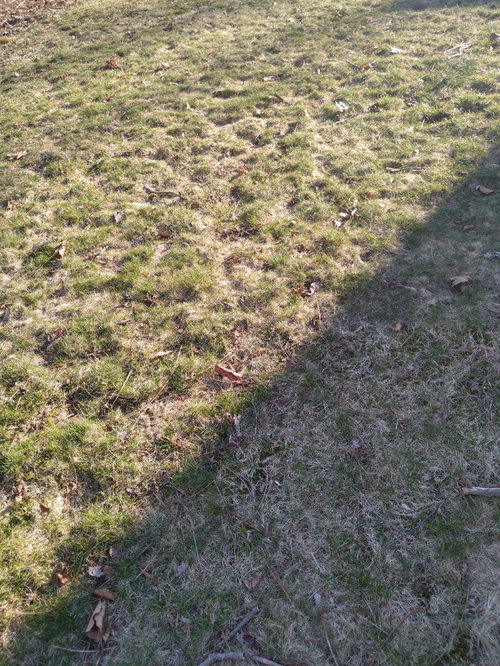
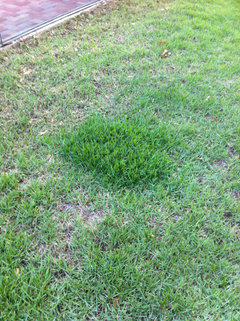
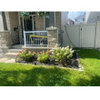
My lawn is really lumpy. It's uncomfortable to walk on. Why is it like this and how do I fix it?


Comments (9)

  • 4 months ago

    When our backyard lawn was like this years ago we found out that it was caused by moles. They were eating grubs in the lawn. My husband used some milky spore treatment to kill the grubs. It seemed to work. Our lawn has pretty much been mole free for years now.

  • 4 months ago

    You didn't mention where you live or what kind of grass you have; however, I have seen bermuda grass lawns do that. As I recall the cause is unknown, but condition is short lived. It should recover normally.


    Bermuda likes to be mowed at the mower's lowest setting. It also likes to be fertilized with a high N fertilizer every 4 to 6 weeks. If you're not doing both of those things, you should expect a spotty result.


    If it is bermuda, you should NEVER have to reseed the lawn. Bermuda requires full sun all day or it will thin out. Trying to reseed a thin bermuda lawn due to shade is a waste of time as the new seed will sprout and die from lack of sun. Still many people do reseed bermuda. If you have bermuda and choose to reseed, wait until the soil is HOT. That time is mid June through August. It will germinate in 3 days when the soil is warm enough.

  • 4 months ago
    last modified: 4 months ago

    I agree aerate/dethatch first, then a topdressing mix of topsoil and sand to even out the low spots.

    Then overseeding, do not mow until the new grass is high and thick and has a nice thatch.

  • 4 months ago

    My problem is not the grass. The grass always looks like this before spring really gets here. My problem is the lumpiness. I presume my grass is a standard mix for northern lawns. It came with the house. Each year, the lumpiness increases

  • 4 months ago
    last modified: 4 months ago

    Could be the freeze/thaw cycle. Yes a roller will flatten it but will compact the soil even more. Aerate after. A core aerator will not disturb the lawn. Leave the plugs in place as mulch. Actually they say leave the clippings on the lawn after mowing. Don't forget to fertilize.

  • 4 months ago
    last modified: 4 months ago

    Thanks for the additional information. You can ignore just about everything I already said, because it referred to southern lawns.

    Where do you live? Nearest city is enough.

    What kind of grass do you have? You called it a northern mix, so I'll assume that's all you know. If it were a mix, it should not look like that.

    How often do you water and for how long?

    When were the last two times you fertilized and what did you use?

    For most of the north spring is not the time to renovate a lawn, because spring is the time to germinate crabgrass. If you live in the farther north north, then you can get away with seeding in the spring. By far the best time to fix a northern tier lawn is at the end of summer. I believe your long term solution is to reseed with a mix around (date TBD depending on where you live).


    For now I would skip aerating and dethatching and focus on deep and infrequent watering, mowing at the highest setting on the mower, and fertilizing. My preference is organic fertilizers, because you cannot make a mistake with those...unless you use too little.

  • 4 months ago

    I like in Z6a, Maine. My soil is slightly sandy, so I don't wouldn't add sand. I lime the lawn every few years. We had a lawn guy a few years back, but he put weed killer on, as well as fertilizer and I like the violets and quaker ladies (bluets, but mine are white) blooming in the spring. I suspect my lawn was seeded many decades ago. The house is 100 years old and old pictures have a lawn, what it's made of I have no idea.


    I have a sprinkler system that was designed to water the lawn, but I mostly use it to water the garden, which often means the lawn gets watered, too, but the area of the picture is less likely to be watered, because the zone it's in doesn't have much garden. It's internet enabled, set to water twice a week (once turned on) but it skips if rain is forecast and I skip it if I think there been plenty of rain recently.


    When everything has leafed out, my lawn is pretty shady. It's smallish and I have some huge, probably 100yo trees.

  • 4 months ago

    Thanks for the extra information. Maine is way out of the crabgrass comfort zone. You'd be safe seeding in the spring. In the transition zone and the south, lawns seeded in the spring become full crabgrass by July.


    Here's what I think is happening, or, has happened with your lawn. The northern "triple mix" of grass includes turf type tall fescue (TTTF), rye, and Kentucky bluegrass (KBG). The reasons for that specific mix are

    • TTTF grows in clumps remains green all year round. It does very well in shaded areas.
    • Rye grows in clumps and goes dormant in winter. Rye needs full sun.
    • KBG spreads out to fill bare areas and normally goes dormant in winter. KBG needs full sun.
    • Diseases or insects will sometimes attack one of the species but not the other two leaving you with at least something for a lawn.

    You have clumps with no grasses succeeding to back fill the areas between the clumps. Assuming the lawn was a normal triple mix, all the KBG is gone. Over the years the lawn may have lost sand between the clumps making the clumps look more prominent.


    How interested are you in making this look right? The right thing to do would be to scrape up the clumps and really start over. If that is out of the question, then I would suggest seeding only TTTF right now due to the shade. Each fescue seed becomes a clump, so the idea is to get a lot of individual clumps close together to make a lawn. If you end up with a hot summer, the tender new grass my die away in the summer heat, but in Maine it should come through. The TTTF seeds you buy today are modern varieties and should be an improvement over whatever was originally seeded. Then in late August (for Maine), reseed again using a full triple mix to get the modern varieties of KBG and rye added in. The KBG and rye may die out in the shade next year, but should come up for the winter with no leaves on the trees. Whether you reseed now or not, the normal time for reseeding or overseeding in the north is in the late summer or early fall (beginning in late August for you). That gives the new seed a temperate time to germinate and get going and time for the roots to harden up in preparation for the following summer. If you see bare spots appearing in the shade, then give up on the rye and KBG, and stick to TTTF.


    These grasses will look much better when mowed at the mower's highest setting.


    You did not mention fertilizing. I use alfalfa pellets (rabbit chow) as an organic fertilizer. If you read the labels on all the commercially branded organic fertilizers, alfalfa shows up a lot as an ingredient. You should be able to buy plain brown bag of alfalfa pellets at your local feed store for about 1/7 the cost of the commercially bagged products. The application rate is 20 pounds per 1,000 square feet. Considering where you live, you might also be able to find soybean meal at your feed stores. Compare prices. The application rate is the same. Soybean meal is a better fertilizer, and meals are easier to apply. I would use it, but you can't get it in south Texas.


    One reason people seem to not like organic fertilizer is they think it doesn't work. It works but maybe not on your time schedule. It takes 3 full weeks before the organics seem to kick in. The reason for the delay is biology, but I won't bore you with the details. Here is a picture of a zoysia lawn which had a handful of alfalfa pellets tossed on it in May and the picture was taken in June.


    Thanks to mrmumbles for posting this picture waaaaay back when. You can easily see the improved color, growth, and grass density from the alfalfa fertilizer.