Software
Houzz Logo Print
jeannie_nguyen

Do you keep your heat on all day/night?

11 years ago
last modified: 11 years ago
What's your heating schedule like? Are you comfortable leaving it on all day and night? Or do you like to conserve and turn it on only when necessary?

Tell us how often you use your heating devices and post photos of your favorite products!

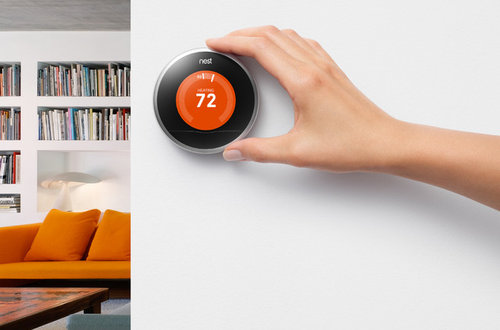
Nest Learning Thermostat · More Info

Comments (81)

  • 11 years ago
    Two Nest thermostats here in Australia, even though not supported by the company in any way. Have done basic programming of the schedule and leave it running all the time, but rather than try to program a more complicated schedule I simply use the iPhone or iPad app to make changes while away.
  • PRO
    11 years ago
    Color people is right. Jiggling back and forth in large temperature increments is equal to wasted energy, and often a higher bill as well.. Too, your comfort done will depend on humidity. Drier winter air feels cooler, just as summer air with a lot of humidity will feel warmer that the actual temperature. I like not veering too far from 67. That means64/ 65 to sleep in the winter, and fuzzy wool socks and a cozy sweater for awake times The worst is turning the heat down sooo far down during the day......that your mattress turns to a chilled slab on which you can never get warm despite piling blankets, or you arrive home to a chilled sofa that takes hours to thaw. Just as people will warm a room, everything in the house has a "temperature".
  • 11 years ago
    With radiant heat in our floors, efficient insulation, some solar gain with south-facing windows and a largely open floor plan, we heat like Ron Popeil (set it and forget it!)
  • 11 years ago
    I've moved this past year and I've gone from a extremely "tight" home to one that is the total opposite. My new house was built in 1850. I have a Cape Cod basement (dirt w/stone foundation not full height) only the 2nd floor has insulation in the walls, done when the attic was turned into 2 bedrooms but NO heat at all up there it just "floats" up the stairs.

    In every season here the wood floors are cold due to that "basement." And having cold feet makes me turn the heat up. I have a newer gas furnace and forced air.

    I keep my heat at about 70 when I'm here and I work from home. At night about 1/2 hour before I go to bed I turn on a space heater in my bedroom to take the chill off. When I do go to sleep I turn the heat down to 55 and turn off the space heater. I have a huge, expensive down quilt and I love how warm it keeps me. I can NOT sleep unless I'm in a cold room so this sleeping arrangement has nothing to do with energy savings.

    However when I get up in the morning I run down stairs and turn my heat on. My house is small so it heat up quickly. I am thinking of getting a Nest this year so the heat will come on just before I get out of bed. 99% of the time I remember to dial down to 60 when I leave the house to run errands but again that Nest with the iphone function would be good for the few times I forget.

    The subject of dialing down the heat at night to save money always comes up in these conversations. And for those of you that say it costs more to heat up the "mass" of your house in the morning then it would if you kept the heat at 70... that statement might be true in a very specific way. If I have a piece of stone that is cooled to 60 degrees and one at 75. Clearly it will take a little energy to get the one at 60 to 75. But you all end the conversation there and that isn't correct. The bottom line is this: regardless of the "extra" heat you may use to heat up your mass, it still saves energy overall to turn your night temperature way down.

    Because once the temp is turned down, the furnace does not go on at all for some period of time, thus erasing the little bit of extra energy that the system uses in the morning to heat it up again. So the important question here is: Does having your heat at 58 for 8 hours save money? And the obvious answer is Yes.

    Now I love physics, but find it difficult to explain it well but the following links may help but it amazes me that people come to forums and read what someone posts and calls it fact. I'm going to guess that most of the opinions posted here are not from physics professionals. Taking a class in HVAC or installing heating systems does not make you an expert in the science behind heat loss.

    The bottom line is: for every degree you dial down you save money.

    Amherst Univ: http://www3.amherst.edu/~physicsqanda/Thermans.htm

    http://science.kqed.org/quest/2008/10/03/top-energy-and-money-saving-thermostat-tactics/

    http://www.care2.com/greenliving/10-thermostat-tips-save-money.html

    http://seattletimes.com/html/localnews/2003700956_climate10m.html (first question)
  • 11 years ago
    We keep the thermostats at 70. We find the constant temp lowers our bills because there isn't constant fluctuation...even with zoned heat and a programmable thermostat.
  • 11 years ago
    We have a small ranch and a Honeywell programmable thermostat that works well. When we,re home we keep it at 71 and I'm still cold and wear swets and a denim shirt and I'm fine. At night it's set ato 67 and when we're not home, it's set at 64. Since we got all new window a few years ago, our heating bills decreases significantly. Before we had the original windows to the house built in 1948 with crank handles. The new windows are Pella.
  • 11 years ago
    We have very high ceilings. Yes they look great but in the winter all the heat goes upstairs and we are cold downstairs. During the day when only the cat is home, I keep the temp at 60. When my son comes home from school he turns up the heat to 70 and it stays at 70 until bedtime around 10pm then I turn it down to 62. I can't sleep in a warm room, I need it to be cold. When its just my husband and I, I only use a space heater because we hang out in the living room mostly.
  • 11 years ago
    Pixie thanks for the links.setting it back when away or asleep is the way to go.my new townhouse is well insulated so it's great to see how slowly it loses heat or cool. I use insulated drapes to close at night and have solar gain deduce the winter heating cost during the day. I turn the heat down to 55 when I'm away during the day. It reheats to 70 in time for my return from work. Two furnaces on two zones in 2,400 square feet cost $69 per month to heat in Boston. Set back thermostats are the way to go!
  • 11 years ago
    I think most women are prone to being too cold and most men to being hot. It's that way in our house. Just had our air handler and heat pump replaced, and the installer said it's that way at his house. He confessed to a stinkly trick: Knowing how to manipulate the display on the thermostat, he had it it always say 72 when it was really 69. So he gets to be comfortable and his wife hesitates about complaining. He was young and I've been married 25 years, so I gave him a friendly scolding for his deceit. Me? I've just turned it into an excuse to buy and wear sweaters and let my husband have his way on all but the coldest of winter days. He, in turn, bought me a lovely heated throw. It works for us. All kidding aside, most mid-range and up HVAC systems these days have zoning systems that do a better job of comfortably heating or cooling our spaces. The system we replaced was only 12 years old, and I can't believe the improvement in the new one.
  • PRO
    11 years ago
    No heat on in our house. We're located in Far NE Scottsdale, AZ and have a home that is built out of insulated poured concrete walls. The interior temp is between 68-70, while the exterior temp during the day has been in the low 70s and the nights are in the upper 40s to low 50s.
  • 11 years ago
    Bstnjohn, great point about insulation. I mentioned that we setback our thermostat quite a bit. That usually means it doesn't come on at all during the day or at night. Saving it from running approximately 16 hours a day. We have insulated our walls, doubled the attic insulation, weather sealed, added cellular blinds in our mud room, and this year replaced the windows. All of these measures help our home maintain a more constant temperature.

    Those of you with Nest thermostats, does your thermostat need to be in a main room? How long does it take for the thermostat to "learn" your routine? Is there a way to set up a basic program and have the Nest fine tune it? We have an old school programmable thermostat that we have turn the heat up before we get up. Seems the Nest may realize we hit snooze and never get up at that time. :)
  • 11 years ago
    last modified: 11 years ago
    We have central radiant heat (natural gas) throughout. Turning it off when we leave the house for work is not an option because it takes too long to reheat. Our only thermostat is in the great room and set to 68F (20°C) - that's it. The bedroom doors are closed so that opening the windows there doesn't affect the temperature in the rest of the house.

    When the sun shines through our 70' of triple-paned floor to ceiling windows, the indoor temperature easily rises to 80F and the central heat automatically shuts off. It often stays off until way into the night or even the next morning, depending on the outdoor temperatures.
  • 11 years ago
    6&870
  • PRO
    11 years ago
    68F during the days and 58F at nights
  • 11 years ago
    In the winter its on more than off. Its not on during the night. These days esp in the UK the energy companies have put prices way up and keep doing so. I don't think there can be many that can afford to have it on all the time.
  • 11 years ago
    I agree with The Color People. That is what my HVAC serviceman says. I have programmable - 17C at night, comes on at 6:30 am to heat to 21C - takes about 15 min. (Long enough for news & 2 songs :-). Then at 7:30am set to go to 17C while at work then 21C for 5:30pm. , 11:30 pm back to 17C. On wkend programmed to heat up at 7:30 am and stay at 21c until 11:30 pm. When I go out on wkend I manually lower 2 degrees and put on hold until I get home. When away for extended periods Iower to 15C.
  • 11 years ago
    HEY ALL OF YOU THAT THINK IT IS BETTER TO KEEP A CONSTANT TEMPERATURE! Go back and read the comments of pixiesusan and especially look at the links. You will find that your belief is simply NOT so! Any time you can turn down the heat, it will save you money. Yes, of course, it requires your furnace to work a bit harder to bring the heat back up when you return, but the savings while you were gone are MORE than the extra energy required when you come back!
  • 11 years ago
    Urban myths die hard.
  • 11 years ago
    Always set to 72.
  • 11 years ago
    We have seperate thermostats for the 1st & 2nd floors. (Dual zone) As someone mentioned previously- when you completely turn off the heat & "let" the house get cold (while at work/school etc) ...everything - the walls inside & out (ie joist) get cold then when the heat gets turned back on it has to work even harder to heat EVERYTHING back up. (That can't be cost effective.) That being said, the home we are in now is newer & insulated amazingly- I know in our 1st rental the heat never reached what we wanted- so if we didn't turn it off it ran constantly.
  • 11 years ago
    The programmable thermostats are really only useful if the house is empty during the day. I work from home, so the temp stays around 68 24/7. I can and do turn it down in winter when there are a lot of people in the house, but 68-70 in winter and 75-78 in summer work pretty well.
  • 11 years ago
    For those of us who live in single family homes in Canada the heat must be on day and night. Keeping it off during the day when no on is home results in cold furniture and the risk of frozen pipes. Most of the people I know turn the thermostat back a few degrees at night and while they are at work, but it uses as much energy to reheat the home if it's too far down
  • 11 years ago
    We set the thermostat down a couple degrees during the day if the house is empty and 68 when the house is occupied. We have a fairly open house and it does take time for things to heat up (we are in the Northeast). The bedrooms are over the garage (concrete) and the living/dining room are over the furnace room (I would have designed this differently).

    I do not drop the temperature at night (except for the summer). I have poor circulation in my extremities and was told that could be linked to my light sleeping. Your brain is concentrating on keeping your body warm. For all of you that think a cold room is ideal for everyone to sleep in, think of the others in your family, they may not be so acclimated.

    Here's an interesting read on the subject. http://www.webmd.com/sleep-disorders/features/cant-sleep-adjust-the-temperature
  • 11 years ago
    I have programmable thermostats on both floors. Full electric heat/AC - two separate units. I usually turn the heat down at night to about 64, up to around 66-68 in the AM and evening. 64 during the day when I'm at work. My pupster has a heated bed, so I can keep it down during the day. Right now I'm keeping it a little higher during the day - 66 or so, because I am keeping my daughter's puppy temporarily, and she is in a crate without a bed so she won't potty in the crate. I would love to install nest thermostats, but the cost is prohibitive, so I just bought some mid priced thermostats. I've had them for about two years, and I'm not really sure that I've noticed a difference in my electric bill. During the summer, I tend to keep it around mid 70's. I will say I cringe when I come home or get up and it's toasty warm. I just know those heater coils are on and costing me money!
  • 11 years ago
    We have a programmable thermostat. It is set to 60 at night and while we're away and 68 other times. I also try not to turn the heat on when I'm home until I feel cold (about 63). If you think filling your gas tank is expensive, try a $700 plus oil tank fill up. Thank you wool sweaters.
  • 11 years ago
    My heat is on all day but I have it set so it is several degrees lower at night and when I am at work. Unfortunately I have oil heat so I never have it set to 70 no matter what. Now that I pay the bills I understand when I was told to put on a sweater or another blanket as a child lol
  • 11 years ago
    All programmed on our a Thermostat. 55 at night...60 when we are away during the day. And, when we are home -68.
  • 11 years ago
    I love the Nest for cooling in the Georgia summer months but I leave the Nest set at 66 for heating in the colder months. It saves more $ and is easier on the equipment to keep the heat at one temp. Raising and lowering the heat by only 1 degree saves big heating $$$. Only thing totally WRONG with the Nest is that it is not Windows friendly for my new phone :(
  • 11 years ago
    I live in southeastern Virginia and have a heat pump with programmable thermostat. I set it at 60º at night and when the house is unoccupied. Two hours before I expect to get home it goes up to 62º. An hour later it goes to 64º. If I want it any higher I bump it up two degrees at a time so the supplemental resistance heating doesn't kick in, up to 68º if I'm sedentary. I will bump it a little higher for company.
  • 11 years ago
    Each floor of our three-story rowhouse is a separate zone with its own programmable (Emerson?) thermostat. We've never gotten the hang of programming so we control it manually. During the colder months we keep it at 70 during the day if someone is home, 71 if it's very cold outside. At night we keep the lower two floors at 66 and the bedroom level at 70.
  • 11 years ago
    We have a NEST and it has cut our heating bill in half (no exaggerating). We installed it ourselves and it took us less than 30 minutes (hubby is not handy at all). It has a motion sensor to help it learn your habits. My hubby does go and lower the heating sometimes while he is at work and I'm home to see if I notice it.
  • 11 years ago
    I never keep the heat on, it is like throwing money out the window since in this area many houses are not well insulated with the climate being so moderate. In the evening or early morning I have been using my new electric heater or gas fire place.
  • 11 years ago
    So, do you need "The Nest" if you have a programmable thermostat and use it properly?
  • 11 years ago
    Rhonda, probably not. When your schedule is predictable, and your programming fits with your schedule, you are getting the biggest portion of the benefits of a NEST.

    However, if you travel, have irregular schedules, don't want the kids/household help messing with the thermostat, or are geeky and like seeing the recommendations from Nest to improve your results, Nest might be worth a look.

    I love playing with it remotely, and appreciate that it reverts to an "away" setting shortly after I leave the premises, and then reverts to "home" settings when I return. It also alerts me to settings that might help save energy based on new weather predictions, the heating equipment you have, and previous use.

    Our schedule is not routine. I work at home, so there is less opportunity for the "away" settings, and it's nice I don't have to remember to adjust anything on my way out.

    NEST settings take into account your equipment, so if you use a heat pump, it will start earlier to avoid using the more expensive auxiliary heat. Very cool technology.
  • 11 years ago
    We also use the NEST and have saved using this thermostat. It's nice to be able to change the temp from my iPhone in bed at night w/out having to get up too. The best part is the company is moving towards an integrated system w/ Protect...a smoke and CO detector all in one...now, if they would just add a camera...sold!
  • 11 years ago
    Department of energy advice:
    http://energy.gov/energysaver/articles/thermostats

    68 while home 10-15 degrees less while away for 8 or more hours can save up to 15% on bill
  • 11 years ago
    When we wake temp is set auto to go to 68 degrees. When we leave for work 63 degrees. Return home in pm 69. Sleep it's set to 67. Our gas bill in winter is no higher than $125.00 / nj
  • 11 years ago
    I had always lived in houses with natural gas furnaces until 4 years ago when we moved into a house with heat pumps. We knew nothing about how they worked so at first we programmed the thermostat like we always had - quite cool overnight, then a quick warm-up in the morning followed by a medium heat during the day and a little warmer in the evenings. Yikes! Our electric bill was outrageous. It took two years(!) before we learned that heat pumps just cannot work like that and if faced with a big bump up in temp, they default to backup electric heat which is very inefficient. We set our thermostat to a constant 68 degrees around the clock and our electric bill dropped substantially. Frankly, I'd much prefer it cooler overnight, but then I would have to sacrifice warmth in the morning, so at 68 it stays. If I had my choice, I'd much prefer a gas furnace.
  • 11 years ago
    I don't keep the heat on overnight, ever! I hate the heat, inside or out. Cold is so much better - you can pile on the cozy blankets or snuggle under the covers. When you're too hot you can only get so naked before you scare the neighbors.
  • PRO
    11 years ago
    After reading some comments here I wanted to suggest a different way of thinking about this. It may not be obvious, but the perceived savings and comfort factors of the thermostats are not at all independent of the heating and cooling system. This is particularly critical in times when the government is promoting and sponsoring upgrading to the high efficiency modulating heating systems. The added efficiency of these systems relies on them being able to extract additional energy by condensing the flue gasses and thus raises efficiency from say 80% to about 95% Without going into lengthy explanation, the important concept here is that the traditional set back control, which simply turns this equipment on and off, does not allow it to operate at advertised high efficiency. Reason being is when the house recovers from a set back, more frequently then needed the equipment is ran at full capacity where it cannot condense and is thus as efficient as the 30 yo system it has just replaced. Such control deficiency applies to all of the so fashinable Nest thermostats as well. There are several solutions to the problem and one of them is to use a communicating thermostat like this one

    http://www.pexuniverse.com/yth9421c1002-honeywell-vision-pro-iaq-thermostat-kit

    depending on what communication interface your equipment supports. Based on your goals try to get an advise from a professional that actually understands how all types of high efficiency equipment is controlled and operated, it is unlikely to be Joe the plumber! You will be comfortable, green and saving at the end.

    Disclaimer… We are not affiliated with or endorse any heating equipment manufacturers
  • 11 years ago
    We keep it around 62-64 during the day. At night it's usually around 57-58. With our 2 dogs in bed with us, it get pretty warm. I stay at home so it's pretty much constant. If we leave we normally put it down to 60. We live in a trailer and the windows are not the best. Can't wait until we change them so we can save some more. Other than that, it holds the heat pretty good. We do live up in the mountains and it does go to 20 at night sometimes. But during the day, the sun hits the trailer all day and it stays warm. We are thinking about a space heater. But it really hasn't been that cold yet. We have a heat pump with that auxiliary thing and totally hate it because it really isn't that efficient. But don't have the money to buy another one. The bill last year with the Christmas light on didn't go higher than $90. During summer, we did not use it at all. But then again, it really didn't get up to 100.
  • 11 years ago
    I very very rarely use my central heating. Our wood burning stove is doing a very good job of keeping us warm and toasty. Just as well since energy prices are sky rocketing here in the UK.
  • 11 years ago
    I have to say I'm surprised that so many people heat their homes to over 65 degrees. I would love to have 65 degrees in my home but can't afford it. I'm generally around 55 degrees.
  • PRO
    11 years ago
    I live on the West Coast of Canada...I'll do my best to get everything in both Celsius and Fahrenheit. This is our program for the thermostat:

    Night time (9:45pm - 5am): 18 C = 64.5 F
    Awake (5am - 8:30am): 19.5 C = 66.5 F
    "Away" (8:30am - 3pm): 17.5 C = 63.5 F
    Evening (3pm - 9:45pm): 19.5 C = 66.5 F

    I've been working with this schedule for 3 weeks (rental) and it appears that the 17.5 C drop needed an extra 30 minutes to get it up to a "comfortable" temperature when my family gets home at 3:45pm. I know from experience living in very cold climates (-40 C = -40 F in the winter) that a programmable thermostat ALWAYS saves money! The colder the climate, the more it saves. Any time you reduce the temp by 1 C (1.8 F) you save money. The extra 30 minutes to get it up to "comfortable" is more than paid for by the 6 hours at a very low temperature. I know that without even checking my old heating bills. The "keeping it even" is for a vehicle motor at cruising speed. This is no longer applicable to todays modern heating systems - nor the modern vehicle engine.
  • 11 years ago
    We live in a small space. We turn it on when we need it. It takes little time to bring home to a comfortable level, that's how small it is. Size doesn't matter
  • 11 years ago
    Usually turn heat off at night, unless someone has a cough.
  • 11 years ago
    Mind you, in our climate, only one night last Winter below freezing.
  • 11 years ago
    I have my heat on all day, all night. My heating bill isn't that high. I keep it at 23C. In the hot weather I have the AC on 23. I like to be comfortable.
  • 10 years ago
    Without knowing the climate, zone or part of the country or world in which you live, I don't find most of the responses helpful. I like reading the responses, though! ;>) Thanks for the info. about new devices and technology.
  • 10 years ago
    I have pets, some of them seniors, so although I am not home during the day I DO leave the temperature at a comfortable level. Although "I" am not home most of the day, they are. I am responsible for their happiness livelihood and comfort. So yes, I treat them like family and pay the extra cost of keeping them warm and snuggly during long cold winter days and hot humid summer days.