
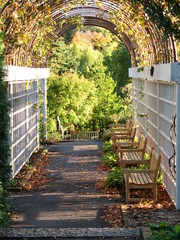

Espalier
Train branches or vines to grow in a flat plane, and you've got an espalier

An espalier is a fruit tree, shrub or vine trained to grow along a wall or lattice in a flat plane. Espaliers can also be grown in containers if a staked lattice is used. The wire or stake used to train the plant is also called an espalier, and to espalier is also to train the plant. Espaliers can create lovely, space-saving designs for the garden.
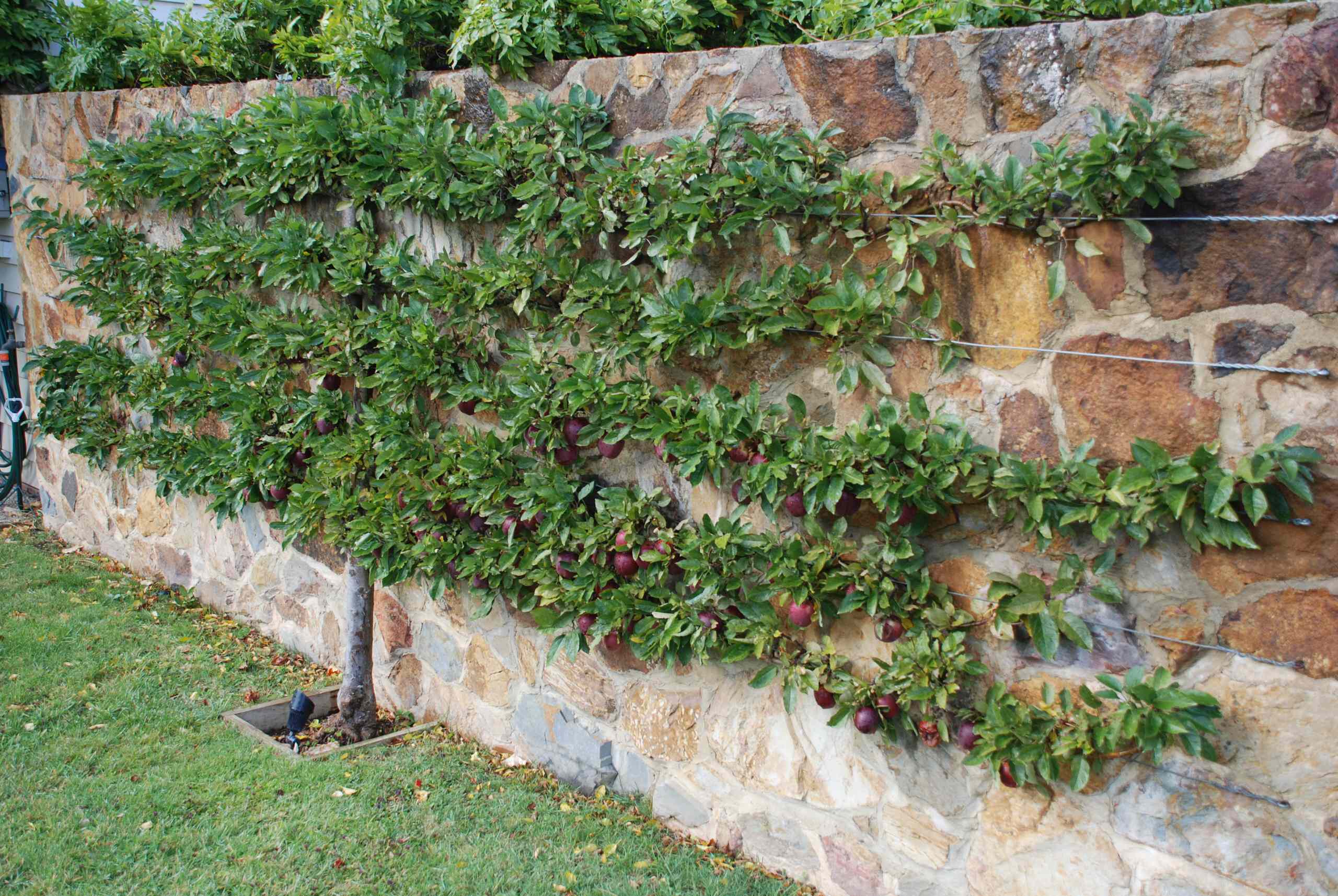
An espaliered plant benefits from the radiant heat of a wall it grows against, which can be great for fruit. This is an espaliered apple tree.
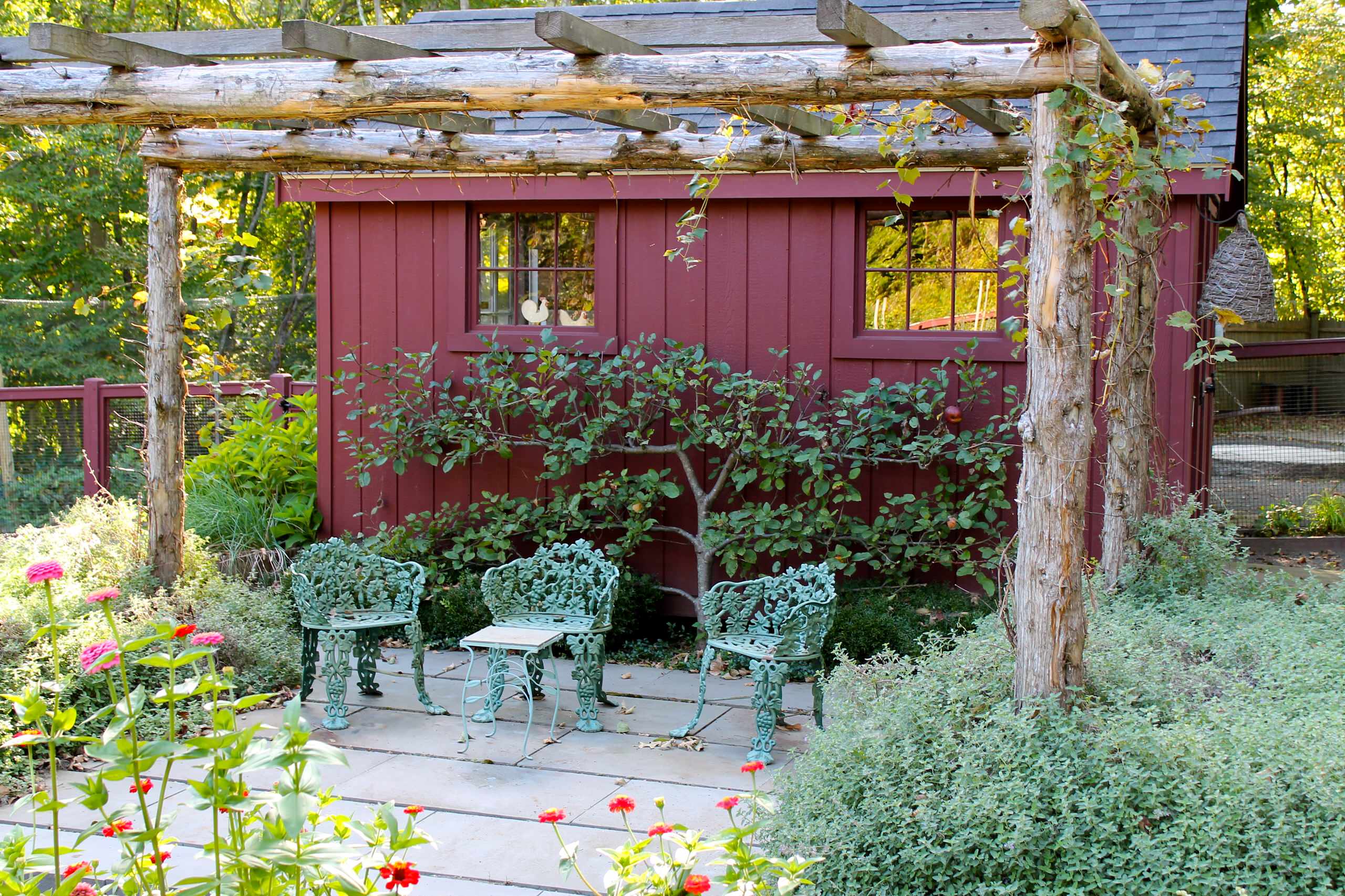
Espaliers can fill in long, blank walls in a variety of desired patterns.
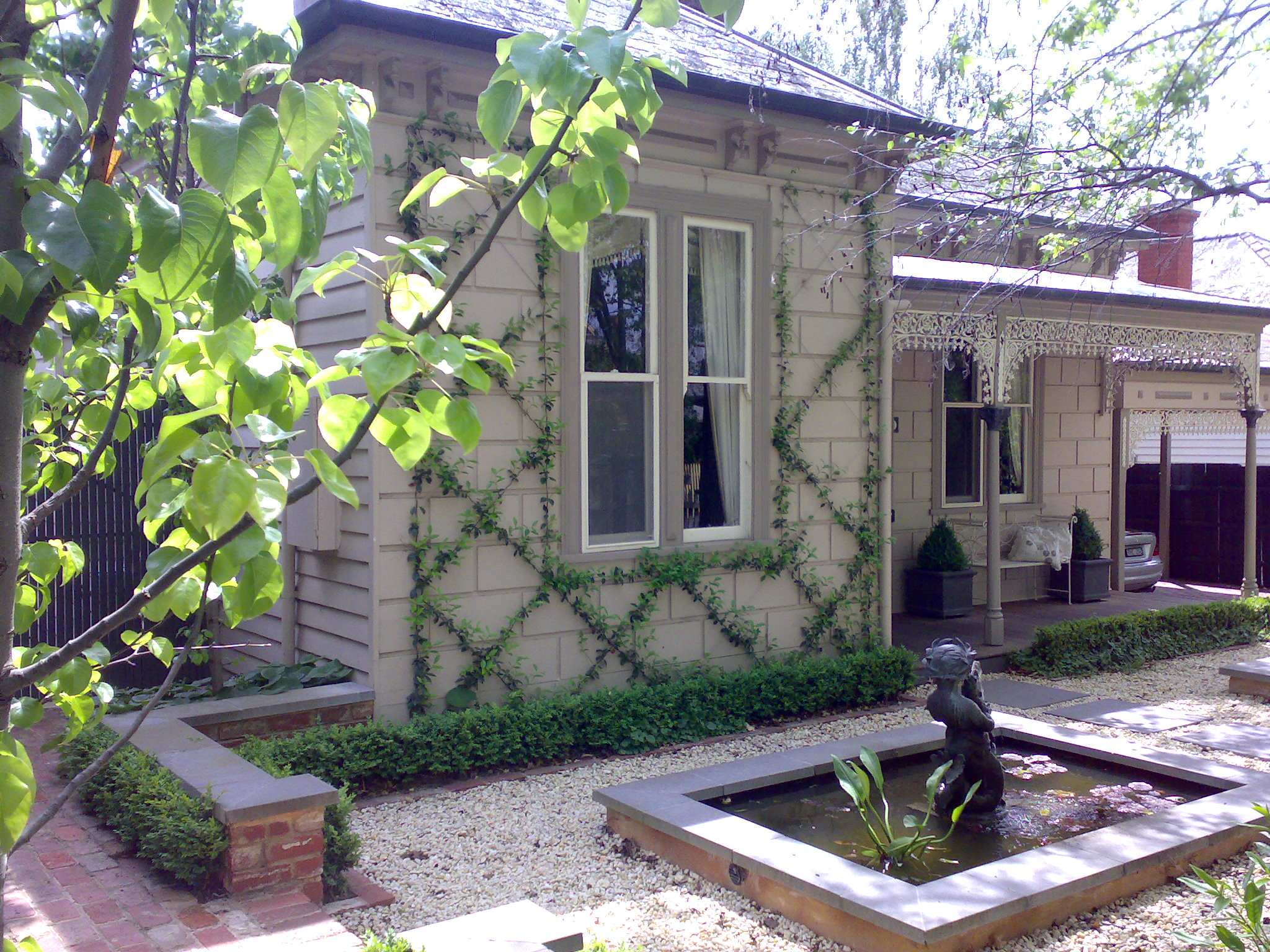
Vines were trained in meticulous patterns in the formal gardens of 17th-century Europe.
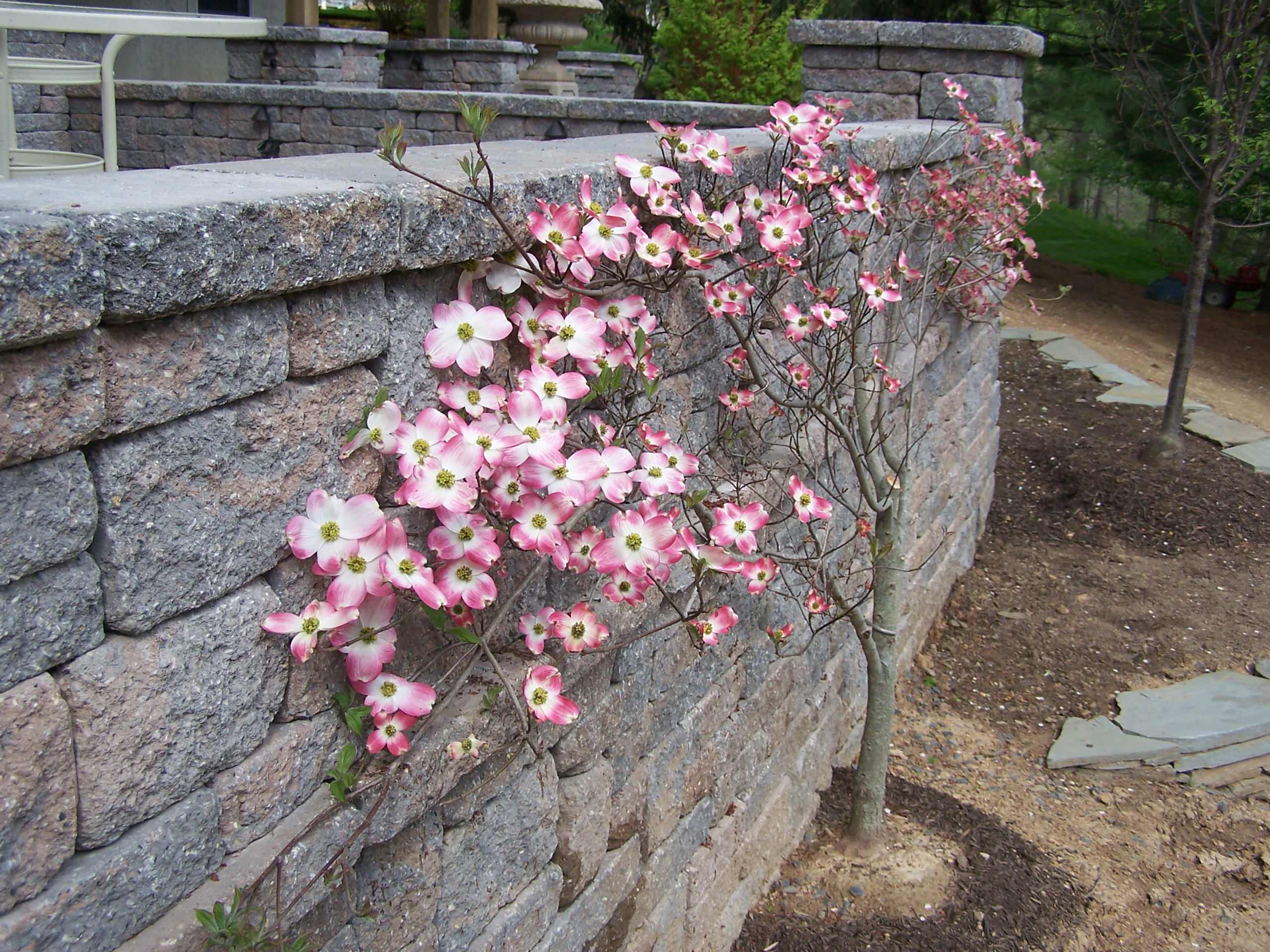
This flowering dogwood makes an excellent espalier with a slightly more informal shape.
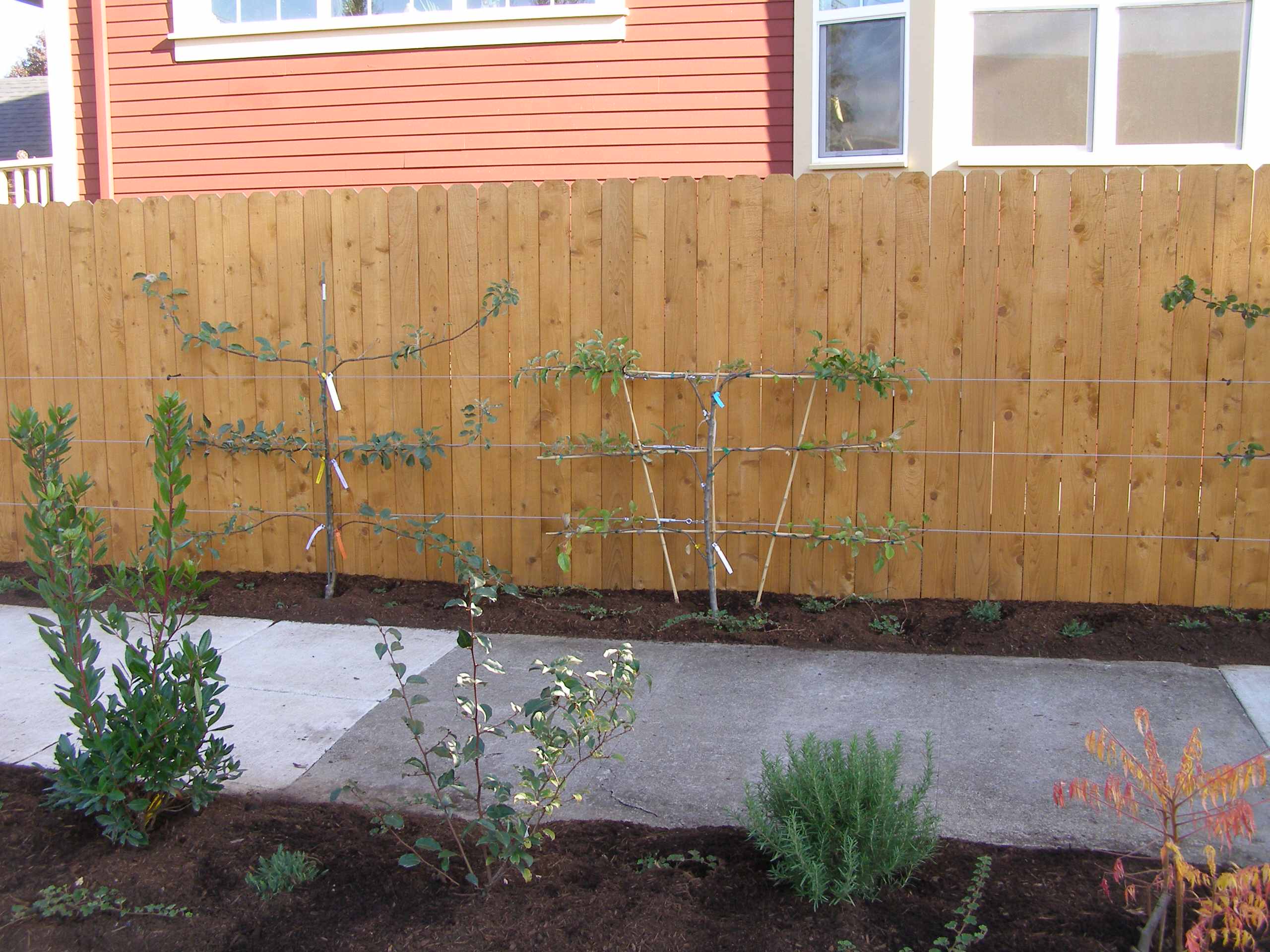
Formal or informal, espaliers can take years to establish. First the main stalk of the plant must be trained to grow upright next to the wall. Shoots must be pruned to grow at the desired locations. Once the plant has achieved its shape, only minor pruning is necessary.
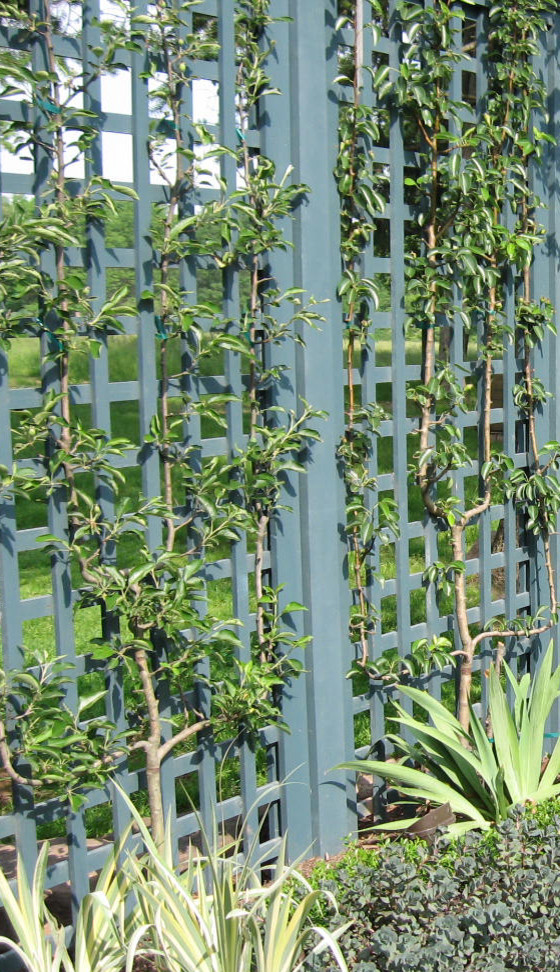
One of the easier espaliered designs to grow is a main trunk with three or four vertical branches growing from it. This espalier is trained on a lattice.
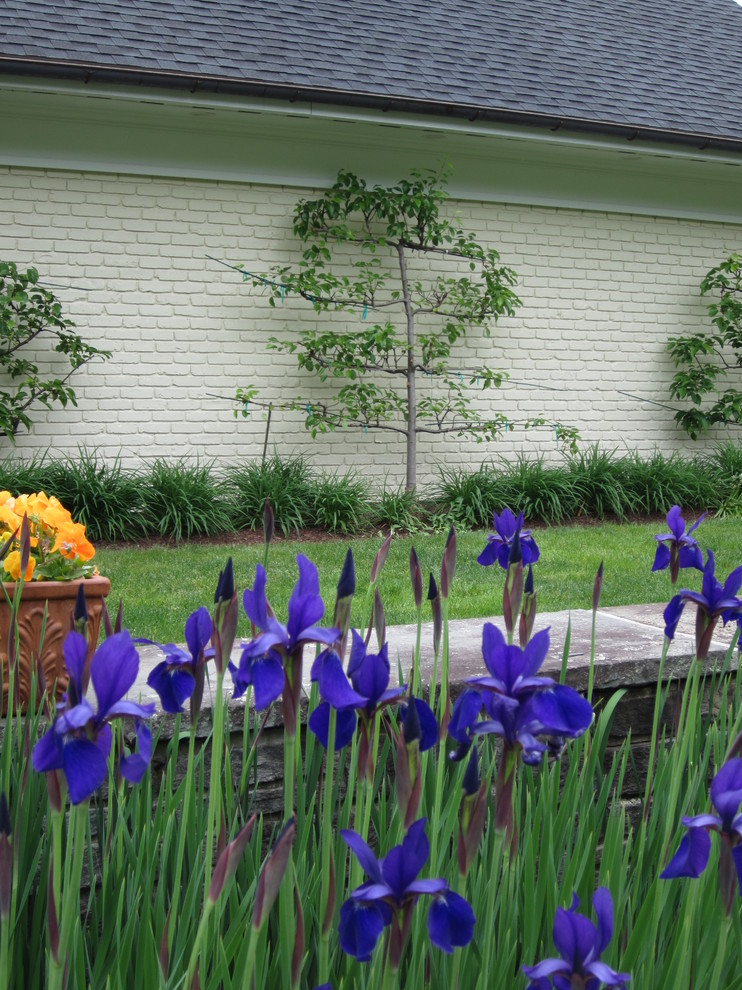
Fruit trees are typically espaliered horizontally to maximize fruit growth.
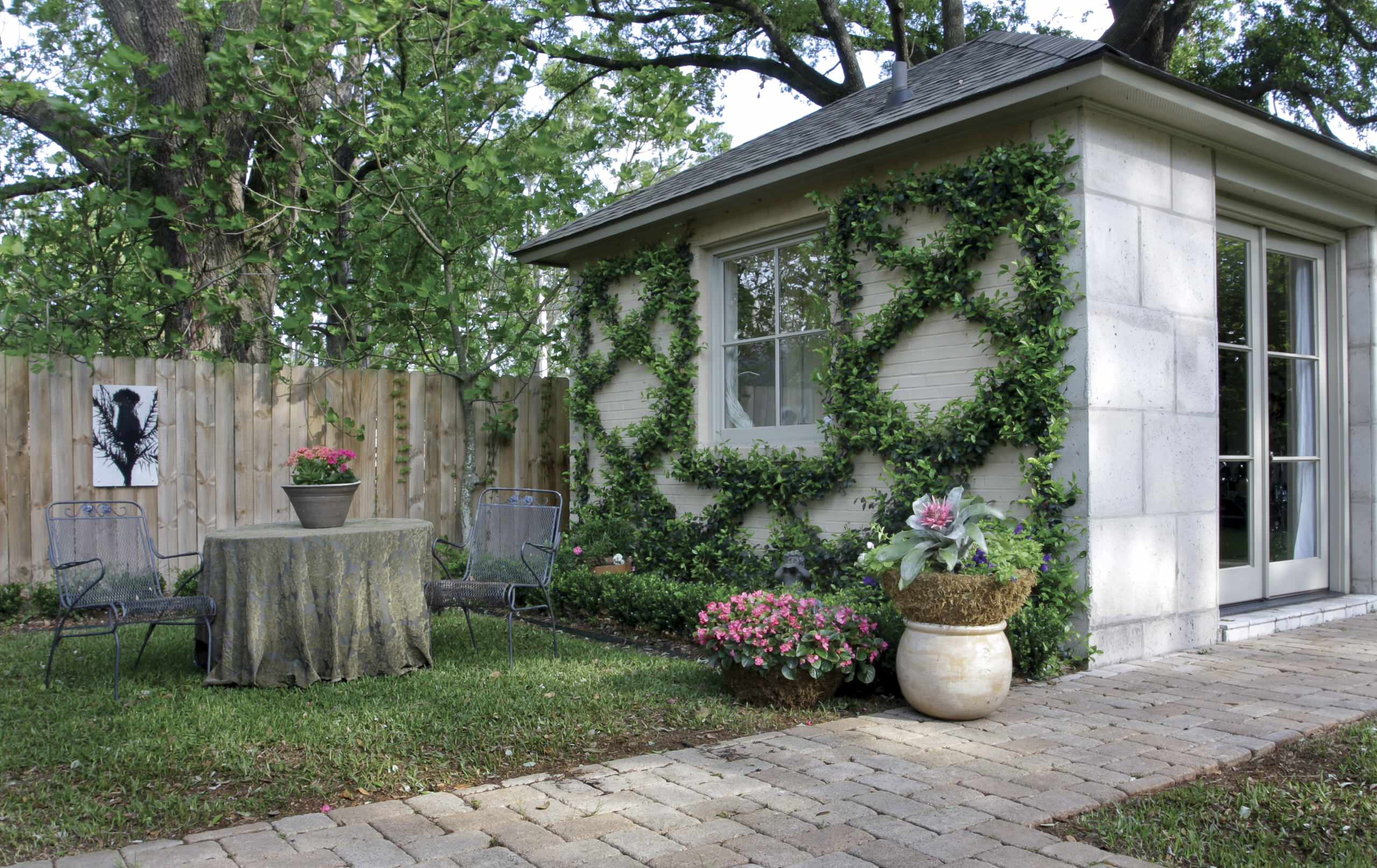
When vines are trained in a diamond-shape pattern resembling a lattice, the result is called a Belgian fence.
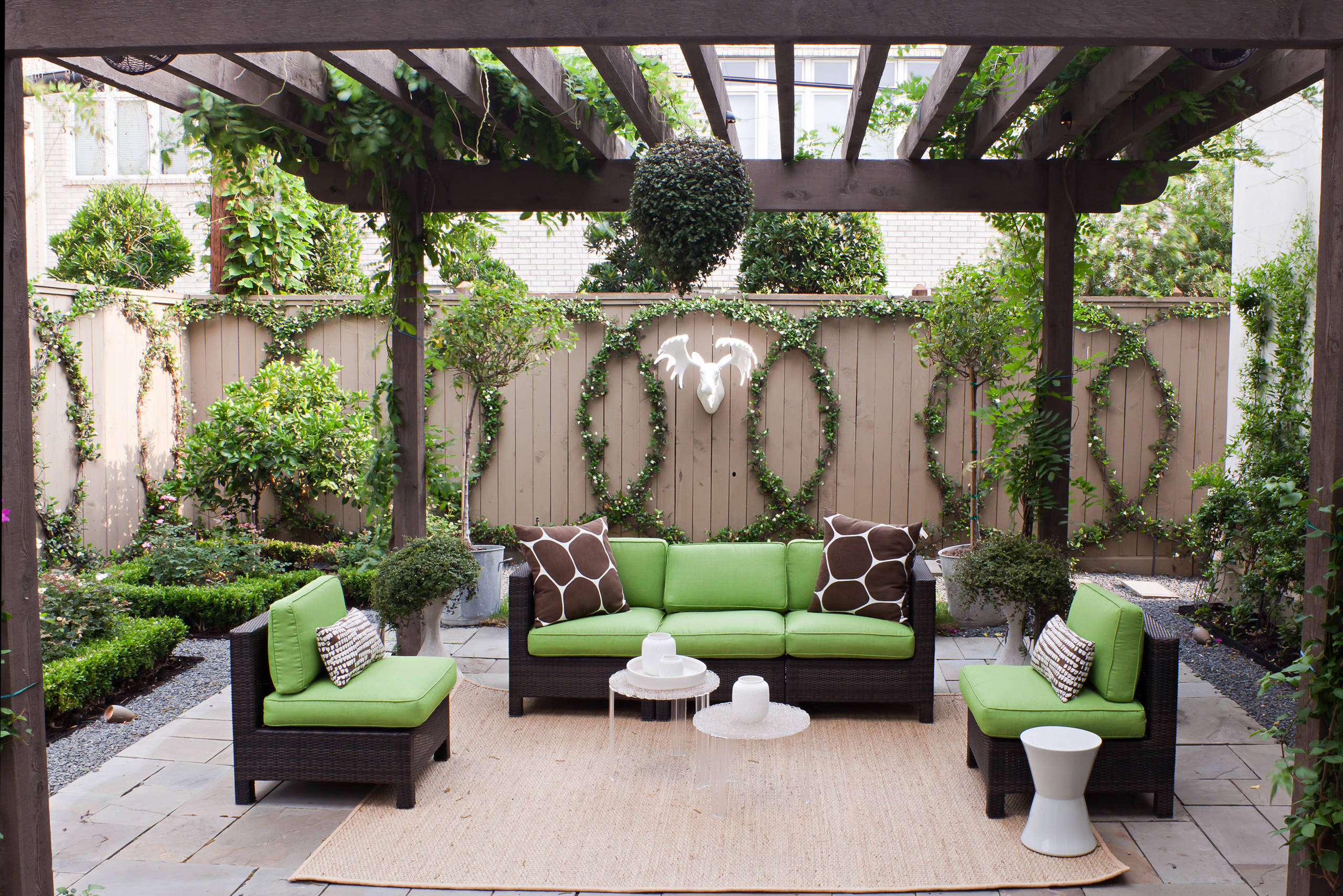
The possibilities for the design of an espalier can be endless, but typically fruit trees, shrubs with compact growth and vines that cling are the best choices.
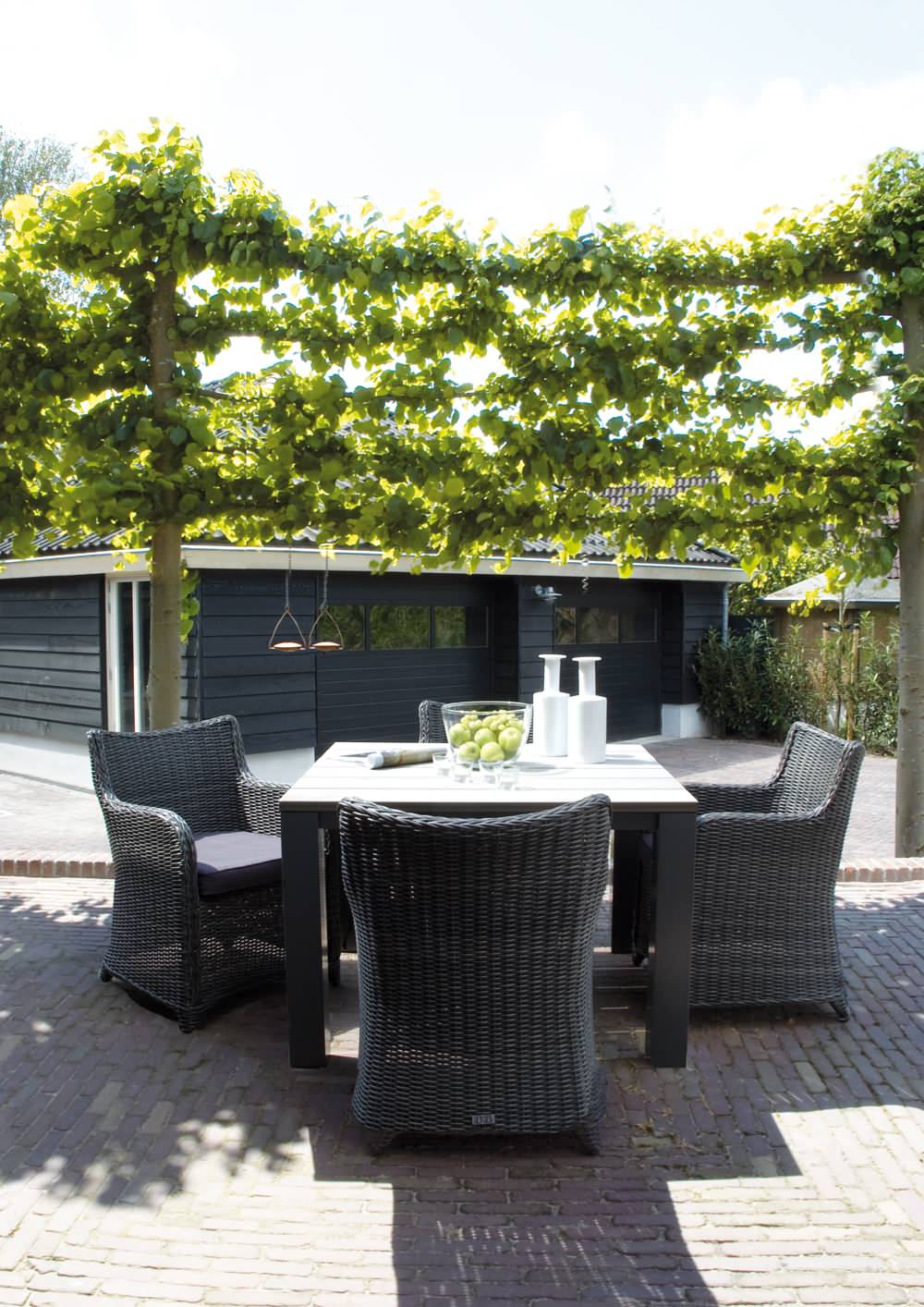
Espaliers are not limited to walls or fences, but they do need to grow in one plane, like the curtain of vines in this patio.

