
Search results for "Attic space" in Home Design Ideas
 Artisan Custom Closets
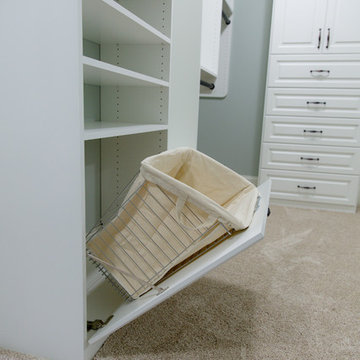
This customer expanded the master closet into the unused attic space to make the closet larger. Adding a custom closet incorporating a laundry hamper and jewelry drawers with lots of handing rods tripled the size of the closet overall.

 McMillan Builders LLC
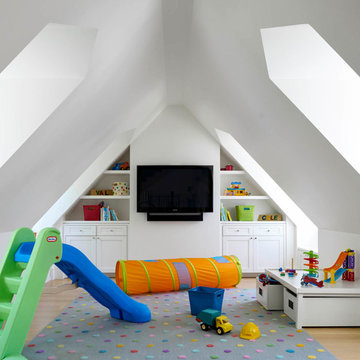
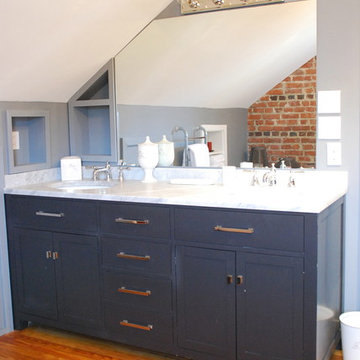
This is a 6-foot vanity from Restoration Hardware. The top is marble and the sinks are undermount. Although a tight space due to the ceiling, the mirror is cut around the built-ins. Steven Berson
Find the right local pro for your project
 Jean Brooks Landscapes
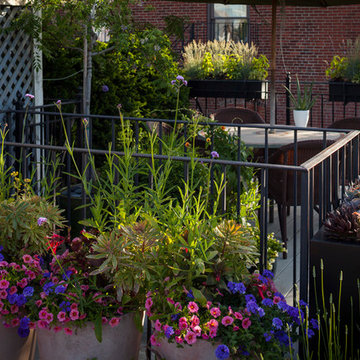
This garden takes advantage of the chimney tops and attics spaces of the urban landscape of the Back Bay- we refer to it as "Mary-Poppinsville". Split in to two areas- seating and dinning/cooking. shrubs, perennials, annuals, and edibles including: herbs, tomatoes, The client is a gourmet chef and uses the foods in his cooking. With limited space, the most popular edible plants that clients ask for are tomatoes and herbs because the herbs can be used in daily cooking and theres nothing to compare to the homegrown tomato. Where space is generous, we also plant blueberries strawberries, raspberries, lettuces, peppers.
 Landis Architects | Builders
Photo: Michael K. Wilkinson
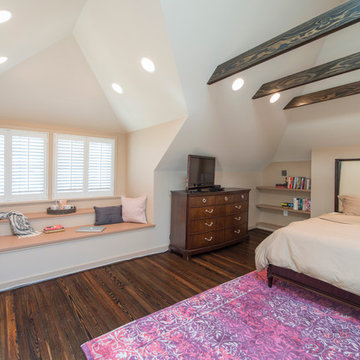
The owners of this 1923 home in Washington DC wanted a master suite, and originally considered combining two rooms on the second floor to serve this purpose. However, they showed our team the home’s attic and expressed an interest in seeing a design option for a master suite in that space.
Our designer was immediately inspired. The appeal of moving the master suite to the attic was that it offered an opportunity to create a unique space that was larger and had more design options than combining two bedrooms.
The original attic had wood paneling on the walls and ceiling and was mostly used for storage and as a retreat for the cats. The 7-foot walls did not capture the volume of the roof line, nor did it take advantage of the square footage.
We removed the existing paneling and pushed the existing walls back so they had a lower height around the perimeter. This provides a dramatic contrast to the new high ceiling and dramatic angles of the roofline. We maintained an open floor plan and used glass panels and doors for privacy and separation of different functions. The finished square footage is 650 sq.ft. There is about 350 sq.ft. of unfinished the storage area.
We also installed larger windows in the front dormer. The new windows are casement windows for egress purposes, which are required by code in a bedroom. The front dormer was also reframed in a shape that follows the original frame, which adds more volume. We installed two long steps inside the dormer to hide the ducts underneath and provide seating and storage.
The space needed some detailing to balance the large volume. The open plan also required a visual delineation of the different areas. Our designer added three beams across the ceiling over the bed to define the master bedroom. The beams were finished with the same dark stain used to refinish the attic’s original pine flooring. Dimmable recessed lights in the ceiling are placed in accordance with the beams location.
 Faith Blakeney Design Studio
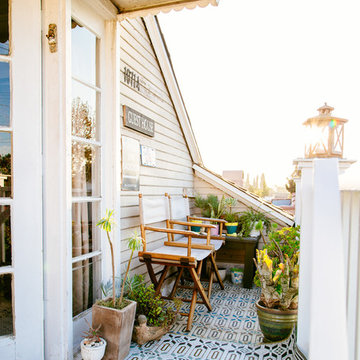
The Treehouse is the home I share with my daughter Miss Noa. It is our sanctuary and our refuge, our playhouse and our house of rest. It is carved out of the roof of a 100 year old craftsman home, so the spaces are all unique, and intimate, which I love. The colors I chose for the space are all slightly weathered as though they spent years in the sun. The vibe is bohemian, with all sorts of collected (Faith) and created (Noa) art. I have a passion for small spaces- they are just fun and playful, so to accentuate the element of play in the space we painted the ceiling with circus tent stripes in muted tones and turned my bedroom into a bedouin tent!
Photographed by Dabito
 Crisp Architects
Rob Karosis
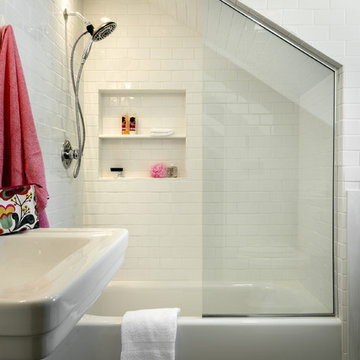
Inspiration for a small timeless white tile and ceramic tile ceramic tile bathroom remodel in New York with a pedestal sink, a two-piece toilet and white walls
Inspiration for a small timeless white tile and ceramic tile ceramic tile bathroom remodel in New York with a pedestal sink, a two-piece toilet and white walls

 Joel Contreras
Jason Roehner
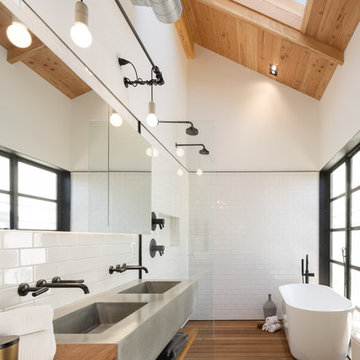
Bathroom - industrial white tile and subway tile medium tone wood floor bathroom idea in Phoenix with wood countertops, an integrated sink, white walls, flat-panel cabinets, medium tone wood cabinets and brown countertops
Bathroom - industrial white tile and subway tile medium tone wood floor bathroom idea in Phoenix with wood countertops, an integrated sink, white walls, flat-panel cabinets, medium tone wood cabinets and brown countertops
 BGI Design
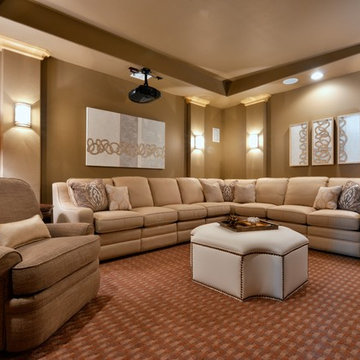
A faux leather ottoman with nailhead trim sits center stage, surrounded by a custom sectional with 3 reclining chairs. The adjacent club chair also reclines, offering plenty of relaxing viewing options. Custom art work adorns the walls and enhances the color scheme.
Michael Hunter Photography

 SF Design Build
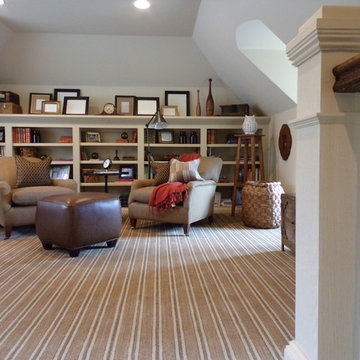
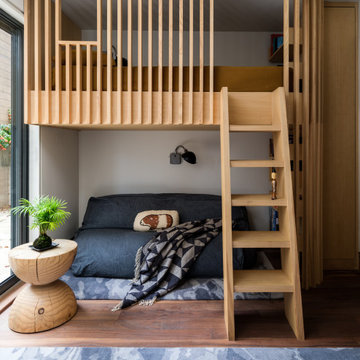
Example of an asian medium tone wood floor living room design in San Francisco with white walls
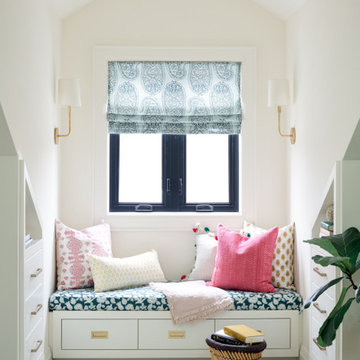
 Emily Griffin Design
This cozy and colourful window seat is the perfect place to curl up on and gaze out the window at the trees for a little daydreaming or to read a book. Designed by: Stephanie Houghton, principal partner at Emily Griffin Design.
 Curbio Home Improvement
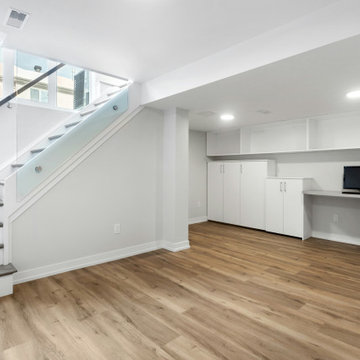
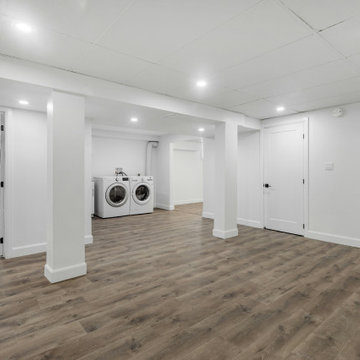
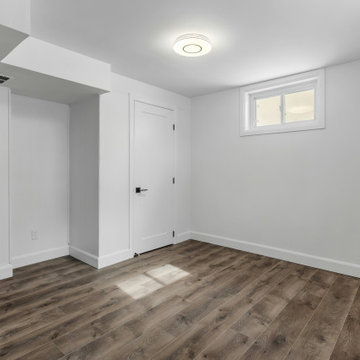
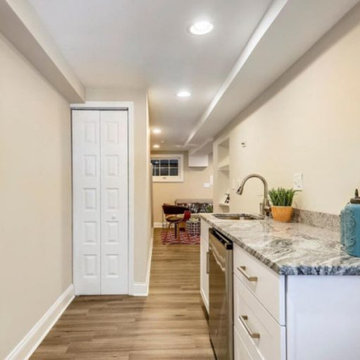
Unfinished basements and attics are fairly common. In fact, both spaces were originally intended to be left unfinished. As homeowner preferences change, and everyone seeks more space where they can find it, fully finished basements complete with bedrooms and attics finished off for office use are increasingly common.
Finishing your basement or attic can mean creating a flex space, an entertainment room, or even an in-law suite—but is it worth it to finish your basement right before you sell? In most cases, yes. Many basements and attics were originally left unfinished because, due to building codes, even if finished, the space would not count toward “livable” space, and therefore a listing’s square footage. That said, a finished basement or attic will certainly affect both your home’s appraisal and fair market values.
Basements and attics are often used to host guest bedrooms, office spaces, children’s playrooms, and/or entertainment rooms. As much of the country embraces more flexible work setups, including a lot of opportunities to work from home, finished basements and attics have risen in appeal.
The best way to find out exactly how much finishing your basement or attic will add to your re-sale value is to discuss the project with a licensed real estate agent who can show you the sale prices of comparable homes in your market both with and without finished basements and attics. When it comes to completing the work, your agent can work with Curbio to get the job done quickly so you can get on the market and sell quickly while maximizing your profits from the sale.
Sponsored
Columbus, OH
Free consultation for landscape design!

Peabody Landscape Group
Franklin County's Reliable Landscape Design & Contracting
 Curbio Home Improvement
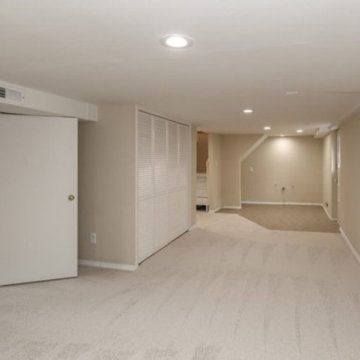
Unfinished basements and attics are fairly common. In fact, both spaces were originally intended to be left unfinished. As homeowner preferences change, and everyone seeks more space where they can find it, fully finished basements complete with bedrooms and attics finished off for office use are increasingly common.
Finishing your basement or attic can mean creating a flex space, an entertainment room, or even an in-law suite—but is it worth it to finish your basement right before you sell? In most cases, yes. Many basements and attics were originally left unfinished because, due to building codes, even if finished, the space would not count toward “livable” space, and therefore a listing’s square footage. That said, a finished basement or attic will certainly affect both your home’s appraisal and fair market values.
Basements and attics are often used to host guest bedrooms, office spaces, children’s playrooms, and/or entertainment rooms. As much of the country embraces more flexible work setups, including a lot of opportunities to work from home, finished basements and attics have risen in appeal.
The best way to find out exactly how much finishing your basement or attic will add to your re-sale value is to discuss the project with a licensed real estate agent who can show you the sale prices of comparable homes in your market both with and without finished basements and attics. When it comes to completing the work, your agent can work with Curbio to get the job done quickly so you can get on the market and sell quickly while maximizing your profits from the sale.
 Curbio Home Improvement
Unfinished basements and attics are fairly common. In fact, both spaces were originally intended to be left unfinished. As homeowner preferences change, and everyone seeks more space where they can find it, fully finished basements complete with bedrooms and attics finished off for office use are increasingly common.
Finishing your basement or attic can mean creating a flex space, an entertainment room, or even an in-law suite—but is it worth it to finish your basement right before you sell? In most cases, yes. Many basements and attics were originally left unfinished because, due to building codes, even if finished, the space would not count toward “livable” space, and therefore a listing’s square footage. That said, a finished basement or attic will certainly affect both your home’s appraisal and fair market values.
Basements and attics are often used to host guest bedrooms, office spaces, children’s playrooms, and/or entertainment rooms. As much of the country embraces more flexible work setups, including a lot of opportunities to work from home, finished basements and attics have risen in appeal.
The best way to find out exactly how much finishing your basement or attic will add to your re-sale value is to discuss the project with a licensed real estate agent who can show you the sale prices of comparable homes in your market both with and without finished basements and attics. When it comes to completing the work, your agent can work with Curbio to get the job done quickly so you can get on the market and sell quickly while maximizing your profits from the sale.
 Curbio Home Improvement
Unfinished basements and attics are fairly common. In fact, both spaces were originally intended to be left unfinished. As homeowner preferences change, and everyone seeks more space where they can find it, fully finished basements complete with bedrooms and attics finished off for office use are increasingly common.
Finishing your basement or attic can mean creating a flex space, an entertainment room, or even an in-law suite—but is it worth it to finish your basement right before you sell? In most cases, yes. Many basements and attics were originally left unfinished because, due to building codes, even if finished, the space would not count toward “livable” space, and therefore a listing’s square footage. That said, a finished basement or attic will certainly affect both your home’s appraisal and fair market values.
Basements and attics are often used to host guest bedrooms, office spaces, children’s playrooms, and/or entertainment rooms. As much of the country embraces more flexible work setups, including a lot of opportunities to work from home, finished basements and attics have risen in appeal.
The best way to find out exactly how much finishing your basement or attic will add to your re-sale value is to discuss the project with a licensed real estate agent who can show you the sale prices of comparable homes in your market both with and without finished basements and attics. When it comes to completing the work, your agent can work with Curbio to get the job done quickly so you can get on the market and sell quickly while maximizing your profits from the sale.
 Curbio Home Improvement
Unfinished basements and attics are fairly common. In fact, both spaces were originally intended to be left unfinished. As homeowner preferences change, and everyone seeks more space where they can find it, fully finished basements complete with bedrooms and attics finished off for office use are increasingly common.
Finishing your basement or attic can mean creating a flex space, an entertainment room, or even an in-law suite—but is it worth it to finish your basement right before you sell? In most cases, yes. Many basements and attics were originally left unfinished because, due to building codes, even if finished, the space would not count toward “livable” space, and therefore a listing’s square footage. That said, a finished basement or attic will certainly affect both your home’s appraisal and fair market values.
Basements and attics are often used to host guest bedrooms, office spaces, children’s playrooms, and/or entertainment rooms. As much of the country embraces more flexible work setups, including a lot of opportunities to work from home, finished basements and attics have risen in appeal.
The best way to find out exactly how much finishing your basement or attic will add to your re-sale value is to discuss the project with a licensed real estate agent who can show you the sale prices of comparable homes in your market both with and without finished basements and attics. When it comes to completing the work, your agent can work with Curbio to get the job done quickly so you can get on the market and sell quickly while maximizing your profits from the sale.

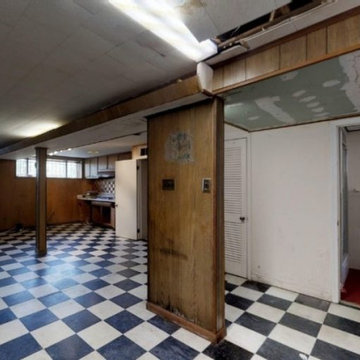 Curbio Home Improvement
Unfinished basements and attics are fairly common. In fact, both spaces were originally intended to be left unfinished. As homeowner preferences change, and everyone seeks more space where they can find it, fully finished basements complete with bedrooms and attics finished off for office use are increasingly common.
Finishing your basement or attic can mean creating a flex space, an entertainment room, or even an in-law suite—but is it worth it to finish your basement right before you sell? In most cases, yes. Many basements and attics were originally left unfinished because, due to building codes, even if finished, the space would not count toward “livable” space, and therefore a listing’s square footage. That said, a finished basement or attic will certainly affect both your home’s appraisal and fair market values.
Basements and attics are often used to host guest bedrooms, office spaces, children’s playrooms, and/or entertainment rooms. As much of the country embraces more flexible work setups, including a lot of opportunities to work from home, finished basements and attics have risen in appeal.
The best way to find out exactly how much finishing your basement or attic will add to your re-sale value is to discuss the project with a licensed real estate agent who can show you the sale prices of comparable homes in your market both with and without finished basements and attics. When it comes to completing the work, your agent can work with Curbio to get the job done quickly so you can get on the market and sell quickly while maximizing your profits from the sale.
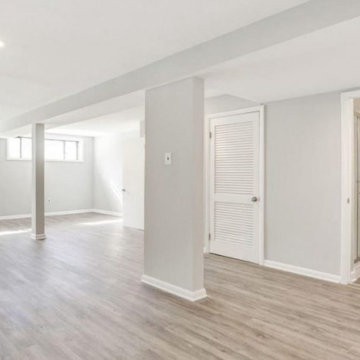 Curbio Home Improvement
Unfinished basements and attics are fairly common. In fact, both spaces were originally intended to be left unfinished. As homeowner preferences change, and everyone seeks more space where they can find it, fully finished basements complete with bedrooms and attics finished off for office use are increasingly common.
Finishing your basement or attic can mean creating a flex space, an entertainment room, or even an in-law suite—but is it worth it to finish your basement right before you sell? In most cases, yes. Many basements and attics were originally left unfinished because, due to building codes, even if finished, the space would not count toward “livable” space, and therefore a listing’s square footage. That said, a finished basement or attic will certainly affect both your home’s appraisal and fair market values.
Basements and attics are often used to host guest bedrooms, office spaces, children’s playrooms, and/or entertainment rooms. As much of the country embraces more flexible work setups, including a lot of opportunities to work from home, finished basements and attics have risen in appeal.
The best way to find out exactly how much finishing your basement or attic will add to your re-sale value is to discuss the project with a licensed real estate agent who can show you the sale prices of comparable homes in your market both with and without finished basements and attics. When it comes to completing the work, your agent can work with Curbio to get the job done quickly so you can get on the market and sell quickly while maximizing your profits from the sale.
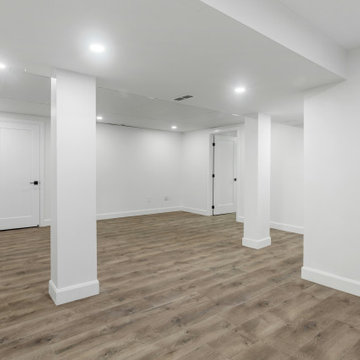 Curbio Home Improvement
Unfinished basements and attics are fairly common. In fact, both spaces were originally intended to be left unfinished. As homeowner preferences change, and everyone seeks more space where they can find it, fully finished basements complete with bedrooms and attics finished off for office use are increasingly common.
Finishing your basement or attic can mean creating a flex space, an entertainment room, or even an in-law suite—but is it worth it to finish your basement right before you sell? In most cases, yes. Many basements and attics were originally left unfinished because, due to building codes, even if finished, the space would not count toward “livable” space, and therefore a listing’s square footage. That said, a finished basement or attic will certainly affect both your home’s appraisal and fair market values.
Basements and attics are often used to host guest bedrooms, office spaces, children’s playrooms, and/or entertainment rooms. As much of the country embraces more flexible work setups, including a lot of opportunities to work from home, finished basements and attics have risen in appeal.
The best way to find out exactly how much finishing your basement or attic will add to your re-sale value is to discuss the project with a licensed real estate agent who can show you the sale prices of comparable homes in your market both with and without finished basements and attics. When it comes to completing the work, your agent can work with Curbio to get the job done quickly so you can get on the market and sell quickly while maximizing your profits from the sale.
47