
Search results for "Before buying" in Home Design Ideas
 Architecture Stones
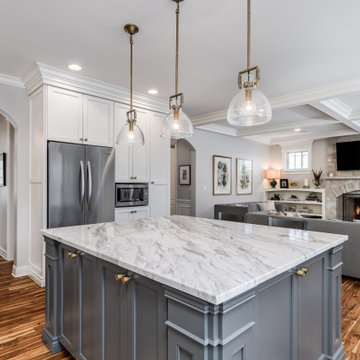
Marble vs granite vs quartz: It is important to know what type of countertop to choose before buying and installing it. Quartz countertops are a great option if you are looking for a very particular color and sustainability. Granite countertops and marble countertops are a great option for those who are looking for an economical option. They are the beauty of Earth and have natural colors, but they will need more attention and care. The Architecture Stones shop has it’s production warehouse on site where the cutting and fabrication of quartz countertops, granite countertops, porcelain countertops, quartzite countertops along with marble countertops etc. takes place and if one wants to buy a natural stone shelf, a stone slab, a stone sink, a shower bench, kitchen shelves, a stone table top, order a fire place mantel or a fireplace tile, a kitchen backsplash, stone tile, or a vanity top we are happy to help our customers from the DC Metro Area.

 safe ZOnea
Every year, the same thing happens. The first real snowfall arrives, demand for de-icing materials spikes overnight, and the businesses that waited too long find themselves scrambling for supply at the worst possible moment. Facility managers, property owners, contractors, and municipalities all depend on a steady supply of salt and ice melt to keep their properties safe and operational through winter. The ones who plan ahead sail through. The ones who don't pay more, wait longer, and take on real risk.
Sourcing de-icing materials well is not complicated, but it does require thinking ahead and understanding the options. The choices you make about what to buy, how to buy it, and who to buy it from have a direct effect on your costs, your reliability, and your ability to keep people safe when conditions turn dangerous. This article lays out what matters.
Why Your Choice of Supplier Matters More Than You Think
It is easy to treat de-icing material as a commodity, something you grab whenever you need it without much thought about where it comes from. That works fine until the moment it doesn't, usually in the middle of a storm when everyone needs supply at once and the casual sources have run dry. At that point, the relationships you built before the season become the difference between staying stocked and being stuck.
Reliable supply is the whole game in winter operations. A property that runs out of ice melt during a storm faces safety hazards, liability exposure, and disruption, none of which can wait for a back-ordered shipment. This is why establishing relationships with dependable rock salt suppliers before the season starts is one of the smartest moves a facility manager or contractor can make. It locks in supply, often locks in better pricing, and removes a major source of mid-winter stress.
The lesson here is to treat sourcing as a planning decision rather than a last-minute errand. The businesses that come through winter smoothly are almost always the ones that secured their supply chain early, chose suppliers who could actually deliver when it counted, and never had to gamble on finding material during a shortage. Reliability bought in advance is far cheaper than scarcity paid for in a crisis.
Bagged or Bulk: Matching the Material to the Job
One of the first practical decisions is whether to buy de-icing material in bags or in bulk, and the right answer depends entirely on the operation. Each format has clear advantages, and many operations end up using both for different purposes.
Bagged material offers convenience, control, and easy storage. It is simple to handle, easy to distribute to different locations or crews, straightforward to store without special equipment, and convenient for spot application by hand. It suits smaller properties, businesses without bulk storage, and situations where portion control and tidiness matter. Bulk material, on the other hand, tends to make sense for large operations that go through high volumes, where buying in quantity lowers the per-unit cost and the operation has the equipment and space to store and handle it. The tradeoff is between the convenience and flexibility of bags and the volume economics of bulk.
For many operations, the right approach is a mix: bulk for the high-volume core of the work and bags for flexibility, spot treatment, and locations where bulk handling is impractical. The key is to match the format to how the material will actually be stored, moved, and applied, rather than defaulting to one or the other out of habit. Thinking this through in advance avoids both the waste of over-buying bulk you can't handle and the expense of relying entirely on bags for a large operation.
Rock Salt Is Not Your Only Option
Rock salt, or sodium chloride, is the workhorse of winter de-icing for good reason. It is effective, widely available, and cost-efficient, which makes it the default choice for most operations most of the time. But it has limits, and understanding the alternatives helps you choose the right material for the conditions you actually face.
The most important limitation is temperature. Rock salt becomes less effective as temperatures drop, and in genuinely cold conditions it can struggle to do the job at all. This is where alternatives come in. Calcium chloride, for instance, works at much lower temperatures than rock salt and acts quickly, which makes it valuable when conditions are severe or when fast melting matters. Operations that face hard freezes or need dependable performance in extreme cold often keep calcium chloride for sale on hand for exactly those situations, using it alongside rock salt rather than instead of it.
The practical approach is to understand the conditions your property faces and stock accordingly. For many operations, rock salt handles the bulk of the work while a faster, colder-rated material like calcium chloride covers the extreme days when ordinary salt falls short. Matching the material to the temperature and the urgency of the situation is what separates an operation that stays ahead of winter from one that is constantly reacting to it.
Securing Your Supply Before the Season
Knowing what to buy is only half the equation. The other half is making sure you can actually get it when you need it, which means securing your supply before winter arrives rather than after it has already started. Timing is one of the most underrated factors in winter operations.
The logic is simple. Demand for de-icing materials is highly seasonal and spikes sharply during storms, when everyone needs supply simultaneously. Prices and availability both move against the buyer at exactly those moments. By contrast, planning ahead, estimating your needs and arranging supply before the season, puts you in a far stronger position. Working with established rock salt suppliers ahead of time means your material is accounted for before the rush, often at better pricing and with the confidence that it will be there when the first storm hits.
This kind of planning also lets you think clearly rather than react under pressure. You can estimate your seasonal needs based on your property and past winters, decide on the right mix of materials and formats, and arrange storage in advance. Operations that do this consistently spend less, worry less, and never find themselves making frantic calls during a storm. The effort of planning ahead is modest, and the payoff in reliability and cost savings is substantial.
Storing and Handling What You Buy
Securing supply is not much use if the material degrades before you can use it, which makes proper storage and handling an important and often overlooked part of the equation. De-icing materials are sensitive to moisture, and poor storage can turn a good supply into a clumped, hardened mess that is difficult to apply.
The fundamentals are straightforward. Keep material dry and protected from moisture, since salt and ice melt readily absorb water and can harden if exposed. Store it in a way that suits the format, whether that means a proper bulk storage area or a dry space for stacked bags. Keep it accessible, so crews can get to it quickly when a storm hits and time is short. And handle it with the right equipment for the format and volume, which protects both the material and the people working with it. None of this is complicated, but neglecting it can undermine even a well-planned supply.
Good storage practices protect the investment you made in securing supply early. There is little point in arranging your materials ahead of the season only to have them degrade before use. Treating storage and handling as part of the overall plan, rather than an afterthought, ensures that the material you secured is actually usable when the moment comes. It is the final link in a supply chain built to perform under winter conditions.
Estimating How Much You Actually Need
One question trips up operations of every size: how much de-icing material to buy. Order too little and you risk running short during a storm. Order too much and you tie up money and storage space in material you may not use. Getting the estimate reasonably right is a meaningful part of sourcing well.
Several factors shape the answer. The size and type of the areas you treat, sidewalks, lots, entrances, and drive lanes, set the baseline for how much material each application consumes. The local climate matters too, since colder regions and those with frequent snowfall go through far more material than milder ones. Application frequency depends on how often storms hit and how quickly surfaces need to be cleared, which varies with the kind of property and the expectations of the people who use it. And the type of material plays a role, since different products are applied at different rates.
Past experience is often the best guide. Operations that track what they used in previous winters, adjusted for the size of the property and the severity of the season, can estimate their needs with reasonable confidence. For newer operations without that history, it helps to plan conservatively and to work with a supplier who can replenish stock reliably, so that a low estimate does not turn into a mid-storm shortage.
The goal is not perfect precision but a sound, slightly cautious estimate paired with a dependable supply relationship. That combination lets an operation keep enough material on hand to handle the season without over-committing to volume it cannot store or use. Thinking this through before winter, rather than guessing during it, is one more way that planning ahead pays off when the snow starts to fall.
The Bottom Line
Sourcing de-icing materials well comes down to a few straightforward principles: plan ahead, choose reliable suppliers before the season, match your materials and formats to your actual needs and conditions, and store what you buy properly. The operations that follow these principles move through winter with confidence, while those that improvise pay more and take on needless risk.
Winter is predictable in one respect: it arrives every year, and demand for de-icing material spikes the moment it does. The businesses that prepare for that reality, rather than being surprised by it, are the ones that keep their properties safe, their costs controlled, and their operations running no matter what the season throws at them. A little foresight before the first snowfall pays off through every storm that follows.

 Design Vision Studio
IDS (Interior Design Society) Designer of the Year - National Competition - 2nd Place award winning Kitchen ($30,000 & Under category)
Photo by: Shawn St. Peter Photography -
What designer could pass on the opportunity to buy a floating home like the one featured in the movie Sleepless in Seattle? Well, not this one! When I purchased this floating home from my aunt and uncle, I undertook a huge out-of-state remodel. Up for the challenge, I grabbed my water wings, sketchpad, & measuring tape. It was sink or swim for Patricia Lockwood to finish before the end of 2014. The big reveal for the finished houseboat on Sauvie Island will be in the summer of 2015 - so stay tuned.
Find the right local pro for your project

 Tiny Little Pads
Design ideas for a mid-sized eclectic painted wood floor and partial sun gender-neutral outdoor playset in Las Vegas with gray walls.

 Dream Kitchens
Example of a mid-sized mountain style master white tile mosaic tile floor and blue floor freestanding bathtub design in Detroit with recessed-panel cabinets, brown cabinets, blue walls, a vessel sink, wood countertops, a hinged shower door and brown countertops

 Angelo's Marble & Granite Inc.
Inspiration for a timeless u-shaped kitchen remodel in Philadelphia with a farmhouse sink and granite countertops
 User
UserPhoto: Ten Ten Creative
Wet bar - transitional single-wall dark wood floor and brown floor wet bar idea in Dallas with shaker cabinets, black cabinets, black backsplash, subway tile backsplash and gray countertops
Wet bar - transitional single-wall dark wood floor and brown floor wet bar idea in Dallas with shaker cabinets, black cabinets, black backsplash, subway tile backsplash and gray countertops



 Turk Interiors
Large arts and crafts master beige tile and mosaic tile limestone floor and gray floor freestanding bathtub photo in Denver with shaker cabinets, an undermount sink, soapstone countertops, medium tone wood cabinets, a two-piece toilet, beige walls, a hinged shower door and gray countertops


 WPL Interior Design
 A grand home on Philadelphia's Main Line receives a freshening up when clients buy an old home and bring in their previous traditional furnishings but add lots of new contemporary and colorful furnishings to bring the house up to date. The Master Sitting room in beige and gray with yellow accents is a great place for a quiet repose before settling into bed in the large master bedroom suite. Jay Greene Photography

 Modern Nest
Zeke Ruelas
Mid-sized trendy backyard gravel patio photo in Los Angeles with a fire pit and no cover
Mid-sized trendy backyard gravel patio photo in Los Angeles with a fire pit and no cover

 InnovationLand
This Houston outdoor kitchen and entertaining area offers a modern take on Mediterranean style.
Designed and built by Outdoor Homescapes of Houston, this fully loaded family and entertaining space echoes the stucco, travertine tile patio and Mediterranean style of the existing home while exuding a more modern, transitional style.
“This was a high-profile client – both VPs of different oil and gas companies who entertain affluent guests on a regular basis – so they wanted to make sure they had high-end appliances and all the latest amenities they could order,” says Lisha Maxey, senior designer for Outdoor Homescapes and owner of LGH Design Services in Houston. “They also have two kids, ages 7 and 10, and wanted a family gathering space that better accompanied their new, luxurious pool.”
What really sets apart this outside kitchen design idea, however, is the way the elements are used throughout the space.
“Usually, outdoor kitchen designs for a backyard are grouped into one island or cabinet,” explains Outdoor Homescapes of Houston owner Wayne Franks. “But here, the patio, roof and fireplace were all in place, separated by stucco columns, and the outdoor kitchen elements had to work around them.”
A 14-foot-long cooking island houses a built-in Fire Magic grill with a Magic View Window (allows the chef to check on food without lifting the lid and losing valuable heat). The island, the countertop of which is "Carnaval" granite from Lackstone, also features a Fire Magic power burner, warming drawer and trash drawer. On one side of the fireplace, forming an “L” with the cooking island, sits a built-in Primo ceramic grill.
On the other side of the fireplace is a 3-foot-long cabinet housing a bar with a wine cooler, ice maker and upper cabinet. And finally, just outside the patio door is a 7-foot-long cabinet with a modern Kohler sink with a high-arc Moen faucet (sink and faucet from Faucets Direct), a trash drawer and another upper cabinet.
Outdoor Homescapes of Houston, by the way, outfitted both cabinets with glass inserts, custom pulls and three-way sensor lighting.
“At the beginning, this was basically a blank space with a fireplace in the middle,” says Maxey. So Outdoor Homescapes upgraded the fireplace with Austin Stack Stone in white (No. 401) from Colorstonescreenshot vickers mosaic tile rectangle. "The stone added that pop,” notes Maxey.
The fireplace’s espresso-colored, distressed wood mantel (from Mantels.com) and upper wood cabinets were both stained with the Minwax color Jacobean. The ceiling fans were also updated with ones featuring similarly espresso-colored, wooden fan blades, to match.
The table in the middle - a cast-iron, Mediterranean style gem with hand-forged scrollwork designs from Patio 1 in Houston – seats 10.
“We wanted this kind of Mediterranean feel,” says Maxey. “We wanted rustic, but the appliance package was so new, with all its stainless steel, so we kept a the cabinets and the columns stucco instead of stone for a more clean, modern look and then did the custom tile backsplash and mosaic in more of a rustic, Mediterranean look."
The backsplash is a 1-inch travertine tile background with 4-inch square metallic insets, both from Floor & Decor. The tile for the 18-by-24-inch rectangle mosaic came from Great Britain Tile Co. and included a Dianno Reale tumbled border and background. The bronze, diamond-shaped insets are tumbled Dark Emperdor tile and the scrolls are tumbled Noce tile.
The client, who admits they have high standards, was more than pleased with the project – especially browsing through Outdoor Homescapes’ vast library of patio kitchen design ideas, the 3D virtual video tour that let them preview the project from every angle before construction. They also liked the personalized design consultation.
"OH provides a very neat service where one of their designers will either shop/buy for you or shop with you for the more detailed pieces that will finish your home," reads the client's review on Houzz. "This was a very positive, personalized feature ... Lisha helped narrow down an enormous marketplace of materials and finishes to a few we could choose from."
 Mastercraft Shutters & Blinds
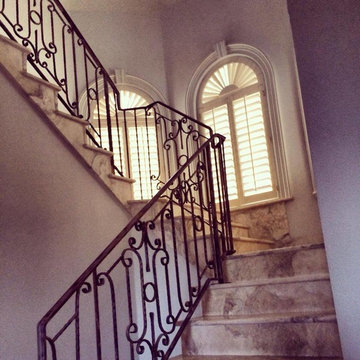
With our company selling both poly shutters and wood shutters customers often ask which material is better for shutters. Most companies would tell you that one or the other is a better product depending on what they sell. We think this is the wrong approach and it reminds me of the saying "when the only tool you possess is a hammer, you tend to perceive all of your problems as nails".
Before there was poly or faux plantation shutters, products that were created in an effort to produce a more cost effective imitation to the real thing, there was wooden plantation shutters. Why do people choose to buy imitation when the real thing is available for purchase? Simply because they are convinced that the imitation plantation shutters are just as good if not better, but facts being what they are, there is nothing like the real thing. Wood plantation shutters are, and always will be, the most sturdy and durable of all the plantation shutters.


 JandB Kitchen Designs
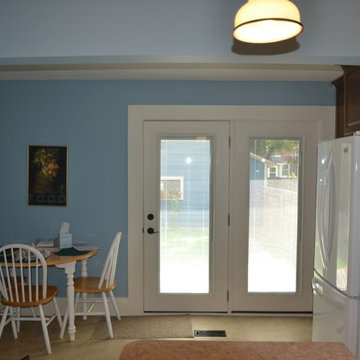
WE'VE BEEN DOING A GOOD AMOUNT OF APRON (FARM) SINKS OVER THE LAST FEW YEARS.....THERE'S AN ABUNDANCE OF SIZES AND MATERIALS AVAILABLE.....THIS IS BLANCO'S "SILGRANIT" WHICH IS AVAILABLE ON ALL STYLE SINKS AND IN MANY COLORS......ALWAYS HAVE THE STRAINER TOWARDS THE BACK.....BE SURE TO BUY A SINK THAT HAS MATCHING GRIDS FOR THE BOTTOM.....KEEPS YOUR SINK SCRATCH-FREE.

 Alice Welborn
Rarely do we find a piece that stands the test of time like the Wood Pyramid Dining Side Bar Stool. The design was the result of a desire to develop an organically flowing design that advanced the art of creativity. These ambitions thus led to the development of the deep seat pocket, and waterfall seat edge chair, that you see before you. Pyramid is made with a durable molded plastic top and solid wood legs with foot caps to prevent scratching and is perfect for bar seating areas.
Buy Now
OVERALL PRODUCT DIMENSIONS
20.5"L x 21.5"W x 44"H
SEAT DIMENSIONS
29.5"H
BACKREST DIMENSIONS
14.5"H
BASE DIMENSION
20.5"W


 Taylor Made Custom Contracting Inc.
Wanting to live closer to their adult children, our clients decided to buy a home in Bel Air and move from Florida. However, before the actual relocation, they chose to remodel the entire home utilizing their artistic style.
In the kitchen, a wall was removed in order to create a large breakfast area. Instead of installing wall cabinets, an iron and wood open shelf was placed in the corner above the Caesarstone countertop and white base cabinets. On the oven wall, black chalkboard paint was designed as a backdrop to the uniquely designed white mosaic tiles and wooden shelves. A large French door-styled pantry cabinet with wide drawers was built next to the stainless steel refrigerator with wood shelving and a wine rack above.

 Taylor Made Custom Contracting Inc.
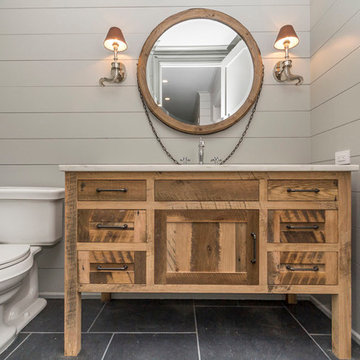
Wanting to live closer to their adult children, our clients decided to buy a home in Bel Air and move from Florida. However, before the actual relocation, they chose to remodel the entire home utilizing their artistic style.
In the kitchen, a wall was removed in order to create a large breakfast area. Instead of installing wall cabinets, an iron and wood open shelf was placed in the corner above the Caesarstone countertop and white base cabinets. On the oven wall, black chalkboard paint was designed as a backdrop to the uniquely designed white mosaic tiles and wooden shelves. A large French door-styled pantry cabinet with wide drawers was built next to the stainless steel refrigerator with wood shelving and a wine rack above.

 Karndean Designflooring
Texas White Ash is a light-tone plank, ideal for elegant interiors. The original wood planks were only slightly enhanced to allow the neutral color tones to come through. The straight grain detailing adds a crisp, clean finish to any interior.
 Alice Welborn
Rarely do we find a piece that stands the test of time like the Wood Pyramid Dining Side Bar Stool. The design was the result of a desire to develop an organically flowing design that advanced the art of creativity. These ambitions thus led to the development of the deep seat pocket, and waterfall seat edge chair, that you see before you. Pyramid is made with a durable molded plastic top and solid wood legs with foot caps to prevent scratching and is perfect for bar seating areas.
Buy Now
OVERALL PRODUCT DIMENSIONS
20.5"L x 21.5"W x 44"H
SEAT DIMENSIONS
29.5"H
BACKREST DIMENSIONS
14.5"H
BASE DIMENSION
20.5"W
15