
Search results for "Common mistakes" in Home Design Ideas

 The Kitchen Company
A timeless kitchen designed by Ron Fisher with three different countertops and two islands blends seamlessly into this beautiful home in Cheshire Connecticut.

 The Cabinetry
Photography by Tara L. Callow
Inspiration for a mid-sized transitional l-shaped brown floor and dark wood floor kitchen remodel in Boston with an undermount sink, shaker cabinets, white cabinets, quartzite countertops, ceramic backsplash, stainless steel appliances, an island and white backsplash
Inspiration for a mid-sized transitional l-shaped brown floor and dark wood floor kitchen remodel in Boston with an undermount sink, shaker cabinets, white cabinets, quartzite countertops, ceramic backsplash, stainless steel appliances, an island and white backsplash

 Borab Landscape Inc.
Creative solution with lattice and mandevilla on a blank garage wall facing a pool area.
Find the right local pro for your project
 Ainslie-Davis Construction
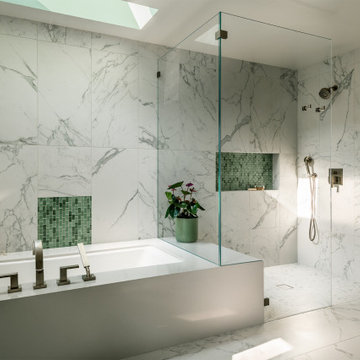
Walk-in shower - transitional white tile white floor walk-in shower idea in Seattle with an undermount tub, a hinged shower door and a niche

 Los Angeles Pool Builders, Inc
Pool - large modern backyard tile and rectangular infinity pool idea in Los Angeles

 CTA Design Builders, Inc.
The new design brings in an abundance of natural light, a mix of modern and classic materials, and a touch of steel for a clean, contemporary feel.
Photo: Michael Cole

 PK Painting and Contracting LLC
Common Mistakes in Exterior Door Refinishing
Refinishing an exterior wood door is an excellent way to prolong it’s lifespan while improving its appearance. However, there are a few common mistakes that can render a refinishing ineffective, or even damage your door. Learn what to avoid while working on your exterior wood door to ensure a successful refinishing.
1. Poor Sanding
Sanding against the grain or leaving power sander marks can leave unsightly marks on the surface that will appear in the finished product. Pay attention to how you’re sanding, and use finer grit sandpaper to eliminate any marks.
2. Scratching the Glass
Leaving glass unprotected during the sanding process can result in accidentally scratching the surface. These marks are difficult to remove, and can be avoided by simply protecting the glass before you sand.
3. Bad Varnish
A varnish could be bad for a variety of reasons; bad prep work, mixing incompatible products, etc. Make sure you know the product you are working with, and do not cut corners.
4. Sanding Through the Veneer
Many exterior doors are constructed from a solid core with a decorative veneer applied on top. Sanding too far into the veneer can show unsightly layers and seriously reduce the lifespan of your door. Know how your door is made, and don’t sand too much.
 Studio Shelter
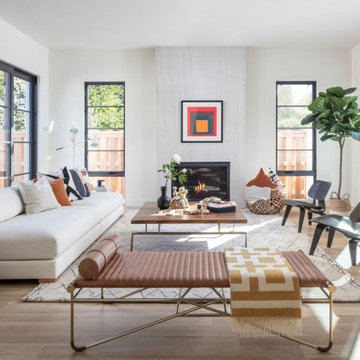
French modern home, featuring living, stone fireplace, and sliding glass doors.
Large trendy formal and open concept light wood floor and beige floor living room photo in Denver with white walls, a standard fireplace, a stone fireplace and no tv
Large trendy formal and open concept light wood floor and beige floor living room photo in Denver with white walls, a standard fireplace, a stone fireplace and no tv


 Sarah Seung-McFarland
Photo: Sarah Seung McFarland © 2017 Houzz
Design: Bento Designs
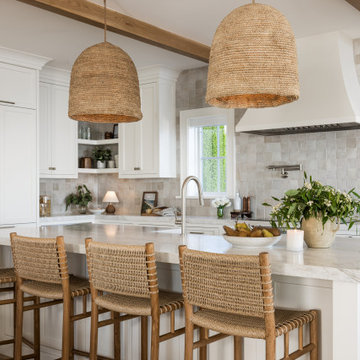
Living room - industrial living room idea in New York
Living room - industrial living room idea in New York



 Round Table Design
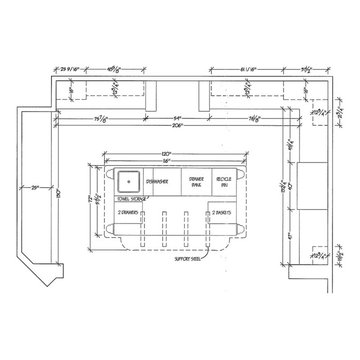
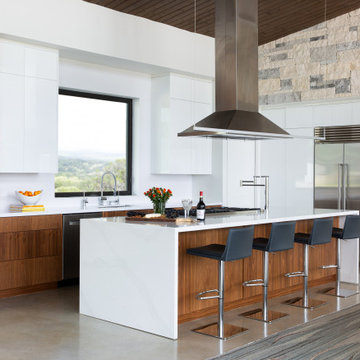
The open concept kitchen was designed to keep everything off the countertops,! All small appliances are hidden in functional areas. The beautiful Walnut Veneer Cabinets are punctuated but the high gloss white, touch latch, flush cabinets

 Allevin Creative
Open concept kitchen - contemporary open concept kitchen idea in Seattle with open cabinets, multicolored backsplash, stainless steel appliances and an island

 JASMIN REESE INTERIORS
Inspiration for a timeless l-shaped medium tone wood floor and brown floor kitchen remodel in Chicago with an undermount sink, recessed-panel cabinets, white cabinets, white backsplash, subway tile backsplash, stainless steel appliances, an island and white countertops
 M Atelier
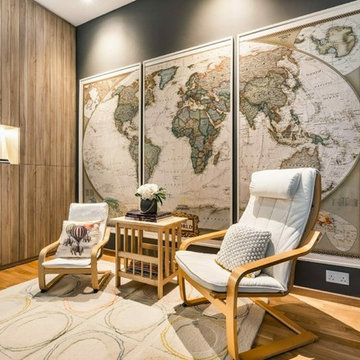
If there is one big mistake that homeowners make when carrying out the decoration tasks of their interior design project, that would be over-accessorising. Indeed, experts in interior design in Singapore agree that there are styles where “more is more,” and there are also those where “less is more.”
While as a homeowner you may choose either of these two style directions, you should first think about the different aspects of interior design and make sure that your style choice fits with these elements. Not doing so may not only result to a poorly executed renovation, but a home that you will find uncomfortable to live in.
So how do you avoid the tendency of over-accessorising? You may want to follow these pieces of advice coming from professionals in interior design in Singapore:
Mistake #1: Using the same fabric on almost all surfaces.
It is common practice among most homeowners to use almost the same fabric on all table surfaces, and sometimes even on sofa covers and drapes. Indeed, this can be cost effective, but it does not contribute to the development of the home’s overall design.
This is because there are fabrics are created to meet specific purposes. For example, lace is often used as table runners, as they give more definition and style to these specific furniture pieces. However, they do not do your windows any favours when used as curtains.
Opaque and heavy fabrics are often intended for curtains and drapes for rooms that require more privacy; in contrast, sheer and fabric materials are more suited for living room windows as they allow natural light and ventilation to move around the house.
Mistake #2: Placing more accents than you actually need.
Another mistake which homeowners are prone to make when decorating their home is placing more accents than needed. There are homes you can see side tables that are overpopulated with picture frames, trinkets, and fancy souvenirs that do not have any connection to each other. Sometimes, you can find numerous throw pillows occupying almost the entire sofa, to the point that all the seats are already occupied.
These are classic examples of “fear of empty spaces,” which is prevalent in most Asian societies, and even in some Western countries. But while it is common practice to occupy empty spaces, you may also want to think about what to do with the space first.
Instead of piling up all your memorabilia in the side tables of your bedroom or living room, why not use a tiered stand so that they can be presented in an organised manner? You may also want to choose a designated area for your trinkets, such as a wall or an unoccupied corner in your room.
Mistake #3: Overdoing the lighting fixtures.
Some homeowners want to imitate the homes of the celebrities they see on TV, and apart from following the same colour schemes and choice of furniture, they also choose to add more lights in their rooms than necessary.
Well, you should understand that the purpose of lighting fixtures is to illuminate the rooms of the house, but this doesn’t mean that you have to brighten up your home all the time. You may want to use lamps that spread the light across the room, rather than several smaller bulbs. The latter only lights up specific parts of the room, and when all these bulbs are lit simultaneously, they only spike up your electric bill.
It would be better to choose lighting fixtures according to your need and the function of the room. Doing so not only illuminates your home properly, but also creates an ambiance that gives you the comfort you are looking for in a dwelling space.


 Dirty Dirt Soil Company
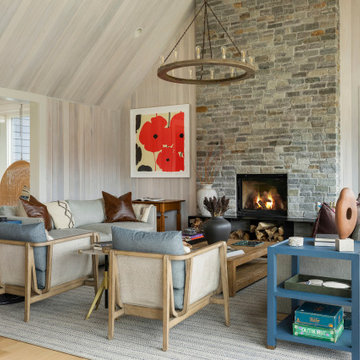
Choosing the right soil starts with knowing where you are going to use it. Potting soil is designed for containers, raised bed soil is formulated for raised gardens, and garden or bed-building soil is intended for in-ground or landscape applications. While the products may look similar, they are designed for different growing environments.
Using the right soil can give plants a better foundation and help gardeners avoid a common mistake: assuming that one type of soil works equally well everywhere.
For gardeners in Houston and throughout Texas, where heat, heavy rain, drought and challenging native soils can all affect growing conditions, choosing the right soil for the job is particularly important.
 Dirty Dirt Soil Company
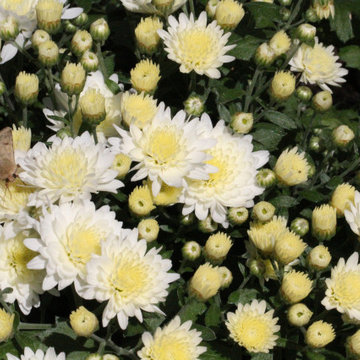
Choosing the right soil starts with knowing where you are going to use it. Potting soil is designed for containers, raised bed soil is formulated for raised gardens, and garden or bed-building soil is intended for in-ground or landscape applications. While the products may look similar, they are designed for different growing environments.
Using the right soil can give plants a better foundation and help gardeners avoid a common mistake: assuming that one type of soil works equally well everywhere.
For gardeners in Houston and throughout Texas, where heat, heavy rain, drought and challenging native soils can all affect growing conditions, choosing the right soil for the job is particularly important.

2