
Search results for "Reassembling" in Home Design Ideas
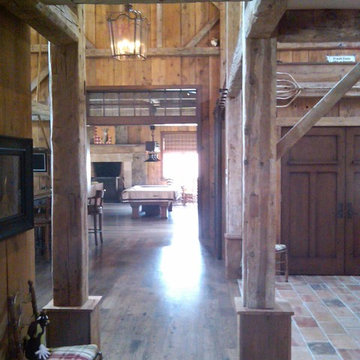
 Damian Farrell Design Group
Looking down towards the game room from the home's great room. It's a 100+ year old barn, that was purchased by the clients, disassembled, cleaned and pressure treated, and reassembled at its new location. Antique farming implements adorn the walls.
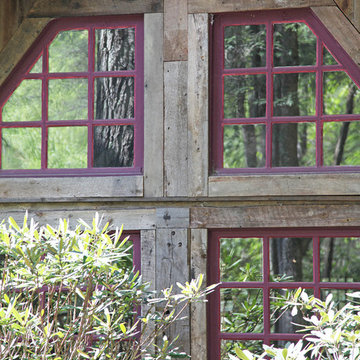
 MossCreek
This MossCreek custom designed family retreat features several historically authentic and preserved log cabins that were used as the basis for the design of several individual homes. MossCreek worked closely with the client to develop unique new structures with period-correct details from a remarkable collection of antique homes, all of which were disassembled, moved, and then reassembled at the project site. This project is an excellent example of MossCreek's ability to incorporate the past in to a new home for the ages. Photo by Erwin Loveland
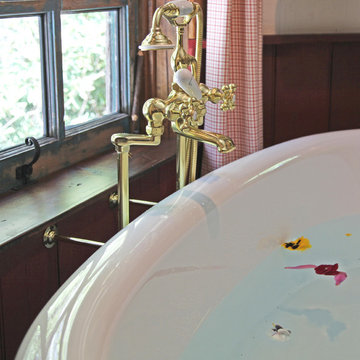 MossCreek
This MossCreek custom designed family retreat features several historically authentic and preserved log cabins that were used as the basis for the design of several individual homes. MossCreek worked closely with the client to develop unique new structures with period-correct details from a remarkable collection of antique homes, all of which were disassembled, moved, and then reassembled at the project site. This project is an excellent example of MossCreek's ability to incorporate the past in to a new home for the ages. Photo by Erwin Loveland
Find the right local pro for your project
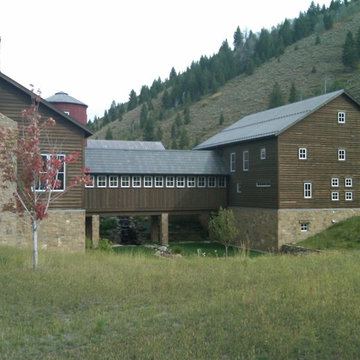 Damian Farrell Design Group
This home is nestled in a charming Idaho Valley, and references the local rustic, ranch aesthetic. Local Idaho granite was used for the stone base. The main structures are "reclaimed" barns from that were painstakingly disassembled, pressure treated, moved, and reassembled on the new site. A covered bridge connects the bedrooms to the busier, less private rest of the home.
 User
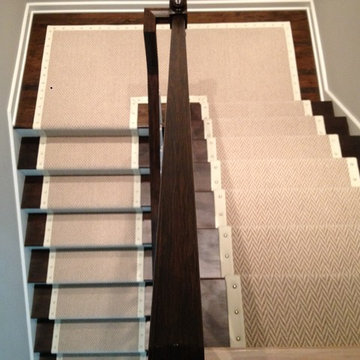
UserWool Patterned Field Carpet with Linen Wide Binding & Chrome Upholstery Nails
Mid-sized transitional carpeted u-shaped staircase photo in Chicago with carpeted risers
Mid-sized transitional carpeted u-shaped staircase photo in Chicago with carpeted risers
 MossCreek
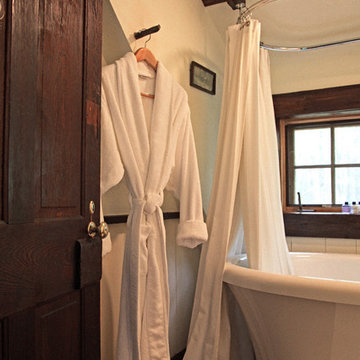
This MossCreek custom designed family retreat features several historically authentic and preserved log cabins that were used as the basis for the design of several individual homes. MossCreek worked closely with the client to develop unique new structures with period-correct details from a remarkable collection of antique homes, all of which were disassembled, moved, and then reassembled at the project site. This project is an excellent example of MossCreek's ability to incorporate the past in to a new home for the ages. Photo by Erwin Loveland
 Designer's Touch
In this project. All the pre-existing woodwork (doors, trims, baseboards and bookcases) were taken down carefully and reassembled in order to maintain the old Cambridge house beauty. The owners did not like the idea of a TV dominating a space; of it being a focal point in a living room. So therefore we designed the sliding panel which displays one of their special paintings when the TV is not use.
In an open concept living space, one challenge is creating a sense of separate rooms with different functions but with an overall “feel” of it being one. I believe we achieved that. The gold tones dining room chandelier and the teal wallpaper in the dining room, which is such a rich, inviting color, distinguishes that room from the kitchen but complements it, and then the teal chairs in the living room carry that color theme there.
 Answer The Home
How To Remove Stopper From Pedestal Sink: An Easy Step By Step DIY Guide
By
Jen William
November 13, 2021
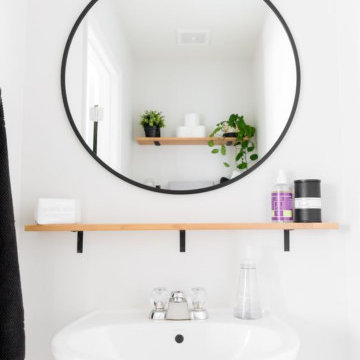
From a statistical viewpoint, we use our sink on an hourly basis. And most of us are familiar with a clogged sink due to a stuck or worn stopper. Do you call a plumber on such occasions? If that’s the case, we can assure you that you can solve it by yourself. And to prep you up, today we shall explain how to remove stopper from pedestal sink deftly in simple steps.
Moreover, minute wastes gradually jam the drain tube. Under this situation, we must unhook the stopper to clear the drain tube. Plus, a pop-up assembly eventually frays when it needs to be changed. So, for your convenience, we have also discussed how to change and reassemble the stopper.
 VINT NYC
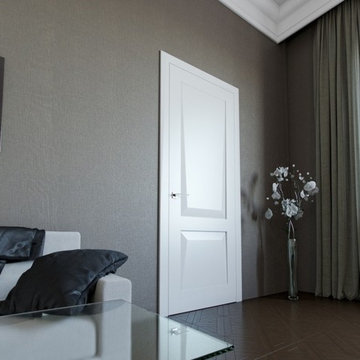
Novara is a new model with a state of art design and a winner of young designers competition "Wood Fashion 2014". There’s no more similar shapes in the world!
We provide door design and manufacturing solution by your description or sketch.
Handmade solid alder wood. In order to remove the wood tension, the timber is cut and reassembles with individual slats. This technique makes the door protected from cracking or bending of doors during lifetime.
The door glass has a 5/16 thickness with satin inside. Different lighting makes it look in a different hue.
Paints are coming from Milesi, the leading Italian manufacturer of environmentally friendly harm-free product.
 VINT NYC
Novara is a new model with a state of art design and a winner of young designers competition "Wood Fashion 2014". There’s no more similar shapes in the world!
We provide door design and manufacturing solution by your description or sketch.
Handmade solid alder wood. In order to remove the wood tension, the timber is cut and reassembles with individual slats. This technique makes the door protected from cracking or bending of doors during lifetime.
The door glass has a 5/16 thickness with satin inside. Different lighting makes it look in a different hue.
Paints are coming from Milesi, the leading Italian manufacturer of environmentally friendly harm-free product.
 Designer's Touch
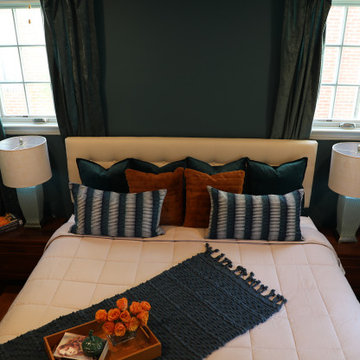
In this project. All the pre-existing woodwork (doors, trims, baseboards and bookcases) were taken down carefully and reassembled in order to maintain the old Cambridge house beauty. The owners did not like the idea of a TV dominating a space; of it being a focal point in a living room. So therefore we designed the sliding panel which displays one of their special paintings when the TV is not use.
In an open concept living space, one challenge is creating a sense of separate rooms with different functions but with an overall “feel” of it being one. I believe we achieved that. The gold tones dining room chandelier and the teal wallpaper in the dining room, which is such a rich, inviting color, distinguishes that room from the kitchen but complements it, and then the teal chairs in the living room carry that color theme there.
 Benham Design Concepts
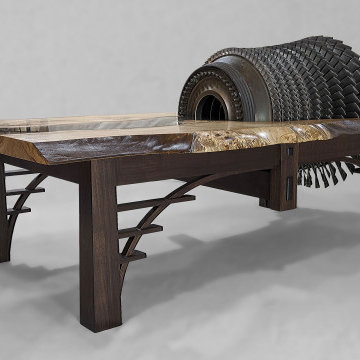
This coffee table has been one of the more unique pieces I had the pleasure of designing and building. The piece of machinery in the center of the table is a compression chamber from a jet engine out of a Bowing 727. The client that commissioned this project wanted a unique way to display the engine. After a few design iterations, we came up with a coffee table where a glass river flows out of the jet engine.
The base is made from walnut that is dyed to match some of the other millwork in the house. I reinforced the base with a hidden steel frame to help support the engine's weight. I used one of my favorite design elements to make it look like a bridge; even though the water is flowing over the top of the bridge instead of underneath it, I think the element helps tie the theme together.
The top is made from a live edge cottonwood slab, which had some beautiful burls in it. The cottonwood tree was felled here in Colorado and provided by a local arborist, who helped slab the tree and dry the wood. The glass was waterjet cut to follow the grain in the wood and wrap around the shape of the burl. I then carefully inlaid it into the top of the slab.
To get it in position at the client's place, I built a custom crate to strap the engine in and then used a mobile engine hoist/crane to place it into the back of the truck. The crate was notched specifically to sit on a dolly so it could be rolled around. I took the crane apart and loaded it into the truck with the table. Once on-site, we reassembled the crane to get it out of the truck and wheeled the engine inside over a makeshift ramp to get over any steps and thresholds. I disassembled the crane, brought it inside, and reassembled it to lift the engine in place onto the base. Then, I added the cottonwood slabs and slid the glass into place. I then reversed the process and took apart the crane to get back outside and into the back of the truck. I felt pretty proud that I pulled off a nicely choreographed bit of engineering to get it into its final resting place.
 Benham Design Concepts
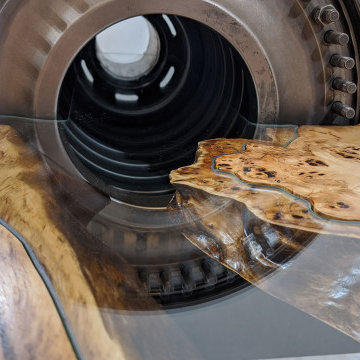
This coffee table has been one of the more unique pieces I had the pleasure of designing and building. The piece of machinery in the center of the table is a compression chamber from a jet engine out of a Bowing 727. The client that commissioned this project wanted a unique way to display the engine. After a few design iterations, we came up with a coffee table where a glass river flows out of the jet engine.
The base is made from walnut that is dyed to match some of the other millwork in the house. I reinforced the base with a hidden steel frame to help support the engine's weight. I used one of my favorite design elements to make it look like a bridge; even though the water is flowing over the top of the bridge instead of underneath it, I think the element helps tie the theme together.
The top is made from a live edge cottonwood slab, which had some beautiful burls in it. The cottonwood tree was felled here in Colorado and provided by a local arborist, who helped slab the tree and dry the wood. The glass was waterjet cut to follow the grain in the wood and wrap around the shape of the burl. I then carefully inlaid it into the top of the slab.
To get it in position at the client's place, I built a custom crate to strap the engine in and then used a mobile engine hoist/crane to place it into the back of the truck. The crate was notched specifically to sit on a dolly so it could be rolled around. I took the crane apart and loaded it into the truck with the table. Once on-site, we reassembled the crane to get it out of the truck and wheeled the engine inside over a makeshift ramp to get over any steps and thresholds. I disassembled the crane, brought it inside, and reassembled it to lift the engine in place onto the base. Then, I added the cottonwood slabs and slid the glass into place. I then reversed the process and took apart the crane to get back outside and into the back of the truck. I felt pretty proud that I pulled off a nicely choreographed bit of engineering to get it into its final resting place.
 Benham Design Concepts
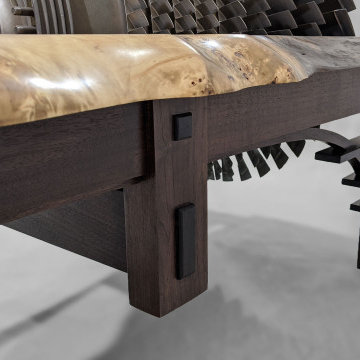
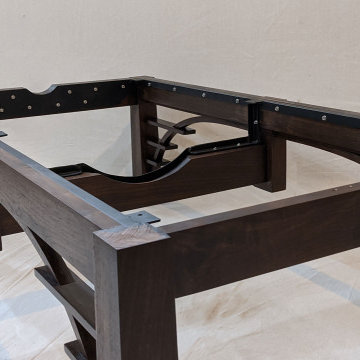
This coffee table has been one of the more unique pieces I had the pleasure of designing and building. The piece of machinery in the center of the table is a compression chamber from a jet engine out of a Bowing 727. The client that commissioned this project wanted a unique way to display the engine. After a few design iterations, we came up with a coffee table where a glass river flows out of the jet engine.
The base is made from walnut that is dyed to match some of the other millwork in the house. I reinforced the base with a hidden steel frame to help support the engine's weight. I used one of my favorite design elements to make it look like a bridge; even though the water is flowing over the top of the bridge instead of underneath it, I think the element helps tie the theme together.
The top is made from a live edge cottonwood slab, which had some beautiful burls in it. The cottonwood tree was felled here in Colorado and provided by a local arborist, who helped slab the tree and dry the wood. The glass was waterjet cut to follow the grain in the wood and wrap around the shape of the burl. I then carefully inlaid it into the top of the slab.
To get it in position at the client's place, I built a custom crate to strap the engine in and then used a mobile engine hoist/crane to place it into the back of the truck. The crate was notched specifically to sit on a dolly so it could be rolled around. I took the crane apart and loaded it into the truck with the table. Once on-site, we reassembled the crane to get it out of the truck and wheeled the engine inside over a makeshift ramp to get over any steps and thresholds. I disassembled the crane, brought it inside, and reassembled it to lift the engine in place onto the base. Then, I added the cottonwood slabs and slid the glass into place. I then reversed the process and took apart the crane to get back outside and into the back of the truck. I felt pretty proud that I pulled off a nicely choreographed bit of engineering to get it into its final resting place.
 Benham Design Concepts
This coffee table has been one of the more unique pieces I had the pleasure of designing and building. The piece of machinery in the center of the table is a compression chamber from a jet engine out of a Bowing 727. The client that commissioned this project wanted a unique way to display the engine. After a few design iterations, we came up with a coffee table where a glass river flows out of the jet engine.
The base is made from walnut that is dyed to match some of the other millwork in the house. I reinforced the base with a hidden steel frame to help support the engine's weight. I used one of my favorite design elements to make it look like a bridge; even though the water is flowing over the top of the bridge instead of underneath it, I think the element helps tie the theme together.
The top is made from a live edge cottonwood slab, which had some beautiful burls in it. The cottonwood tree was felled here in Colorado and provided by a local arborist, who helped slab the tree and dry the wood. The glass was waterjet cut to follow the grain in the wood and wrap around the shape of the burl. I then carefully inlaid it into the top of the slab.
To get it in position at the client's place, I built a custom crate to strap the engine in and then used a mobile engine hoist/crane to place it into the back of the truck. The crate was notched specifically to sit on a dolly so it could be rolled around. I took the crane apart and loaded it into the truck with the table. Once on-site, we reassembled the crane to get it out of the truck and wheeled the engine inside over a makeshift ramp to get over any steps and thresholds. I disassembled the crane, brought it inside, and reassembled it to lift the engine in place onto the base. Then, I added the cottonwood slabs and slid the glass into place. I then reversed the process and took apart the crane to get back outside and into the back of the truck. I felt pretty proud that I pulled off a nicely choreographed bit of engineering to get it into its final resting place.
 Marty Anderson & Associates
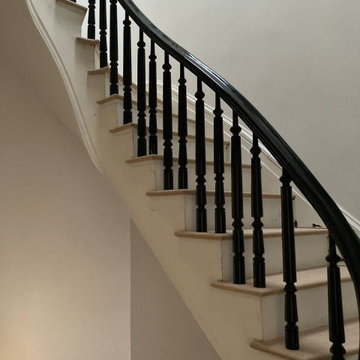
Your friendly neighborhood "stair repair guys" are at it again! Seen here is a replacement of red oak treads and "paint grade" maple risers we have recently wrapped up in Midtown #Hoboken, and now we are on to do a similar job in #JerseyCity. Here, we removed each tread and riser, and then using the original tread as a template, then onsite made an exact duplicate, and installed that spanking new replacement. No Home Depot or Lowe's junk-core treads with a thin surface veneer here! These much more authentic treads are SOLID wide plank 5/4" red oak. The railing system has been reused, only disassembling it and reassembling it as needed to do this precise tread and riser replacement. The project as seen here is ready to release to the paint and staining crew. Good to go for the next 150 years or so.
TheStairRepairExperts.com
StairRepairNJ.com
marty.anderson@mac.com
 Stretch Ceiling Miami
The Stretch Ceiling installation method
.
There are 2 methods of Stretch Ceiling Installation:
– One method without Harpoon (used by some competitors).
– The better one, with Harpoon, is custom fit to your room for maximum flatness,
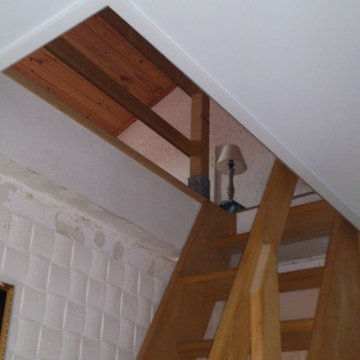
which enables it to be easily removed and reassembled: THIS IS OUR METHOD !
.
.
During our initial visit, we will discuss all the possibilities and designs that can be achieved:
Membrane finish best adapted to your liking
Type of lighting options and most suitable film color
Price range
Warranty provided and, last but not least,
Scheduling the installation
 VINT NYC
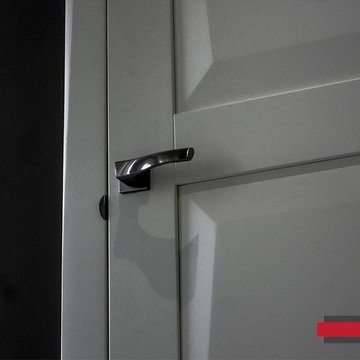
Novara is a new model with a state of art design and a winner of young designers competition "Wood Fashion 2014". There’s no more similar shapes in the world!
We provide door design and manufacturing solution by your description or sketch.
Handmade solid alder wood. In order to remove the wood tension, the timber is cut and reassembles with individual slats. This technique makes the door protected from cracking or bending of doors during lifetime.
The door glass has a 5/16 thickness with satin inside. Different lighting makes it look in a different hue.
Paints are coming from Milesi, the leading Italian manufacturer of environmentally friendly harm-free product.
 Benham Design Concepts
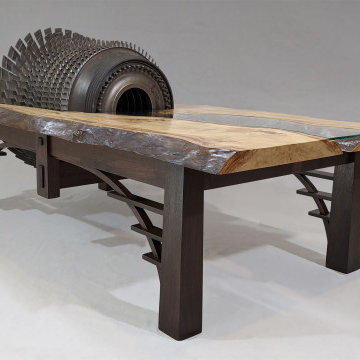
This coffee table has been one of the more unique pieces I had the pleasure of designing and building. The piece of machinery in the center of the table is a compression chamber from a jet engine out of a Bowing 727. The client that commissioned this project wanted a unique way to display the engine. After a few design iterations, we came up with a coffee table where a glass river flows out of the jet engine.
The base is made from walnut that is dyed to match some of the other millwork in the house. I reinforced the base with a hidden steel frame to help support the engine's weight. I used one of my favorite design elements to make it look like a bridge; even though the water is flowing over the top of the bridge instead of underneath it, I think the element helps tie the theme together.
The top is made from a live edge cottonwood slab, which had some beautiful burls in it. The cottonwood tree was felled here in Colorado and provided by a local arborist, who helped slab the tree and dry the wood. The glass was waterjet cut to follow the grain in the wood and wrap around the shape of the burl. I then carefully inlaid it into the top of the slab.
To get it in position at the client's place, I built a custom crate to strap the engine in and then used a mobile engine hoist/crane to place it into the back of the truck. The crate was notched specifically to sit on a dolly so it could be rolled around. I took the crane apart and loaded it into the truck with the table. Once on-site, we reassembled the crane to get it out of the truck and wheeled the engine inside over a makeshift ramp to get over any steps and thresholds. I disassembled the crane, brought it inside, and reassembled it to lift the engine in place onto the base. Then, I added the cottonwood slabs and slid the glass into place. I then reversed the process and took apart the crane to get back outside and into the back of the truck. I felt pretty proud that I pulled off a nicely choreographed bit of engineering to get it into its final resting place.
 VINT NYC
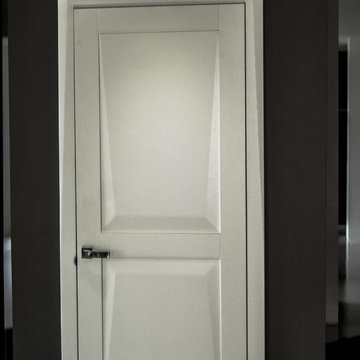
Novara is a new model with a state of art design and a winner of young designers competition "Wood Fashion 2014". There’s no more similar shapes in the world!
We provide door design and manufacturing solution by your description or sketch.
Handmade solid alder wood. In order to remove the wood tension, the timber is cut and reassembles with individual slats. This technique makes the door protected from cracking or bending of doors during lifetime.
The door glass has a 5/16 thickness with satin inside. Different lighting makes it look in a different hue.
Paints are coming from Milesi, the leading Italian manufacturer of environmentally friendly harm-free product.
9