Software
Houzz Logo Print
jaytac

New discovery?

18 years ago

Right I know your going to find this somewhat hard to understand and I'm going to find it even harder to explain but here goes.

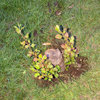
on Monday 10th December at roughly 8pm I walked on the beach in Victoria, Melbourne, Australia whilst on holiday and saw this orange shaped small object attached to some seaweed which stuck out alot due to it being the only colourful object visible so I inspected closer and removed it from the seaweed, I can confirm it was growing from the seaweed, not rested on or near the seaweed now heres what is a little hard to comprehend, its roughly 2cm big and its an orange...as in the fruit now call me crazy but I've never known an orange to be that small nevermind GROW on seaweed.

After taking it home and looking all over the internet I'm getting the feeling I've just discovered something. I've peeled it revealing segments, just like a orange, it has a strong orange smell and I have eaten a segment only to find it somewhat sour but still tastes like an orange.

I have a picture of it on a small saucer with a $1 and $2 coin next to/near it the image isn't edited at all.

(I know the quality isn't brilliant)

http://i22.photobucket.com/albums/b348/jaytac/WebCam_20071210_0938.jpg

Comments (12)

  • 18 years ago

    Various seaweeds grow flotation nodules like this in order to hold themselves upright.

  • 18 years ago

    And it's segmented like and tastes like an orange. That's just too cool for words!

    Carole

  • 18 years ago

    @ tcstoehr

    Have you got a link to this information? I can't find anything at all like this nor can I find anything to do with seaweed flotation nodules and as I said there was NO other signs of it on other seaweeds.

    @ Carole

    It is too cool I intend to keep it as long as possible theres a seed in it as well but I don't see how it could possibly grow...even if it grew into a miniature orange tree it would be pretty damn awesome.

    and I mean come on...it's exactly like an orange it can't be anything but an orange surely?

  • 18 years ago

    Edit:

    Originally I thought maybe this could of been caused by cross-pollenization but not being a plant/fruit expert I'm not really able to judge and I'm not even sure if it would be physically possible to cross pollinate an aquatic plant with a citrus fruit...but weirder things have happened.

  • 18 years ago

    maybe it's you saw an orange/citrus branch with a fruit still attached that blew off a tree and got blown into the ocean, then the branch side sank and the orange floated.

  • 18 years ago

    oh and no, no cross-pollination/hybdridization is possible - seaweeds and land plants like citrus are far too unrelated to cross. A lot of seaweeds aren't even plants in the scientific sense, they're collections of algae.

    Note though that a lot of plants that aren't even in the citrus family produce citrus scents, and segmentation in fruit isn't uncommon

  • 18 years ago

    I mean cross-pollination/hybridization is not possible

  • 18 years ago

    Jaytac:

    A marine biologist familiar with the sea plants of Australia would be the best source of info for you. I don't know whether you are currently in Australia or the UK, but Australia has outstanding professionals in this field. Here, we are mostly backyard fruit growers, though many of us have other interests as well.

    I can't think of an event more wierd than cross-pollination between a seaweed and citrus fruit, and if anything wierder has happened, I haven't noticed it.

    Don Yellman, Great Falls, VA

  • 18 years ago

    The actual term for the "flotation device" that seaweeds use is pneumatocyst. Google for "seaweed pneumatocyst" and you'll find what I'm talking about. Keep in mind that different sea plants will have completely different forms of pneumatocysts. A segmented pneumatocyst is quite logical as the segmentation would give structural support.

  • 18 years ago

    @ tcstoehr

    searching seaweed pneumatocyst came up with 453 results and although would seem to be the only logical explanation I really doubt this is one of them, pneumatocysts contain carbon dioxide, surprisingly to help them float lol the concept of a pneumatocyst that's fruit like wouldn't really be efficient as a flotation device I doubt.

    @ peanuttree

    Even so I've not seen a fruit like this and It wasn't in the water, it was on the beach attached to the seaweed, I know for sure because I picked it up by the "fruit" I'm also sure it was seaweed not a branch.

    @ jellyman

    I'm in Australia till the 27th I think but, although a marine biologist would be useful, this would baffle them either that or they wouldn't believe me seeing as I technically have no other proof then the fruit itself which, as time goes by, is getting dryer an dryer and will eventually rot, shamefully I didn't have the sense to take it with the seaweed or even attached which would of definitely helped me.

    Thanks everyone for replying.

  • 18 years ago

    you haven't preserved it? Freeze it or dry it or something. Or go to a college/university to talk to a seaweed expert and ask them to preserve it in formaldehyde. The only thing you could lose is a little bit of your time, but if you're right and it is a new discovery you'd be the discoverer of a new specimen!

  • 18 years ago

    Is it possible somebody may have discarded a citrus fruit amongst some wet seaweed on the beach, and after drying it became stuck to it? It may then have appeared to have been growing directly from the clump of seaweed? Many seaweeds contain sticky proteins and indeed the Japanese cultivate the Funori seaweed to be processed and used as glue. Just a suggestion as it seems unlikely to me that this is a new citrus species that grows in the sea.