Software
Houzz Logo Print
b4wine

Dying Fish - Any Ideas?

20 years ago

Help, please!!!

About every 2 weeks, one of my fish dies. There are no signs of a predator getting it, and except for one fish that had a lot of its scales rubbed off (my guess, during the mating process), there are no marks on the fish. It's just dead, floating in the pond.

The other fish all seem fine at the time.

I just this evening found another fish -- I now have left 1 large koi, and 8-to-10 small (about 4-inches) koi, shibunki or gold fish. It's the small fish that are dying.

I feed the fish every Tuesday evening and feed them until they lose interest. I feed 3 different types of koi/goldfish food.

I religiously keep the water levels high, and always use the MicrobeLift system on schedule for the various products.

And test the water. Tonight's test (at twilight as the sun was setting)from a testing kit showed Ammonia .1 (the palest yellow, and the lowest reading on the scale), Nitrite at 0, Nitrate at 0, and Ph at 8.0 From that, I think the water is in good shape.

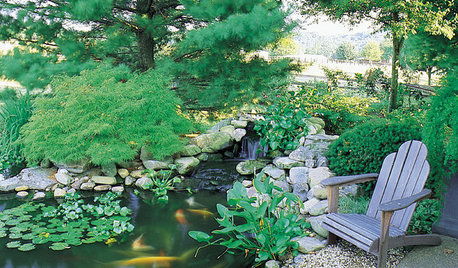
The pond is in shade during the morning and some of the afternoon. There are lots of plants growing in the pond, and some string algae in the streams of the waterfalls, and some blanket weed in the pond itself. Water is clear and I can easily see everything in the pond and on the bottom of the pond. I keep the dead leaves, water lilly leaves, fallen leaves from trees, etc. cleaned out of the pond.

Any ideas on what might be contributing to the dying fish? I purchased some of them last November, and the rest were purchased in May this year. The most recent deaths have been from the group I purchased in May, because those were the pretty shibunkins.

Thanks for any insight you can provide.

Comments (20)

  • 20 years ago
    last modified: 11 years ago

    could be a lot of different things. since the goldfish are also effected its not KHV. so I would guess some sort of parasite. This might explain the missing scales from flashing.

    can you tell me more about your pond. How many gallons? what type of filter system do you have? what size pump? do you have a rock bottom? bottom drain? Skimmer? Do you have aeration?

    Also, can you take a few more tests...pH and kH

  • 20 years ago
    last modified: 11 years ago

    Beth, It could be parasites but I doubt it because they are dieing so far apart. Are they all goldfish that are dieing. The ammonia being .1 is high. Then that was on a Sunday when you feed only on Tuesday. When you feed I would expect that the ammonia is higher. Is there a reason why you feed on Tuesday only?
    Mike

  • 20 years ago
    last modified: 11 years ago

    Also, how are the other fish behaving? If they don't clamor to eat any more often than once a week, then I would be concerned. Pond fish are notorious pigs. If they stay on the bottom a lot and don't nose around the plants looking for bugs, or just generally 'play', I'd suspect ammonia poisoning. A water change is the quick fix, but you of course have to find out what is causing it. Also, if you have any white or yellow fish, look for redness at the base of their dorsal fins, and spreading up into the fins to show distress.

  • 20 years ago
    last modified: 11 years ago

    Surfhead: The pond is 1,000 gal, with Savio pump and skimmer box that moves 4,500 gal/hour. Depth is 24 - 28 inches. Pump moves water to top box where it comes out into 2 streams that tumble down into 2 waterfalls into the pond. No other aeration other than waterfalls. A rock bottom and no bottom drain. Rocks are clean, and I can clearly see the rocks. Last night's pH reading was 8.0. I don't have a kH test.

    Mike: I do think only the goldfish or the shibunkin are dying. I haven't noticed the cat fish-like teeth on the dead fish. My large (18 inches, maybe) rescued koi is doing well throughout all of this. I've had him/her since rescue last November. I only feed once weekly because I worry about fish/food overload/water quality, etc. Earlier in the year when I fed the fish they were absolutely not interested. Now, they are interested in the food and willingly eat when I feed them. I've been a bit concerned about starving them, but I keep reading here that there are plenty of natural foods for them in the pond. So that's what I'm trusting. The ammonia reading last night was 0.1 on a scale that runs from 0.1 - 4.0. The color ranges from pale yellow to dark, dark green. The color last night was the palest of yellow, so I thought that meant that the ammonia was very low. That's been the ammonia reading throughout the summer when I've tested the water. It's stayed consistent.

    Other info about the pond:
    1) No fertilizing around the pond and no insecticides
    2) No strange behavior from the fish. They either rest under the shade of the water lillies, or swim
    lazily around the pond. When I feed them, they cavort around, sometimes flick their tails in the air -- kind of like "striking" at the feed. They act very normally.
    3) I've never done any water changes. Pond is nearly 1 year old. I top it off whenever pond level gets below the line on the skimmer. I only use untreated, secondary water from the mountain reservoir. Never any culinary water in the pond.
    4) We had aout 2 weeks of weather in the high 90s/low 100s. The water stayed pretty nice. Warm at the surface or around the edges, but quite comfy and cool at the bottom. The hot weather spell broke almost a week ago
    and last night's pond weather was delightfully cool from top to bottom.
    5) Lots of rain the past 2 days. We got a little over 1/2 inch of rain on Thursday, and it rained significantly on Tuesday and Wednesday last week. Rain in August is very unusual in Utah. There is an overflow line on the pond, so if the rain water was too much, it will overflow onto the grass below the pond.
    6) Does not appear to be any runoff into the pond. The 2 streams leading down to the waterfall are built up above the nearby ground.

    One other thought, but this may be a stretch. I bought quite a few impatiens about 3 weeks or so ago, and washed them off to get bare roots and planted them in the pond and streams. I think I did a good job of getting the surrounding plant material off the impatiens' roots before I put them into the pond/streams. But maybe there was some residual stuff (including fertilizer?) that is causing the problem. But, if this were the problem, wouldn't the fish be acting strangely, giving some sign of being in distress?

    I hope this helps and I really appreciate any ideas you have.

  • 20 years ago
    last modified: 11 years ago

    Ann --

    The remaining fish act as they've acted since the day I got them. Sometimes one or two of them will chase another fish (I discovered a black baby fish last night when I was removing dead leaves -- so there have been some "hijinks" going on this summer. I have no idea of how many of them I have, as the black is hard to see. My guess is it's the root color of the goldfish, not an exotic colored fish. Will have to see as it grows older.

    When it's been so incredibly hot, they're pretty still, staying under the shade of the water lilly plants, so it's hard to see them. Now that it's 10-15 degrees cooler, they do swim about, checking out the undersides of the leaves, nosing around the edges of the pond and plants. They act just like the fish I had in Virginia acted -- and I never lost any fish there.

    So, I am confused -- particularly given the very low ammonia readings of the water tests. And the fact that the pond is loaded with plants in the water, and I feed only weekly.

    Plants actually in the water of the streams and pond: lillies, water lettuce, WH, impatiens, canna lillies, calla lillies, blue pickeral, iris, Egyptian papyrus, chameleon, lizard plant, penneywort, water bluebell, watercress,cattails, water parsley

  • 20 years ago
    last modified: 11 years ago

    rock bottom, skimmer only, you have never done a water change, and your fish are dying. Yes this is an all to familiar situation I am afraid.

    Light feeding and lots of plants will help, but just because the water is clear and you can see the rocks does not mean the water is healthy and clean. I highly suspect the rocks are the source of the problem. Rotting plant debris and solid fish waste settles in between the rocks and will cause all sorts of bacterial and parasitic issues. I would immediately remove all remaining fish into a holding tank and drain the pond. then rent a power washer and clean out the muck collecting UNDER the rocks. Rock bottom/skimmer only ponds will require this annually. Most aquascapes installers will be more then happy to do this for you (that's how they really make their money). Also you should really think about removing the rock. But if you aren't up for that at least consider clearing away a section of rock at the deepest point and putting in a retrofit bottom drain. Also you should implement weekly water changes...maybe 20% at a time.

    also, one other thing to consider, lots of plants help with O2 during the day, but remove O2 during the night, so when the water gets warms during the summer the fish can be quite stressed every morning from O2 depletion. the daily stress from the changes in the O2 levels can make them vulnerable to the conditions caused by the rock bottom.

  • 20 years ago
    last modified: 11 years ago

    Thanks, surfhead, for the detailed response.

    To clarify, when you say "skimmer only" -- does that include the filters? I am a relative novice for this sized pond, so I may have been incomplete in my response. In each box (where the pump is and at the top of the water falls where the water comes into the stream), there is a seeded filter. The box at the top has a really large filter with special ribbons on it, that I understand carries desirable bacteria. When I use the MicrobeLift products they are supposed to be re-seeding the filters. I only clean out the filter by light, gentle hosing, and only when they are truly truly dirty and have lowered the water in the skimmer box -- that's per the insructions my landscaper gave me. The box at the pond end, where the pump is, also has the skimmer in it and 2 large UV lights that operate all the time, which is why I have some string algae in the streams and some blanket algae in the pond, but never an algae bloom.

    Does this additional info change your response? If it doesn't, what else do I need (understand about the bottom drain -- I've been reading all the threads on that lately) to ensure healthy water?

    My pond was installed by a landscaper who specializes in ponds and waterfalls and has been in business for years. I'm going to ask him about bottom drains and his experience with them here in Utah.

    Again, I'm not quibbling....just want to ensure I understand before I talk with the landscaper. Thanks again for your help!

  • 20 years ago
    last modified: 11 years ago

    many landscapers are a bit old school and don't really understand the dynamics of water quality. They create nice looking water gardens that can hold a couple goldfish and plants, but these are not koi ponds and cannot handle much of a bio load.

    When I said skimmer only I meant the only method the filter has for removing water is through a skimmer and there is no bottom drain or method of removing water from the bottom of the pond. The problem with a skimmer only set up is any debris the manages to sink below the skimmer level will remain in your pond and rot and eventually create a toxic environment. Some will tell you the rocks on the bottom will grow bacteria like a bio filter, and they will, for awhile. But as time goes on and more and more rotting plant material and fish waste settle between the rocks the beneficial bacteria is smothered out and dies. For your filter to be effective you really need some method of removing water from the bottom of the pond. You can use a submersible pump placed at the deepest section but I find those clog very easily and require constant cleaning to work properly. That's why a bottom drain is an easier method for removing solid waste from the bottom of the pond.

    do you have city water or well water? If you have any chlorine in your tap do NOT use the hose to wash the bio filter as the chlorinated water will make quick work of your bio filter.

    I'm not a fan of the "bacteria in a bottle" products. Little more then snake oil IMO. Good circulation and a properly sized pump and bio filter that effectively removes the solids from the pond will provide you with far better water quality then any bottled product.

  • 20 years ago
    last modified: 11 years ago

    Beth, I agree with surfhead's assessment. Here is a slightly different angle from which to look at things. You have a relatively small pond for "1 large koi, and 8-to-10 small (about 4-inches) koi, shibunki or gold fish." Since you are only feeding once a week, I suspect your pond may be picked rather clean of food. The experts recommend feeding koi 2% to 3% of their body weight A DAY. Certainly, they can subsist on less. I wonder if your smaller fish might be dying of starvation. - Dick

  • 20 years ago
    last modified: 11 years ago

    Oh Dick!!!! That's a horrible thought!!! I'll increase feeding and see what happens.

  • 20 years ago
    last modified: 11 years ago

    Good news -- I think!

    I went out and fed the fish (3 types of koi/goldfish food). And while they all ate some, most of the food is still on the surface or has fallen and is resting perkily on top of the algae-covered rocks. The fish have even been playing with their food -- taking it in, spitting it out, taking it in again. They are active, swimming and frisking about, but they really aren't eating much. So, I'm interpreting this as they really aren't all that hungry. Sure hope that's right -- I just hate the thought that I've been starving the fish to death!!

  • 20 years ago
    last modified: 11 years ago

    Beth, I would guess that you do not have the problems that surfhead talked about yet. If I had to guess the problem you have is ich. It is very deadly to goldfish but doesn't affect koi much. With almost anything else the koi would have more problems than the goldfish. I would treat the pond with Proform C and that should take care of the problem right now. With a pond with rock in the bottom it is necessary to use bacteria like Mircolift PL to help keep the build up down. You might want to test your test kit on known samples of water with ammonia in it at different levels. What you think of as good news I don't think that it is good sign. Something is going on. Try the Profrom C and that may solve a good share of the problems.
    Mike

  • 20 years ago
    last modified: 11 years ago

    Yes, I agree re: the food assessment not necessarily being good. My fish can eat a LOT if I *really* feed them. I can't honestly ever think of a time that I've fed them until they stop eating...or I'd still be out there. LOL

  • 20 years ago
    last modified: 11 years ago

    Thanks for all of your help, everyone.

    Mike, I've ordered the Proform C online, along with a different type of ammonia test so I can cross compare tests. I have also ordered Microbe Lift TheraP, which is supposed to help de-stress the fish. I'll continue to religiously use the MicrobeLift PL every month, and I think I'll treat the pond with ML Sludge Away. I did that every week this spring for 4 weeks per the instructions, but didn't think I was supposed to use it in the summer. It dissolves whatever crud is in the bottom of the pond, and the ML PL then removes what Sludge Away has dissolved. So that should continue to help the bottom of the pond.

    I'll give everything a go, treat with the Proform C and hope that the fish feel better and forgive this novice for her oversight. I just haven't seen the little white spots that are symptomatic of ich --- and when the fish is dead, I confess I didn't look for that. Just looked for physical injury.

    Anyway, huge thanks again to everyone!

  • 20 years ago
    last modified: 11 years ago

    Beth, Don't get carried away with the bacteria. You used Sludge Away once this year that's enough. The PL will be fine or the TheraP but I would not use both products at the same time. You may not see white spots on the fish. Some times it will look like small black dots.
    Mike

  • 19 years ago
    last modified: 11 years ago

    I HAVE DONE EVERYTHING FOR MY POND THAT I CAN THINK OF. MY FISH ARE STILL DYING. WHAT DO I DO? MY POND IS ABOUT 200 GALS. MY KOI ARE STRESSED OUT AT THE BOTTOM OF THE POND. I ALSO, HAVE A LOT OF STRING ALGE THAT SEEMS TO HAVE COME ON REALLY QUIK. IVE DONE THE PARTIAL WATER CHANGE AND ADDED DE-CHLORINATOR. I DONT OVER FEED. I HAVE PROPER FILTERATION. WHAT ELSE SHOUL I DO? PLEASE HELP. THANK YOU. JULIE

  • 19 years ago
    last modified: 11 years ago

    beth4,

    I haven't heard much said about possibly of an Aeromonas/Pseudomonas infection? Those nasty fellows that seem to show around the warming up of an individual's pond with te coming of spring/summer.

    My story sounds very similar to yours and I tested for parasites/etc. Zip on the readings and zipo in viewfinder of the M-scope. Then I really noticed the "collection" I had going on the bottom of my pond; not a lot - just enough. Down there where they like to hide out and catch a ride on the sleepy fish waking up from their winter slumber.

    You mentioned you had rocks on the bottom, What do you do to maintain that there isn't much build-up of debris above /below the rocks?

    My three cents - ditch the rocks (make a rock path out of them) and add a retrofit bottom drain.

    LP

    Side note:
    stylists44,

    CALM DOWN and quit yelling. Sounds to me you have a build-up of too much nitrogen - do you keep plants in there? Do you clean the bottom of debris?

    Here is a link that might be useful: Do you want Rocks in the Bottom of your Pond??

  • 19 years ago
    last modified: 11 years ago

    Beth4, checking in for this year. I originated this post last August. Since then I've not lost a single fish -- except for 3 that disappeared after winter thaw and before the leaf canopy came out that disguises the pond. I think I lost those 3 to a heron. They just completely disappeared. All the fish are now happy and healthy.

    I wonder if my fish were dying last year because I wasn't feeding them, at all, ever. When I started feeding them twice weekly, I never lost another fish. And, had several batches of babies. Six babies have survived, even made it through the winter, so all is well.

    For my pond, I use all Microbe Lift products. These products keep the rocks nice and clear of debris and plant growth. I can clearly see the pond rocks on the bottom of the pond. I am very happy with all of the ML products I use, and use them exactly as directed. They do a great job of breaking down the debris.

    I've got all my fingers crossed that everything will continue smoothly through the summer. I've already placed several plants in the pond. Need to arrange them, add more, and then bare-root plant the impatiens which will take over the sides of the streams and the pond, keep the algae at bay and look beautfiul.

    Thanks for everyone's comments and suggestions!

  • 15 years ago
    last modified: 11 years ago

    I've had my fish for 6 years and have never lost one. This week I noticed 4 were missing but it seemed to me someone had taken them since the cover was missing and no where to be found so as I do each summer; l changed out my water and added pondstart let it fliter for while then put my fish back in. For awhile they seemed fine then they started dieing.All my fish are now gone. Done the same thing for 6 years just don't understand.

  • 15 years ago
    last modified: 11 years ago

    i started my little pond last summer . the gold fish have gottin big . but this summer i seen that alot of my fish are startin to dye for on resson they dont look like anything is gettin them so y thay keep dying please help me