Software
Houzz Logo Print
sam_md

Summer Blooming ID

15 years ago

{{gwi:399726}}

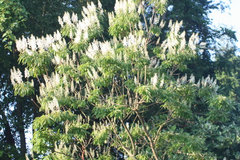
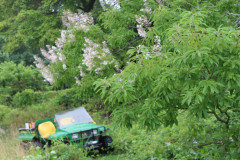
I took this pic today of an upright, shrubby tree. It blooms this time each year, the extreme heat and drought don't seem to faze it. It's a Dixie native, can you name it?

Comments (20)

  • 15 years ago

    Elliottia paniculata.

  • 15 years ago

    Elliottia racemosa

  • 15 years ago

    Thank you for posting this. I knew nothing of this plant.

    Arktrees

  • 15 years ago

    Is this common in the nursery trade yet? I read an article from 1969 describing the difficulties with propagation but hinted at the end that successful propagation from root cuttings was promising.

    I see that rarefindnursery.com has it listed as "out of stock"

    It sure appears lovely in the pic provided, Sam. Thanks for sharing.

    Here is a link that might be useful: Old article

  • 15 years ago

    I can't read apparently. The article is much more recent. The most recent date in the article I could find was 1988.

  • 15 years ago

    I've never seen it either (westerner), very cool fls. Thanks folks!

    Dan

  • 10 years ago


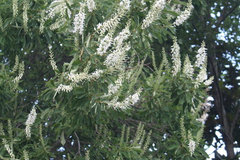
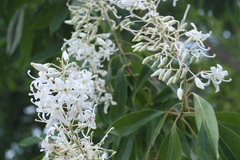
    Sorry for the blur, it was windy this morning. Georgia Plume has what I would call a pure white flower. We are well into the Dog Days but that doesn't bother it. This is a great, upright, distinctive collector's item for a sunny spot.

  • 9 years ago

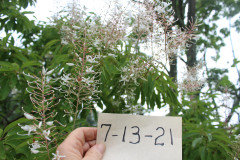
    Here's my Georgia Plume again, full bloom today.

    Corolla has either 4 or 5 petals which fall from the flower individually. Most years this tree has nice fall color, like sourwood. Who grows it? Who has it? Who has seen it other than me? If so, where?

  • 9 years ago
    last modified: 9 years ago

    Never saw it or even heard of it. Learn something new every day. In the Heath family, so related to sourwood & rhododendron.

  • 9 years ago


    THIS pdf by Al Fordham from Arnold Arboretum provides good info about Georgia Plume. In the '60's only one man, Henry Hohman, who lived near me, knew how to propagate this tree. I don't see any signs that things have changed, this native American tree remains exceedingly rare.

  • 8 years ago
    last modified: 8 years ago

    Sorry to bump but this is most impressive. This is one of the few SE rarities I haven't tried, but my understanding is that most forms are known to do poorly in cultivation. Also, it seems to have larger and better flowers than other pictures I've seen. Maybe you should try to get this micro-propagated. Heck go ahead and patent it, Elliottia paniculata 'Sam's Choice' (TM) cultivar name 'SCHLUBSQVAR' lol. I'd still buy it! Actually I suppose it depends where you got it and how it was propagated, though. Did you get it at Woodlanders? Rarefind might have had them one year, but Woodlanders has been in the only consistent source in recent years. Though they don't have it every year by any means. I don't know if they clone them or managed to find a good seed source. Probably the latter.

    Anyhow if you live near the former Kingsville Nursery, you are in region of the most reliable summer rainfall in the state of MD, probably. So maybe that helps too LOL.

  • 8 years ago

    Wow yes, just if you can figure out how to propagate it :0 (that root propagation method seems dodgy to me...I mean may work...but not commercially possible)

  • 8 years ago


    HERE is an article about TC of Georgia Plume from Univ of Georgia a few years ago. Am gonna try seed again next month however my luck for the past few years has been very poor. I checked, am not aware of any commercial sources currently listing this plant available, no one. It can be found sometimes among collectors who "horse trade".

  • 6 years ago

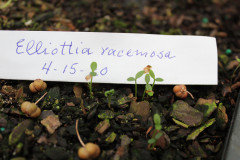
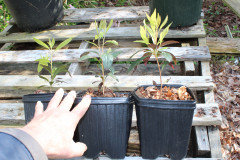
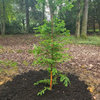
    Here's an update on Georgia Plume propagation. Last Sept I collected capsules from my tree in Maryland. I separated the seed from the capsules and sowed seed in regular bark mix, covered with window screen and left outside all winter. Seed was subjected to wet, ice, snow and up and down temperatures. As you can see it is now germinating. By the end of the season these seedlings will be about an inch tall. I gradually introduce them to full sun.

    Here below are some seedlings starting their third year. Notice they hang on to last year's foliage because they were overwintered in a protected spot.

    My propagation advice is take freshly collected seed, give it moisture, freezing & thawing in the winter and it should germinate the following April. The limiting factor is availability of sound seed.

    Cultural advice similar to sourwood tree. = acid, sunny, well-drained. Even though the native range is restricted to NE Georgia, the plant retains cold hardiness in its genetic memory. FWIW I have seen perhaps 15 specimens in various eastern US botanic gardens/arboreta over the past 30 years. Long story short, I am not aware of any healthy, robust, flowering specimen growing in the ground today. The reason for decline is neglect, apathy, crowding, deer damage, etc. In addition to my own, there are likely some nice plants in private collections especially in Georgia & SC. If anyone knows further please share here.


  • 6 years ago

    sam -- congrats on the seedlings.

  • 5 years ago

    HERE is a current article from Atlanta Journal-Constitution. It's about one of the few remaining areas where Georgia Plume can be found called Big Hammock in Tatnall County, GA.

  • 5 years ago

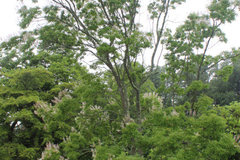
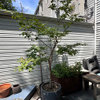
    Found another one, this time in Conshohocken PA. Pic should have been taken last week.

    Absolutely beautiful tree, Flowers don't show up against the sky.

    This Georgia Plume is in full sun, well-drained site on hilltop. No special treatment, Planted about 1930.


  • 3 years ago
    last modified: 3 years ago

    Nice to see you posting, Sam. Always enjoyed your postings, and you're also a fellow Marylander to boot. Interesting that your seedlings prb'ly had no cross-pollination, yet seem healthy. I understand that can be the case w/some plants (you'd have to think they're clones).

  • 2 years ago

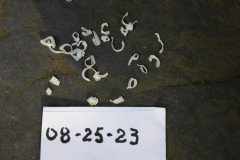
    rare to have flowers this late on Georgia Plume. Notice corolla is not tubular and petals fall seperately. Can you name any other member of the heath family with this trait? I can't.