Software
Houzz Logo Print
dedtired

insulating the attic -- which method to choose?

15 years ago

I've had three estimates for adding insulation to the attic. The ceiling of the bedrooms upstairs is slanted. There isn't any attic over the slanted area, but it is accessible to add insulation. I don't know the correct name for slanted part.

Here are the three options.

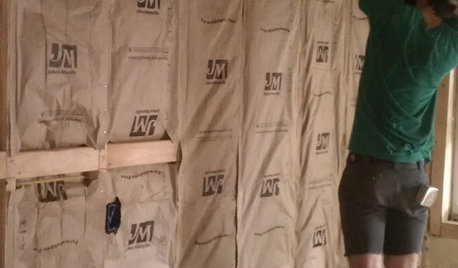
Contractor 1. Blow in fiberglass insulation on floor of attic and into slanted roof. Estimate included detail about sealing leaks.$1200.

Contractor 2. Blow in cellulose to attic floor and slanted roof. $1400. This contractor also strongly recommends blowing cellulose into the walls. Total for all is $5000, so that's not happening, but I can opt for just the attic.

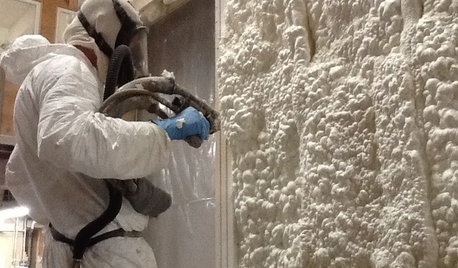
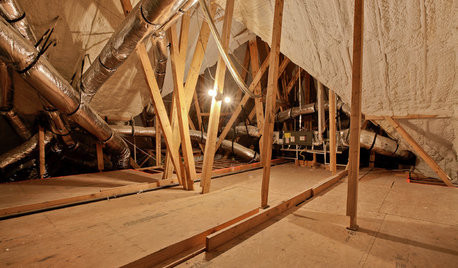
Contractor 3. Add spray foam insulation into slanted area and between the joists of the attic roof. This fellow says the spray foam would be a much better option for the slanted area. I also like this because it means I can continue to use the attic for storage. One concern is that the vents on the ends of the attic would be closed off. He says that will be fine. It also means that electricians can get to the wiring that goes through the attic, too, which I like. He also said that money spent insulating the walls would be better used for new windows (he doesn't install them). I don't have his estimate yet.

I have pretty much decided against #1 because his inspection of the house was cursory compared to the others.

#2 and #3 are highly recommended on Angie's List. I was impressed with their thoroughness and knowledge, but I can't decide who to choose or which is the better method.

Any thoughts to help me? I am especially interested to hear whether spray foam insulation is a good method. Thanks.

Comments (24)

  • 15 years ago

    Spray foam is usually considered the best and most expensive - you didn't give the price but obviously it should be the most expensive.

    I think generally the most cost effective is first contractor recommended.

    I worry a bit about converting a vented attic to an unvented one. If done when the house is new, that is one thing. But conversion has some concerns. It depends how it is done and what your climate is.

    What is your foam estimate, I'd expect it to be >3x the fiberglass estimate. Your climate and current insulation would be useful pieces of info.

  • 15 years ago

    Should have included this, thanks for asking. I am just outside of Philadelphia. Cold winters (but not like New England) and hot, humid summers, but not like FL in the summer.

    Currently there are some ancient fiberglass batts in the attic. They are dirty and compressed.

    I still don't have the estimate for the spray foam. Now I am scared about the cost! As soon as I get it, I'll add that info. The house is about 1300 square feet on two floors, not including the attic area (which is not high enough to stand in) or the partial basement. Walls in the den, kitchen and upstairs bath were insulated when they were renovated.

  • 15 years ago

    1300x2=2600?

    Oh yeah - spray foam will be a shocker.

    I paid about $1000 for 2000 sq at R-30; and then paid another $200 for an upgrade to R-40. The spray was $8k. You can get most of the advantages of spray with really good sealing. You'll probably find a good payback to at least R-40 - maybe even higher.

  • 15 years ago

    Sorry, I meant the entire house is 1300. I wasn't very clear.

    Even if it's half of $8K, there's no way I'm going to do that. I'd go up to $2500, but that's it. #2 is looking better to me. I wasn't impressed with #1.

    Wish I had the insulation now. It's so cold here today and getting colder later this week. Brrr. Furnace is churning!

  • 15 years ago

    Cellulose is more forgiving of older houses without vapor barriers.

  • 15 years ago

    no insulation in your walls at all?

  • 15 years ago

    what ever option you decide upon air seal first.

    the slanted ceiling is vaulted or cathedral..fyi

    only option 1 mentions air sealing

    the added cost of foam is that it creates an air seal
    as it is applied..with conventional insulation you have
    to make the air seal.

    to effectively insulate you need to stop air movement through the insulation. this is your air barrier..recessed lights..cuts at bath fans..open thermal bypasses will
    allow air to move thru insulation.

    any hole between living and attic spaces should be sealed.
    my prefrence is not cellulose due to the particles that
    enter the living space.

    mastic sealing ductwork..supply boxes to attic flooring and any work in the attic should be done prior to the insulation
    asit will be harder to work in attic after insulation is installed.

    best of luck

  • 15 years ago

    Thanks for the further info. Still no estimate for foam, so I am waiting to see.

    Only the rooms that have been renovated (kitchen, bath and den) have insulation in the walls.

    The contractor who suggested foam also mentioned that air can blow through cellulose, and that foam will seal the leaks.

    You have all been very helpful with providing great info.

  • 15 years ago

    I would do blown cellulose into attic floor and slanted roof. Thats your best bang for the buck.

    If you choose that ask him to guarantee a certain depth of cellulose through out the attic. Don't let him skimp on the cellulose. You want lots of it.

    Cellulose is cheap and easy to install into attic's. Easy as in low skill (mostly). Doesn't mean its not hard work (dirty, dusty, etc.). I insulated my attic myself. Its not skilled work. You do have to be careful not to step thru your ceiling though. I guess thats a skill.

  • 15 years ago

    Is it true that air can blow through cellulose if the leaks aren't sealed?

  • 15 years ago

    not stepping thru the ceiling is a skill!

    cellulose has more weight than fiberglass.
    blown into an attic cellulose has less of an
    air sealing quality than dense packed cellulose
    or wet or glue blown installs used in open walls.

    air moves through cellulose as well as fiberglass.
    while cellulose will slow the air movement more
    than fiberglass it will not stop it.

    when the air moves through the insulation it brings
    dirt particles. if you look for discolored (dirty) insulation, and remove the insulation you will find
    the leakage site.
    earlier this week I was in a house with an unvented
    bath fan. the cut in the sheetrock was 1/4 to 1/2"
    bigger than the housing of the bath fan, and the back
    draft damper was not installed.lots of air movement..
    the white blown fiberglass
    was almost black with dirt that had been pulled through the
    fg insulation. easy to find that bath vent fan!

    an easy example is the ducts at the plenum
    pull the insulation back and the leakage at
    the duct collar lines up with the dirt trails
    on the insulation.

    the same happens with cellulose..but as it is
    gray to start with it doesn't show the dirt
    trails the air leakage causes.

    blower door testing would show you air leakage
    sites of house and duct testing will do the same
    with duct system.

    best of luck

  • 15 years ago

    Thanks, Energy.

    I wish I could do this myself but as a single woman, I'm not ready to take that on! So far I have avoided stepping through the ceiling when I go into the attic. There's enough flooring up there to stand on.

    I got the estimate for the foam insulation and as you all predicted, it was very high. $4400 to seal the attic and sloping roof, as well as insulating an area in my den (former garage)that was an overhang (all the estimates included this work).

    So, looks like I am back to the blown in cellulose. Now my concern is condensation that appears on the roof nails that protrude in the attic. Sheesh. It never ends.

    I'm getting some great info from all of you and I really appreciate it.

  • 15 years ago

    I watch this thread with interest and am not trying to hijack your thread - only contribute.

    We are in a similar situation (live in Upstate NY).

    As you experienced - foam spray estimates for the attic were out of control (though we will probably do it for the rim joist as it seems most effective).

    We have blown in fiberglass up in the unfinished attic space and I have a hunch it's not enough. That in tandem with improper sealing of 2nd floor ceiling fixtures is causing most heat to just go out the roof without keeping the heat or air conditioned air during the summer on the 2nd floor.

    Have you considered having an Energy Audit done?

    We had one done in a prior house and I learned a ton. If done properly, it really does provide valuable insight as to issues and proper resolutions (including payback, etc..) A blower door test reveals a great many things.

    We are having an audit done tomorrow on our current home. I'll be interested in the results of the audit to help guide in where to spend the money to get the best results.

    Not sure what PA's process is but NY is giving money to homeowners to do one by a BPI certified contractor. Ours will be free.

  • 15 years ago

    condensation is on roofing nails?
    what is your climate?
    is condensation on nails in one area or all
    of roofing.
    you can hire out this work. I do it. being
    a single woman hasn't proved to be a problem yet
    for me.

    Don't Know..is this free audit through Wellhome?
    would you share your experience?

    thanks

  • 15 years ago

    Feel free to hijack! Any and all new info is welcome. Having gone to school in Syracuse and vacationed in the Adirondacks (Lake Placid was freezing in the evening in August), I am somewhat familiar with that climate. Suburban Philadelphia is nowhere near as extreme.

    Yes, the condensation is on the roofing nails, particularly in one area. Is it true that once the floor of the attic is adequately insulated, condensation will no longer be a problem because the attic will be cold, not warm?

    I also notice I have ice dams from a recent snowfall. The roof of the detached unheated garage is still snow covered while the roof of the house is not.

    I haven't heard of any programs to cover the cost of an energy audit in PA, but I'll look into it. The insulation contractor I am most interested in offers this service, so I'll ask. Thanks for the tip.

  • 15 years ago

    Yes, the condensation is on the roofing nails, particularly in one area.

    what area..near a furnace, ductwork or bath or stove fan vent??

    Is it true that once the floor of the attic is adequately insulated, condensation will no longer be a problem because the attic will be cold, not warm?

    Maybe..but if you have an area that warm air is entering the attic via duct leakage, or living space to attic then
    the condensation may be a symptom of this.
    hard to tell without seeing...

    I also notice I have ice dams from a recent snowfall. The roof of the detached unheated garage is still snow covered while the roof of the house is not.

    makes sense to me the garage is not heated so there is no
    temp difference between attic and garage..thus no reason for the snow to melt.
    Ice dams..no experience with them..need some cold climate
    input, not south La.
    can you post pictures??

    best of luck

  • 15 years ago

    Hello again.

    Energy Rater - NYSERDA is the one offering the program funding. Google NYSERDA and it'll show you their link if interested.

    From what I know ice dams can be caused by more than 1 source. I think Energy Rater is spot on regarding why no ice dams on the garage.

    For the house... Do you have soffits (sp?)? If so they may not be properly functioning due to improper installation of the insulation that is currently there. Your insulation guy or person conducting the energy audit most probably look as part of a check on this by default.

    As I understand some of it - though may be wrong...
    The soffit may be blocked with insulation not allowing the cold air to keep that portion of the roof cold. Basically if they are blocked, the roof edge is warmed up with insulation, the snow melts then ultimately freezes again. I may have it completely wrong but think something like this happens.

    Are your gutters full of debris or perhaps not pitched the correct way? If so, that can be a cause or one of the contributing factors.

    There are probably other issues but these are two that constantly come up here seeing many people in my area have that issue.

    I've seen many of rusty nails in my investigations - not only in attics but in rim joists too. Condensation can absolutely cause this over years. Seen it with my own eyes.

    Sorry I don't have any potential answers for you other than ideas...

  • 15 years ago

    I just had the gutters cleaned before the last snowstorm, so I know it's not clogged gutters. Wish it were that easy!

    Yes, I do have soffits and I have no idea what's going on with them. I will have insulation blown in there as part of this process and cross my fingers that it solves the problem.

    Energy Rater, the condensation is in a part of the attic that is away from ducts and electrical lines. It is probably the least "busy" part of the attic. It's over a bedroom, which is over the living room.

    Since the foam is so expensive and it seems that the cellulose is nearly as effective, I've decided to go with the blown in cellulose. The contractor also suggested insulating the walls, but that will have to wait. I am "recovering" from a bathroom reno and I'm not ready to deal with more holes in the walls. If needed, I'll have it done next year when I am prepared for another onslaught of contractors!

    In the meantime, I am cleaning out the attic and I discovered the motherlode of old Fisher Price toys. Maybe I'll sell them and get enough money to pay for the insulation.

  • 15 years ago

    First, there is a big difference between upstate NY and the Philly area. (At what I would call upatate. No, Rockland County does not count, Putnam nor Orange either.) I lived in Chenango, Tompkins and Monroe counties on the one hand, and in Philly on the other. The costal plain is a lot more humid and a lot warmer. The humidity difference is probably more important than temperature even though it is a lot warmer.

    In my current location (more similar to Entergy_rater's) sealing the attic at roof line is a generally a good idea. You keep out moisture and more effectively air-seal than if you try to seal the ceiling-attic division. Attic duct leaks and air leaks between the attic and spaced below become less important.

    Philly, I don't know. I was not thinking about building science when I lived there thirty years ago. You would need to consult someone with knowledge of what is good in that area. There may be some good resources on public web sites like your land-grant University. I believe that they do more than play football there though it is sometimes it does not seem like it.

  • 15 years ago

    hi there,

    Fellow single-woman insulator here. :-) I've been doing a lot of insulating upgrades lately on my own 1923 house (which was mostly uninsulated before I bought it) and I'm up in Maine, so our climate is a bit colder than yours. But I think many of the same principles apply anywhere there is snowfall.

    As I understand it, ice dams happen because the insulation is failing in that area and allowing your heated house air up into the attic to warm the roof. There are two schools of thought on stopping this:

    1. Insulate right at the roof (the rafters) with spray foam to basically include the attic as part of the heated house. This eliminates the need to do tons of air sealing all over the attic floor and then you don't need to use blown-in or batts. Plus you have more usable storage space. The foam closes your soffit vents, because if the attic is part of the house now, you don't want any cold air flowing through it. (fyi despite the cost (around $2000 for a 1400sf house)this is the route we've gone and it does seem darned effective.)

    2. Insulate the attic floor and basically make the attic part of the outside. This means your top inside ceiling is now the top of the warm house and needs tons of insulation over it. The more the merrier. Here's where you want those soffit vents. Think of the soffit vents as providing a steady current of air from the eaves up to the top along the roof, over top of the insulation and the roof itself, keeping the roof the same temperature as the outside so snow doesn't melt and create dams.

    In our cold climate the recommended attic R-value is very high, which would mean a few feet of blown-in cellulose. Part of the problem with a cathedral (slanted) ceiling is that it doesn't leave a ton of space on the other side of the ceiling for insulation to go -- ours wouldn't allow for even the minimum recommended amount of blown-in or batts. So for me, foam was a necessity.

    If you can possibly afford it, the other key thing to insulate are your rim joists in the basement. We did this and it made an immediate difference in the heating costs. In my understanding, you need to seal up under the walls at their very bottom, so that cold air doesn't whoosh up through the (uninsulated) walls and between subfloors and floors and cool the entire place down. See the attached article.

    Good luck with your decision and stay warm!

    Here is a link that might be useful: DIY Insulating Rim Joists

  • 15 years ago

    I wish I could afford to do the foam insulation, but at three times the cost, there's no way. Maybe NOT having the attic as storage would be good, because I can't squirrel away more stuff. My attic was becoming an elevated graveyard for my junk.

    In the meantime I am dealing with plumbing problems, dental repairs and a dead car battery. Sheesh. Life -- Gimme a break! I have pretty much decided on going with the blown-in cellulose. Hope I'm not making a mistake. I am concerned that it will make the house permanently dustier than it is now.

    As George Carlin said "That's all your house is: a place to keep your stuff. If you didn't have so much stuff, you wouldn't need a house. You could just walk around all the time."

    I admire all you lady DIYers. I do a lot of jobs myself, much more than most other women I know, but I'm not taking this job on. Circuspeanut, nice to know there's another crazy lady like me out there!

    Here is a link that might be useful: a place for your stuff

  • 15 years ago

    Hi. I promised to report back after the work was done, which it now is.

    I went with the blown in cellulose insulation in the attic only, and also a problem spot in my den. The job went very smoothly, in spite of a foot of snow outside. We got lucky and the job happened on a sunny day.

    They removed the old plywood floor, saving one spot for storage. They blew cellulose into the "vaults" (their term for the slanted roof that has no attic over it)and on top of the old fiberglass. Altogether there is about a foot of cellulose. They left a small walkway down the center of the attic and also the six square yards I wanted for some storage.

    They mixed water with the cellulose in the attic which kept the dust down. In the ceiling area of my den (cold air was coming through some can lights), they dense packed it.

    The difference in the house is noticeable! There's no more cold air coming into the den. The upstairs of the house stays a lot warmer, especially one bedroom that was particularly chilly. It's about 25F outside now and the house is warm and comfy.

    However, the house still gets chilly on cold windy days. I think new windows and insulation in the walls would be the answer. That's just not in the budget.

    The house got a little dusty, just a fine film close to the access areas. The contractor did a great job of cleaning up. I could smell the cellulose a bit the first day, but that dissipated after a day.

    I hope I see a savings on my next heating bill. I better! The job cost about $1500. My house is not large. Hope this info helps.

  • 15 years ago

    Went to the home show at the local community college today. I noticed the snow on my roof was melting faster than my neighbor's, so I asked a couple of contractors about insulation. I have a dormer roof over my two upstairs bedrooms and bath on a 50's cape with no access to the attic which is about 3 feet high and tapers toward the back wall. I know there is some batt insulation up there and the suggestion was to remove the two vents on either end of the house and blow insulation in to the attic. Sounded reasonable, didn't get a price, having an esitimnate done. any thoughts.
    Thanks

  • 15 years ago

    If that's the only access, then go for it. Can they drill holes from below to get to it? That's what they did in the overhang portion of my den, which used to be a garage. The holes were not enormous and they did a good job of patching them. I think that would assure that the center portion of your dormer gets adequate insulation.

    Your best bet is to find an installer with an excellent reputation. I found mine on Angie's List.

    I am still waiting for my first utility bill, but my house is noticeably warmer, especially upstairs.

    When I walk around the neighborhood I can see who has enough insulation and who does not by the amount of snow on the roof. My detached unheated garage still has snow from the last storm. as does my screened porch. Not the house, since the insulation was blown in after the storm and the roof had already warmed enough to melt the snow.