Software
Houzz Logo Print
karencon

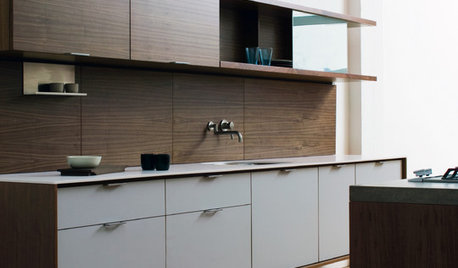
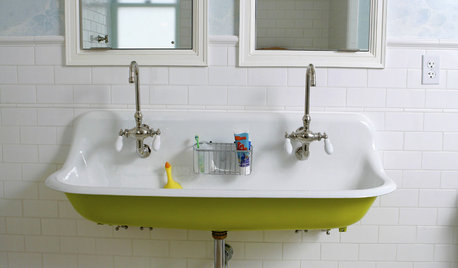
Wall mounted faucet , outside wall?

19 years ago

Greetings,

Can someone explain why a wall mounted faucet cannot be installed on an outside wall. Our wall backs up to a garage wall, not heated. Its actually an enclosed stairwell into the kitchen. This will ba a 1/2 bath sink.

Karen

Comments (9)

  • 19 years ago

    Installing on the inner part of an outside wall means that the piping generally has to run inside of the wall. In a cold winter, even with insulation, it will probably freeze. I have seen plenty of sinks with faucets installed on the inside of outside walls and the piping came up through the floor and there was never a problem. How many kitchens have you seen with windows over the kitchen sink giving a nice view of the outdoors? I don't know what the problem is.

  • 19 years ago

    I thought I read somewhere that the plastic pieces in the valves, also in that wall, could freeze up. The valve for a regular faucet is in the cabinet, isn't it.

  • 19 years ago

    In a bath lavatory if it is wall hung, most people run the water and drain pipes through the back wall. This makes for a nice clean look under the lavatory and makes it easy to keep the floor clean. If a vanity is installed, many still come through the back wall with the piping. If the piping is in an outside wall, it will probably eventually freeze. As a pretty experienced DIYer, I have installed many lavs with piping coming from the cellar up through the floor. They don't freeze. Although the look isn't as nice I never liked the idea of all those pipe fittings in the wall if a problem developed. Has somone told you that it is against a code hang a lav on an outside wall?

  • 19 years ago

    No one has told me that we can't do it but I have read on the kitchen forum that its a no-no. Because we live on the bay, we are built on steel pilings. We only have a enclosed garage space underneath. That wall is part of the stairwell. We use a heat wrap on the main coming into the house which is about 7 feet from the location I'd like to put the wall faucet in.
    Karen

  • 19 years ago

    I'm curious, where do the pipes for something like your kitchen sink come from? Is that sink on an outside wall? Where does the pipes for toilet and lavatory come from? My guess would be that they come up through the floor? Why can't the same be done for this fixture.
    For years I had to deal with heat tapes...is that what you are referring to? I hate them and avoid them whenever possible. Many fires have been caused by them and then, of course, they can always fail and let the pipes freeze.

  • 19 years ago

    I know the pipes come straight up through the floor for the kitchen and bathroom now. The only difference I see is that they would not run inside the vanity but through the exterior wall. My understanding was that the valve being in the wall would put it at more risk, not just the pipes. Scared me with the info about the heat wrap; probably what you are familiar with. What other options would we have for preventing freezing of the main up into the house?

  • 19 years ago

    I think putting the piping or the shutoff in the wall does put them at risk of freezing.
    On the heat tape....I dealt with mobile homes for years in Vermont where it gets cold. There is always a spot where the water line exits the ground and goes into the home.
    If you just wrap it in insulation it eventually freezes so people use heat tapes. The normal, flat heat tape was the most common and the most dangerous. If the tape overlapped itself, it could heat up and start a fire.
    The one product I found to be the best, and all of the MH installers I know used it, was called "Frost Tex" or Frost Tec...can't remember. It's blue in color, round in shape and sold in hardware stores and is on a roll so you have to know how much you need. They cut off what you need and you have to buy a two piece plug kit. The store will also have a chart telling you how many wraps per foot you will need to protect to a certain temperature. This type of tape can overlap itself and not burn out and I have never seen one go bad no matter how old. You should also purchase a package of flat fiberglass insulation to wrap over the pipe and heat tape. The package normally also comes with some plastic to go over the insulation and acts as a vapor barrier.
    I bought a bunch of stuff one time and there was a whole case of the flat heat tapes. I threw the whole thing away because I wouldn't use them. That is how little confidence I have in the old flat versions. People still like the flat ones because they are cheaper.

  • 19 years ago

    Cool, thanks fo the info. DH doesn't think we have the tape you speak of and all I can see is the cord and black insulating material covering it. We will explore this further......Karen

  • 19 years ago

    Even with pipes in cabinets in extreme weather they can freeze.
    How many times have you seen advice to leave the cabint doors open at night when a bad cold spell is expected?
    In Virginia it is rarely a problem.
    In New Hampshire it is a real problem.
    It does keep the plumbers in the money.