Software
Houzz Logo Print
probookie

Rewiring older house -- Long!

19 years ago

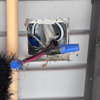
The wiring in our 1956 house does not seem to have been updated since construction. We have several fuse boxes--the main and a separate one for central air--and the receptacle covers have slots for only 2 plug prongs. The wiring in the walls is covered in a type of black cloth (someone please tell me what it is called!). Examination of this wiring behind what is probably the most heavily used outlet in the house shows that it is still flexible and shows no evidence of fraying or deterioration. Our home inspector said that the fuse box wiring looked to be in very good condition.

While we have NO PROBLEMS with the functioning of kitchen appliances, TVs, computers, lights, or any other type of electrical device, we would appreciate some advice on updating the system.

For example, I had to call 4 separate insurance companies to secure homeowners' insurance when we bought the house 3 years ago. Some insurors will no longer cover houses that have fuse boxes instead of breaker boxes! So we will upgrade to breaker boxes. But what is recommended for the receptacles? We don't want to just stick new 3-prong outlet covers on ungrounded outlets.

I have browsed this forum and found some of the threads on rewiring old construction. After seeing that costs are likely to range from $14K to $25K IF we can find anyone willing and able to do it (we are in the DC metro area), I thought some of the forum members might be able to suggest what degree of electrical system updating (beyond bringing in breaker boxes) is advisable or necessary. We will probably be in this brick 4-level split (2 attics) for about 10 years more.

Comments (4)

  • 19 years ago

    Some additional protection is obtainable by changing the FIRST receptacle on a circuit to a GFCI, connecting it so that it protects the receptacles downstream and then installing the grounding-type receptacles in the other locations on that circuit. Those must be marked as "not grounded" and the GFCI package probably has labels for that purpose.

  • 19 years ago

    You need to come up with a plan. Don't just call an electrician and tell him to re wire the whole house. Find a small electrical contractor who is willing to spend a few hours helping you design a plan. Ask around your friends and neighbors to find a good one by referral.

    Then figure out where you need or would like new circuits, for more capacity and for grounding. The kitchen and bathrooms will be the best places to add new 20 amp circuits, due to the heavy loads used like microwaves and hair dryers. Plus your fridge really should be grounded. Also, the washer should have a grounded, 20 amp circuit.
    Grounded circuits are also recommended for your computer & equipment.

    Most of the old 2 prong receptacles in your living room and in the bedrooms are fine for the lamps, clocks, radios, vacuum cleaner, TV's, etc that they serve. These items all have 2 prong plugs anyway, with the exception of some large TVs and vacuum cleaners that have a carpet cleaning function. It makes no sense to run a grounded circuit to a location where a grounding plug will never be used, if the existing 2 prong system is in good condition.

    So basically, put new wiring where you need it, and if the old wiring is in good shape, leave it there. If you want to check the condition of any wiring in any house, remove the kitchen light. If the insulation on the wires is still in good shape at the kitchen light, you can bet the rest of the wiring is ok. The wiring above lights gets the most heat over the years, and the kitchen light is the one that gets the most use. It's also the one that gets overlamped the most. If you find the insulation to be crispy, you will need to start checking other places.

    Most of all, try to find someone to help you tailor a plan.

  • 19 years ago

    My home inspector checked my fuse boxes and thought they looked ok also - 15 years ago.

    I just finished moving my branch circuits over to a new CB panel. One of the branch circuits was connected to the main 60A fuse. Can you say "fire hazard"?

    In my case, many years of add-ons by previous homeowners with no clue created a dangerous rat's nest. With all the wires packed into the main panel, it wasn't apparent that there were issues until I went through it circuit by circuit. I believe that this may be a common problem and is the basis for the difficulty obtaining homeowners insurance for a home with fuses.

    Good luck with your project.

    FullMetal, not an expert, just a DIY'er with a library card.

  • 19 years ago

    Out of curiosity, why do you want to rewire? I can plainly see the need to go from fuses to a modern breaker box, but what's wrong with the existing wiring? My house was built in the same year as yours and has the old black (oily) fabric NM cable. It's in great shape for 50 year old stuff. We have done a lot of remodeling and have kept the old stuff in place for the most part. I also did a panel retrofit, however. We did have one large-gauge aluminum cable that was badly toasted, but everything else is ready to go another 50 years. As someone in similar shoes, you may find what you have is fine. Have you looked to see if you have a ground wire in the existing receptacle boxes? I did and was able to put in new, modern receptacles w/o modifications to the wiring. My comment is - bring the OCPD up to snuff, swap out the receptacles where you need grounds if you have a ground wire, and spend the money on the plumbing. A house the age of yours will need it!